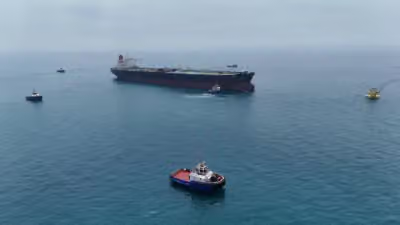
While the US has been pushing for resumption of oil exports from northern Iraq, talks to resume pumping crude through Turkey have collapsed for the second time in a week, official sources confirmed to Reuters.
The breakdown extends a two-year deadlock that has stalled crude flows from the semi-autonomous Kurdistan region to Turkey’s Ceyhan port.
It also complicates President Trump’s strategy of boosting Iraqi oil supply to keep global prices in check while simultaneously increasing pressure on Iran by cutting off its access to cheap crude.
"There is strong insistence from the US side on ensuring the success of the negotiations by any means," a US government official close to the talks told Reuters.
For Baghdad, however, the standoff is part of a larger dilemma. As Trump revives his "maximum pressure" campaign against Iran, Iraq finds itself squeezed between two powerful allies—Washington and Tehran.
Not only is Iraq under growing pressure to restart oil exports, but also to curb Iran’s access to its financial system and restrict militia activity—moves that, in Washington’s view, would make Iraq more independent from Tehran.
Yet, for Iraq to fully align with US demands is unrealistic, given the 2,500 US troops still stationed in the country and last year’s $430 million in US military and economic aid.
Washington exerts financial pressure on Iran via Iraq
Beyond oil, the US is also tightening its grip on Iraq’s financial system in an effort to sever Tehran’s economic lifelines.
Last week, at the US Treasury’s request, Iraq’s central bank blocked five more private banks from accessing US dollars, according to Reuters. The move is part of a broader campaign to limit Tehran’s access to hard currency.
Additionally, Trump’s administration is reviewing all existing sanctions waivers that allow Iran to benefit economically, including the waiver that permits Iraq to purchase Iranian electricity and gas. If revoked, Iraq would be forced to find alternative energy sources or risk blackouts.
Iraqi leaders, however, appear to be pushing back slightly.
In an interview with Al Hadath, Iraqi Foreign Minister Fouad Hussein acknowledged US pressure but rejected the idea that Baghdad would fully align with Trump’s anti-Iran strategy.
“The United States proposed measures to increase pressure on Iran, but Baghdad is committed to balancing its relationships with both Washington and Tehran,” he said.
For now, there are no signs that Trump will escalate pressure immediately, but his unpredictability leaves Baghdad weighing not just whether it can rein in Iran’s influence—but whether it wants to.