Iran mocks Trump’s Gaza plan, suggests sending Israelis to Greenland
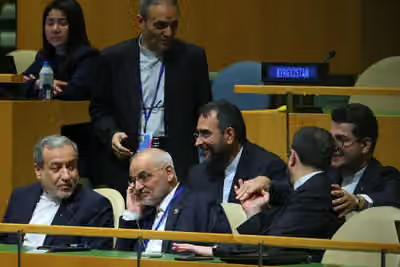
Iran's Foreign Minister Abbas Araghchi has criticized US President Donald Trump's plan to relocate Palestinians from the Gaza Strip to other nations, countering with the suggestion that Israelis should be resettled in Greenland.
"My suggestion is different. Instead of Palestinians, expel Israelis and send them to Greenland so they can kill two birds with one stone," Araghchi said in an exclusive interview with Sky News.
President Trump, who initially suggested acquiring Greenland in his first term, has doubled-down on the claim since returning to office.
On Saturday, the US President disclosed that he had conferred with Jordan's King Abdullah II about building housing to move over 1 million Palestinians from Gaza to neighboring nations. He also said he planned to address the same issue with Egyptian President Abdel Fattah el-Sisi on Sunday.
The proposal was preemptively rejected by the Ramallah-based Palestinian Authority (PA), which said it would violate its “red lines”.
"You’re talking about a million and a half people, and we just clean out that whole thing,” the US President also told reporters over the weekend.
The comments come after a ceasefire deal and hostage release negotiated jointly by the incoming Trump administration and the Biden administration between Israel and Hamas.
Nuclear negotiations would be 'more challenging' than before
Addressing the possibility of negotiations over its nuclear program, Foreign Minister Araghchi told SKY News that while Tehran is willing to hear President Trump out, reaching an agreement will be far more challenging than in 2018, when the original nuclear deal was finalized.
"The situation is different and much more difficult than the previous time," he told SKY News. "Lots of things should be done by the other side to buy our confidence… We haven't heard anything but the 'nice' word, and this is obviously not enough."
This follows President Trump’s earlier remark that it would be "nice" if the nuclear crisis could be resolved without escalating further—and without the need for Israel to launch military strikes against targets in Iran.
Iran's Foreign Minister told SKY News that any attack on Iran's nuclear facilities would trigger an immediate response, calling it "crazy" for Israel and the US to take such action.
Tehran's Prosecutor's Office has filed charges against political commentator Sadegh Zibakalam following a speech he delivered in Doha which has enraged the government.
"Due to recent baseless statements made by Sadegh Zibakalam, the Tehran Prosecutor's Office has filed charges against him," Mizan, Iran's judiciary news website, said on Tuesday, without providing further details of the charges.
The charges come after a video of his lecture, titled “The Trump presidency and the 46 years of hostility between Iran and the US,” was widely shared on social media.
"More than being worried about Trump and what Trump is going to do with Iran, I am worried about the situation in Iran – the sharp contradiction, the sharp conflict between the younger generation of Iranians and their hatred of literally anything which is tied to the Islamic Republic,” Zibakalam said in a lecture at the Arab Center for Research and Policy Studies in Doha on US President Trump's inauguration on January 20.
Zibakalam also said that Iran's youth hate Palestinians because the Islamic Republic's leaders support them. "You'll be surprised how many Iranians hate Palestinians," he said, the sympathy now eroded in the wake of October 7.
Instead, he said the young generation see Israeli Prime Minister Benjamin Netanyahu, as a "hero" after the war which has seen Tehran's regional allies Hamas and Hezbollah significantly weakened.
Mizan said that Zibakalam, who is currently on medical leave outside of prison, faces multiple cases for "making false statements in the media and on social media."
He was sentenced to 18 months in prison and a two-year ban from political activities for "propaganda against the system."
In a second case, he received a one-year sentence for publishing "false material," and in a third, he was sentenced to six months in prison for "spreading false information." The Supreme Court upheld his sentences, Mizan reported.
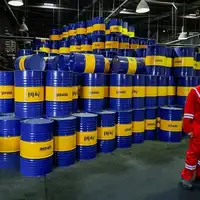
The 2001 gas supply agreement between the National Iranian Oil Company (NIOC) and the UAE-based Crescent Gas Corporation (CGC) remains one of the most controversial topics in Iranian politics.
The agreement, signed during the administration of reformist President Mohammad Khatami, was never implemented.
Iran has been ordered to pay substantial damages to Crescent and has lost billions of dollars in potential revenue after gas exports under the deal, which were supposed to begin in 2008, failed to materialize.
The controversy primarily centers on allegations of corruption leveled by ultra-hardliners against former Oil Minister Bijan Zanganeh and other officials aligned with the so-called reformist faction, unfavorable rulings by international arbitration courts against NIOC, and the loss of substantial revenue from the Salman oil and gas field.
Q: What is the Crescent Deal?
The Crescent gas deal was a 25-year contract to export natural gas from Iran's offshore Salman field in the Persian Gulf to the United Arab Emirates.
Under the agreement, Iran was to deliver approximately 500 million cubic feet of natural gas per day to the UAE, starting in 2008.
Crescent Gas invested approximately $300 million in infrastructure, including a gas sweetening plant and transmission facilities, while NIOC spent over $1.5 billion developing the Salman gas field and its related transport infrastructure.
Negotiations with the UAE side over pricing terms continued after the government transitioned to populist President Mahmoud Ahmadinejad in 2005. These talks initially broke down due to Tehran's insistence that the previously agreed price was too low compared to rising global prices at the time.
The Ahmadinejad administration later dropped its opposition to the agreement and chose to implement it. However, under political pressure, NIOC ultimately refused to begin supplying gas to CGC as agreed.
Q: Who opposed the Crescent deal and why?
Saeed Jalili, ultra-hardline politician and secretary of Iran's Supreme National Security Council (SNSC) under then-President Ahmadinejad, is known as the staunchest critic of the Crescent Deal.
Former Oil Ministry official Mahmoud Khaghani claimed in July 2024 that in early 2010, Ahmadinejad urged the Supreme National Security Council to resolve the Crescent issue in order to avoid litigation.
Khaghani, accused Jalili of sabotaging the deal due to personal grudges against former Oil Minister Zanganeh, the architect of the deal, and insisted that the deal should never be implemented. According to Khaghani, Jalili argued that CGC would not be awarded more than $850 million in damages if the case went to court.
Proponents of the deal have also accused Jalili of attempting to create insurmountable obstacles in nuclear talks with world powers while he headed the nuclear negotiation team.
Despite repeated challenges from Zanganeh to publicly debate the matter, Jalili has declined, stating that the issue is too complex for a debate and should instead be resolved in court.
Q: What legal steps has CGC taken against NIOC?
In 2009, Crescent Gas filed a lawsuit against NIOC with the Permanent Court of Arbitration (PCA) in The Hague. In 2014, the arbitration court ruled that NIOC had breached its contractual obligations.
In 2021, the arbitration tribunal awarded CGC $2.43 billion in damages for lost profits due to NIOC's failure to deliver gas. NIOC appealed the ruling to the Court of Appeal in London, but the appeal was rejected in July 2023.
As of January 2025, the award, including accrued interest, amounts to approximately $2.75 billion.
Separately, in September 2021, another tribunal awarded Dana Gas, an affiliate of Crescent Petroleum, $607.5 million for NIOC’s failure to supply gas under the same agreement. This award only covers the first 8.5 years of the 25-year contract.
Additional arbitration claims could raise the total damages sought from NIOC to as much as $18 billion.
Q: Has NIOC paid the sums awarded to the UAE side?
To date, NIOC has not fulfilled its payment obligations. However, Crescent Petroleum has successfully obtained orders to seize NIOC assets abroad in order to enforce the arbitration awards.
In April 2024, a UK court ordered the transfer of the NIOC House in London to CGC as partial settlement of the damages. More recently, another NIOC-owned building in Rotterdam, the Netherlands, was seized for the same purpose.
Two Israeli soldiers have been accused of spying for Iran while one operated the country’s Iron Dome air defense system, sharing highly classified footage of it in operation.
According to a joint statement by Israel police and Shin Bet, the two suspects had been lured by social media, as seen in previous cases.
"They understood that they were in contact with an Iranian operator, based, among other things, on their media publications, which revealed at the time the arrest and interrogation of Israeli citizens who were in contact with Iranian intelligence elements and carried out similar missions for them," the statement said.
The pair have been named as Yuri Eliaspov and Georgi Andreev, residents of Krayot in northern Israel.
Eliaspov, the main suspect, admitted that he sent his Iranian operator a video he recorded of the Iron Dome operating system. "I got into a difficult financial situation,” he told prosecutors.
Iranian spy plots in Israel increased 400% last year in the wake of the Gaza war, with dozens of cases in Israel foiled involving dozens more Israeli citizens. Some of the most serious included plots to murder the likes of Israel's Prime Minister and Defense Minister.
Superintendent Sarit Peretz, an investigation officer in the National Unit for the Investigation of Serious and International Crime in Lahav 433, said in a statement: "Yuri Eliaspov is charged with the offense of aiding the enemy in war, the most serious offense in the law book, the penalty for which is life imprisonment or death,” though Israel has only enacted the death penalty twice since its founding in 1948.
“Anyone who received Yuri's video [of the Iron Dome] and understands these systems could act against the State of Israel, which is very dangerous. The video contains very sensitive information," she added.
She said that Eliaspov claims only to have sent part of the video and not all of it. “Even the part he says he sent contains great danger,” she said.
Israel's Iron Dome air defense system is 90 percent effective and has protected the country from thousands of missile, rocket and drone attacks from Iran and its allies around the region such as the Houthis in Yemen and Hezbollah in Lebanon.
Asher Ben-Artzi, the former head of Israel’s Interpol, said the cases show a constant pattern in how Iranian intelligence is working to recruit Israeli citizens.
“They manage to recruit Israelis, mainly from the weakest strata of society, to whom they promise to make easy and quick money. This affair that has now been revealed was a great success for them after they managed to locate a reservist stationed in a sensitive unit and the assessment of the security officials is that the information they provided did indeed cause damage,” he told Iran International.
“The fact that they gained access to IDF soldiers, even in reserve service, is very worrying.”
The two were lured like others in recent months, by initially being asked to spray ‘children of Ruhollah’ graffiti in Tel Aviv, referring to the original founder of the Islamic Republic.
Eliaspov then shared the opportunity with his friend Andreev, and convinced him it was easy money.
By the time he was caught, Eliaspov had earned $2,500, while Andreev only $50. Both have admitted they are guilty of the charges and remain in custody until the next hearing on Friday in Haifa.
The pair began communicating with the agent in late September and have been under investigation for two weeks. They were both discharged immediately from Israeli military service.
French Foreign Minister Jean-Noel Barrot said on Monday that his country would propose the European Union issue sanctions against Iranian officials responsible for the detention of French citizens in Iran.
Earlier this month, Olivier Grondeau, a French citizen detained in Iran for over two years on espionage charges revealed his identity and described his ordeal in a phone call aired on French radio as Paris stepped up efforts to gain his release.
In addition to Grondeau, two other French detainees, teachers Cécile Kohler and Jacques Paris, have been detained in Iran since May 2022.
Last week, the European Parliament adopted a motion for a resolution condemning Iran’s detention of European Union citizens, labelling the practice as “hostage diplomacy.”
An Iranian-linked cyberattack targeted kindergartens in Israel on Sunday, disrupting public address (PA) systems and infiltrating emergency systems in at least 20 locations by exploiting vulnerabilities in a private company's infrastructure.
Handala, an Iranian cyber group linked to Iran’s Ministry of Intelligence (MOIS), claimed responsibility for the attack on its Telegram channel.
Additionally, the group used another system belonging to the same company to send tens of thousands of threatening text messages to Israeli citizens.
Israel's National Cyber Directorate confirmed the breach and is working with the affected company and the Ministry of Education to address the situation.
"Citizens who received these messages are advised to block the sender and disregard the message, as it poses no harm to mobile devices," the directorate said.
Kan, Israel's public broadcaster, reported that the affected systems have now been disconnected from the wider network, with the unnamed private company responsible for the compromised units saying that it is taking steps to resolve the issue and enhance its security measures.
Last April, a day after Iran's first-ever direct military strike against Israel, the Iranian-linked hacker group Handala claimed to have breached Israel's radar systems and sent hundreds of thousands of threatening text messages to Israeli citizens.
In September, the group claimed it had successfully breached the Soreq Nuclear Research Center, alleging the theft of 197 gigabytes of data.
The hackers also published around 30 photos they claimed were taken inside the center, along with screenshots allegedly showing the names of nuclear scientists involved in the facility's particle accelerator project.
In response, the Israeli prime minister's office, speaking on behalf of the Israel Atomic Energy Commission, denied the authenticity of the images. "Following a thorough examination, the images and blueprint do not belong to any of its facilities," the statement said.
According to cybersecurity expert Nariman Gharib, the group Handala Hack, Karma Below and Homeland Justice were created and are operated by a cyber unit within the counter-cyber threat division (CT) of Iran's Ministry of Intelligence's internal security department, specifically for advertising purposes.
Microsoft released a report last year which said that since the Gaza war, Iran "surged its cyber, influence, and cyber-enabled influence operations against Israel".
"From October 7, 2023, to July 2024, nearly half of the Iranian operations Microsoft observed targeted Israeli companies," said the Microsoft Digital Defense Report.
The US software giant's report in October said that from July to October 2023, only 10 percent of Iranian cyberattacks targeted Israel, while 35 percent aimed at American entities and 20 percent at the United Arab Emirates.
However, the war has seen a spike in cyber attacks on Israel alongside attacks by Iran's military allies against the Jewish state.
"Within two days of Hamas' attack on Israel, Iran stood up several new influence operations," Microsoft said.