• العربية
  • فارسی
Brand
  • Iran Insight
  • Politics
  • Economy
  • Analysis
  • Special Report
  • Opinion
  • Podcast
  • Iran Insight
  • Politics
  • Economy
  • Analysis
  • Special Report
  • Opinion
  • Podcast
  • Theme
  • Language
    • العربية
    • فارسی
  • Iran Insight
  • Politics
  • Economy
  • Analysis
  • Special Report
  • Opinion
  • Podcast
All rights reserved for Volant Media UK Limited
volant media logo

Health minister blames currency collapse for soaring drug costs

Jan 6, 2025, 08:47 GMT+0Updated: 11:56 GMT+0
A drug store in Iran

Iran's health minister said on Sunday that currency fluctuations and collapse of the rial are fueling a rise in medicine costs across the country while a mass shortage is crippling the system.

Mohammadreza Zafarghandi added that the government plans to offset currency-driven price hikes by compensating insurance companies to prevent patients from bearing the cost.

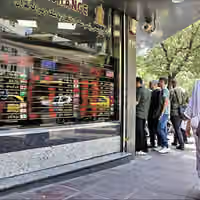
Iran is grappling with a dire economic situation as the rial, which has depreciated by over 30% since September, sending ripple effects across multiple industries including the pharmaceutical industry, which heavily relies on the cash-strapped government for hard currency to import raw materials.

While Zafarghandi promised government action on rising medicine costs, Mehdi Pirsalehi, head of the Food and Drug Organization revealed that the government owes 360 trillion rials (approximately $4.47 billion) to the pharmaceutical sector, alongside 200 trillion rials ($2.48 billion) in medical equipment debt.

In July last year the head of Tehran Chamber of Commerce for Industries, Mines and Agriculture (TCCIMA) warned that Iran’s pharmaceutical and medical equipment sectors are struggling to secure both foreign currency and local rials, in an interview with the state-affiliated ILNA news website.

In 2022, Iran’s parliament decided to scrap an annual $9 billion subsidy for essential food and medicines, despite warnings of more inflation and hardship.

The subsidy was introduced in April 2018 when Donald Trump signaled his intention to withdraw from the Obama-era nuclear agreement with Iran known as JCPOA, and Iran’s national currency began to nosedive.

Before becoming Iran’s president, Masoud Pezeshkian criticized the Raisi administration for eliminating government subsidies, warning that such measures would hinder drug manufacturers from importing the raw materials needed to produce medicines.

Now, as president, Pezeshkian himself plans to cut the allocation for importing essential goods, including agricultural products, pharmaceuticals, and raw materials, to €12 billion, according to the 2025 budget outline released in October.

Most Viewed

Khamenei fills six top military posts as key intelligence gaps persist
1

Khamenei fills six top military posts as key intelligence gaps persist

2
INSIGHT

First red meat, now dairy: Iran’s household diet keeps shrinking

3
VOICES FROM IRAN

Iran’s healthcare crunch forces patients to cut treatment

4
ANALYSIS

The strange power of Iran’s absent supreme leader

5

Rezaei named Iran’s top security chief and Khamenei representative

Banner
Banner
Banner

Spotlight

  • Two years on, Pezeshkian’s presidency is a tale of survival
    INSIGHT

    Two years on, Pezeshkian’s presidency is a tale of survival

  • Iran plays down Mecca Pact as regional security order shifts
    INSIGHT

    Iran plays down Mecca Pact as regional security order shifts

  • From Karbala-4 to AMIA: Mohsen Rezaei returns to Iran’s security helm
    INSIGHT

    From Karbala-4 to AMIA: Mohsen Rezaei returns to Iran’s security helm

  • The strange power of Iran’s absent supreme leader
    ANALYSIS

    The strange power of Iran’s absent supreme leader

  • First red meat, now dairy: Iran’s household diet keeps shrinking
    INSIGHT

    First red meat, now dairy: Iran’s household diet keeps shrinking

  • Tehran rents hit three times many workers’ monthly pay

    Tehran rents hit three times many workers’ monthly pay