Hezbollah, Iran had prevented Israeli incursion into Syria - al-Manar
Iran and Hezbollah were Syria's bulwark against an Israeli incursion which is now unfolding, the Tehran-backed militant group's media outlet al-Manar said in a news analysis on Tuesday.
The comments were among the first from the group after Bashar al-Assad's downfall at the hands of armed insurgents, an upheaval that deprives it and the Islamic Republic of their main Arab ally and key nexus for Lebanon-bound weapons.
"A suspicious and insolent silence regarding the aggression is taking place, except for some voices here and there in addition to those who have a history of confronting this enemy and knowing its ambitions very well, such as the Islamic Resistance in Lebanon (Hezbollah) and the Islamic Republic of Iran," al-Manar said.
"The enemy unleashed its ambitions, immediately starting a military operation to nibble away at areas in southern Syria, including Mount Hermon and a number of cities and villages, in addition to a wide-scale air aggression that included almost all of the Syrian army’s capabilities, specifically its advanced weapons," it added.
"So where are those who care about Syria’s freedom?"
Israeli airstrikes have sunk the Syrian fleet targeted Syrian military bases and alleged chemical weapons facilities in the days since Assad fled the country for Russia on Sunday. Its ground forces also plunged into a buffer region on the Golan Heights in place since a 1974 war.
Israeli Prime Minister Benjamin Netanyahu warned Syria's new rulers not to follow in Bashar al-Assad's footsteps and allow Iran to "re-establish" itself in the country.
"If this regime allows Iran to re-establish itself in Syria, or permits the transfer of Iranian weapons or any other weapons to Hezbollah, or if it attacks us -– we will respond forcefully, and we will exact a heavy price," Netanyahu said in a video statement from Tel Aviv.
"What happened to the previous regime will happen to this one."
A prominent international football referee has left Iran due to threats and pressure from the country’s security forces, according to information exclusively obtained by Iran International.
The revelation that Mahsa Ghorbani departed follows a recent interview with the Shargh Network in which she highlighted challenges faced by female referees in Iran.
"I cannot continue my work or life in a country where my safety is constantly under threat," Ghorbani was quoted as saying.
Ghorbani could not be reached for comment and Iranian authorities have yet to comment on the case.
Iranian sport news website Tarafdari quoted a former Iranian referee as saying that Ghorbani intends to live in Europe but will not be seeking political asylum.
The referee had been slated to participate in high-profile competitions such as last year’s Tehran derby, officiating in the VAR room. However, opposition from government authorities and state-affiliated media prevented her involvement.
Ghorbani also missed the chance to officiate at the 2022 Qatar World Cup because she was barred from overseeing men’s matches in Iran due to her gender.
Last month, 15-year-old table tennis player Baran Arjmand sought police protection in Denmark, refusing to return to Iran after participating in a championship.
Iranian judoka Saeid Mollaei and alpine skier Atefeh Ahmadi have similarly sought asylum in recent years, citing political and social pressures.
Ghorbani’s departure underscores rising tension between Iranian authorities and professionals in sports, the arts and academia, many of whom are leaving the country due to safety concerns and economic hardships.
Israeli Defense Minister Israel Katz said Tuesday that the country's navy had destroyed Syria's fleet in the Mediterranean on Monday night.
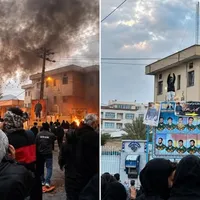
Photos released by news agencies showed sunken Syrian naval ships in Latakia, with smoke billowing from the wreckage after they were laid to waste by the Jewish state's airstrikes.
"I have no reason to believe this has happened," Iran's Vice-President for Strategic Affairs Mohammad Javad Zarif said Tuesday when asked about speculations that Assad's fall is a result of a US-Russia deal.
"Of course, one must investigate and examine what has occurred, but so far, I have not found any evidence in this regard. I cannot say it did not happen, but I can say that I am not aware of it," Zarif said.
"Unfortunately, Turkey's role in this matter is very clear," the former foreign minister added.
Iranian female students protesting compulsory veiling
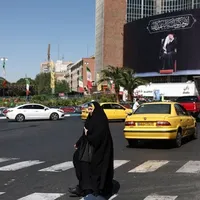
Amnesty International has condemned Iran's new compulsory veiling law, saying it intensifies the oppression of women and girls while exposing activists opposing the rules to charges carrying the death penalty.
“Iranian authorities have adopted a new draconian law that further erases the human rights of women and girls, imposing the death penalty, flogging, prison terms and other severe penalties to crush ongoing resistance to compulsory veiling,” Amnesty International said in a press release on Tuesday.
The "Law on Protecting the Family through the Promotion of the Culture of Chastity and Hijab," comprising 74 articles, is set to take effect this Friday. It imposes severe penalties on women and girls who defy veiling requirements, including exorbitant fines, prison terms, flogging, and travel bans.
Amnesty highlighted that activism against the hijab law may even be deemed “corruption on earth,” a charge punishable by death under Iran's penal code—a concern recently raised by Iranian women’s rights activists.
“This shameful law intensifies the persecution of women and girls for daring to stand up for their rights following the ‘Woman Life Freedom’ uprising,” said Diana Eltahawy, Amnesty International’s deputy regional director for the Middle East and North Africa.
Drafted in May 2023, less than a year after the Woman Life Freedom uprising sparked by the death in custody of Mahsa Amini in September 2022, the law was introduced in response to widespread defiance of compulsory veiling by women and girls, Amnesty said.
Amnesty detailed sections of the new law and how it, warning it criminalizes acts such as “nudity, indecency, unveiling and bad dressing.”
Article 50 of the law defines “unveiling” as failing to cover the head with a hijab, chador, or headscarf. “Bad dressing” is defined in Article 48 as exposing body parts below the neck, other than the hands and feet, or wearing clothing deemed to “contribute to or incite sin by others”.
However, the rights group warned terms such as “nudity” and “indecency” remain undefined in the new law, allowing for subjective interpretation and enforcement.
Under Article 48, fines for “bad dressing” begin at $160 for a first offense and rise to $4,000 for a fourth. Further infractions can result in $8,000 fines, up to five years in prison, a two-year travel ban, and a two-year ban on social media use. Article 49 mandates that “nudity” in public or online may lead to up to 10 years in prison or a $12,000 fine, with repeat offenses punishable by 15 years in prison or a $22,000 fine.
Amnesty noted that women unable to pay fines face severe restrictions, including being barred from reclaiming impounded vehicles, renewing driving licenses or passports or leaving the country. Article 56 also allows for asset seizures or imprisonment in such cases.
Article 38 prescribes up to five years in prison, travel bans, and fines for “insulting or ridiculing the hijab” or “promoting nudity, indecency, unveiling, and bad dressing.” Meanwhile, the law also bans the import and sale of clothing, dolls, mannequins, books, paintings, and other items that “promote nudity, indecency, unveiling, and bad dressing.”
“The complex web of fines, prison sentences and other severe punishments going as far as the death penalty demonstrates the state policy to control women and girls through fear and economic hardship. This law has particularly devastating consequences for the most economically disadvantaged in society,” Eltahawy added.
Amnesty warned the law grants sweeping powers to Iran’s intelligence and security forces, including the Revolutionary Guard and Basij militia, to enforce veiling rules.
Eltahawy called on the international community to act urgently, urging governments to use diplomatic and legal avenues to hold Iranian authorities accountable for systematic human rights violations.