Most Viewed



Hossein Aghaie, a researcher in strategic affairs and international relations, told Iran International, "The fall of Bashar al-Assad is, in fact, the fall of the Islamic Republic's ideology and regional terrorism.”
He emphasized that the Islamic Republic's nightmares continue with the Trump administration's maximum pressure campaign and Israel's operations across the region.
Aghaie attributed the fall of Assad to the collapse of the Syrian army and said, "If Russia's interests demand it, Putin will do to the Islamic Republic what he did to Assad."
According to him, the biggest loser in the Syrian war is the Islamic Republic, which has spent significant amount of money in the survival of Assad.
Assessing the post-Assad situation, Aghaie said that Putin will continue to use the Islamic Republic as a bargaining chip, Turkey will increase its geopolitical influence in Syria, and Israel will face a dual challenge of threat and opportunity.

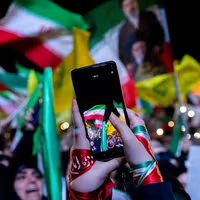
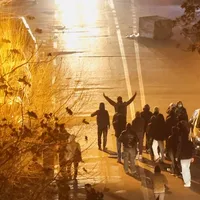
The clerical government in Iran is currently grappling with at least seven significant domestic and international crises, creating what can be described as a "mega-crisis" for the whole political system and its leadership.
Crisis 1: Setbacks for Hamas, Hezbollah, and Bashar al-Assad
The severe defeats suffered by Iran's proxy groups, Hamas and Hezbollah, along with Bashar al-Assad in Syria facing downfall, have severely destabilized Iran's regional alliances.
Hamas and Hezbollah have been significantly weakened by heavy military losses and the elimination of key leaders. Meanwhile, Assad's forces have faced a string of defeats, particularly the rapid loss of vast areas of the country, key military bases and the apparent disintegration of its military units.
These developments have undermined Iran’s ability to rely on its regional allies against the United States, Israel, and other players, a stark contrast to just a year ago when Iranian officials boasted of their "strategic depth" and influence reaching the Mediterranean.
Crisis 2: Threat of Direct Confrontation with Israel
Iran’s long-held dream of directly confronting Israel has turned into a nightmare as the possibility of severe retaliation looms large.
Israel, leveraging current geopolitical conditions and the potential return of Donald Trump to the White House, is reportedly working to weaken not just Hamas and Hezbollah but also Iran-backed forces like Iraq’s Hashd al-Shaabi and Yemen’s Houthis. Additionally, Iran’s nuclear and missile programs could become targets of Israeli strikes. Israel’s October 26 air strike on key targets in Iran demonstrated the vulnerable state of Tehran’s air defenses and Israel’s modern military superiority.
Israeli intelligence’s deep penetration into Iran’s security infrastructure has heightened fears within Tehran, including concerns over the potential assassination of top officials, even Supreme Leader Ali Khamenei.
Crisis 3: Trump’s return and a hardline US administration
The prospect of Donald Trump returning to the White House with a team of hawkish policymakers poses a major challenge for the Islamic Republic.
Unlike the Biden administration, Trump’s team has no intention of immediately pursuing diplomacy with Iran, instead favoring a return to the "maximum pressure" campaign. Figures like Marco Rubio and Mike Waltz, known for their aggressive stance on Iran, are expected to play leading roles in this strategy.
Crisis 4: Europe’s shift toward a hardline stance
Europe has adopted a much tougher stance against Tehran, driven by concerns over Iranian missiles and drones supplied to Russia in the Ukraine war, Iran’s nuclear program, and its development of ballistic missiles.
This shift has resulted in new sanctions on key Iranian entities, including the Islamic Republic of Iran Shipping Lines and Iran Air. Europe now appears more aligned with the United States on its Iran policy.
Crisis 5: Domestic economic and financial collapse
Iran faces an unprecedented financial and economic crisis, marked by severe budget deficits, the inability to fund long-existing subsidies, pay pensions, or cover infrastructure costs.
Reports indicate that the National Development Fund, or Iran’s sovereign wealth fund, is nearly depleted, with much of its resources diverted to military and proxy activities. Energy shortages, including electricity, gas, and gasoline, have exacerbated the crisis, severely impacting both citizens and industries.
Crisis 6: Deepening divide between government and people
A significant and growing gap between the government and the public has fueled unrest. This divide spans economic, political, social, and cultural issues, with increasing dissatisfaction over the government’s inability to address basic needs like energy and its imposition of restrictive policies such as mandatory hijab and internet censorship.
Far from meeting promises of dignity and respect, particularly for women, these policies have only intensified public anger. The government’s disregard for protests and demands has deepened this rift, placing society on the brink of widespread unrest reminiscent of earlier mass uprisings in 2017, 2019 and 2022.
Crisis 7: The challenge of finding a successor to Ali Khamenei
One of the most pressing challenges for the system is the question of succession for Supreme Leader Ali Khamenei. This issue has consumed the leadership’s focus, raising serious concerns about navigating this critical transition without endangering the very survival of the ruling establishment.
Its inability to manage social and economic crises, combined with external pressures, has made the succession issue a complex and multifaceted challenge.
A mega-crisis
These seven interwoven crises have converged into a "mega-crisis," placing the Islamic Republic in one of the most challenging periods of its existence. The path forward remains uncertain, with mounting pressure from both internal and external fronts threatening the regime’s stability.
Syria’s second largest city Aleppo fell to rebel forces within a mere 48 hours of their launching a shock offensive. Now they push forward on the road to Damascus.
The hardline Islamist-led forces are unlikely beneficiaries of fallout from neighboring conflicts in which key Syrian allies Iran and Russia are sapped and distracted while uneasy neighbor Turkey presses its advantage.
Syrian president Bashar al-Assad, accused of war crimes by many Syrians and rights groups, fended off an armed challenge to his rule following Arab Spring democracy protests in 2011 with help from Iran-backed Hezbollah fighters and Russian air power.
But much has changed. The war in Ukraine has preoccupied Russia, Hezbollah limped to a ceasefire with Israel and Iran finds itself on the backfoot in a multifront confrontation with Israel in which it has lost the initiative.
“Over the last year, Hezbollah's forces inside Syria got weaker,” said Ibrahim Al-Assil, a Syrian analyst at the Middle East Institute in Washington, D.C.
Al-Assil said he was detained by the Syrian secret police in 2011 while taking part in a peaceful protest against Assad in Damascus. He said he was interrogated and tortured for four days at a Syrian military Airport.
“Now even Russia is overwhelmed and busy with the war in Ukraine,” said Al-Assil who founded the Syrian Nonviolence Movement but now predicts deadly upheaval. “The battle is not going to be easy. It's going to be bloody. It's going to be brutal."
The Israeli military has launched dozens of strikes on alleged Iran weapons facilities, smuggling routes and warehouses, curbing the ability of Iran and its allies to help.
The Israeli military announced on Tuesday in a new release that their Air Force conducted a strike in Damascus targeting Hezbollah’s representative to the Syrian military, Salman Nemer Jamaa.
Israel said Jamaa was a Hezbollah operative who was a key figure in enabling weapons smuggling to Lebanon from Syria, in a sign the Jewish state would still pound its Lebanese adversary despite the calm next door.
How far can Iran go to support Assad?
Whether Iran in its cash-strapped and weakened state can afford to come to Assad's rescue remains a key question.
“Is Syria the hill the Iranian regime is willing to die on? I don't think so,” said Hazem Alghabra, who grew up mostly in Syria was a former advisor to the US State Department on Near Eastern Affairs.
The Iranian establishment may understand its weakened position, and Hezbollah forces could be demoralized and underequipped after a punishing 14-month wrestle with the Mideast's top military power.
“The Iranian regime is not going to make big decisions while they're being chased literally by Israel and the United States. The Iranian regime moves when there's an opportunity, a weakness," Alghabra said. "They operate a bit like a virus, whenever they see a weakened immune system, they move in it."
Who are the rebel forces?
Two of the main rebel forces, Hayat Tahrir al-Sham (HTS) and the Syrian National Army (SNA), are both backed by Ankara.
HTS, known as the Organization for the Liberation of the Levant, is a former Al Qaeda affiliate that pledges to build a state based on Islamic principles.
They are made up Islamist insurgents with Jihadi ideology and former Free Syrian Army factions. They managed to take control of key places in Syria such defense factories in Aleppo, a thermal power station and an air base, according to monitors and eyewitnesses.
All met with little resistance, Greg Brew, an Iran analyst with the Eurasia Group told Iran International.
“Assad's forces have essentially melted away,” said Brew. “Turkey is largely in the driver's seat when it comes to extracting real concessions and real advantage from the situation."
Ankara, while supporting anti-government rebels, may not want Assad to fall, however.
Turkish President Recep Tayyip Erdogan may be using the Islamist insurgents to push a reluctant Assad to acquiesce to a Turkish sphere of influence in Northern Syria, allowing the millions of Syrian refugees in Turkey to return.
Weakened Syrian control over the area may aid Turkey's goal of undermining Kurdish foes further to the East who could also soon find the US military umbrella under which they have operated for years yanked away by an isolationist President Trump.
“Turkey is in a position to extract the greatest gains, the greatest advantage from this sequence of events, even if it hasn't been dictating the events, it does look likely to benefit,” said Brew.
On Tuesday, US airstrikes hit the Eastern Syria in the city of Deir Ezzor. The day before, US backed anti-Assad forces took several villages there from Iran and Iran-backed Assad forces.
While regional power politics may mean Israel and Turkey do not seek Assad's outright ouster, Syrian people trapped in the conflict are at the mercy of the country's clashing internal foes.
Syrian's suffered under the human rights abuses of their president but are likely wary of the Islamist insurgents who have pushed out his forces in recent days.
"People now are focusing on survival," said Al-Assil.
The fall of Aleppo to rebels opposing President Bashar al-Assad has caused a critical situation for the Syrian government with implications that may extend to the Islamic Republic of Iran.
Opposition forces have now advanced towards the outskirts of Hama and Homs, two strategic Syrian cities on the road to Damascus. The potential fall of Damascus and the overthrow of the Assad government is more serious than ever, causing deep concerns for the Islamic Republic and its leader, Ali Khamenei.
The collapse of Assad’s rule would dismantle a cornerstone of Iran’s regional strategy against Israel. It would also threaten the survival of Iran's proxy groups, which rely heavily on Damascus for support. Without Assad’s backing, these groups could struggle to sustain their operations, jeopardizing the Islamic Republic’s influence in the region.
For Khamenei and Iran’s Revolutionary Guards (IRGC), Assad’s government is a vital pillar of the so-called Axis of Resistance. Its potential fall could even endanger the stability of the Islamic Republic itself.
The coming days are pivotal for both Assad’s government and Iran. The defeat in Aleppo dealt a major blow to the morale of the Syrian army and government, but the greater concern for Assad and the Islamic Republic is the possibility of opposition forces advancing toward Damascus after consolidating their power in the north and toppling the government.
The opposition forces now control Aleppo and Idlib near Turkey’s borders and are rapidly advancing in Hama and Homs governorates with reports that they are at the gates of the provincial capitals. Capturing the cities of Hama and Homs would give them a strategic advantage, potentially allowing a push toward Latakia, the Assad family’s power base, or Damascus.
The situation today is starkly different from 2016, when Assad, with robust support from Russia, Hezbollah, and Iran, defeated opposition forces in the battle of Aleppo. Several factors have contributed to the weakening of the Assad government and its supporters:
- Russia's involvement in Ukraine: Russia, a key ally of Damascus, is preoccupied with the war in Ukraine, limiting its ability to provide military support compared to 2016.
- Hezbollah's diminished sway: Iran-backed Hezbollah, a powerful armed ally of Damascus, has suffered significant losses in its conflict with Israel and faces domestic pressure in Lebanon to reduce its involvement in regional conflicts.
- Iran's economic constraints: Tehran’s financial woes made worse by US sanctions have restricted its ability to provide financial and military aid to the Assad government. According to estimates, Tehran has spent tens of billions of dollars in Syria but now finds it hard to continue such support.
- Erosion of the IRGC's manpower and logistics in Syria: Key IRGC commanders, including former chief of IRG's extraterritorial Quds Force Qasem Soleimani, have been killed in recent years and the replacement forces do not have the same capabilities. Additionally, proxy groups such as the Afghan Fatemiyoun Division Iraq’s Popular Mobilization Forces (PMF) are less effective than before.
If Assad’s falls, Iran’s regional foreign policy could face a severe crisis. Damascus plays a crucial role in facilitating the transport of weapons, logistics, and financial support to Iran’s proxy groups. Its collapse would likely lead to:
- Disruption of weapons transfers to Hezbollah via Damascus and Latakia airports.
- Reduced support for Palestinian groups such as Hamas and the Islamic Jihad.
- Destruction of smuggling networks for arms and narcotics into Jordan and the West Bank.
For Iran, preserving Assad's government is a matter of strategic survival. While Khamenei and the IRGC are likely to make every effort to prevent its collapse, their resources and influence are far weaker than in the past. Ultimately, Assad’s fall could dismantle the 'Axis of Resistance’ and pose a serious threat to the Islamic Republic’s future.
US president-elect Donald Trump is gearing up for his second term, pursuing a national security doctrine rooted in principles forged during his first term: a blend of pragmatism and resolute America First ideology.
A taster of the blend was presented by Trump’s nominee for National Security Adviser, Mike Waltz, in his interview with CNBC on November 26 2024, where he said the Middle East is key to resolving the Russia-Ukraine conflict.
Waltz contends that Trump will mobilise all resources to dismantle Iran’s destabilising hegemony, emboldened under Biden’s administration. This aligns with Trump’s broader strategy to untangle the global crises bogging down American power.
To achieve this, Waltz suggests leveraging Russia’s influence over Iran’s IRGC praetorian guard to advance lasting peace in the Middle East, a vision epitomised by the Abraham Accords. This necessitates a face-saving resolution to the Russo-Ukrainian War, safeguarding American interests in Europe while enabling détente with Russia. Waltz confirms collaboration between the Biden and Trump teams to address these crises—as suggested by the author a few weeks back.
Trump's November Days: a pivotal moment in American history?
The span of 5–26 November 2024—Trump’s November Days— can be compared to the critical days of the Cuban Missile Crisis in 1962. Though the world public opinion may not be apprised of the threat the outbreak of a world war, Trump seems to be convinced, and he has so exclaimed several times, if left uncontained both the conflict in the Middle East and the Russo-Ukraine War could lead to World War III.
Putin’s Russia just tested a “conventional” multi-warhead missile, Oreshnik, against Ukraine. Not only has lowered the threshold of Russia’s nuclear doctrine but he has also threatened to use Oreshnik against Kiev.
These weeks reflect a reckoning for America’s allies and adversaries. Through calls with the leaders of Israel, Ukraine and Russia, president-elect Trump signals a readiness to address global crises with bold leadership. Equipped with intelligence uncovering Iranian plots against his life, Trump could cite Iran’s machinations in his talks with the Russian president Vladimir Putin, who has been Tehran’s biggest ally in recent years.
Trump appears to be steadfast in his conviction that the delicate bifurcation of a proactive strategy—one that seeks to neutralise Iran’s regional by co-opting Putin—can be achieved only through a blend of transactional acumen and the unyielding application of military strength. Put simply, to Trump, providing Putin with a dignified exit from his Ukrainian quagmire may well furnish the United States with a potent “Russian leverage” to counter Tehran’s ambitions with the greatest efficacy.
Trump’s National Security Strategy
Trump is, above all, guided by the America First ideology. This conviction was first vividly displayed in his interview with CNN’s Larry King on September 2, 1987, a day after the publication of his now-famous advertisement condemning America’s foreign defence policies as profligate and misguided.
At that moment, Trump offered a glimpse into his vision of America’s place among its allies—particularly the oil-rich monarchies of the Persian Gulf and Japan—and its adversaries, laying bare his disdain for arrangements he deemed unequal and detrimental to the American taxpayer. His first term cemented this doctrine, articulated in his 2017 National Security Strategy as "peace through strength."
Trump’s approach—transactional, unpredictable, and grounded in interpersonal chemistry—relies on the judicious use of economic sanctions, military power, and alliances. His approach to Iran showcased his strategy: withdrawing from the 2015 nuclear deal to counter Iran’s ambitions, imposing tough sanctions to curb its regional activities, and authorising the elimination of IRGC top commander Qassem Soleimani following attacks on US forces.
His pragmatism also allowed reluctant alignment with Iran against ISIS, contrasting with Obama’s reliance on the nuclear deal. Through the Abraham Accords between Israel and Arab monarchies, Trump fostered a regional alignment against Iran. In stark contrast, Joe Biden’s de-escalation policy emboldened adversaries, culminating in Hamas’s October 2023 attack on Israel and the collapse of Saudi-Israeli negotiations.
Nominees as emissaries and instruments of strategy
Trump regards loyalty not as blind fealty but as the bedrock of an effective administration, especially in what he perceives to be one of the most critical junctures in American history. His nominees reflect this concern, embodying a calculated alignment of expertise and allegiance to his vision.
Beginning with Mike Waltz as National Security Adviser, Trump has assembled a cadre of officials poised to execute his agenda with precision. Among his appointees is Keith Kellogg, a highly decorated retired general and former advisor to Vice President Pence, who will serve as Trump’s special envoy for Ukraine and Russia. Kellogg’s extensive military experience positions him as Trump’s most trusted ambassador plenipotentiary, tasked with navigating delicate negotiations at the intersection of European and Middle Eastern crises.
The suite of nominees also includes Senator Marco Rubio as Secretary of State, Congresswoman Elise Stefanik as Ambassador to the United Nations, and John Ratcliffe as CIA Director. The trio of Waltz, Rubio and Stefanik share Trump’s vision for containing Iran, including Tehran’s influence network in DC, and securing regional stability, demonstrated through their congressional leadership.
Ratcliffe’s prior tenure as Director of National Intelligence further equips him to advance Trump’s agenda with strategic insight. Tulsi Gabbard's nomination as Director of National Intelligence is a bold but contentious choice, reflecting Trump’s embrace of unconventional diplomacy—and perhaps a green light to Putin. Complementing her are Mike Huckabee, named Ambassador to Israel, and Steven Witkoff, special envoy for the Middle East, both exemplifying Trump’s transactional and results-driven strategy.
The Road Ahead
Trump’s return takes shape amidst unyielding crises: the Russo-Ukrainian War rages in Europe, while tensions between Israel and Iran threaten to ignite the Middle East. This world, far more intricate than the one he left in 2020, demands sharp strategy and steadfast resolve.
In these November Days, Trump has been gathering a team that he hopes can achieve what the Biden administration could not: to square the national security circle between the Middle Eastern maelstrom and the stalemated Russo-Ukrainian conflict. Guided by America First and peace through strength, his loyal and expert nominees offer him an opportunity to steer the world from chaos toward a semblance of stability and peace.
Armed opposition factions in Syria including the Islamist group Hay’at Tahrir al-Sham (HTS) killed a top Iranian military commander and pierced the outskirts of Aleppo in recent days, jolting the stalemated fight against President Bashar al-Assad’s forces.
These movements have highlighted an unexpected strength within the opposition, placing pressure on the Iranian-backed Syrian authorities amid an already complex political and military landscape.
These developments come at a critical time for the Syrian government, which is grappling with deep internal pressures due to a deteriorating economy and growing public discontent. Externally, Assad faces diminishing Russian support as Moscow remains preoccupied with the conflict in Ukraine, alongside mounting battlefield losses among Iranian-backed allies.
These shifts on the ground appear to signal a change in the rules of engagement in Syria, raising questions about the ability of both local and international actors to adapt to these changes and what they might mean for the country’s political future.
Unexpected military tactics
The operations were launched with meticulous coordination among different factions of Islamist groups and the Syrian National Army (SNA), focusing on strategic targets. Although the timing of the attacks was unexpected, evidence suggests that preparations had been underway for months, bolstered by advanced weaponry.
Armed drones and other sophisticated tools played a pivotal role, enabling the opposition to effectively manage the conflict and secure rapid territorial gains into Aleppo, Syria’s second-largest city.
Within hours, opposition forces seized key strategic locations, including stretches of the M5 highway and major military bases such as Brigade 46 and Regiment 46. These swift gains highlighted the opposition’s ability to challenge Assad’s forces—and even Russian troops—when sufficiently supported. Notably, the operations set aside internal factional disputes, presenting a rare display of unified military coordination.
The opposition’s treatment of prisoners added a notable dimension to their strategy, as humane practices are rarely observed in the Syrian conflict. Even HTS, an internationally designated terrorist organization, appeared to adopt a more calculated approach in handling detainees. This shift may reflect an effort to send a positive signal to the international community and position themselves for potential political transformation and broader acceptance on the global stage.
International stakeholders
The Syrian government finds itself in a precarious position, suffering heavy losses among its troops and allied militias. Iranian-backed militias, a critical pillar of support for Assad, have faced significant setbacks, including the death of a senior Iranian advisor and members of Hezbollah. These developments underscore Iran’s continued direct military involvement in Syria, despite mounting losses that reflect the depth of its entanglement in the conflict.
Meanwhile, Russia, a steadfast supporter of Assad, appears increasingly constrained in its ability to intervene decisively to restore balance, largely due to its focus on its invasion of Ukraine and growing international pressures. This could prompt Moscow to scale back its direct military support for Assad, opening the door to unpredictable military and political changes.
On the other hand, Turkey’s role in these operations cannot be overlooked. Analysts suggest that Ankara aims to achieve strategic objectives, including facilitating the return of thousands of Syrian refugees to safe zones in northern Syria and pressuring Assad to accept a political settlement on new terms.
Despite their field successes, extending the conflict to other regions, such as Deir ez-Zor, appears unlikely. The Syrian Democratic Forces (SDF), backed by the international coalition, control territories east of the Euphrates, while areas west of the river remain dominated by Iranian militias and Assad government forces. Any military advance into these regions would require significantly greater logistical support and troop numbers.
Shifting balance of power
These developments indicate that the Syrian conflict may be entering a new phase of escalation, potentially compelling Assad and his allies to reconsider their military and political strategies. As domestic and international pressures on the government intensify, the urgency for political solutions has grown, likely requiring terms that differ significantly from those previously proposed.
Iran: Official reactions and battlefield losses
On the official level, Iran has expressed deep concern over what it describes as the resurgence of “terrorist takfiri groups” in Syria. Iranian Foreign Ministry spokesman Esmail Baghaei warned that these developments pose a serious threat to regional stability, accusing the United States of orchestrating a “malicious plot” to destabilize the region. Iran called on regional countries to enhance cooperation to thwart these threats, framing them as part of a broader strategy to undermine Syria’s and the region’s stability.
Tehran blamed the armed factions for violating de-escalation agreements established under the Astana process, in which Iran, Turkey, and Russia serve as guarantor states. It described recent attacks near Aleppo and Idlib as blatant breaches of these accords, warning that continued operations could jeopardize the progress made in reducing violence over recent years.
Iran reaffirmed its unwavering support for the Assad against what it considers “takfiri terrorism” and praised the sacrifices of its “resistance martyrs.” The killing of senior military advisor General Kioumars Pourhashemi during recent clashes in rural Aleppo was framed as evidence of Iran’s commitment to safeguarding regional security. Iranian officials stressed that such losses would not deter Tehran from continuing its support for the Syrian government until full security and stability are restored.
A New Chapter in the Syrian crisis
Amid these rapid and complex developments, Syria’s landscape appears set for a significant shift in military and political power dynamics. The recent changes underscore evolving strategies by both local and international players, reigniting the Syrian crisis on new fronts.
As the Assad government and its allies face growing pressures, the opposition is striving to consolidate its gains, bolstered by limited but strategic support. The central question looms: will these developments open the door to a political resolution that could end the suffering of the Syrian people, or is the country destined for prolonged escalation, further entrenching the tragedies of the conflict?