Experts suspect the assassination of Hamas’s political leader Ismail Haniyeh possibly used a special precision missile with special forces in Tehran guiding it to its target.
It meant that such a strike would take out the Iran-backed terror-designated group’s figurehead while causing the least collateral damage.
Major Andrew Fox, a research fellow at the Henry Jackson Society and a former British paratrooper, said locating Hamas leader Ismail Haniyeh had made the assassination, early on Wednesday, nothing more than “fairly straightforward intelligence”.
Haniyeh made regular media appearances during his multiple visits to Tehran, making it an accessible target for Israel, which had promised Qatar not to strike him there—one of Hamas's two exile offices, alongside Turkey.
“They put themselves on the radar so it’s fairly straightforward intelligence work to find them. The time of day was very sensible. In Afghanistan we did night raids as we knew where the target would sleep.”
Based on his many years of experience, he said the likelihood of the cause of the strike was a missile launched from outside Iran and guided in with precision laser technology, operated by special forces on the ground.
“The soldier on the ground points a laser pointer at the exact spot they want to hit so the laser guides the missile to the point of impact,” he said. “The UK, US and others have this technology.”
Causing minimal damage, it also came in almost unnoticed with very little sound to warn of its approach.
“There are kinetic missiles Israel has been using that kill using kinetic energy that essentially uses the speed and weight of the warhead to do the killing. We’ve seen that in strikes on kills where a classroom is hit that’s being used by Hamas. It explains why less people got killed and it was less noisy than an explosive warhead,” he explained.
What this also means is that, unlike the assassination in Beirut of Hezbollah’s top commander on Tuesday, Fuad Shuker, which injured at least 60 others and damaged a huge chunk of a large building, the impact is far less.
“It’s really clever to use this as it doesn’t wipe out a whole chunk of Tehran. There isn’t so much damage that Tehran is forced to retaliate with huge force. If they’d levelled a city block, Iran would have no choice but to be more aggressive than I think they will be. It was one house. It’s embarrassing for Iran but in terms of damage it’s not a huge beast,” added Maj Fox.
Israeli intelligence and security analyst, Ronen Solomon, said the hit in Tehran will be a major embarrassment for Iran. While in Qatar, Haniyeh has a huge circle of security around him. However, he had just one bodyguard in Tehran, ironically, the one place he felt he was safe.
But he left a huge footprint leading Israel straight to him. “Ismail Haniyeh came with a group of Palestinians so there is a wide [intelligence] signature. They came from Qatar and usually it’s by a private plane,” he explained.
The root of the strike remains unconfirmed by either Iran or Israel but Solomon said what was unusual was the lack of sound and sight.
“Usually if there is an explosion we see it. You can hear it. We didn’t get this on this occasion. If there was a strike, north of Tehran there is the Caspian Sea,” he said, suggesting this was the direction of attack.
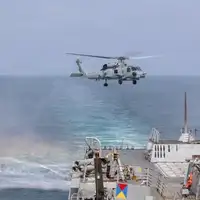
“If I’m a special unit with guided missiles I can do it from the sea with roaming missiles" The Caspian Sea in the north is not far from Tehran, he said.
With Israel’s close ally, Azerbaijan, bordering Iran, Solomon says the chances of it having been used to launch the attack are high. Just a few hundred kilometers away, it already has Israeli weaponry and shared intelligence.
However, he says another option, as has been seen before, is a drone attack that could be done with a range of 30km sent from inside Tehran, launched by an opposition cell.
Such a method would be realistic for an operation of this kind, and Israel has this capability as has been seen in the past with operations Iran accused Israel of plotting.
“This would have been a very quick operation with little time to plan after the announcements he was in Tehran which also shows the determination of Israel,” Solomon said.
However, with both sides staying silent on the details, the operation remains a mystery. “There wasn’t any kinetic signature and Israel hasn’t taken responsibility, so it’s still unclear, which is good for Israel as it gives room for denial,” he said.
Israeli Defense Minister Yoav Gallant has already said, “We don’t want war, but we are preparing for all possibilities.”
Iran's Revolutionary Guards said that "the killing of Haniyeh will be met with a harsh and painful response," and Ali Larijani, adviser to supreme leader Ali Khamenei, said Israel will "fall into a new quagmire" due to the attack.
Afshin Shahi, an international relations professor at Keele University, talked to Iran International about the potential impact of Ismail Haniyeh's assassination on the regional balance of power.
He noted that despite the strong rhetoric from Russia and China condemning the assassination, Moscow might feel more satisfied with the outcome.
Shahi explained, "We are witnessing the exposure of deeper security fissures within the Islamic Republic, making the regime feel more vulnerable."
According to the professor, in such circumstances, Iran is likely to adopt a more flexible stance toward countries like China and especially Russia.
A video of a former Minister of Intelligence, Ali Younesi, has gone viral on social media. He expressed grave concern over the infiltration of Israel's intelligence agency, Mossad, into various sectors of the country, warning that officials should be "worried for their lives."
Younesi stated in 2021 that over the past "10, 15, or 20 years," while the country has been purged of all groups he labeled as "terrorist," there has been a significant failure in addressing the infiltration by foreign intelligence services, particularly those of Israel.
He emphasized that in the "last ten years, Mossad's infiltration into various sectors of the country is so extensive that all officials of the Islamic Republic should be worried for their lives."
The assassination of Haniyeh attack occurred days after Iran’s Minister of Intelligence hailed the "dismantling of Mossad's infiltration network" as a pivotal achievement of former president Ebrahim Raisi's administration.
Esmail Khatib remarked last week, "Mossad's infiltration network had been assassinating our scientific figures and sabotaging critical centers. Under the thirteenth administration, this network and its access and capabilities have been eliminated."
The German government called for restraint in the Middle East in response to recent events, including an Israeli strike that killed a top Hezbollah commander in Beirut and the killing of Hamas leader Ismail Haniyeh in Tehran.
German Foreign Ministry spokesman Sebastian Fischer emphasized the importance of preventing further escalation and avoiding a regional conflagration.
"It is essential to avoid further escalation and a regional conflagration," Fischer told reporters, urging all parties to exercise "maximum restraint" and warning that "the logic of tit-for-tat reprisals is the wrong path."

Following the assassination of Hamas leader Ismail Haniyeh in Tehran, the dollar exchange rate in Iran's market has surged past 600,000 rials.
The price of the dollar was around 580,000 rials in recent weeks.
Tasnim News Agency, affiliated with the Islamic Revolutionary Guard Corps, issued a warning about potential market volatility, describing "excitement" in the currency and gold markets. The agency said that currency dealers are exploiting the situation, attempting to create fluctuations and profit.