Tehran City Council Head Defends Secretive €2bn Contract with China

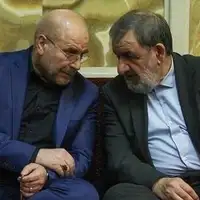
Mehdi Chamran, the head of the Tehran City Council, has defended a secretive two-billion-euro contract with a Chinese construction company for the purchase of electric buses.

Mehdi Chamran, the head of the Tehran City Council, has defended a secretive two-billion-euro contract with a Chinese construction company for the purchase of electric buses.
Chamran said on Sunday that the details of the agreement were “confidential and its disclosure poses a security issue.”
He also claimed that the contract was executed under the supervision of the Ministry of Foreign Affairs and the Central Bank. Chamran claimed that a similar contract was in place in 2017, suggesting that such dealings were not uncommon.
However, recent reports highlight growing concerns and criticism from city council members about the municipality's clandestine agreements with the Chinese company, aimed at importing transport and traffic surveillance equipment, among other items.
The contract, signed by Mayor Alireza Zakani, is expected to be funded by the proceeds from Iran's oil exports to China and the accumulated money there amid US sanctions.
During a January visit to China, Zakani confirmed that he had signed several agreements, including a 1.67 million euro deal in the transportation sector. Items listed in the deal include electric buses, vans, taxis, subway cars, and traffic cameras. Despite the disclosures, detailed specifics of the contract remain undisclosed, prompting urgent calls for transparency from Tehran city councilors and the media.
The financing of the contract has also raised eyebrows. Tehran's city government lacks direct access to substantial hard currency, which is typically controlled by the state. It is speculated that the Supreme Leader Ali Khamenei's office may have authorized the project.
Adding to the controversy, whistle-blower Yashar Soltani recently revealed on his website that the Chinese company tasked with importing public transport vehicles to Tehran is relatively new, established only in 2010, and highlighted "numerous violations" in the agreement with Tehran Municipality.


The Iranian housing market continues to impose immense financial burdens on its citizens, particularly tenants, as rents soar to unprecedented levels, leaving many struggling to afford even basic accommodation.
The main reason for soaring rents and property prices is persistent high inflation, staying above 40 percent in the past five years. The national currency, rial, has fallen more than 15-fold since 2018 when the United States withdrew from the JCPOA nuclear deal and reimposed sanctions on Iran’s oil exports.
Azimi, a resident of District 5 of Tehran Municipality, located in the northwest of the capital, shared his distressing experience with Khabaronline news website in Tehran shedding light on the grim reality faced by countless Iranians.
"The owner of our house has raised the price more than I can afford," Azimi lamented. Following a 40% increase in rent demanded by the landlord, Azimi found himself unable to meet the exorbitant figure. Desperate for alternatives, he sought out smaller accommodations, only to be met with substantially higher rents for significantly smaller living spaces, leaving him with no viable option but to relocate to another area.
The latest reports from Iran's economic daily Donyaye Eqtesad revealed a staggering 42% increase in rents in April 2024 compared to the previous year, with projections indicating further spikes in the coming months, exacerbating the plight of Iranian tenants already grappling with financial precarity.
Azimi emphasized the disproportionate rental costs in his area, ranging from 4-5 billion rials annually, approximately between $6510 - $8140, averaging around $610 per month, rendering renting in his district unaffordable for the average citizen. With civil servants and ordinary workers earning meager monthly salaries barely exceeding $200, the disparity between income and housing costs has reached alarming levels.
Furthermore, the daunting prospect of purchasing a home remains elusive for many including Azimi, with the average cost of one square meter (11 sq feet) of apartments in Tehran and most other major cities above $1150.
"I have been a tenant in Tehran for many years, but I still haven't been able to get a housing loan," Azimi added.
Echoing Azimi's sentiments, another resident from the same district voiced distress over the worsening rental market crisis, stating, "While there are numerous rental properties available, the issue lies in their unattainable prices for prospective tenants, leaving us questioning who can actually afford them." Additionally, they added, "In fact, I encountered a 100% rent hike compared to last year, with no foreseeable plans in place to assist us."
A trade union activist from District 7 of Tehran, one of the urban areas of the capital, corroborated these grievances, citing a staggering 50% increase in the rental market. Additionally, he pointed to the stagnant real estate market caused by dwindling purchasing power regarding homeownership, adding that "no one is able to buy a house". "Property prices have decreased slightly, but it should be noted that the decrease in prices was not caused by inflation control, but due to a sharp decrease in purchasing power…” he added.
According to statistics released by the Statistical Center of Iran, the housing market witnessed an annual inflation rate of nearly 40% in the preceding twelve months. Moreover, late last year, Donyaye Eqtesad unveiled a startling statistic: the average time required for people to save enough money to purchase a home in Tehran has surged to 112 years.
As Iranians endure the relentless onslaught of rising rents, urgent intervention, and comprehensive measures are imperative to address the housing crisis. However, adding to the woes of Iranian tenants is the lack of government intervention and support.
Despite President Ebrahim Raisi's promise during his 2021 presidential campaign to tackle Iran's housing crisis by building one million affordable homes each year, there has been no indication of any new housing being delivered.
Furthermore, in 2022, reports emerged that Iranian banks refuse to give government-mandated mortgages and loans to people, despite the government's promise to help low-income workers.
In the midst of Iranians grappling with an annual inflation rate surpassing 40% over the last five years, compounded by low wages and a falling national currency now exceeding 610,000 against the US dollar, they now have to face the daunting challenge of securing a roof over their heads.

Iran's former foreign minister, Mohammad Javad Zarif, stirred controversy by claiming that American student protestors were “brutalized” by US security forces.
“American student protestors being brutalized by US security forces have a much greater claim to protecting Palestinians than the Custodians of Holy Mosques,” he wrote in his Sunday tweet.
However, Zarif's comments quickly sparked outrage on social media, particularly in light of recent revelations concerning the sexual assault and murder of 16-year-old Nika Shakarami by agents of the Islamic Republic. Critics accuse Zarif of being complicit in the crimes of the regime he once represented.
Ashkan Kalashy, responding to Zarif's post, highlighted the hypocrisy of his statement: "Seriously? You were the foreign minister of one of the most brutal regimes in the world. During your tenure, more than 1,500 protesters were killed in less than a week. How can you talk about US students with a straight face?"
Another user predicted Zarif's imminent accountability in court for his involvement in the regime's actions against humanity.
“Javad you are finished. You will be very soon seen in courts for being a partner in crime of IR devastating acts against humanity. We will take back our lovely IRAN from you occupiers. You came to an end, you are finished Javad,” he wrote.
The conversations reveal a deep-seated resentment towards a figure once seen as the diplomatic face of Iran.
Pro-Palestinian student protests across the US have been manipulated by the regime to reinforce its anti-Israel rhetoric. American students have been organizing rallies and sit-ins, pushing their institutions to disclose and divest from investments associated with Israel.
Iranian officials have expressed support for the protesters, which has cast a spotlight on the Iranian regime's apparent hypocrisy. While the regime publicly champions the freedom of expression of American students, it simultaneously suppresses the voices of its own citizens who dare to speak out.

Iran's Deputy Police Chief, Qasem Rezaei, has claimed that the construction of a border wall with Afghanistan will help prevent drug trafficking, the movement of outlaws, and terrorist infiltrations.
The border fortification plan, which was revealed last month, entails building a four-meter concrete wall, along with barbed wire, fencing, and proper roads along the northwestern and eastern borders, all scheduled for completion within the next three years.
Rezaei highlighted, "This initiative specifically targets areas known for frequent illegal activities, including drug trafficking and the movement of outlaws, as well as potential terrorist threats."
Iran's Deputy Interior Minister, Majid Mirahmadi, announced last week an investment of three billion euros to "quickly start sealing the borders," amidst ongoing clashes with Taliban forces.
"This comprehensive effort includes the installation of fences, walls, and intelligent border control systems, ensuring a robust defense of our national borders," Mirahmadi added.
Tensions along Iran's borders have been highlighted by multiple incidents, including the capture and subsequent release of five Iranian border guards by Taliban forces on April 25 as tensions escalated in recent months.
The eastern borders of Iran have also been troubled by the intensified activities of the insurgent Sunni Baluch group, Jaish al-Adl (Army of Justice), which advocates for enhanced rights and improved living conditions for the Baluch ethnic minority.
The group has been a consistent source of tension with Iran. In response to attacks attributed to Jaish al-Adl, the Islamic Revolutionary Guard Corps (IRGC) has conducted cross-border operations into Pakistan, which have led to retaliatory attacks.
Jaish al-Adl was responsible for multiple attacks in the Sistan-Baluchistan province in recent months, which resulted in the deaths of Iranian law enforcement officers.

Iran continues to solidify its position as one of the most oppressive regimes for press freedom, with recent reports shedding light on the increasing challenges faced by the media in the country.
A report published Friday by the Organization for the Defense of Free Flow of Information (DeFFI) highlights a surge in repression against journalists during April 2024. Documenting 44 new cases filed against journalists by Iranian state authorities, with updates on 49 existing cases, the report underscores a systematic effort by the authorities to silence dissenting voices. This surge in repression coincides with recent events including tensions with Israel and heightened enforcement of hijab regulations on women.
Earlier Friday, Reporters Without Borders (RSF) placed Iran at 176th rank out of the 180 countries assessed, in its 2024 World Press Freedom Index, placing the country below China and just ahead of North Korea.
Speaking on the matter at the Nobel Peace Center's event on World Press Freedom Day Friday, Nahid Persson Sarvestani, Swedish-Iranian filmmaker, likened Iran to "a big prison for everybody, especially for journalists," additionally emphasizing the challenges faced by citizen journalists like Ghazaleh Chalabi, who was shot and killed by state security forces while filming protests in 2022. She added that the risks extend beyond Iran's borders, as exemplified by the case of Pouria Zeraati who was stabbed outside his London home recently.
In another report from the Midpoint School of Journalism, extensive repression against Iranian journalists over the past year is detailed. Documenting over 226 cases, the report highlights various forms of persecution, including arbitrary summons, arrests, physical assaults, and security threats. These incidents often targeted journalists covering contentious issues such as women's rights, economic struggles, and significant security incidents.
The involvement of security institutions, government agencies, and the judiciary in pressuring and threatening journalists is evident. Instances of pressure extend beyond Iran's borders, with allegations of targeting journalists abroad, including assassination plots.
Overall, these reports paint a grim picture of the challenges faced by journalists in Iran and the lengths to which authorities go to suppress dissent and control information.
Amidst the release of these reports coincided with World Press Freedom Day, US Department of State’s official Persian language X page paid tribute to Iranian journalists in Iran facing governmental pressures including Nilufar Hamedi, Elaheh Mohammadi, and Nazila Maroufian, applauding them for their bravery in reporting under difficult circumstances.
Paradoxically, the Spanish, Romanian, and Slovenian embassies in Iran, shared a message on their X pages for World Press Freedom Day, claiming to “honor journalists and media workers who report the truth, often at their own risk". Notably absent from their message were references to the arrests, bans, media outlet closures, and other forms of persecution faced by journalists in Iran.

Iran has decided to prohibit women from attending football matches involving FC Nassaji Mazandaran against popular teams such as Persepolis FC and Esteghlal FC.
The ban extends similar restrictions previously placed in cities like Arak and Tabriz and was reportedly influenced by an incident in Arak where a female fan without mandatory hijab, referred to as a 'jimmy jump', embraced Esteghlal FC's goalkeeper Hossein Hosseini at the end of a match.
Additionally, recent tensions escalated during a match between Persepolis and Sepahan FC, where verbal altercations between female fans of Persepolis and male fans of Sepahan further complicated the situation.
The newspaper Etemad highlighted what it describes as a "strange project" to re-ban women from stadiums, suggesting that each minor incident is being used as a pretext to justify broader restrictions.
"This time, a general directive to ban women's entry to stadiums will not be issued. Instead, any small or significant incident in any stadium will be used as a pretext to ban women's entry to that particular stadium. Later, it will probably be told to FIFA that women's entry to stadiums is not banned, but in a specific stadium, it has been temporarily suspended until the infrastructure is improved in the near future," wrote Etemad.
Conversely, the conservative Kayhan daily, which has ties to Supreme Leader Ali Khamenei, supports the exclusion of women from stadiums. It argues that the environment at football matches makes the spaces unsuitable for families and women.
The ongoing debate over women's presence in stadiums has been a contentious issue in Iran, with FIFA pushing for inclusivity for several years. Despite occasional relaxations allowing limited female attendance, persistent barriers continue to restrict their full participation, often under the guise of protecting cultural values or awaiting infrastructural upgrades.