Rent In Iran Up by 60% As Cost Of Living Soars
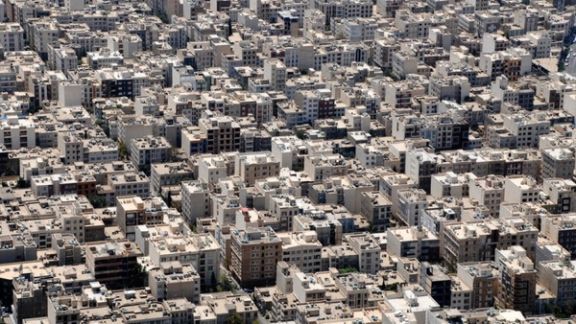
Rents in Iran have surged by 60% over the past year, with 12 provinces experiencing increases exceeding 70%.
Rents in Iran have surged by 60% over the past year, with 12 provinces experiencing increases exceeding 70%.
The figures were released by the Eco Iran website, citing statistics from the government-run Statistical Center of Iran for the Iranian year up until March 2023.
In the previous year, 20 provinces, equivalent to 64.5% of Iran's provinces, witnessed rent growth rates surpassing the national average. The report also highlighted that rent inflation in Tehran province exceeded 52%, resulting in the average monthly household rental cost in Tehran province rising from $105 in 2021 to $160.
Additionally, data from the Statistical Center of Iran indicates that the average expenses for housing, water, sewage, fuel, and electricity surged by nearly 60% during the same period.
For around one year, both the Statistical Center and the Central Bank have ceased publishing regular reports on developments in the housing market, drawing criticism from economic experts and the construction and real estate sectors.
Recently, officials from the Ministry of Roads and Urban Development have prioritized restricting property buying, selling, and renting platforms with real estate consultants and property transaction platforms having been accused of contributing to price hikes.
The situation coincides with a report from the Donya-e-Eqtesad newspaper, indicating that the nationwide growth in rent prices from March to September 2023 has reached its highest level in 12 years, surging to 38.5%.
Reports from mid-2022 previously highlighted a staggering increase of over 300% in Tehran's rental prices within a three-year timeframe. Additionally, statistics released in December 2021, around six months after Ebrahim Raisi assumed the presidency, revealed that food and housing costs had surged by 300% to 740% over the preceding six years.
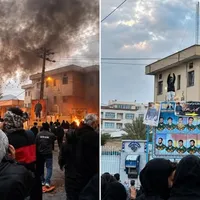
Iran saw the most significant decline in internet freedom in 2023, as authorities attempted to suppress protests associated with the Woman, Life, Freedom movement.
The latest Freedom House report specifically highlights Iran's sharp decrease in scores among the assessed countries, mainly due to the authorities' harsh and disproportionate response to nationwide protests that erupted after the death of Mahsa Amini while in custody in September last year.
The crackdown included the arrest of numerous protesters, particularly women who used social media to voice their opposition to the government's discriminatory hijab policies. Additionally, the government imposed restrictions on internet services, blocked platforms like WhatsApp and Instagram, and expanded its surveillance measures.
The Middle East in general continued to experience limitations on internet freedom in 2023, as indicated in the latest report titled Freedom on the Net 2023: The Repressive Power of Artificial Intelligence.
Notably, none of the seven Middle Eastern countries evaluated received a "Free" rating. Lebanon, Jordan, and Iraq were classified as "Partly Free," while the remaining four – the United Arab Emirates, Bahrain, Saudi Arabia, and Iran – were categorized as "Not Free."
Among these, Iran had the lowest overall score in the region, with 11, and experienced the most substantial decline with a decrease of -5 on Freedom on the Net's 100-point scale.
Freedom on the Net is an annual assessment of human rights in the digital realm. The project examines internet freedom in 70 countries, covering nearly 89 percent of the world's internet users.
Due to Iran's raging inflation and stagnant economy, the minimum wage has fallen so far behind that tens of million have joined the ranks of “the working poor.”
Etemad, a prominent reformist daily in Iran, published an article on Wednesday, highlighting the alarming growth of poverty affecting workers whose incomes have fallen below the poverty line. The paper reported that workers' wages now only cover approximately 60 percent of their monthly household expenses.
There are different figures for the 'poverty line in Iran'. By one definition, it is a level of income that covers the minimum essential needs of a household, and incomes below the line are referred to as "absolute poverty”. According to Mohammad Bagheri-Banai, a lawmaker and member of the parliament’s economic committee, the poverty line for residents of Tehran, is around 300,000,000 rials (approx. $600) per month, which is three times as much as the minimum wage in Iran.
According to a report published by ILNA website in January, one-third of the country’s population is now living in extreme poverty, with the number almost doubling from 2020 to 2021. However, it is believed that the real number could be far higher. According to official figures released by Interior Ministry, around 60 percent of Iranians live under the relative poverty line.
Currently the official annual inflation rate is just below 50 percent – the highest rate in Iran for more than 30 years -- but prices for foodstuff are most affected, with cooking oil rising by more than three times the annual inflation at 145 percent, and the price of meat also rising by 78 percent over a one-year period (point-to-point).
The key factor to lower inflation and boost incomes is economic growth. Despite various claims by the government, the growth rate has been nearly null over for over a decade. In January, the World Bank projected Iran to have a 1.9-percent GDP growth, but the figure, even if true, comes on the back of two years of deep recession in 2019-2020.
The current downturn in the country’s economy proves that Iran’s economic growth – even if it exists – has not led to job creation, Etemad said, claiming that employment generation was "low-quality".
This comes as Iran's seventh development plan, set to be implemented next year, addresses employment in just one article, which surprisingly focuses solely on home-based businesses and small enterprises. The seventh development plan is supposed to provide a roadmap for the country's economic and social future. However, according to Etemad’s assessments, there is little hope for significant improvements in employment generation.
In addition to the mounting crisis of the working poor, the daily claimed that in the past five years more and more people have become discouraged in their job hunting and are no longer actively seeking employment.
According to Article 41 of the Labor Law, the Supreme Labor Council is mandated to determine the minimum wage for workers each year. However, the government is not obligated to set wages according to the figures announced by the council. It increases wages according to its own interests. The discrepancy has caused widespread labor protests during the past several years.
On the other hand, increasing the minimum wage raises the overall cost for businesses, leading to workforce layoffs or a reluctance to hire new employees.
Incomes in Iran began to lag behind inflation after the establishment of the Islamic Republic in 1979, but salaries were increasing from 2000-2010 when monthly minimum wage hit a high of about $275 in 2010. This coincided with the time when the United Nations Security Council began imposing sanctions to force Tehran to roll back its nuclear program. The rial lost half of its value since last year and the minimum wage, without housing allowance, has dropped to around $120 a month.
A Kuwaiti official has said that plans are in place to start production at a Persian Gulf gas and oil field in the coming years, which is also claimed by Iran.
The Durra gas field off the coast of Kwait, Saudi Arabia and Iran is expected to be fully commissioned by 2029, a deputy managing director of Kuwait Petroleum said on Wednesday.
A Kuwaiti-Saudi Arabian development agreement signed last year has been criticized by Iran, which claims a stake in the field. Durra holds an estimated 20 trillion cubic feet in proven reserves.
Called Arash in Iran and Durra or Dorra by Saudi Arabia and Kuwait -- the offshore field was discovered in 1967 and is estimated to have a total proven reserves of around 310 million barrels of oil in addition to the large gas reserves.
Saudi Arabia and Kuwait began making bold remarks about the energy reserve field earlier this year, demanding that Iran should demarcate its maritime borders in the region.
In July, Kuwait’s oil minister Saad Al Barrak stated, “This is an exclusive right of Kuwait and Saudi Arabia in the Durra field, and whoever has a claim must start demarcating the borders. And if it has a right, it will take it according to the rules of international law," and added that "The other side (Iran) has claims that are not based on a clear demarcation of the maritime borders.”
Iran’s oil minister Javad Owji responded July 30th that “If there is no willingness to cooperate, Iran will pursue its rights and benefits, including the exploitation and exploration of the Arash gas field, and will not tolerate any violation of its rights.”
Authorities have pressured a 16-year-old girl’s family and friends to deny the role of hijab patrols in an incident Sunday that led to her falling into a coma.
A source close to the family of Armita Geravand informed Iran international that the art student’s parents were summoned to an intelligence agency after their daughter was taken to a nearby hospital, where she is currently in the intensive care unit (ICU).
According to the source which requested anonymity, Armita’s parents faced pressure and threats to publicly declare that their daughter had sustained a head injury when she fainted, while denying reports that hijab patrols pushed her after an argument over covering her hair causing her to hit her head against a metal bar.
On Tuesday, state media aired brief interviews with the young girl’s parents at the hospital, alongside short footage depicting her and her two friends entering the car and then her unconscious body being carried out by the friends who lay her on the platform.
During the interview, Armita's distraught mother, struggling to speak, stated that she was informed her daughter had fainted in the metro car and hit her head on something.
State media's official narrative is that the young girl fainted due to not having eaten breakfast.
Reports on social media suggest that security forces are taking strong measures to keep people and reporters away from the hospital, including canceling visiting hours for other patients in the ICU ward.
According to Hengaw Organization for Human Rights, a Kurdish rights group that published a photo of the comatose Armita in the intensive care unit at Fajr military hospital, security forces have also confiscated the mobile phones of Armita’s family members to prevent photos and videos from reaching the media.
Sources who initially brought attention to the young girl's head injury and hospitalization on Monday claim that hijab patrols shoved her, apparently following an argument, because she had not covered her hair.
The source who spoke to Iran International also mentioned that the young girl's two friends, who were seen entering the metro car with her and later dragging their unconscious friend onto the platform, were detained for five hours and have also faced pressure to support and repeat the security forces' account of the incident.
Several hours after the incident, the reporter Maryam Lotfi from the reformist Shargh daily was detained by security forces while interviewing Armita’s mother at the hospital. Lotfi was released after a few hours. Neither Lotfi nor her newspaper have made any further comments about her detention.
The incident has caused serious concerns among Iranians and internationally. The German Foreign Minister, Annalena Baerbock, expressed her outrage over the incident in a tweet Wednesday. She stated that the young girl’s parents should have had the right to be at their daughter’s bedside, rather than in front of state media cameras.
Armita’s parents have reportedly been allowed to see her only a few times from behind windows.
Some pundits and social media users have raised suspicions about the reported incident and warned that the regime may have carefully orchestrated it to discredit the opposition and independent media. They suggest that the regime could reveal footage or documents at a later stage as proof of their account of the incident against the opposition and independent media's version.
Expatriate journalist Sheragim Zand said in a tweet that the possibility of a psychological warfare attempt by the regime should not lead to the silence of the opposition in Armita’s case despite certain ambiguities. Zand argued that the regime's perceived plan would be limited to this specific incident, even if such a plan exists. In that case, it would only provide further evidence that the regime resorts to every form of deceit against the opposition.
A new report by the World Bank has put Iran among the worst countries in the world in terms of Worldwide Governance Indicators.
The international financial institution collected data from over 30 think tanks, international organizations, non-governmental organizations, and private firms worldwide to encompass a wide range of perspectives on governance. However, in Iran's secretive regime, even its latest ranking, though low, begs questions as to the accuracy of the data provided, scoring suspiciously in areas such as rule of law.
Governance, defined as the traditions and institutions through which authority in a country is exercised, encompasses aspects such as the process of government selection, monitoring, and replacement, the government's ability to formulate and implement effective policies and the level of respect shown by citizens and the state towards the institutions that oversee economic and social interactions among them.
The Worldwide Governance Indicators (WGI) feature six aggregate governance indicators for over 200 countries and territories from 1996 to 2022: Voice and Accountability, Political Stability and Absence of Violence/Terrorism, Government Effectiveness, Regulatory Quality, Rule of Law, and Control of Corruption. The composite measures of governance are on a standard normal distribution scale, ranging from approximately -2.5 to 2.5, with higher values corresponding to better governance.
In none of the categories did the Islamic Republic regime even come close to zero, which represents the mean or average of the dataset.
The Voice and Accountability index measures the extent to which a country's citizens can participate in selecting their government, as well as the freedom of expression, freedom of association, and a free media. In 2022, Iran scored -1.45, placing the Islamic Republic among the lowest on the list. Since last year's uprising alone, hundreds of journalists have been imprisoned, and Iranian journalists abroad harassed and threatened, including Iran International journalists in London, who were temporarily forced to relocate to Washington.
The Political Stability and Absence of Violence/Terrorism index assesses the likelihood of political instability and/or politically motivated violence, including terrorism. In this category, Iran scored -1.59 in 2022. In addition to its being home to the Islamic Revolutionary Guards Corp, Iran has militia proxies across the region from Syria and Lebanon to Yemen and Iraq.
Having extremely limited freedom of expression and the media, Iran holds one of the world's worst track records for human rights violations, with numerous international bodies and activists calling for the regime's accountability. Tehran does not allow UN rapporteurs to enter and dismisses reports by the United Nations or any other organization seeking to hold it responsible for its heavy-handed crackdown on dissent. Since last year's uprising, thousands of dissidents including stars of sport and entertainment, have been subject to brutal punishments ranging from imprisonment to travel bans and bank account freezes.
The country witnessed its biggest uprising against the ruling power in 2022 when protests erupted nationwide following the death of Mahsa Amini in morality police custody last September. The Iranian government temporarily relaxed its strict enforcement of hijab rules, with more women appearing in public wearing ordinary attire. However, since March, hardliners have intensified their rhetoric and actions to suppress women's defiance of hijab and regain lost ground. According to UN experts, the new measures amount to “gender apartheid.”
Iran scored -0.88 in government effectiveness, which reflects perceptions of the quality of public services, the quality of the civil service and its independence from political pressures, the quality of policy formulation and implementation, and the government's commitment to such policies.
Regulatory quality concerns the government's ability to formulate and implement sound policies and regulations that facilitate and promote private sector development. The Islamic Republic received a score of -1.59 in this category as well, placing it among the bottom 10 countries.
Ironically, in the Rule of Law index, Iran received a score of -1.02, which measures the extent of confidence in societal rules, including contract enforcement, property rights, the police, and the courts, as well as the likelihood of crime and violence. Surprisingly high, this is in spite of brutal crackdowns including mass arrests of journalists and academics, state-sanctioned violence against protesters, and widespread sexual abuse of women in the hands of security forces.
The Control of Corruption index evaluates the extent to which public power is exercised for private gain, and Iran received a score of -1.13. According to Transparency International, which measures Corruption Perceptions Index (CPI), Iran ranked 150 out of 180 countries in 2021, one stop lower than a year earlier.
Critics of President Ebrahim Raisi's administration point to his poor and nepotistic appointments as contributing factors to an ineffective and inefficient government, as well as systemic corruption.
Good governance is not limited to affluent nations. In fact, more than a dozen developing and emerging countries, including Slovenia, Chile, Botswana, Estonia, Uruguay, Czech Republic, Hungary, Latvia, Lithuania, Mauritius, and Costa Rica, achieve governance scores that surpass those of industrialized countries like Italy or Greece.


