• العربية
  • فارسی
Brand
  • Iran Insight
  • Politics
  • Economy
  • Analysis
  • Special Report
  • Opinion
  • Podcast
  • Iran Insight
  • Politics
  • Economy
  • Analysis
  • Special Report
  • Opinion
  • Podcast
  • Theme
  • Language
    • العربية
    • فارسی
  • Iran Insight
  • Politics
  • Economy
  • Analysis
  • Special Report
  • Opinion
  • Podcast
All rights reserved for Volant Media UK Limited
volant media logo

Nighttime Protests Resume In Iran After Lull

Iran International Newsroom
May 2, 2023, 15:06 GMT+1Updated: 17:56 GMT+1
File photo of "women, Life, Liberty" protests in Tehran

Night time protests were back in Iran on Monday night after weeks of calm.

Coinciding with international labor day, action was seen in several neighborhoods of the Iranian capital Tehran as well as the nearby city of Karaj and the central city of Esfahan (Isfahan).

Street protests -- which were held almost daily for a couple of months after the death of 22-year-old Mahsa Amini in police custody had dwindled in recent weeks after months of protests which saw more than 500 civilians killed and around 20,000 arrested.

Protesting against poor wages and inhumane working conditions, rallies saw thousands of workers gather. More than 100 oil, gas, petrochemical and other plants across the country have been staging strikes since April 22. The regime simultaneously stepped up arrests and indictment of union activists around the industrial action.

In Esfahan, protesters chanted slogans in support of workers and political prisoners with social media videos showing people expressing support for Tomaj Salehi, a rapper who has been detained since the early days of the current wave of protests. "We have come again, the uprising continues" and "The rule of turbans is over," they chanted.

In videos that surfaced on social media from the Monday night protests, dozens of women cast off their headscarves, with captions in which people made fun of the country’s head of police, who keeps warning hijab rebels that the protests would be over soon and those who unveil will continue to be prosecuted.

Since 22-year-old Mahsa Amini was beaten to death by hijab enforcers in September sparking a nationwide revolt, the simple act of unveiling in public has become a common occurrence across Iran, and a thorn in the side of the regime hardliners who are pushing for stricter measures.

Supreme Leader Ali Khamenei’s assertion Tuesday that flouting hijab is “religiously and politically haram” has prompted officials to signal harsher crackdown on those who unveil in public.

Following Khamenei’s cue, the ministry of interior in its second statement on hijab within a week, alleged that the opposition to compulsory hijab was an enemy plot advanced by foreign intelligence services and the opposition outside Iran, who through social media are trying to use it to “create deep social divides and a divide between the people and the government.”

The unrest since Amini’s killing by the police has made it increasingly difficult to enforce the mandatory Islamic dress code which has become a symbol of opposition against clerical rule.
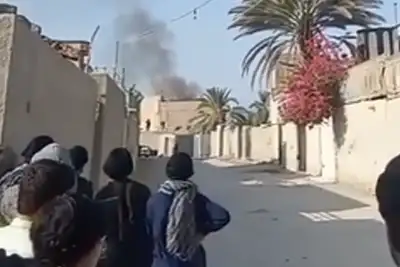
Women unveiling in public in Tehran (fle photo)
100%
Women unveiling in public in Tehran

Most Viewed

Iran negotiators ordered to return after internal rift over Islamabad talks
1
EXCLUSIVE

Iran negotiators ordered to return after internal rift over Islamabad talks

2
ANALYSIS

US blockade enters murky phase as tankers spoof signals and buyers hesitate

3
ANALYSIS

Why the $100 billion Hormuz toll revenue is a myth

4

US tightens financial squeeze on Iran, warns banks over oil money flows

5
ANALYSIS

US blockade targets Iran oil boom amid regional disruption

Banner
Banner

Spotlight

  • Hardliners push Hormuz ‘red line’ as US blockade tests Iran’s leverage
    INSIGHT

    Hardliners push Hormuz ‘red line’ as US blockade tests Iran’s leverage

  • Ideology may be fading in Iran, but not in Kashmir's ‘Mini Iran'
    INSIGHT

    Ideology may be fading in Iran, but not in Kashmir's ‘Mini Iran'

  • War damage amounts to $3,000 per Iranian, with blockade set to add to losses
    INSIGHT

    War damage amounts to $3,000 per Iranian, with blockade set to add to losses

  • Why the $100 billion Hormuz toll revenue is a myth
    ANALYSIS

    Why the $100 billion Hormuz toll revenue is a myth

  • US blockade targets Iran oil boom amid regional disruption
    ANALYSIS

    US blockade targets Iran oil boom amid regional disruption

  • Iran's digital economy battered by prolonged blackout
    INSIGHT

    Iran's digital economy battered by prolonged blackout

Tweet unavailable

•
•
•

More Stories

Tehran Metro Turns Into Hijab Battleground

May 1, 2023, 23:41 GMT+1
•
Maryam Sinaiee

The use of “jihadi groups” to enforce hijab rules has turned the capital’s metro stations into a battleground with women who are refusing to wear the hijab. 

Videos circulating on social media show black veiled women warning female passengers over hijab and plainclothesmen and uniformed agents standing at the ticket gates preventing the women who ignore the warnings from passing through the ticket gates. 

Tehran’s mayor, Alireza Zakani said at a city council meeting Sunday that the municipality has formed a special uniformed security unit to stop unveiled women from passing through the ticket gates. 

“We will proceed according to the country’s laws in this regard. Our first step is issuing notices, then we issue warnings to the unveiled [women], and in the third stage we prevent them from entering the metro stations,” Zakani said. 

Hijab enforcement at Tehran metro. 

Social media users say arguments break out very frequently between hijab defying women and their companions with hijab enforcers. The battle continues even after women pass through the ticket gates and onboard the train where arguments often break out between vigilantes and hijab enforcers with women who remove the veil after passing the checkpoint. 

As a last measure, Tehran municipality has installed screens between the metro cars allocated to women and other cars that can be used by men or both genders. Zakani claimed that installing such screens started in Tehran and “is now being copied by other countries,” without mentioning which countries have done so.

The main reason for installing screen barriers is preventing men from entering the cars allocated to women and harassing them,” Mayor Zakani claimed. 

The CEO of Tehran Metro, Masoud Dorosti, said the installation of the screens had started in early March and such screens would be installed in all metro trains within the next few weeks. 

Dorosti claimed that the screens, which he called “retaining doors”, were installed by popular demand and have been welcomed. 

Referring to the installation of the screens in an article entitled “Living the Magic Realism” Monday, Mehdi Afrouzmanesh, deputy editor of the reformist Ham Mihan newspaper, said it is unbelievable that the authorities have resorted to such measures. Installing screens between metro cars and other things that happen in Iran are like Gabriel Garcia Marquez’s surrealistic stories in which things that are hard to believe but not impossible happen, he wrote. 

As another example of such unbelievable happenings, he mentioned the declaration of President Ebrahim Raisi’s deputy in women’s affairs, Ensieh Khazali, “who, as the person in charge of improving the quality of women’s life, said proudly that she married when she was sixteen.”

Woman playing a song on harmonica at a Tehran metro station unveiled as an act of protest. 

In the past few weeks authorities have sealed thousands of businesses including restaurants, cafes, tourist accommodations, retail shops and even a counselling clinic and a gym -- in Tehran and other cities for women’s refusal to wear the compulsory hijab. 

Several shops in Opal mall, a massive modern shopping center with over 450 businesses in Tehran, which was shut down last week were sealed again Sunday immediately after the mall’s re-opening. According to the reformist Shargh daily, the closure of the mall had resulted in the loss of around 2,500 jobs. 

The recent campaign to enforce hijab rules has caused some violent incidents involving pro-hijab vigilantes and women who defy it. A 60-year-old woman had a cardiac arrest this week when a fight broke out between vigilantes and members of her family over hijab.


Exiled Prince Speaks Of A Vision For A Secular, Democratic Iran

May 1, 2023, 19:43 GMT+1
•
Iran International Newsroom

Iran’s exiled Prince Reza Pahlavi delivered a speech to over 500 members from one of the leading US anti-hate NGOs, speaking of a democratic, secular Iran.

At one of the world’s leading organizations specializing in civil rights law, Pahlavi made the powerful address in Washington, slamming the regime's campaign of oppressing women and minorities.

Pahlavi, a viable alternative to the regime in the eyes of the Iranian people, spoke of the current women led movement to topple the regime. “Iranian women quickly became the foremost target of the revolutionaries and their new government. They were publicly beaten, harassed, and segregated from the early days of the revolution,” he said, underlining that for four decades women have been systematically disenfranchised by the regime.

He cited that “most notably [women are] legally considered to be worth half of a man” according to the Islamic Republic’s interpretation of Islamic law or sharia, and spoke of the regime’s campaign of bigotry against its minorities.

While he acknowledged the deep anti-semitism and holocaust denial intrinsic to the regime, the hatred does not stop with the Jewish people, Pahlavi also referring to the Islamic Republic’s campaign of bigotry against religious minorities including members of the Baha’i faith as well as Sunni Muslims, who constitute about 10 percent of Iran’s 88 million population.

“Members of the Baha'i faith are punished for their religious beliefs, face government-mandated discrimination in schools and workplaces, and experience property confiscation and desecration of their cemeteries. Sunni Muslims were denied the right to worship in their own mosques. Christians were forced into secretive house churches.”

He also referred to his recent trip to Israel, in which he met with Prime Minister Benjamin Netanyahu among other leading figures and community members. He said: “I visited Israel to stand up against the Islamic Republic's antisemitism, and to stand in solidarity with victims of the Holocaust in the face of the regime's Holocaust denial.”

“I went to mourn with the victims of the regime-sponsored terrorism, but I also went to Israel to stand up for my people, so that there will be no further victims of hate and bigotry,” he added.

He called the historic trip “a new vision for our region, a vision that is not bogged down in the forced ideological divisions of recent decades but instead based on ancient ways of our lands and connections between our people”.

Peace in the region will only be sustainable when a secular democratic Iran joins its ranks, he said.

At the event, marking the 75th anniversary since the founding of the State of Israel, Israel's President Isaac Herzog delivered a virtual message to the attendees about the threats posed by the Islamic Republic to Israel and other countries of the region.

ADL Director Jonathan Greenblatt -- who served as a special assistant to former president Barack Obama and director of the White House Office of Social Innovation and Civic Participation -- spoke of his sympathy for the Iranian people who are suffering from “brutality and oppression of the Islamic regime”.

ADL Director Jonathan Greenblatt (April 30, 2023)
100%
ADL Director Jonathan Greenblatt

He went on to speak of Iran’s destabilizing influence across the Middle East and beyond through its proxies. "It is an extremist regime with an ideology as dangerous as Al-Qaeda, because it is unwilling to reconcile societies,” he said. “Indeed, Iran is the leading state sponsor of terror around the world and a country whose number one export is antisemitism.”

Greenblatt hailed Pahlavi, seen by many as a legitimate alternative to the regime, a “catalyst for a free, democratic, and secular Iran; one at peace with its own people, at peace with Israel, and at peace with the world”.

Earlier in the day, Pahlavi slammed a letter by 32 Knesset members to Israeli Foreign Minister Eli Cohen, threatening Iran's territorial integrity. Describing the letter as “completely unacceptable and a service to the interests of the anti-Iranian Islamic Republic regime,” he called it “in total conflict with the positions communicated to me by Israeli leaders and senior government officials.”


Iran Regime Summons Tens Of Labor Activists Ahead Of May Day

May 1, 2023, 12:59 GMT+1

At least 50 labor activists in Tehran, Kordestan and Gilan provinces have been summoned on the eve of International Workers Day.

Pressure increased on teacher and worker union activists ahead of International Workers Day, but rallies took place in Tehran and other cities mostly by retired workers.

Security agents have warned labor activists they are forbidden from attending May Day gatherings on Monday.

The Free Union of Iranian Workers announced that two members of its board of directors, were threatened and interrogated by intelligence agencies.

According to Hengaw Kurdish-Iranian human rights monitoring group, at least eight other labor activists have been summoned in the Western Kurdish city of Sanandaj.

The summons issued while calls for holding a rally to commemorate May Day have been published by the labor activists.

Meanwhile, the Writers' Association of Iran has called for the unconditional release of all labor activists, including Keyvan Mohtadi and other political prisoners.

The Council of Retirees of Iran also published a statement to slam the economic policies of the regime which have “destroyed the life of workers”.

On the eve of the international day of protests, the Central Council of Iran's National Front released a statement claiming “Iranian workers are increasingly under economic pressures facing the most severe livelihood problems”.

On Sunday, a group of 15 trade unions and civil rights groups issued a statement on the eve of International Workers' Day to voice support for the ongoing protests and strikes in Iran.

Unions, Rights Groups Voice Support For Iran’s Strikes

Apr 30, 2023, 21:59 GMT+1
•
Iran International Newsroom

A group of 15 trade unions and civil rights groups issued a statement on the eve of International Workers' Day to voice support for the ongoing protests and strikes in Iran.

The Sunday statement issued on the occasion of May Day underlined that the Islamic Republic "neither deserves to survive nor it is capable of surviving.”

Decrying the “bloody crackdown” by the regime during the current wave of protests ignited by the death in custody of Mahsa Amini, the statement said that people from all walks of life including "teachers, workers, filmmakers, artists, and civil and political activists” are against the Islamic Republic.

They noted that the "revolutionary” uprising of the Iranian people is “still alive and moving" forward and no day passes without rallies and acts of protests calling for change.

Referring to the sexual discrimination against women in Iran and the chemical attacks on schoolgirls, they said "Women are deprived of their most basic human rights."

The civil rights groups and labor unions also said the regime "is not able to control rising prices and inflation even for a single week and has plunged a community of 90 million people into poverty and misery in a rich country."

Logos of unions and groups issuing a statement in support of Iran's strikes and protests (file photo)
100%
Logos of unions and groups issuing a statement in support of Iran's strikes and protests

The Council for Organizing Oil Contract-Workers' Protests, which has been one of the main organizers of the current wave of strikes, and workers of the Haft-Tappeh Sugarcane complex – who recently snubbed President Ebrahim Raisi -- were among the signatories of the statement.

The statement came as workers in more than 100 oil, gas, petrochemical and other plants across the country have been staging strikes since April 22, protesting poor working conditions, low wages and rising cost of living. Almost all the striking workers in oil, gas, steel, petrochemicals and other industries, are not officially hired by the country’s oil company or relevant ministries and are working on temporary contracts, risking their only means of livelihood by joining the strikes.

Authorities claim that the strikes are being organized by anti-regime groups, a charge the Islamic Republic often makes to de-legitimize the demands of the workers who earn less than $200 a month. An official at South Pars gas field on the Persian Gulf stated that 4,000 protesting workers will be replaced by new ones.

Earlier in the day, three prominent Iranian labor activists condemned the recent detention of workers calling it "organized brutality" by the regime.

More than 1,600 labor rallies and strikes have been held in the past year across Iran. The Islamic Republic’s security and judiciary apparatus have summoned, arrested and imprisoned dozens of labor activists to stifle dissent.

In their Labor Day statement, the signatories also called for "immediate and unconditional release of all political prisoners,” and also cautioned the authorities against “criminalization of political, trade union, and civil actions."

In recent years, as the Iranian National Oil Company has ceded many operations to quasi-private companies, most of the work is done by temporary contract workers with little pay and no benefits.

The so-called private companies are controlled by military or other state entities, or by well-connected regime insiders who quash labor demands by using government security forces.

More Shops Sealed In Iran Over Hijab Rule

Apr 30, 2023, 20:32 GMT+1

Several more stores have been sealed in Tehran and other cities over female customers' refusal to wear the government's mandatory hijab.

Meanwhile, the reopening of Opal shopping mall, a major shopping center in northern Tehran has angered some supporters of the regime.

IRGC-affiliated Fars News Agency reported on Sunday that at least 13 cafes and restaurants in Tehran were sealed in connection with removing of mandatory hijab by customers or staff.

In another development, Iranian media reported that some stores in Opal shopping mall have been sealed again after reopening on Sunday.

The shops had offered discounts to clients who come in person without veils.

However, the owners denied publishing the offers on social media and apologized.

Iranian regime has closed at least 2,000 businesses since late March for women’s refusal to wear compulsory hijab, with tens of thousands of employees losing their jobs.

Hardliner media reported April 25 that some businesses, mainly restaurants and cafes, owned by celebrity artists and popular footballers have been shut down or received warnings over defiance of hijab rules by their staff and customers.

Authorities also announced on the same day that they had shut down Opal Mall, a massive modern shopping center with over 450 businesses in Tehran. Shargh said the closure of the mall alone affected around 2,500 jobs.

The recent campaign to enforce hijab rules has caused some violent incidents involving pro-hijab vigilantes and women who defy it. A 60-year-old woman had a cardiac arrest this week when a fight broke out between vigilantes and members of her family over hijab.