Chinese Are No Longer Willing To Work On Iran Oil Projects

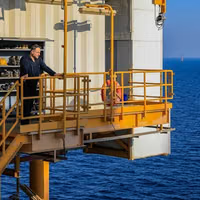
Iran has decided to develop its unfinished oil projects as Chinese companies are unwilling to continue joint plans, Iran’s oil ministry website reported Tuesday.
Iran has decided to develop its unfinished oil projects as Chinese companies are unwilling to continue joint plans, Iran’s oil ministry website reported Tuesday.
SHANA, the oil ministry’s news service quoted the director of Yadavarn Development Plan in southwest Iran as saying that “the development of the Yadavaran joint oilfield is expected to resume [by Iranian experts] in the next Iranian year (March 2023-24) with a credit line of $400 million.”
Mojtaba Moradi, an official, told SHANA that “the project seeks to increase the production capacity of the field by 42,000 barrels per day.”
“After about a six-year hiatus in development activities, the implementation of the project to increase the field’s output will begin,” he underlined.
“The development project will be carried out by Iranian experts and engineers, using domestically made parts and equipment,” he noted.
The development comes as President Ebrahim Raisi in is Beijing this week on an official visit discussing the implementation of a 25-year cooperation pact signed in 2021 as a general outline, but details have not been worked out.
However, according to moderate news website Rouydad 24, Moradi did not mention why the project is now being carried out by Iranian experts.
The Yadavaran hydrocarbon deposit shared with Iraq is located 70 kilometers west of the city of Ahvaz in Khuzestan Province near the Iraqi border.
Based on studies, the field's crude reserve is more than 34 billion barrels. The reserve's recovery rate for light and heavy crude oil stands at 15% and 7% respectively. Around 83,000 barrels of Yadavaran production are a blend of light crude and the rest is heavy crude.
Rouydad 24 quoted informed sources as saying that after the unofficial withdrawal of the Chinese company Sinopec, the National Iranian Oil Company has decided to continue the development of this field on its own.
“It is quite clear that the National Iranian Oil Company has reached a dead end in the negotiations with the Chinese and now decided to implement the second phase itself,” added Rouydad 24.
The Chinese have not yet reacted to the announcement, but according to the contract signed by the Ahmadinejad administration with Sinopec in 2007, the Chinese company developed the first phase, and the second phase was also supposed to be carried out by the same company. Sinopec started negotiations for the second phase in 2016, but so far there has been no result.
According to the deal Sinopec had a 51-percent share in the oil field, but it appears Beijing has been wary of violating US sanctions on Iranian oil exports, although it buys illicit shipments of crude from Iran.
The Chinese have said that the imposition of US sanctions against Iran in 2018 has hampered the process and that they should wait.
“When the Raisi administration took power, they were optimistic that the Chinese would invest in this field, but Beijing, for the time being, has no intention of investing there,” stressed Rouydad 24.
“In the past two years, the Chinese have increased their investment in countries like Saudi Arabia, the UAE, Kuwait, Iraq, and even Afghanistan, and have removed Iran from list of their priorities for the time being,” Rouydad 24 went on to say.