UN Rapporteur Wants Prosecutions Over Iran Human Rights

In an Iran International interview Javaid Rehman has outlined his plans for a UN probe into an “unprecedented level of violence and state brutality in Iran.”
In an Iran International interview Javaid Rehman has outlined his plans for a UN probe into an “unprecedented level of violence and state brutality in Iran.”
Rehman, the United Nations Special Rapporteur on Human Rights in Iran, said the “independent and international” fact-finding mission established by a UN Human Rights Council vote November 24 would focus on Iran’s high number of executions, including drug offenders, “the killing of children and ethnic minorities,” and establishing accountability of individuals.
Rahman said 21 people involved in protests had been indicted on crimes carrying the death sentence, and at least “15,000 protestors arrested.” He applauded the Human Rights Council for “listening to the Iranian people,” and explained that he would be working very closely with the investigation given his “expertise and knowledge.” Rehman, a Pakistani-British legal scholar based in London, has been special rapporteur since 2018 but, unlike a UN special rapporteur on the human-rights consequences of sanctions, has not been allowed to visit Iran.
The UN mission, which reportedly will have a $3.67 million budget and 15 staff, would collect and preserve evidence for future prosecutions, dismissing “mis-information” and using the experience of members, Rahman said. He envisaged a detailed report by February-March 2024 for the council’s 55th session.
Accountability for human rights violations would come, he told Iran International, through “future legal proceedings” in international courts and through cases in national courts on the principle of universal jurisdiction. “These individuals better be careful because we are going to hold them accountable in courts of law,” he said.
National courts have been generally reluctant to apply universal jurisdiction, with the United States among those world powers most resistant to the principle. In recent instances a Swedish court in July sentenced to life imprisonment Hamid Nouri, a former Iranian official, over 1988 prison executions, and in January a German court jailed for life Anwar Raslan, a former Syrian intelligence office, for murder and rape of prisoners in Damascus. Rahman did not explain any potential role of the International Criminal Court, which has generally indicted Africans and which the US has refused to join, insisting for example it has no jurisdiction over US troops in Afghanistan.
‘Key principles’
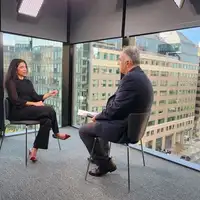
In his interview with Iran International’s TV correspondent and host Sima Sabet, Rehman criticized the Iranian constitution, which he said “violates democratic norms, violates key principles of constitutionalism,” including a lack of separation of powers. He called the judiciary’s role “problematic” and said one of his “big concerns” was women being excluded from “serious political positions.”
Looking ahead to the work of the UN mission, the special rapporteur welcomed submissions from victims of violence, and also from journalists and their families receiving threats “in the UK, European and north American countries.”
“That is what the Islamic Republic is all about,” Rehman said. “It wants fear to be spread…The Islamic Republic of Iran wants a complete blackout of the news.” Rehman encouraged Iran International to “continue your excellent work.” He noted that in contacts with Iranian officials, they had accused him of “talking to terrorists” and “not being objective.”