Erdogan's Saudi Visit Signals Isolation For Iran - Analyst

Iran is facing an uphill battle in its foreign relations, an analyst has said in Tehran in the wake of Turkish President Recep Erdogan’s visit to Saudi Arabia.
Iran is facing an uphill battle in its foreign relations, an analyst has said in Tehran in the wake of Turkish President Recep Erdogan’s visit to Saudi Arabia.
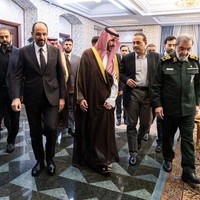
In a shift in its regional policy, Erdogan this week visited Saudi Arabia, while having delayed a similar visit to Iran. Abdolreza Farajirad, a professor of international relations in Tehran told ILNA news website that Erdogan is signalling his preference to strengthen ties with Riyadh amid his country’s economic crisis.
Iran is under United States’ sanctions, he said, and Erdogan needs economic partners.
Turkey and Saudi Arabia have a common will to "reactivate a great economic potential" between the two countries, Erdogan said on Saturday, after his first trip to the kingdom since 2017.
Speaking to reporters on a flight back from Saudi Arabia, where he sought to mend frayed ties, Erdogan said the sides were determined to accelerate efforts for the common interests and stability of the region, Turkish media reported.
"We agreed with Saudi Arabia to reactivate a great economic potential through organizations that will bring our investors together," Erdogan said.
Farajirad said that Erdogan is acting according to Turkey’s national interests. US sanctions have reduced Turkish-Iranian commerce and what Ankara needs is investments and trade. He pointed out that Erdogan’s outreach began with the United Arab Emirates and then Israel, culminating with his trip to Saudi Arabia.
Over his long tenure, Erdogan has shown that he is capable of shifting his foreign policy direction to address Turkey’s needs, Farajirad said emphasizing the importance of pursuing national interests.
Although he could not openly criticize the Islamic Republic in Iran’s controlled media environment, the analyst was indirectly drawing a parallel between Turkish foreign policy and Iran’s ideological approach to foreign policy.
“This shows our foreign policy is at an impasse, although I don’t want to criticize the foreign ministry, but until there is no agreement in Vienna, the impasse will continue,” Farajirad argued.
After more than year of negotiations with world powers, particularly with the United States in Vienna, Iran has still not agreed to revive the 2015 nuclear agreement, JCPOA, demanding that its Revolutionary Guard (IRGC) be removed from a US list of terrorist organizations.
Washington, in return, maintains that the terrorist designation has nothing to do with the nuclear issue, and if Tehran wants non-nuclear sanctions to be removed it should be willing to discuss its destabilizing regional role.
So far, the Islamic Republic has remained defiant, emphasizing its opposition to Israel and Arab countries that have normalized ties with the Jewish state.
The IRGC continues to speak loudly and emphasize its ongoing support to militant groups in the region.
Farajirad argued that in the meantime, Riyadh’s foreign policy has become active again, taking positions which make it easier for other countries to draw closer to its positions. As a result, it has had successes in improving ties with Qatar and Turkey and also influence events in Lebanon and Pakistan, where the Muslim League has returned to power.
Erdogan, in turn, has found the moment opportune for trying to benefit from Saudi Arabia’s vast financial resources, especially at a time of high oil prices, “to benefit from trade with Saudi Arabia and investments by Riyadh.”