Iran Basij Chief Pledges Support To Its Social Media Soldiers

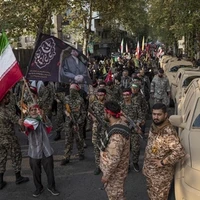
The general commanding Iran’s paramilitary Basij, said Thursday that his social media activists would be given equipment and technical support to boost their work.
The general commanding Iran’s paramilitary Basij, said Thursday that his social media activists would be given equipment and technical support to boost their work.
Brigadier General Gholamreza Soleimani was speaking to Defa Press, news agency of the armed forces, two days after he told the Basij Digital Content Creation event in Tehran that a “people's network in cyberspace…means that the Iranian nation has deployed technology in the battlefield.”
In September Soleimani said that an “era of hit-and-run in cyberspace" was over and that the Basij needed a more systematic approach.
Ali Fadavi, deputy commander of the Revolutionary Guards Corps, which supervises the Basji, in a speech Wednesday warned Basij members of that the Islamic Republic is under attack and cultural “war…happening inside our houses and in the mobile phones in our pockets and our hands.” He called on them to "enter the battlefield."
Organized trolling has been for some time a feature of Iranian politics, helping to spread untruths and unsubstantiated allegations. Iranian authorities, including Supreme Leader Ali Khamenei refer to state-sponsored social-media activists as "cadets of the soft war.”
Iranian activists often allege that the IRGC and other state bodies sponsor organized trolls on social media to anonymously threaten, attack and discredit dissidents and to disseminate fake news.
The Basij has around 5 million members, according to leading academic authority Saeed Golkar, with around 200,000 cadres and special Basij, who can act as a paramilitary support to police and security forces. Thousands of members are active on social media to counter news, information and critical opinions disseminated on social-media including by Persian-speaking media abroad.
Besides maintaining extensive network of social media activists, the Islamic Republic also devotes an unknown measure of resources to control the Internet, block thousands of websites and ban foreign social media platforms such as Facebook, You Tube and Twitter. Almost every Iranian has to resort to VPNs and other tools to have access to blocked sites.
A recent study published by the Media Quarterly in Iran shows that the daily readership of Iranian newspapers and the audience of state television have plummeted dramatically during the past two years due to various factors including the loss of public trust, censorship and greater popularity of online media and social media as a source of news and information.
The Telegram messaging application, for instance − which is blocked but accessed through VPNs and anti-filtering software − has over 49 million users in Iran with at least 150 channels having, over 1 million subscribers. Instagram, which is not blocked, has a similar number of users. Many Iranian politicians and their supporters, including former principlist president Mahmoud Ahmadinejad, as well as a range of activists, have popular channels on Telegram and Instagram accounts.