• العربية
  • فارسی
BrandBrand
  • Iran Insight
  • Politics
  • Economy
  • Analysis
  • Special Report
  • Opinion
  • Podcast
  • Live TV
  • Iran Insight
  • Politics
  • Economy
  • Analysis
  • Special Report
  • Opinion
  • Podcast
  • Live TV
  • Theme
  • Language
    • العربية
    • فارسی
  • Iran Insight
  • Politics
  • Economy
  • Analysis
  • Special Report
  • Opinion
  • Podcast
  • Live TV
All rights reserved for Volant Media UK Limited
volant media logo

Houthis claim five attacks on Saudi airports, energy facilities

Nov 28, 2026, 19:52 GMT+0

Yemen's Houthis said Saturday they had carried out five military operations against Saudi infrastructure over the past 48 hours, claiming strikes on Riyadh's main airport, radar installations, an oil refinery, a gas plant and power stations.

Houthi military spokesperson Yahya Saree said the group had directly hit King Khalid International Airport in Riyadh and disabled two radar installations in Abha and Khamis Mushait in southwestern Saudi Arabia.

He also claimed attacks on the Jizan refinery and the Hawiyah gas plant in Eastern Province had sparked major fires, while strikes on the al-Shuqaiq and Jizan power stations caused extensive damage.

The claims could not be independently verified.

Most Viewed

Trump deploys extra aircraft carrier, says Iran is making ‘big mistakes’
1

Trump deploys extra aircraft carrier, says Iran is making ‘big mistakes’

2
INSIGHT

Iraq shuts more border crossings with Iran under US pressure to seal land routes

3

Iran faces global condemnation over Kuwait attack that killed two Italians

4

Iran’s central bank chief admits economic squeeze is hurting families

5

A dark, cold office: Pezeshkian's austerity gesture backfires

Banner

Spotlight

  • Iran cries wolf over nuclear treaty withdrawal
    ANALYSIS

    Iran cries wolf over nuclear treaty withdrawal

  • Who flogs a singer? The ‘public decency’ case against Parastoo Ahmadi
    PODCAST

    Who flogs a singer? The ‘public decency’ case against Parastoo Ahmadi

  • A dark, cold office: Pezeshkian's austerity gesture backfires

    A dark, cold office: Pezeshkian's austerity gesture backfires

  • Iranian women break silence on a lifetime of violence
    VOICES FROM IRAN

    Iranian women break silence on a lifetime of violence

  • Too poor to marry, young Iranians are offered religious workarounds
    INSIGHT

    Too poor to marry, young Iranians are offered religious workarounds

Banner
Banner
Banner
Banner
Banner
Banner
•
•
•

More Stories

Iran's security chief builds parallel power structure outside cabinet

Nov 28, 2026, 19:16 GMT+0
100%
President Masoud Pezeshkian and Mohsen Rezaei attend a farewell ceremony for Iran's late Supreme Leader Ali Khamenei, July 3, 2026

Rezaei's appointments do not establish that the council has displaced the cabinet or acquired new constitutional powers. But they suggest that more of the government's work is being drawn into a security apparatus beyond the president's direct control.
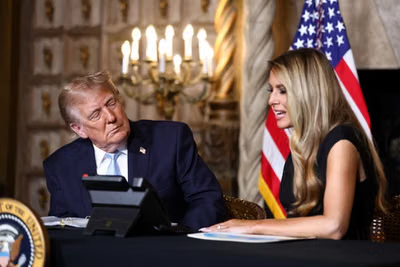
Iran's top national security official has appointed a group of conservative politicians and former officials to oversee economic, energy and infrastructure affairs, raising questions about the growing reach of the country's security establishment into areas traditionally managed by the elected government.

Mohsen Rezaei, secretary of the Supreme National Security Council (SNSC) and a former commander of the Revolutionary Guards, announced eight appointments to the council's secretariat, drawing heavily on officials who served under the late President Ebrahim Raisi.

The appointments extend across economic resilience, infrastructure, energy, food security, social affairs and relations with parliament, giving the secretariat a team whose responsibilities overlap with those of several government ministries.

The changes come as Iran faces a prolonged confrontation with the United States, a naval blockade that has severely restricted oil exports, and mounting pressure on its economy.

They also raise questions about how much authority President Masoud Pezeshkian and his cabinet retain as more of the country's economic and administrative challenges are treated as matters of national security.

Although Pezeshkian chairs the council, the appointments were made by Rezaei, whose authority also derives from the supreme leader.

A government outside the cabinet?

Among the most prominent appointments is Seyed Mohsen Dehnavi, a former conservative lawmaker named deputy for the so-called resistance economy.

Dehnavi has longstanding ties to ultraconservative politician Saeed Jalili, whose student campaign he headed during the 2013 presidential election.

Ali-Akbar Mehrabian, Raisi's energy minister and a former industries minister under Mahmoud Ahmadinejad, was appointed Rezaei's energy adviser.

Alireza Peyman-Pak, who headed Iran's Trade Promotion Organization and later held a senior agricultural trade position under Raisi, was named head of the secretariat's food security headquarters.

Mehdi Dousti, a former governor of Hormozgan province under Raisi, was appointed deputy for infrastructure. He previously worked with the Revolutionary Guards' Khatam al-Anbiya construction organization and in the oil, gas and petrochemical industries.

Unlike several other appointees, Dousti also held a senior economic position in Pezeshkian's Interior Ministry.

The other appointments include Mostafa Zamanian, who headed the presidential Center for Strategic Studies under Raisi, as Rezaei's social affairs adviser.

Former conservative lawmaker Majid Fooladgar was appointed head of Rezaei's office, while former parliamentarian Ali Ahmadi took charge of legal and parliamentary affairs.

The appointments bring several prominent figures from Raisi's administration back into influential positions, despite the change of government following his death in 2024.

Who runs the security council?

The Supreme National Security Council is formally chaired by the president, and its membership includes senior ministers, military commanders and the heads of Iran's other branches of government.

But the president does not exercise exclusive control over the institution.

Under Article 176 of Iran's Constitution, the council coordinates political, intelligence, social, cultural and economic activities related to national security. Its decisions take effect only after approval by the supreme leader.

Rezaei was appointed the supreme leader's representative on the council by Mojtaba Khamenei in August, before Pezeshkian formally appointed him secretary.

That sequence illustrates the overlapping lines of authority within the institution. Although the president chairs the council, its secretary also represents the supreme leader and oversees the secretariat's day-to-day work.

The latest appointments were made by Rezaei, rather than announced as cabinet appointments by Pezeshkian.

There is no public evidence that the president opposed the choices or that the secretariat has formally assumed powers belonging to government ministries.

Nevertheless, the appointment of senior officials covering energy, infrastructure, food supplies and economic policy highlights the extent to which the council's machinery operates in areas that would ordinarily fall within the government's responsibilities.

One more step

The reshuffle comes at a time when Iran's economic problems are increasingly inseparable from its confrontation with the United States.

The American naval blockade has disrupted oil exports, while sanctions and the continuing threat of military escalation have made access to energy, essential goods and trade routes central security concerns.

Ministers are nominated by the president and must secure parliamentary approval. Senior officials appointed to the security council's secretariat do not undergo the same process, even when their portfolios overlap with those of cabinet ministers.

Rezaei's appointments do not establish that the council has displaced the cabinet or acquired new constitutional powers. But they suggest that more of the government's work is being drawn into a security apparatus beyond the president's direct control.
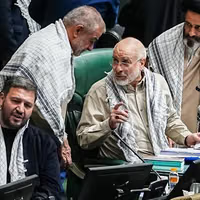
Iran leader's adviser warns Iraq against becoming 'tool' of US

Nov 28, 2026, 16:21 GMT+0
100%
Mohammad Mokhber, senior adviser to Iran's Supreme Leader Mojtaba Khamenei, attends an event in Tehran

A senior adviser to Iran's supreme leader warned Iraq on Saturday against yielding to US pressure over border controls, as closures threaten one of Iran's main remaining trade routes.

Mohammad Mokhber, an adviser to Supreme Leader Mojtaba Khamenei, said Iran had stood by the Iraqi people during their most difficult days and had proven its friendship.

"This unbreakable bond requires Baghdad to remain vigilant on the issue of borders so that it does not become a tool of the enemies of Islam or give in to the policies of the criminal Trump," Mokhber wrote on X.

The warning followed weeks of border closures, including two more crossings shut on Thursday, after Washington formally asked Baghdad to keep only two crossings with Iran open.

Iraqi Foreign Minister Fuad Hussein disclosed the US request on November 8, saying it would be difficult to implement without damaging Iraq's economy.

Trade between the neighbors is worth $15 billion to $18 billion annually, including about $4 billion in Iranian gas, according to Hussein.

Iraq's national security adviser, Qasim al-Aboudi, arrived in Iran on Saturday, the state-owned Iraqi Media Network reported. An Iraqi official told Al Jazeera that the closure of unofficial border crossings would be discussed during the visit.

The official also said Iraq had reinforced its army's 8th and 11th divisions across large areas of Kirkuk province, including areas bordering Sulaymaniyah, Nineveh and Salahuddin, to prevent smuggling through unofficial routes.

Iraq’s Ministry of Interior also announced the continuation of work to complete comprehensive security fortifications in the Hawizeh Marshes on the border between Iraq and Iran.

Between a rock and a hard place

Baghdad faces competing demands from Washington and Tehran.

The United States has sought to disrupt the movement of weapons, sanctioned goods and illicit revenue across Iran's land borders. For Tehran, the stakes have risen as the US naval blockade has severely restricted its seaborne oil exports.

Iraq is one of Iran's largest export markets and its biggest buyer of gas and electricity. The two countries share a border of roughly 1,600 kilometers, with nine official crossings and numerous unofficial routes.

Baghdad has closed several crossings in recent weeks, including Sheikh Saleh and Bashta on Thursday. About 300 trucks carrying goods and building materials were stranded at Sheikh Saleh, according to Iranian customs officials.

The closures have also stirred opposition within Iraq. Political factions aligned with Tehran have condemned what they describe as American interference, while traders have protested the economic disruption.

Iran-aligned factions retain influence in Iraq's parliament, governing coalition and security establishment, while the country remains financially exposed to Washington.

Iraq's oil revenues pass through an account at the Federal Reserve Bank of New York.

According to Reuters, Washington warned Baghdad earlier this year that it could restrict access to those funds unless it reduced Tehran's influence in its government.

Iranian mother dies after husband sets her on fire, local media reports

Nov 28, 2026, 13:57 GMT+0
100%

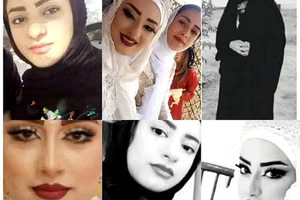
A 39-year-old Iranian mother of two died after her husband reportedly set her on fire, in the latest case of suspected femicide in Iran, according to media reports on Saturday.

Kajal Sadeghi, a resident of Saqqez in Iran’s western Kurdistan province, died after 12 days in hospital with severe burns, the Iranian news outlet Rokna reported.

Her husband poured gasoline over her and set her alight following an argument on November 16, according to accounts cited by Rokna.

Sadeghi, who had two daughters aged eight and 15, was transferred to a hospital in Urmia with burns covering more than 90% of her body and remained in intensive care until her death.

100%
Kajal Sadeghi, a 39-year-old mother of two from Saqqez in western Iran, who died after her husband reportedly set her on fire.

Prosecutors in Saqqez are investigating the case, though police and judicial authorities have yet to officially confirm the circumstances of her death, Rokna reported.

The killing follows another reported case of femicide in Kordestan province. Police announced on November 24 that the parents of a young woman named Helia Fattahi had been arrested on suspicion of murdering their daughter in Sanandaj.

  • Iranian parents arrested over killing of pregnant daughter, rights groups say

    Iranian parents arrested over killing of pregnant daughter, rights groups say

Police cited family disputes as the motive, while the Kurdish human rights organization Hengaw linked the killing to so-called honor-related motives.

Legislation remains stalled

A bill aimed at protecting women from violence has yet to receive final approval in Iran after more than 14 years of deliberations among successive governments, parliament and other state institutions.

“Our definition of violence is completely different from the Western view,” Iranian lawmaker Zohreh Lajevardi said on Wednesday, addressing disagreements over the legislation.

Iran’s legal and institutional shortcomings in addressing femicide and domestic violence are rooted in social and political structures that perpetuate violence against women, social affairs analyst Asieh Amini previously told Iran International.

  • Femicide rates in Iran up by 60% in two years, report says

    Femicide rates in Iran up by 60% in two years, report says

At least 104 cases of femicide, 178 cases of domestic violence and 63 cases of rape and sexual abuse against women were documented in Iran over the past year, the Human Rights Activists News Agency (HRANA) reported on Wednesday.

Economic dependence, family pressure, a shortage of safe accommodation, limited access to judicial protection and discriminatory laws governing marriage, divorce and employment remain major obstacles preventing Iranian women from leaving abusive relationships, HRANA said.

Turkish aviation firm to shut down over US sanctions for Iran ties

Nov 28, 2026, 13:44 GMT+0
100%
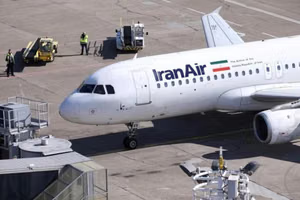
An Iran Air passenger aircraft surrounded by ground-handling vehicles and airport personnel.

Turkish airport ground-handling company FUGO will cease operations after the United States sanctioned it for providing services to Iranian airlines, Turkey’s Demirören News Agency (DHA) reported on Friday.

The company will terminate its operations on November 30, raising uncertainty over the continuation of flights by several Iranian airlines to Turkey, Iranian media reported.

Despite complying with the Turkish Commercial Code, relevant legislation and aviation requirements, the company could no longer continue operations under the current circumstances, FUGO said in a statement cited by DHA.

The company had provided ground-handling services across Turkey for seven years, contributing to the country’s civil aviation and tourism sectors.

  • US sanctions all Iranian airlines in sweeping aviation crackdown

    US sanctions all Iranian airlines in sweeping aviation crackdown

All outstanding payments owed to employees would be settled in full, and discussions with other ground-handling companies were underway to secure alternative employment for staff, FUGO added.

The company described the US sanctions imposed on it as “unfair and unlawful,” Turkish aviation news outlet AirportHaber reported.

US sanctions on Iranian aviation

The US Treasury Department sanctioned FUGO on November 4 for providing ground-handling and other services to sanctioned Iranian airlines that continued to operate flights to Turkey.

Iran Airtour, Saha Airlines, Sepehran Airlines, Varesh Airlines, Taban Air and ATA Airlines had direct contracts with FUGO, the Treasury said.

Washington imposed sanctions on 35 companies and one individual linked to Iran’s aviation industry on September 8. FUGO began providing services to several Iranian airlines in the weeks following those sanctions, the department added.

The Treasury warned that it would continue targeting entities supporting Iran’s aviation industry, citing the sector’s role in facilitating weapons proliferation and terrorist activities.

Efforts to maintain flights

Preparations to establish a new ground-handling company to service Iranian and potentially Russian airlines were underway following FUGO’s designation, Turkish newspaper Aydınlık reported on November 17

Strong demand for travel between Iran and Turkey made a complete suspension of flights unfeasible, aviation industry representatives told the newspaper.

  • Iranian airlines continue foreign flights after US sanctions deadline - Bloomberg

    Iranian airlines continue foreign flights after US sanctions deadline - Bloomberg

Istanbul Airport recorded 748 flights on its Tehran route in October, Aydınlık reported.

The United Arab Emirates, Oman, Iraq, Georgia and Azerbaijan have barred Iranian airlines from operating and cancelled flights to Iran, the US Treasury said on October 30. Turkey has also suspended all Mahan Air flights.

Iran flogged singer to deter dissent, insiders tell Reuters

Nov 28, 2026, 13:11 GMT+0
100%
Protesters gather behind a fire in the street during nationwide anti-government demonstrations in Iran in January 2026.

Iran’s flogging of singer Parastoo Ahmadi and four members of her production team was intended to intimidate government opponents and appease hardline supporters of the Islamic Republic, Reuters reported on Saturday, citing five establishment insiders.

The punishment reflected growing fears among Iranian authorities that worsening economic conditions and widespread defiance could trigger another wave of anti-government protests, three Iranian officials and two other establishment insiders told Reuters.

Ahmadi, 29, and her colleagues received 74 lashes each on Monday for a concert livestreamed two years ago in which she performed without a headscarf and alongside male musicians.

The approaching anniversary of last winter’s nationwide protests has heightened concerns among authorities that mounting economic grievances could spill over into renewed anti-government demonstrations, two of the officials said.

  • Flogging of Iranian singer Parastoo Ahmadi sparks outrage on social media

    Flogging of Iranian singer Parastoo Ahmadi sparks outrage on social media

Security forces killed thousands of protesters in January, with videos showing rows of body bags at the Kahrizak morgue south of Tehran and grieving families searching for their loved ones.

An investigation published by Iran International’s Editorial Board on January 25, based on classified government documents, medical records and eyewitness testimony, put the death toll from the January 8-9 crackdown at more than 36,500.

Separate investigations by Iran International documented evidence of extrajudicial killings, including the killing of wounded protesters undergoing medical treatment, and pressure on bereaved families to prevent public mourning from becoming a focal point for further protests.

The decision to carry out the flogging exposed divisions within the ruling establishment, with some officials opposing the punishment for fear of provoking further public anger, one of the sources said.

Defiance of compulsory hijab

Iranian women have increasingly defied compulsory hijab laws since the nationwide protests of 2022, challenging restrictions imposed following the 1979 Islamic Revolution.

Growing anger among hardliners over the widespread defiance of those restrictions was another factor behind the punishment, three of the sources said.

  • With the war quieting, Iran's hijab crackdown gathers pace again

    With the war quieting, Iran's hijab crackdown gathers pace again

Authorities may have sought to use the flogging of Ahmadi and her colleagues to appease hardliners without risking the public backlash that a nationwide crackdown on women could provoke, two establishment insiders said.

“I think the authorities are sending a message of fear through the flogging,” Saba Robatjazy, a London-based Iranian singer and childhood friend of Ahmadi, told Reuters.

The condition and whereabouts of Ahmadi and her colleagues remain unknown following the flogging.

“I think that the punishment that they gave Parastoo and her band members is only bringing up more anger from people,” Robatjazy said.