Iran leader's adviser warns Iraq against becoming 'tool' of US

A senior adviser to Iran's supreme leader warned Iraq on Saturday against yielding to US pressure over border controls, as closures threaten one of Iran's main remaining trade routes.
A senior adviser to Iran's supreme leader warned Iraq on Saturday against yielding to US pressure over border controls, as closures threaten one of Iran's main remaining trade routes.
Mohammad Mokhber, an adviser to Supreme Leader Mojtaba Khamenei, said Iran had stood by the Iraqi people during their most difficult days and had proven its friendship.
"This unbreakable bond requires Baghdad to remain vigilant on the issue of borders so that it does not become a tool of the enemies of Islam or give in to the policies of the criminal Trump," Mokhber wrote on X.
The warning followed weeks of border closures, including two more crossings shut on Thursday, after Washington formally asked Baghdad to keep only two crossings with Iran open.
Iraqi Foreign Minister Fuad Hussein disclosed the US request on November 8, saying it would be difficult to implement without damaging Iraq's economy.
Trade between the neighbors is worth $15 billion to $18 billion annually, including about $4 billion in Iranian gas, according to Hussein.
Iraq's national security adviser, Qasim al-Aboudi, arrived in Iran on Saturday, the state-owned Iraqi Media Network reported. An Iraqi official told Al Jazeera that the closure of unofficial border crossings would be discussed during the visit.
The official also said Iraq had reinforced its army's 8th and 11th divisions across large areas of Kirkuk province, including areas bordering Sulaymaniyah, Nineveh and Salahuddin, to prevent smuggling through unofficial routes.
Iraq’s Ministry of Interior also announced the continuation of work to complete comprehensive security fortifications in the Hawizeh Marshes on the border between Iraq and Iran.
Between a rock and a hard place
Baghdad faces competing demands from Washington and Tehran.
The United States has sought to disrupt the movement of weapons, sanctioned goods and illicit revenue across Iran's land borders. For Tehran, the stakes have risen as the US naval blockade has severely restricted its seaborne oil exports.
Iraq is one of Iran's largest export markets and its biggest buyer of gas and electricity. The two countries share a border of roughly 1,600 kilometers, with nine official crossings and numerous unofficial routes.
Baghdad has closed several crossings in recent weeks, including Sheikh Saleh and Bashta on Thursday. About 300 trucks carrying goods and building materials were stranded at Sheikh Saleh, according to Iranian customs officials.
The closures have also stirred opposition within Iraq. Political factions aligned with Tehran have condemned what they describe as American interference, while traders have protested the economic disruption.
Iran-aligned factions retain influence in Iraq's parliament, governing coalition and security establishment, while the country remains financially exposed to Washington.
Iraq's oil revenues pass through an account at the Federal Reserve Bank of New York.
According to Reuters, Washington warned Baghdad earlier this year that it could restrict access to those funds unless it reduced Tehran's influence in its government.











OPEC+ has reached a preliminary agreement to keep oil production targets unchanged in the first quarter of 2027 amid uncertainty over the Iran war and disagreements over members’ production capacity, Reuters reported Friday.
Oil ministers from the group, which includes OPEC members and allies such as Russia, are due to meet Sunday to discuss production policy for next year.
The meeting comes amid renewed attacks on tankers in the Strait of Hormuz and Saudi energy infrastructure, raising concerns over further disruptions to global oil supplies.
Brent crude recorded its first weekly gain in November despite falling 1.2% on Friday to $95.44 a barrel.
Energy consultancy Rapidan Energy Group expects OPEC+ to leave production targets unchanged on Sunday, citing uncertainty over the duration of the Iran war and its impact on crude production and exports.
Despite the risk of further supply disruptions, Rystad Energy forecasts a global oil surplus of around five million barrels per day in 2027, equivalent to roughly 5% of global demand, even if Persian Gulf supplies recover only partially.
The International Energy Agency said last week that the war had already resulted in cumulative losses of 2.8 billion barrels of oil supplies from the Persian Gulf.
The agency also said stronger energy-security measures in response to the war could reduce global oil demand by more than 4% by 2035 compared with its scenario based on governments’ stated policies.
Differences over how much individual members should be allowed to produce have also complicated negotiations over next year’s output targets.
OPEC+ had planned to use the findings of its first review of members’ production capacity to help set quotas for 2027, but several countries are seeking higher capacity estimates.
Iraqi Oil Minister Basim Mohammed Khudair said Friday that Baghdad was negotiating with OPEC for a higher production quota to support the development of its energy infrastructure.
Iraq, OPEC’s second-largest producer, is dissatisfied with a preliminary assessment putting its production capacity at 4.9 million barrels per day. Kazakhstan is also seeking a higher estimate, Reuters reported earlier this week.
Russian Deputy Prime Minister Alexander Novak said Wednesday that the capacity review would be completed by the end of the year.
Iraq has warned it could leave OPEC unless its quota is raised, following the United Arab Emirates’ withdrawal from both OPEC and OPEC+ earlier this year over longstanding disagreements about its production quota. Angola left OPEC in early 2024.
Baghdad has also faced pressure from Washington over its membership. In a separate report Friday, Reuters said the Trump administration had encouraged Iraq and Venezuela to consider leaving OPEC earlier this year.
Iranian President Masoud Pezeshkian's attempts to set an example by working in a dimly lit, unheated office have drawn criticism from hardliners who say the gesture projects weakness during the country's confrontation with the United States.
In a televised interview earlier this week, Pezeshkian said he wore a jacket because his office was cold, slept wearing one at home and would move to a smaller room if temperatures fell further to save energy.
What supporters portray as personal austerity and solidarity with the public has become a political controversy, with some critics comparing the president's gestures to the populist style of former president Mahmoud Ahmadinejad.
Tabnak, a news website close to Mohsen Rezaei, secretary of Iran's Supreme National Security Council, published an article titled "Mr. Pezeshkian, Your Dark Room Is a Display of Weakness."
The article acknowledged that the president presumably intended to demonstrate solidarity with Iranians facing difficult conditions and encourage energy conservation.
"But does staging a blackout in the president's workplace, especially when the country remains engaged in a difficult and costly war, really send the right message to society and beyond its borders?" it asked.
The website argued that a country at war and resisting foreign pressure should project effective management and strength.
‘Have a wonderful winter’
The conservative newspaper Farhikhtegan also criticized Pezeshkian in an article titled "The Wrong Signal from the Dark Room," describing the gesture as a staged performance. Instead of communicating "resistance," it argued, the president had conveyed "shortage" and "passivity."
Farhikhtegan also cited Foreign Minister Abbas Araghchi's readiness to reopen the Strait of Hormuz for two days as another example of what it called the government's "message of weakness."
Hardline analyst Ali Abdi questioned the president's public presentation during a roundtable discussion in a video published Friday by Hokmranan Online.
"Have people ever seen pictures of Putin or Zelensky sitting in a dark room after five years of war?" he asked.
US Treasury Secretary Scott Bessent appeared to seize on the images, sharing a Washington Post report about Pezeshkian's dimly lit, unheated office with a mocking message on X.
"Good job, guys. Have a wonderful winter," Bessent wrote.
‘Populist behaviour’
The controversy has revived comparisons with former president Mahmoud Ahmadinejad, who cultivated an image of modest living and informality as part of his populist appeal.
Similar comparisons emerged in November last year after photographs showed Pezeshkian playing soccer alongside members of Iran's national team at the country's National Football Center.
The news website Rouydad24 argued at the time that the episode might appear to be a friendly encounter with players but, viewed alongside the president's other public appearances, revealed a pattern.
"The more critical the country's situation becomes, the more populist President Pezeshkian's behavior becomes," the website wrote.
‘Being honest’
Government officials defended the president's gestures as an appeal for energy conservation during wartime.
Spokeswoman Fatemeh Mohajerani described his conduct as courageous and honest, saying it demonstrated the need to conserve energy under difficult conditions.
Elias Hazrati, head of the government's Information Council, said Pezeshkian had turned off the lights to encourage conservation, strengthen economic resilience and help the country withstand pressure from Trump and the United States.
The president did not need to sit behind a desk in a hall filled with chandeliers to demonstrate Iran's greatness, Hazrati argued.
The reformist newspaper Sazandegi offered a broader defense in a Wednesday editorial titled "The Neorealist President."
It argued that Pezeshkian's behavior reflected honesty and a refusal to mislead the public. His jacket, remarks about energy conservation and dimly lit office challenged a longstanding tradition in Iranian politics of concealing uncomfortable realities while projecting an image of perfection.
"His primary responsibility is to see reality, not conceal it, be honest with the people, and have solutions for overcoming the situation—and to implement those solutions with all his strength and capacity," the editorial said.
The US military said Friday it had disabled a bulk carrier that sailed from the Iranian port city of Bandar Abbas and tried to run the naval blockade, the first ship it has reported disabling since Tehran vowed to break the blockade.
US Central Command (CENTCOM) released video of Thursday’s strike on the Pacific Archer in the Gulf of Oman. It said the Palau-flagged ship ignored repeated warnings after sailing from Bandar Abbas.
A US military aircraft struck the stern, disabling the ship’s propulsion system. The civilian crew was unharmed, CENTCOM said.
The Pacific Archer was the first commercial vessel CENTCOM reported disabling since Iranian officials publicly backed breaking the blockade last week.
The previous strike was on November 7, when US forces disabled the cargo ship Huda, the fifth vessel disabled since the blockade resumed in July.
Thursday’s strike brought that count to six. Another 158 commercial vessels have complied with US orders to change course, CENTCOM said.
Iran’s bid to break the blockade
On November 19, the Revolutionary Guards-affiliated Fars news agency called for a convoy of Iranian oil tankers to sail to China. It argued that the risk of Iranian retaliation against oil terminals in Saudi Arabia, the United Arab Emirates and Qatar could deter Washington from firing on the tankers. Sabereen News, a Guards-linked Telegram channel, carried an unconfirmed report that dozens of tankers were preparing to sail.
Officials were already weighing in that day. Guards spokesman Hossein Mohebbi said Iran would prevent the naval, land and air blockade from continuing. On November 20, Foreign Minister Abbas Araghchi told the ILNA news agency that the naval blockade “must be broken” and that Tehran would pursue both oil exports and negotiations.
The government stopped short of confirming a convoy. On November 23, Foreign Ministry spokesman Esmail Baghaei dismissed reports of tanker loadings and an impending attempt to break through as media speculation, while saying Tehran reserved the right to respond by political, economic or military means.
On November 24, Mohsen Rezaei, secretary of Iran’s Supreme National Security Council, said the armed forces and state institutions were determined to break the blockade.
The Pacific Archer left Bandar Abbas two days later. CENTCOM identified it as a bulk carrier. There is no public indication that Tehran directed its voyage or that it was connected to the proposed tanker convoy.
Tehran vows to keep Hormuz closed
On Friday, the day after the strike, Mohammad Mokhber, an adviser to Supreme Leader Mojtaba Khamenei, told reporters that the Strait of Hormuz would stay closed and that Iran would prevent the US blockade from remaining in place.
The blockade has put pressure on Iran’s oil earnings and its currency. US Treasury Secretary Scott Bessent said Wednesday that Iran had no oil left at sea to sell.
On Friday, when the dollar traded above 2.93 million rials on Iran’s unofficial market, Central Bank Governor Abdolnaser Hemmati acknowledged that the blockade and sanctions had raised trade costs, restricted access to funds and squeezed government revenue, adding to pressure on the rial and on consumer prices.
Iran’s central bank governor acknowledged Friday that access to foreign currency was limited, government revenues were under pressure and soaring prices were eroding families’ purchasing power, with the dollar trading above 2.93 million rials on the unofficial market.
“We know how heavily high prices and instability weigh on your lives,” Abdolnaser Hemmati wrote in an open letter to Iranians. “People have the right to be worried, to ask questions and to demand results from officials.”
Hemmati said sanctions and the US naval blockade had made trade more expensive and restricted Iran’s access to its financial resources. Those pressures, together with the strain on state revenues, were affecting both the exchange rate and the prices Iranians pay, he said.
Two days earlier, Hemmati had credited central bank intervention with keeping the currency market relatively stable over the previous two months. The dollar crossed 2.9 million rials that day, up from about 1.6 million in early April. By Friday, the rial had lost about 45% of its value against the dollar over that period.
“The foreign currency constraints are real,” Hemmati wrote, though he rejected the suggestion that Iran had reached a deadlock. He also dismissed talk of an imminent economic collapse, saying the central bank had supplied more than $32 billion in foreign currency for imports through official channels. He gave no timeframe for the figure.
US Treasury Secretary Scott Bessent, in an interview with Iran International last month, warned Iranians to stock up on gasoline and heating fuel ahead of expected shortages, predicting the economy would shrink by more than a quarter in the year ending March 2027.
“I would predict that from March of '26 until March of '27, the economy would contract more than 25 percent, which is more than the Soviet Union contracted after its collapse,” Bessent said, adding that the campaign was intended to pressure Iran's leadership rather than its population.
Hemmati accused the United States and Israel of seeking to turn economic hardship into social instability. But he also conceded that Tehran’s own policies needed reform and that officials had a responsibility beyond asking people to endure the cost.
“Blaming every problem on sanctions is no substitute for reforming domestic policies,” he wrote. The letter announced no new relief for households or producers.
Iran raised the basic monthly minimum wage by about 60% to 166 million rials for the Iranian year that began in March. At Friday’s exchange rate, that wage was worth about $57.
Even at the time of the wage talks, it covered less than 40% of the estimated 429 million rials a worker’s household needed each month for basic necessities. A promised wage review has yet to produce a decision.
Consumer prices in October were 88.7% higher than a year earlier, according to the Statistical Center of Iran. October was the ninth consecutive month in which food prices were more than double their level a year earlier.
Iran has kept up operations in Europe despite arrests in more than half the cases, and can sharply step them up when it chooses, the London-based International Institute for Strategic Studies said, with incidents rising to 12 a month after the war began.
The IISS examined about 80 operations in Europe since 2022 in which it judged Iranian involvement at least a realistic possibility, including arson, bombings, threats, kidnapping and assassination.
Arrests followed 58 percent of them. Yet activity never stopped: about one or two incidents a month from October 2023 until the US-Israeli strikes on February 28, then 12 a month in March and April, before falling back.
"Iran has sustained activity and has shown that it can surge that activity sharply when it chooses," the institute said in a report published on Thursday.
Britain accounted for the largest share since 2022, 35 percent, followed by Germany, France, Sweden and the Netherlands. Since the war began, Britain and the Netherlands have accounted for more than two-thirds of the 32 incidents recorded.
The figures may partly reflect how well each country detects and publicizes such cases, the institute said.
The war changed whom Iran targeted, the report found. Operations against Jewish communities rose from 21 percent of the total to 57 percent, as Iran's networks turned to targets seen as easier to reach.
In London, they included the arson of Hatzola volunteer ambulances in March and the stabbing of two Jewish men in April.
Attacks on Iranian dissidents and journalists continued alongside them. On November 12, two men were convicted in London of spying on Iran International journalists for Iranian intelligence.
Iran has also moved against US commercial and military interests, including suspected bomb attacks on American financial institutions in Paris and Amsterdam, and incidents at RAF Fairford in September and RAF Mildenhall this month.
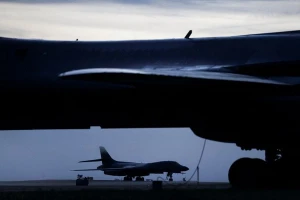

After five men were arrested near Fairford, which hosted US bombers used against Iran, Washington pulled its B-1 bombers out of the base. It later moved tankers and aircraft out of Mildenhall over a threat from Iran.
"Iranian officials will almost certainly note their disproportionate impact," the report said: low-cost operations by recruited proxies had been followed by the withdrawal of significant US military assets from Europe.
The institute found no case of Iran and Russia working together, but said the opportunities were growing, through shared tradecraft, shared support networks or joint attacks on European targets.
It warned of other trends that would make Iran's operations harder to stop: more reliance on lone actors and small cells, as Russia does, and a move toward less protected targets as security improves around Jewish and Israeli sites.
In one of three scenarios for 2027, Iran stops directly tasking operations in Europe, but proxies it has already empowered carry on independently.
The findings match what European governments have described. MI5 Director General Ken McCallum said in October that Iran-linked operations had led to more than 50 arrests in Britain in a year.
A US indictment and an ITV News investigation this month tied the Fairford plot to a network run from Baghdad for Iranian intelligence, which Western officials blame for about 18 attacks across Europe.
Iran's operations reach beyond violence. France blamed a Revolutionary Guards cyber unit for hacking refrigeration systems at about 700 supermarkets in October. On November 20, the European Union and Britain demanded in a joint statement that Iran stop its "hybrid attacks on European soil."