Speaking during Thanksgiving calls with American service members from his Mar-a-Lago estate in Florida, Trump portrayed Washington as being in a position to dictate the timing of any further military action.
“We have victory at hand. It will happen whenever I want it to happen. We are trying to be nice. We are giving them every chance to make a deal and save a lot of lives, but I am not sure if they are going to take advantage of that,” Trump said.
The president said the United States had deployed an additional aircraft carrier to the region.
“We’re getting stronger. We sent an extra aircraft carrier there. We’re loaded up,” he said, accusing Iran of making “big mistakes.”
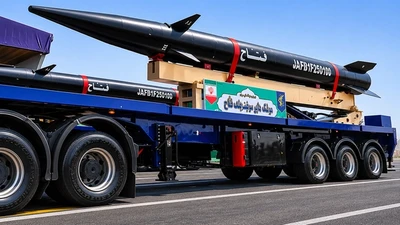
Trump later told reporters that he had spoken with Israeli Prime Minister Benjamin Netanyahu in recent days and that the United States would target Pickaxe Mountain, an underground facility near Iran’s Natanz uranium enrichment complex, if military action resumed.
The International Atomic Energy Agency has never inspected the underground facility, and its contents remain unknown.
He said Washington had not observed significant activity at the facility but again questioned whether Tehran would agree to a deal.
“It would be nice if they made a deal. Personally, I don’t think [they will],” he said.
Trump’s doubts about an agreement come despite continued diplomatic efforts to end the military standoff, with Washington and Tehran still divided over which side should make concessions first.
Iranian Foreign Minister Abbas Araghchi said on Thursday that Qatari and Pakistani mediators continued to exchange proposals between Tehran and Washington, but that Iran had not changed its conditions for reopening the waterway.
“I think paths can be opened,” Araghchi said, adding that proposals were under review but Tehran’s demands remained unchanged.
His remarks followed a visit to Washington on Monday by Qatar’s prime minister, Sheikh Mohammed bin Abdulrahman Al Thani, who held talks with US Secretary of State Marco Rubio and Vice President JD Vance in an effort to revive negotiations.
Iran has sought the lifting of the US naval blockade, the release of frozen assets and an end to hostilities before substantive nuclear negotiations, while Washington has sought reciprocal steps that include nuclear commitments from Tehran at the outset.
The disagreement has made the Strait of Hormuz both a central point of contention in diplomatic efforts and a continuing source of military tensions.
Trump on Thursday described the US naval blockade as the largest ever and said American forces had fired 150 missiles to prevent missiles and drones from striking commercial vessels in the waterway.
“I think it’s the greatest naval blockade that there’s ever been,” he said.
Trump also said a US Army unit operating Patriot missile defense batteries had intercepted 560 missiles and drones since deploying in March in support of Operation Epic Fury.
He said a Marine Corps squadron stationed in the United Arab Emirates had logged more than 4,000 flight hours in support of the operation this year.
Iranian officials and state-linked media had raised the prospect of directly challenging the blockade in recent days. On Saturday, Vahid Ahmadi, a member of parliament’s National Security Committee, said Iran was preparing 14 oil tankers to challenge the blockade, threatening retaliation against regional oil facilities if the vessels came under attack.
Trump warned on Sunday that Iranian vessels attempting to breach the blockade would be sunk.
Iranian state media subsequently backed away from reports of an imminent tanker operation, with Foreign Ministry spokesman Esmail Baghaei dismissing the reports on Monday as media speculation. Tehran, however, has maintained that it will not tolerate the blockade indefinitely.
Even as Qatar pursued diplomacy, Iranian military and political leaders warned this week that Tehran was prepared to intensify its restrictions on shipping and use military means to break the US blockade.
Iranian army chief Amir Hatami on Monday ordered tighter restrictions on passage through Hormuz until Washington met Tehran’s demands, warning that renewed US strikes would trigger a more severe response.
Beyond the standoff over the Strait of Hormuz, disagreements over Iran’s nuclear program remain an obstacle to a broader agreement.
Araghchi told the state-owned Iran newspaper last week that keeping the country’s highly enriched uranium stockpile inside Iran was a red line, although he said a “fair solution” remained possible.
Trump told American troops on Thursday that preventing Iran from acquiring a nuclear weapon remained a central objective of the US military campaign.
“They will never have a nuclear weapon. That I can tell you,” he said.
Trump also said NATO was now involved in US operations against Iran, a day after meeting the alliance’s secretary-general, Mark Rutte, in Florida.
“NATO are now involved with us, as you know. They’re actually in various parts of Iran, and they’ve been great,” Trump said, without elaborating on the nature or scope of the alliance’s involvement.
A joint statement issued after Wednesday’s meeting confirmed that the two leaders had discussed the war with Iran but provided no details of those discussions.
Even as Trump has left open the prospect of renewed military action, he has drawn a distinction between Washington’s war objectives and those of Israel.
Asked in an interview with the New York Post on Tuesday whether his window for ordering further strikes was narrowing, Trump said funding for the war effort would last until roughly the end of January.
He also said Israel’s objective of toppling the Islamic Republic was “probably doable,” but made clear that it was not his own goal.
“I just don’t want them to have a nuclear weapon,” Trump said. “I was never for or against regime change, that was never a criteria for me.”