Saudi-led coalition intercepts Houthi drone heading toward Riyadh
A drone launched by Yemen’s Houthis toward the Riyadh region was intercepted and destroyed on Friday, the Saudi-led coalition said on Friday.
A drone launched by Yemen’s Houthis toward the Riyadh region was intercepted and destroyed on Friday, the Saudi-led coalition said on Friday.












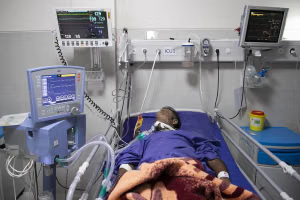
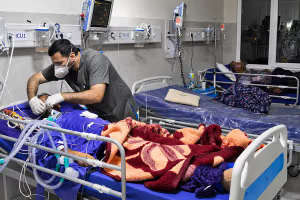
The head of Iran's psychiatric association has warned that some bootleg alcohol is being poisoned deliberately, as a wave of poisonings that has killed at least 26 people and sickened more than 550 spreads to a dozen regions, from Neyshabur to Bandar Abbas.
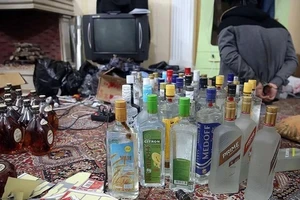
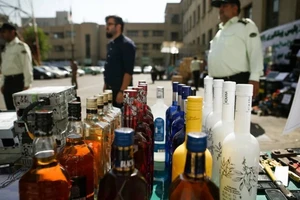
In large waves of alcohol poisoning, "people deliberately, and for various reasons such as profit, poison alcohol," Vahid Shariat, head of the Iranian Psychiatric Association, told the ISNA news agency on Friday. He did not say who they were or how they profited.
Drinkers have no way of telling whether what they buy is toxic, he said, and most of the harm could be prevented. He criticized what he called an "eliminationist" approach to alcohol and urged the state to put harm reduction first.
"There is widespread sloganeering at some levels of management, and those who make harsher slogans and bigger claims get more attention," he said.
The spread of the poisonings, from the northeast to the Persian Gulf coast and from Khoy in the northwest to Zabol in the southeast, has fed suspicion online that they are organized.
"It's obviously the state's doing, otherwise the whole country wouldn't be poisoned," one Iranian wrote to Iran International. "Which dealer or bootlegger can distribute across the whole country?"
Earlier this month, the London-based channel Manoto aired an audio message from a man in Iran who said people linked to the security services and the Revolutionary Guards were involved in distributing alcohol and deliberately contaminating some shipments, without many producers knowing. He offered no evidence, and the claim could not be verified.
Others who wrote to Iran International blamed the ban itself. "The one responsible is whoever won't let quality, standard products in," one said.
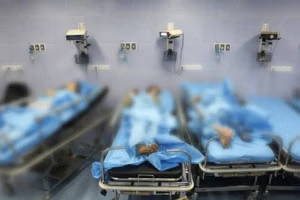
The Health Ministry recorded 543 poisonings and 23 deaths across 12 medical university regions between October 31 and Wednesday evening, and eight people declared brain dead, ministry spokesman Hossein Kermanpour said.
Neyshabur had the most cases, 214, followed by Hormozgan with 93, Shiraz with 81 and Tehran province with 69. Kordestan, Khoy, Alborz, Mashhad, Isfahan, Zanjan, Khalkhal and Zabol also recorded cases.
Of those poisoned, 205 needed dialysis, 33 were in intensive care and 38 had blurred vision. The average age was 31, and 92 were under 20, according to ministry figures.
The toll has risen since. In Hormozgan, 126 people had been poisoned and 10 had died by Friday morning, nine in Bandar Abbas and one on Qeshm Island, the provincial health spokeswoman said, up from seven deaths in the ministry's count. The youngest was 12. In Neyshabur, 238 people had been treated by Thursday, with five dead and five declared brain dead. In Khoy, in West Azarbaijan, 20 people were poisoned and three died.
"No alcoholic drink can be considered safe," Kermanpour wrote on X, adding that the figures were published "not to frighten or blame people" but to prevent more deaths.
Methanol, an industrial alcohol, cannot be detected by smell, taste or appearance, and even a small amount can be dangerous, said Shervin Tabrizi, a spokesman for Tehran's emergency services.
Symptoms, which can appear hours after drinking, include blurred vision, headache, nausea, vomiting, abdominal pain and drowsiness. He urged anyone with symptoms to call the 115 emergency line at once.
Alcohol is banned in Iran for Muslims, who face flogging if caught drinking, and only recognized religious minorities may make it for private use. Bootleggers often stretch drinks with cheap industrial methanol, and mass poisonings recur.
The worst came in early 2020, when 796 people died after drinking methanol in the false belief that it protected against COVID-19, according to Iran's Legal Medicine Organization.
In 2023, methanol-laced drinks killed 17 people and blinded 191 in Alborz province, near Tehran. Four people were later sentenced to death for "corruption on earth" for distributing them.
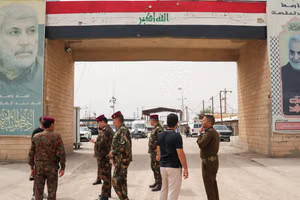
Iraq closed two more border crossings with Iran this week, including one run by the Kurdistan region, extending weeks of closures that followed a US request that Baghdad keep only two crossings open, and squeezing one of Tehran's main remaining trade routes.
On Thursday, Iraqi forces closed Sheikh Saleh, a crossing in Iran's western Kermanshah province, the Mehr news agency reported, citing the governor of Salas-e Babajani county. He said Baghdad had acted on a central government order to shut "unofficial" crossings with neighboring countries.
About 300 trucks loaded with goods and building materials were stranded, Kermanshah's customs chief said, and would be rerouted through other crossings.
The same day, Iraq's border forces closed the Bashta crossing with Iran and the al-Waleed crossing with Syria, both run until now by the Kurdistan Regional Government, Reuters reported, citing Iraqi state media.
There were unconfirmed reports that a third crossing, Shoushmi, in Kermanshah's Paveh county, had also been shut. Kermanshah's customs chief said he had received no official notice of it.
Washington asked for this. On November 8, Iraqi Foreign Minister Fuad Hussein said the US Treasury had formally asked Baghdad to close all its crossings with Iran except two, one in the Kurdistan region and one elsewhere in Iraq.
"There are many official and unofficial crossings with Iran, and closing them all is difficult and affects our economy," he told Al Jazeera.
Trade between the two countries is worth $15 billion to $18 billion a year, he said, including about $4 billion in Iranian gas.
The day before, US Central Command had set up Task Force Iron Gate, a unit of about 20 military and civilian staff in Florida, to disrupt the movement of weapons, dual-use technology, sanctioned goods and illicit revenue across Iran's land borders and the Caspian Sea.
Without US personnel at the crossings, it relies on neighboring governments, chiefly Iraq, Turkey and Pakistan, to do the closing.
Iraq and Iran share a border of about 1,600 kilometers, with nine official crossings and many unofficial ones. Over the past six weeks, Baghdad has closed and reopened them one by one, usually citing technical reasons.
On October 21, Iraq closed Chazabeh, known in Iraq as Sheeb, between Iran's Khuzestan province and Iraq's Maysan, citing inadequate preparations.
An adviser to Prime Minister Ali al-Zaidi said Iran had "deliberately undermined Iraq's security," with people linked to it crossing without permits.
Truckers and traders in Maysan protested over rising prices, and the provincial council chairman, who threatened civil disobedience, was briefly detained. Chazabeh reopened on November 10.
On November 13, Iraq closed Somar, known in Iraq as Mandali, between Kermanshah and Iraq's Diyala province, for what it called maintenance before the rainy season. It is still closed.
On November 26, Sheikh Saleh and Bashta followed.
Major crossings such as Mehran, which carries millions of Iranian pilgrims to Karbala each year, remain open.
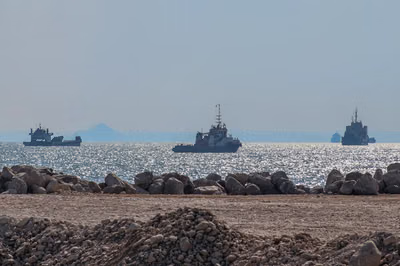
With its ports under US naval blockade since July and seaborne oil exports all but stopped, Iran depends more than ever on land routes for imports, exports and cash.
Iraq is one of Iran's largest export markets, its biggest buyer of gas and electricity, and a long-standing route around sanctions, through fuel smuggling, currency trading and companies fronting for Iranian interests.
Pro-Iran factions in Baghdad have pushed back. The Badr Organization's bloc in parliament condemned what it called American interference in Iraq's border policy and demanded the crossings reopen, and the Asaib Ahl al-Haq bloc asked why the government's technical explanations differed from the foreign minister's account.
The Revolutionary Guards dismissed Iron Gate, saying Tehran had made arrangements to keep trading with its neighbors.

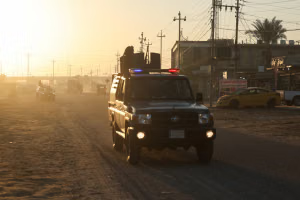
The pressure comes from more than one direction. Iraq's oil revenues still pass through an account at the Federal Reserve Bank of New York, an arrangement dating from the 2003 US-led invasion, and Washington warned Baghdad this year that it could cut off access to them if Iraq did not reduce Tehran's influence in its government, Reuters reported.
US officials also discussed with Zaidi the idea of Iraq leaving OPEC, Reuters reported. The prime minister raised it with his cabinet, but the oil ministry opposed it and proposed seeking a higher production quota instead. The US government said the issue had not been raised in high-level talks.
The closures in the Kurdistan region are also part of a separate fight. On Tuesday, Zaidi ordered federal authorities to take over all crossings run by the Kurdistan Regional Government, and the federal oil ministry to take over oil fields held by Kurdish security forces in Diyala, Kirkuk, Salahuddin and Nineveh provinces.
After the Kurdistan Regional Government objected, Iraq's Federal Supreme Court ruled on Wednesday that Baghdad could deploy federal forces along all international borders, including in the region.
Thousands of people protested in the Kurdistan region on Thursday, while supporters of the prime minister rallied in Mosul.
The moves came a week after Zaidi sent troops into Jurf al-Sakhar, a stronghold of the Iran-backed militia Kataib Hezbollah, over an oil smuggling network.
Not all of Baghdad's moves answer to Washington. The operations against smuggling, the push into Jurf al-Sakhar and the takeover of the Kurdistan region's crossings and oil fields also concentrate power in the central government, a goal that overlaps with US demands but is not the same thing.
Both standoffs turn on control of oil, borders and the money that flows across them, and both put Zaidi, who came to power after Washington opposed the return of Nouri al-Maliki, a longtime ally of Tehran, at odds with powerful forces at home.
Iraq cannot easily cut its ties with Iran. It depends on Iranian gas and electricity, particularly in summer, and Iran-aligned factions sit in parliament, in the governing coalition and in the Popular Mobilization Forces, the state-funded umbrella of armed groups. Moving against them too fast risks unrest at home.
Even Iranian media now describe a shift. Baghdad "appears to be redefining its relations with Tehran," the Iranian news site Rouydad24 wrote on Thursday, in a course that is "less a separation than an effort to increase Iraq's bargaining power with both sides."
Tehran says it can ride out the squeeze. Iran's diplomats, especially in neighboring countries, were working "around the clock" to meet the country's needs and keep trade routes open, Foreign Minister Abbas Araghchi said in the northeastern city of Mashhad.
"The goal is for the enemies to know that besieging Iran is not possible, and that they cannot besiege our country," he said.
US President Donald Trump said on Thursday that Washington was strengthening its military presence in the Middle East and warned that an Iranian nuclear facility would be targeted if strikes resumed, expressing doubt that Tehran would agree to a deal.
Speaking during Thanksgiving calls with American service members from his Mar-a-Lago estate in Florida, Trump portrayed Washington as being in a position to dictate the timing of any further military action.
“We have victory at hand. It will happen whenever I want it to happen. We are trying to be nice. We are giving them every chance to make a deal and save a lot of lives, but I am not sure if they are going to take advantage of that,” Trump said.
The president said the United States had deployed an additional aircraft carrier to the region.
“We’re getting stronger. We sent an extra aircraft carrier there. We’re loaded up,” he said, accusing Iran of making “big mistakes.”
Trump later told reporters that he had spoken with Israeli Prime Minister Benjamin Netanyahu in recent days and that the United States would target Pickaxe Mountain, an underground facility near Iran’s Natanz uranium enrichment complex, if military action resumed.
The International Atomic Energy Agency has never inspected the underground facility, and its contents remain unknown.
He said Washington had not observed significant activity at the facility but again questioned whether Tehran would agree to a deal.
“It would be nice if they made a deal. Personally, I don’t think [they will],” he said.
Trump’s doubts about an agreement come despite continued diplomatic efforts to end the military standoff, with Washington and Tehran still divided over which side should make concessions first.
Iranian Foreign Minister Abbas Araghchi said on Thursday that Qatari and Pakistani mediators continued to exchange proposals between Tehran and Washington, but that Iran had not changed its conditions for reopening the waterway.
“I think paths can be opened,” Araghchi said, adding that proposals were under review but Tehran’s demands remained unchanged.
His remarks followed a visit to Washington on Monday by Qatar’s prime minister, Sheikh Mohammed bin Abdulrahman Al Thani, who held talks with US Secretary of State Marco Rubio and Vice President JD Vance in an effort to revive negotiations.
Iran has sought the lifting of the US naval blockade, the release of frozen assets and an end to hostilities before substantive nuclear negotiations, while Washington has sought reciprocal steps that include nuclear commitments from Tehran at the outset.
The disagreement has made the Strait of Hormuz both a central point of contention in diplomatic efforts and a continuing source of military tensions.
Trump on Thursday described the US naval blockade as the largest ever and said American forces had fired 150 missiles to prevent missiles and drones from striking commercial vessels in the waterway.
“I think it’s the greatest naval blockade that there’s ever been,” he said.
Trump also said a US Army unit operating Patriot missile defense batteries had intercepted 560 missiles and drones since deploying in March in support of Operation Epic Fury.
He said a Marine Corps squadron stationed in the United Arab Emirates had logged more than 4,000 flight hours in support of the operation this year.
Iranian officials and state-linked media had raised the prospect of directly challenging the blockade in recent days. On Saturday, Vahid Ahmadi, a member of parliament’s National Security Committee, said Iran was preparing 14 oil tankers to challenge the blockade, threatening retaliation against regional oil facilities if the vessels came under attack.
Trump warned on Sunday that Iranian vessels attempting to breach the blockade would be sunk.
Iranian state media subsequently backed away from reports of an imminent tanker operation, with Foreign Ministry spokesman Esmail Baghaei dismissing the reports on Monday as media speculation. Tehran, however, has maintained that it will not tolerate the blockade indefinitely.
Even as Qatar pursued diplomacy, Iranian military and political leaders warned this week that Tehran was prepared to intensify its restrictions on shipping and use military means to break the US blockade.
Iranian army chief Amir Hatami on Monday ordered tighter restrictions on passage through Hormuz until Washington met Tehran’s demands, warning that renewed US strikes would trigger a more severe response.
Beyond the standoff over the Strait of Hormuz, disagreements over Iran’s nuclear program remain an obstacle to a broader agreement.
Araghchi told the state-owned Iran newspaper last week that keeping the country’s highly enriched uranium stockpile inside Iran was a red line, although he said a “fair solution” remained possible.
Trump told American troops on Thursday that preventing Iran from acquiring a nuclear weapon remained a central objective of the US military campaign.
“They will never have a nuclear weapon. That I can tell you,” he said.
Trump also said NATO was now involved in US operations against Iran, a day after meeting the alliance’s secretary-general, Mark Rutte, in Florida.
“NATO are now involved with us, as you know. They’re actually in various parts of Iran, and they’ve been great,” Trump said, without elaborating on the nature or scope of the alliance’s involvement.
A joint statement issued after Wednesday’s meeting confirmed that the two leaders had discussed the war with Iran but provided no details of those discussions.
Even as Trump has left open the prospect of renewed military action, he has drawn a distinction between Washington’s war objectives and those of Israel.
Asked in an interview with the New York Post on Tuesday whether his window for ordering further strikes was narrowing, Trump said funding for the war effort would last until roughly the end of January.
He also said Israel’s objective of toppling the Islamic Republic was “probably doable,” but made clear that it was not his own goal.
“I just don’t want them to have a nuclear weapon,” Trump said. “I was never for or against regime change, that was never a criteria for me.”
Arab governments condemned Iran and the European Commission president urged greater pressure on Tehran after a drone attack killed two Italian technicians in Kuwait on Thursday, while Iran denied responsibility and suggested a possible “false flag” operation.
Kuwait’s defense ministry said its forces intercepted several drones and that falling debris struck four people at a military site. The two Italians died of their injuries. A Kuwaiti army captain and a Pakistani national were also wounded.
The technicians worked for Rheinmetall Italia, the Italian arm of the German defense company. They were servicing radar antennas for a Skyguard air defense system used by Kuwait’s armed forces, Italy’s foreign ministry said.
Italian Foreign Minister Antonio Tajani said Rome would lodge a complaint with the Iranian embassy. He urged restraint, saying the Arab countries across the Persian Gulf from Iran were not parties to the war.
European Commission President Ursula von der Leyen urged greater pressure on Tehran to end attacks on its neighbors, saying security in the Persian Gulf “is a matter of security for us all.”
Arab governments condemn attack
Saudi Arabia called for an immediate halt to Iranian attacks and said it held Tehran responsible for the consequences. Bahrain urged the UN Security Council to hold Iran accountable and called on Tehran to pay compensation for the damage.
Qatar warned that repeated attacks on Kuwait could undermine diplomatic efforts to ease regional tensions. The United Arab Emirates and Jordan also condemned the strike, describing it as a violation of Kuwait’s sovereignty.
Kuwait’s foreign ministry said the attack violated UN Security Council Resolution 2817 and cited the country’s right to self-defense under Article 51 of the UN Charter. UN Secretary-General Antonio Guterres expressed solidarity with Kuwait in a call with Foreign Minister Sheikh Jarrah Jaber Al-Ahmad Al-Sabah, according to the ministry.
Iran offers joint investigation
Iranian Foreign Minister Abbas Araghchi denied responsibility in separate calls with Sheikh Jarrah and Tajani. He offered to work with Kuwait to establish where the drones came from and who launched them, according to Iran’s foreign ministry.
Iran’s embassy in Rome raised the possibility of a “false flag” operation intended to draw Europe into the conflict.
The Revolutionary Guards-affiliated Fars news agency suggested a possible Ukrainian role, citing an interview with an unnamed security source who alleged that Ukraine had deployed drones in the region, including in Iraqi Kurdistan. The source offered no evidence linking Ukraine to the attack in Kuwait.
Earlier this month, Iran said it had targeted US military sites in Kuwait after the United States struck Iran’s Qeshm Island in the Strait of Hormuz.
Iranian lawmakers and analysts accuse the Pezeshkian administration of adding to the strain of US sanctions and the naval blockade through currency rules that penalize exporters and bureaucratic hurdles that make it harder for manufacturers to secure raw materials.
They describe a range of domestic measures as “self-sanctions,” pointing to restrictions on foreign currency transactions, banking and customs procedures, and price controls that make it more difficult for businesses to operate.
The criticism has taken on renewed significance as Iran faces restrictions on maritime trade and oil exports. Critics say the government has focused on the consequences of external pressure while doing too little to strengthen domestic production or expand trade through land borders and barter arrangements.
On Wednesday, Hassan Ghashghavi, the spokesman for parliament’s National Security and Foreign Policy Committee, urged the government to support producers during what he described as an “existential war.”
Manufacturers, he said, need access to foreign currency and raw materials to stay in business and avoid bankruptcy.
“Given the existing capacities, the country’s main problem is not a lack of resources but weak management,” Ghashghavi said.
‘Domestic sanctions’ on producers and exporters
Amir Sayyah, an economic advisor to Parliament Speaker Mohammad Bagher Ghalibaf during 2024 presidential debates, told the state TV that the government is making it harder for Iranian entrepreneurs and exporters to operate under already difficult conditions.
“The biggest problem with our economy, apart from foreign sanctions – and I’m not denying foreign sanctions – is domestic sanctions,” Sayyah said on the Be Vaghte Iran (Iran Time) TV debate.
“Whoever can negotiate should go and resolve [the foreign sanctions]. Whoever can find a way around them should do so. But as for domestic sanctions ... if [the enemy] is stabbing us from the front, the government and all these executive agencies should not stab [producers and exporters] in the back.”
Sayyah argued that Iranian businesses could maintain production, trade and financial transactions despite international sanctions if domestic authorities gave them room to operate.
He said currency exchange companies were capable of transferring money from countries such as the United States to destinations in Europe, the Middle East and East Asia, but that the government had failed to make use of their services.
Easing administrative and regulatory restrictions, he argued, would allow businesses to operate more freely without waiting for foreign sanctions to be lifted. He said it would also strengthen Iran’s economic position in any negotiations with Washington.
One of the main obstacles facing exporters, according to Sayyah, is the requirement to bring their foreign currency earnings home at exchange rates set by the central bank. Those rates can put exporters at a financial disadvantage, he said, discouraging them from bringing their earnings back and reducing the supply of foreign currency at home.
“An exporter who earns foreign currency for the country despite sanctions should be regarded as part of the national effort to counter the blockade, rather than being treated as a violator by government agencies,” he said.
Sayyah said the administration of former President Ebrahim Raisi and the parliament at the time had removed some regulations that hampered producers and exporters, but that the work had stalled under Pezeshkian.
Government faces criticism over its economic response
Pezeshkian has repeatedly spoken about the difficulties posed by what he calls economic warfare, arguing that they are more complicated than those of military confrontation.
He has pointed to a shortage of funds and to shortfalls in electricity and natural gas supplies that are expected to lead to scheduled power cuts this winter.
The president has backed diplomacy, arguing that ending the current state of “neither war nor peace” is necessary to ease economic pressure and uncertainty.
His government has drafted next year’s budget around two scenarios, reflecting uncertainty over how long the maritime blockade will last.
The first assumes that current conditions will persist, requiring sharp spending cuts and a halt to new infrastructure projects. Under that scenario, the government would reserve all available foreign currency for essential goods and medicine.
The second envisages the lifting of restrictions and a gradual recovery in the supply of foreign currency, allowing the government to resume reconstruction and infrastructure projects.
Conservative and hardline critics have taken issue with how often the president and his ministers discuss the country’s economic difficulties. They argue that repeated warnings about electricity and gas shortages, scheduled power cuts and limited funds frighten the public and reinforce what they describe as Washington’s psychological warfare.
Hardliners have urged the government to do more to counter the blockade by expanding barter trade and helping domestic producers make fuller use of their capacity.
Imports and non-oil exports fall
The value of Iran’s non-oil exports fell 28.2% between the beginning of April and the end of August compared with the same period a year earlier, according to Foroud Asgari, head of Iran’s Customs Administration. Non-oil exports were down 32.5% from the corresponding period in 2024, before the war.
Imports fell from $23.02 billion to $17 billion, a 26.1% decrease from a year earlier. Compared with the same period in 2024, imports were down 38%, a steeper decline than for non-oil exports.
A substantial share of Iran’s imports consists of raw materials, intermediate goods and machinery used by domestic manufacturers. Economists warn that reduced access to those goods could further undermine production in an economy already under pressure from sanctions and the blockade.
Limits of land routes
Economist Mohammad-Mehdi Behkish has argued that the blockade presents a problem beyond the financial obstacles Iranian businesses faced under previous sanctions.
Even when importers find a way to transfer payments to foreign suppliers, they still face the challenge of getting the goods into the country, he said.
Iran has traditionally conducted a substantial share of its foreign trade by sea. Its land routes have limited capacity and cannot handle the volume of goods previously carried by ship, Behkish argued.