• العربية
  • فارسی
BrandBrand
  • Iran Insight
  • Politics
  • Economy
  • Analysis
  • Special Report
  • Opinion
  • Podcast
  • Live TV
  • Iran Insight
  • Politics
  • Economy
  • Analysis
  • Special Report
  • Opinion
  • Podcast
  • Live TV
  • Theme
  • Language
    • العربية
    • فارسی
  • Iran Insight
  • Politics
  • Economy
  • Analysis
  • Special Report
  • Opinion
  • Podcast
  • Live TV
All rights reserved for Volant Media UK Limited
volant media logo
ANALYSIS

Tehran claims its missiles can reach Europe. What has it shown?

Nov 24, 2026, 03:04 GMT+0

An Iranian lawmaker’s claim that Tehran’s missiles can now travel 4,500 kilometers and a front-page boast by Tehran daily Hamshahri that all of Europe is within reach have renewed questions about Iran’s ability to strike the continent.

Experts told Iran International the threat should be taken seriously, though Iran has yet to demonstrate that it can reliably hit targets at that distance.

Continue reading

Most Viewed

Truck drivers strike across Iran over economic hardship
1

Truck drivers strike across Iran over economic hardship

2

Tehran's subsidence zone expands 20% in two years

3

Trump threatens Iran strikes in new year, says blockade runners will be sunk

4
VOICES FROM IRAN

Deadly poisonings fuel anger over Iran's alcohol ban

5

'Happy Ending' pushes the limits of Iran's underground cinema

Banner
Banner
Banner
Banner
Banner
Banner
Banner

Spotlight

  • Iraqi forces enter Iran-backed militia stronghold, but who holds power?
    ANALYSIS

    Iraqi forces enter Iran-backed militia stronghold, but who holds power?

  • Tehran claims its missiles can reach Europe. What has it shown?
    ANALYSIS

    Tehran claims its missiles can reach Europe. What has it shown?

  • New video reveals where Iran clerics chose Mojtaba Khamenei as supreme leader
    INSIGHT

    New video reveals where Iran clerics chose Mojtaba Khamenei as supreme leader

  • Iran's housing crisis keeps divorced couples under one roof

    Iran's housing crisis keeps divorced couples under one roof

  • 'Happy Ending' pushes the limits of Iran's underground cinema

    'Happy Ending' pushes the limits of Iran's underground cinema

  • Power cuts return across Iran, threatening over one million jobs
    VOICES FROM IRAN

    Power cuts return across Iran, threatening over one million jobs

  • Inside Iran's online gun market, where a few messages can start a deal

    Inside Iran's online gun market, where a few messages can start a deal

  • ‘The city smelled of blood’: Witness recalls Iran protest crackdown

    ‘The city smelled of blood’: Witness recalls Iran protest crackdown

•
•
•

More Stories

Iraqi forces enter Iran-backed militia stronghold, but who holds power?

Nov 24, 2026, 03:00 GMT+0
•
Truska Sadeghi
100%
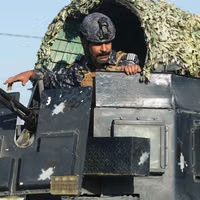
A member of the Iraqi police takes part in a security deployment on the outskirts of Jurf al-Sakhar, Babil province, Iraq, November 20, 2026. REUTERS/Alaa Al-Marjani

Iraq’s deployment of government forces to Jurf al-Sakhar, a longtime stronghold of Iran-backed Kataib Hezbollah, has raised questions about whether Baghdad can restore state authority or has merely reached a new compromise with powerful armed groups.

Experts told Iran International that the deployment marked a significant step in the government’s efforts to rein in militias, but cautioned that a withdrawal of Kataib Hezbollah fighters would not necessarily end Tehran’s influence.

Mukhlad Hazem, a former security adviser to the Iraqi parliament’s leadership, described the deployment as a step no previous Iraqi prime minister had dared to take, but said it was too early to assess its success.

Ahmed al-Sharif, an Iraqi strategic affairs expert, said even if Kataib Hezbollah withdrew from Jurf al-Sakhar, it could relocate its fighters to another strategically important area.

Iraqi Prime Minister Ali al-Zaidi announced on Friday the start of a drive to extend state authority across the country as army and federal police forces entered Jurf al-Sakhar, an area south of Baghdad that had been under the group’s control for 12 years.

“We have not entered a war. Everyone there is your brother,” Zaidi said in a video message to troops deployed in the area, officially known as Jurf al-Nasr.

Zaidi said his government sought to extend its authority throughout Iraq, combat corruption and end the presence of weapons outside state control.

Government forces entered without major clashes despite earlier threats by Kataib Hezbollah and mounting tensions with Baghdad.

However, subsequent reports indicated that Kataib Hezbollah fighters remained in the area even after government forces entered.

A deal to avert confrontation

The standoff escalated earlier this month after details of a confidential 19-page report on suspected oil smuggling in Jurf al-Sakhar appeared in Iraqi media on November 9.

Based on satellite imagery and an examination of oil transportation routes and tanker movements, the report identified suspicious activity near oil pipelines dating back to 2021.

Kataib Hezbollah denied allegations of involvement in illegal oil-related activities.

Zaidi ordered an investigation, but the dispute quickly widened into a confrontation over security control of the area.

Kataib Hezbollah defended its presence, saying it was necessary to prevent the resurgence of Islamic State and protect routes leading to the Shiite holy city of Karbala.

As tensions mounted, Esmail Qaani, commander of the Quds Force of the Islamic Revolutionary Guard Corps (IRGC), traveled to Baghdad for talks with Iraqi political leaders and armed groups.

Kataib Hezbollah confirmed on November 19 that its secretary-general, Abu Hussein al-Hamidawi, had met Qaani alongside Badr Organization leader Hadi al-Amiri and Popular Mobilization Forces (PMF) chairman Falih al-Fayyadh.

Iraqi media reported that Zaidi and Qaani had reached an understanding on the peaceful withdrawal of Kataib Hezbollah and its replacement by a joint security force.

Reuters also reported that Shiite political leaders had mediated a deal to avert an armed confrontation.

Under the arrangement, security responsibilities in Jurf al-Sakhar were divided among the army, federal police, energy police and units of the PMF.

Withdrawal or redeployment?

Sharif described Jurf al-Sakhar as one of Tehran’s key strongholds in its confrontation with the United States.

He said a gradual withdrawal could give Kataib Hezbollah time to await developments in negotiations between Tehran and Washington amid the risk of renewed escalation.

Sharif said Tehran opposed efforts to bring all weapons under Iraqi state control because doing so would deprive Iran of an important source of leverage in its dealings with Washington.

In his assessment, Tehran’s intervention was intended to prevent an armed confrontation between Iraqi government forces and Kataib Hezbollah while securing more time for the group to redeploy its fighters.

The US State Department said on November 18 that Washington expected the Iraqi government to hold Iran-aligned armed groups accountable for their violent and destabilizing activities.

Twelve years of displacement

Located in northern Babil province near the Euphrates River, Jurf al-Sakhar lies close to key routes connecting Baghdad with Anbar and Karbala provinces.

The predominantly Sunni Arab area was recaptured from Islamic State in October 2014 by Iraqi government forces and Shiite armed groups, including Kataib Hezbollah.

The group subsequently took control of security in the area, restricting access for displaced residents, journalists and many government officials.

More than 6,000 families have been displaced from Jurf al-Sakhar since 2014, according to Iraq’s Ministry of Migration and Displacement, with many still living elsewhere.

Hazem said Sunni political factions wanted the issue resolved and displaced families allowed to return.

He said the deployment of government forces and the establishment of an operations center had diminished Jurf al-Sakhar’s status as an area beyond the reach of state authorities.

Completing that process, however, would depend on bringing weapons exclusively under state control and addressing outstanding security and economic issues.

Hazem cautioned that Jurf al-Sakhar’s infrastructure had been severely damaged and that displaced residents would be unable to return without reconstruction.

Tehran claims its missiles can reach Europe. What has it shown?

Nov 24, 2026, 00:59 GMT+0
•
Negar Mojtahedi
100%
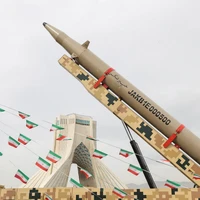
Iranian flags hang next to a missile on display during the forty-seventh anniversary of the Islamic Revolution in Tehran, Iran, February 11, 2026. Majid Asgaripour/WANA/Reuters

An Iranian lawmaker’s claim that Tehran’s missiles can now travel 4,500 kilometers and a front-page boast by Tehran daily Hamshahri that all of Europe is within reach have renewed questions about Iran’s ability to strike the continent.

Experts told Iran International the threat should be taken seriously, though Iran has yet to demonstrate that it can reliably hit targets at that distance.

Ahmad Bakhshayesh Ardestani, a member of Iran’s parliamentary National Security and Foreign Policy Committee, made the 4,500-kilometer claim on Monday without offering technical evidence.

Hamshahri, a newspaper run by Tehran’s municipality, touted a range of roughly 5,000 kilometers. The Islamic Revolutionary Guard Corps (IRGC) has said it lifted its self-imposed 2,000-kilometer limit but has given no details about whether longer-range missiles have been deployed.

100%

What the Diego Garcia launches showed

The clearest indication that Iran may have exceeded its old 2,000-kilometer limit came in March, when it reportedly fired two missiles toward Diego Garcia, a joint US-British military base in the Indian Ocean. One was intercepted and the other failed in flight.

Jim Lamson, a senior research associate at the James Martin Center for Nonproliferation Studies at Middlebury College, assessed that both were intermediate-range ballistic missiles, or IRBMs, capable of traveling at least 4,000 kilometers.

“It does show that Iran had developed at least prototypes of IRBMs, but their design and production status remain unclear,” Lamson said.

He said US and Israeli strikes damaged Iran’s missile development and production facilities, leaving it unclear whether Tehran could build more of those missiles in the near term.

Farzin Nadimi, a senior fellow at the Washington Institute for Near East Policy who specializes in Iran’s military capabilities and Persian Gulf security, said Iran could build on its existing missile technology to extend its reach.

He suspects the two missiles fired toward Diego Garcia may have been modified versions of the Khorramshahr-4, a medium-range missile with a declared range of about 2,000 kilometers. Their identity remains unconfirmed.

“So they were technically capable of reaching Diego Garcia,” Nadimi said, citing the flight paths of both missiles.

The reported launches suggest Tehran was willing to attempt a strike well beyond its old limit.

Nadimi said some parts of southeastern Europe are already within reach of Iran’s existing missiles. He estimated that a range of 4,000 to 4,500 kilometers could put much more of Europe within reach, potentially including Britain.

What Europe should prepare for

Simone Ledeen, who oversaw US defense policy for the Middle East as a deputy assistant secretary at the Pentagon, said the threat to Britain and Western Europe is emerging and called on European governments to invest in missile defense now.

“European governments should plan for the capability arriving rather than wait for proof of it,” Ledeen said.

What Europe should prepare for

Simone Ledeen, who oversaw US defense policy for the Middle East as a deputy assistant secretary of defense, said the threat to Britain and Western Europe was emerging and called on European governments to invest in missile defense now.

“European governments should plan for the capability arriving rather than wait for proof of it,” Ledeen said.

She said the most immediate danger comes from missiles that can already reach US forces and allies in the Middle East.

Reaching the continental United States would require a missile with substantially greater range. Ledeen and Nadimi said Iran’s space program provides some of the technology relevant to developing an intercontinental ballistic missile, a capability that would require further development and testing.

Why Tehran is making the threat now

Tehran’s latest missile claims came a day after US President Donald Trump told Fox News he was inclined to resume strikes on Iran after the new year if no deal was reached.

Kerri Bitsoff, a former senior US Treasury official who helped impose sanctions on networks supplying Iran’s missile and drone programs, said Tehran is using its longer-range missile claims to pressure Washington and its allies to back away from further military action and to turn public opinion against the war.

Bitsoff said Iran’s ability to rebuild and resupply its missile program is under strain. In her view, publicizing a longer range gives Tehran a way to exert pressure while its ability to field those missiles remains uncertain.

“I read it as once again, the regime looking for leverage,” Bitsoff said.

War damage leaves Iran with few options to avert winter gas crunch

Nov 20, 2026, 20:14 GMT+0
•
Dalga Khatinoglu
100%
Traffic moves along a smog-covered highway near Tehran's Azadi Tower, as air pollution blankets the Iranian capital, November 18, 2026

Iran faces a worsening winter energy crisis after wartime damage to its gas infrastructure cut production capacity, with officials warning of shortages in 11 provinces and limited options to make up the shortfall.

The country's daily gas deficit, estimated at around 300 million cubic metres last winter, is expected to reach 430 million cubic metres this winter.

Mohammad Sadegh Azimifar, head of the National Iranian Oil Products Distribution Company (NIOPDC), has announced that 60 million litres of kerosene have been stockpiled in some provinces facing severe gas shortages.

He said LPG reserves for household consumption would also be increased.

Azimifar also reported that 3.2 billion litres of diesel and mazut (fuel oil) have been stockpiled to compensate for gas shortages at power plants.

Production below prewar levels

Iranian officials say gas processing facilities in Asaluyeh were targeted during the recent war, reducing the country's daily gas production capacity by 230 million cubic metres.

Some facilities have returned to operation in recent weeks, bringing the daily production shortfall down to 130 million cubic metres.

The latest figures released by Iranian gas officials indicate that the country is currently producing around 690 million cubic metres of gas per day (mcm/d), compared with 793 mcm/d during the same period last year.

During the peak winter consumption period, Iran normally raises daily gas production to more than 830 mcm/d.

It remains unclear whether all production facilities are operating at their full technical capacity. Nevertheless, the available figures suggest that Iran's gas production capacity has declined by at least 100 mcm/d.

These figures refer to raw gas extracted from fields, rather than processed gas delivered to the national network. Non-methane components are removed during processing, while some gas is consumed by production and transmission facilities.

Last winter, for example, Iran extracted around 837 mcm/d of raw gas but delivered approximately 750 mcm/d of processed gas to the national network.

Of that amount, just under 700 mcm/d reached domestic consumers, with around 40 mcm/d exported and the remainder lost through the country's ageing transmission and distribution network.

Winter demand forces cuts to industry

According to Statistical Center data, Iran's daily household gas consumption in winter is more than 2.5 times its average level during other seasons. A similar seasonal pattern applies to the commercial, public and agricultural sectors.

To meet this demand, the government sharply curtails gas supplies to industries, petrochemical plants and power stations.

Last winter, combined gas consumption by households and the agricultural, commercial and public sectors reached 388 mcm/d, compared with an average of 154 mcm/d during other seasons.

By contrast, daily gas deliveries to power plants, petrochemical facilities, industries and the transport sector fell to 311 million cubic metres, down from an average of 493 mcm/d during other seasons.

With little scope to restrict household consumption during winter, the government has to absorb the seasonal surge by reducing supplies to other sectors.

Limited alternatives to natural gas

Iran already made extensive use of alternative fuels in power plants and industrial facilities last winter, leaving limited room to compensate for further gas shortages.

Only 15% of the country's thermal power generation capacity can operate on liquid fuels, namely mazut and diesel, according to the report's figures.

These power plants already switch to alternative fuels during peak winter demand, leaving little additional scope to increase their use.

Meanwhile, half of the industrial sector's winter gas consumption comes from small-scale industries, many operating within urban areas and unable to switch to alternative fuels.

According to Kpler data, Iran exported an average of approximately 256,000 barrels per day of mazut and 378,000 barrels per day of propane and butane (LPG) by sea last year.

These exports have been halted by the US naval blockade. The combined energy content of the fuels is equivalent to around 85 million cubic metres of natural gas per day.

In theory, retaining these fuels for domestic use could help offset part of the winter gas deficit. But doing so would require industries and power plants to substitute mazut and LPG for natural gas wherever possible, alongside a suspension of natural gas exports.

Both scenarios face significant obstacles.

Many industries lack the technical capacity to switch fuels, while Iran urgently needs gas export revenues, particularly given the severe disruption to its oil revenues.

With alternative fuels already widely used last winter, power plants and industrial facilities are unlikely to have much additional capacity to absorb them this year.

Greater reliance on liquid fuels would also come against the backdrop of Iran's winter air pollution crisis. Last winter, government offices and schools were closed for approximately four weeks because of air pollution and energy shortages.

Eleven provinces face gas supply stress

Iranian officials say 11 provinces will face gas supply stress this winter, with the situation expected to be particularly severe in the northern provinces of Mazandaran, Gilan and North Khorasan.

An examination of Ministry of Energy data shows that these three provinces consumed an average of around 50 mcm/d of gas in 2023, including 21 mcm/d used by households and the commercial, public and agricultural sectors.

Azimifar's announcement that 60 million litres of kerosene have been stockpiled in some provinces facing severe shortages underscores the government's preparations for possible supply disruptions.

The stockpile has an energy content equivalent to approximately 59 million cubic metres of natural gas, although the extent to which it can replace gas consumption depends on the availability of suitable equipment and the sectors receiving the fuel.

Eight other provinces are also expected to face supply stress.

Together, the 11 provinces consumed around 240 million cubic metres of gas per day in 2023, accounting for 37% of the country's total consumption that year.

A tough winter for Iran's cement industry, a tougher one for steel

Nov 19, 2026, 04:13 GMT+0
•
Umud Shokri
100%
File photo: Tehran Cement factory has faced restrictions because of environmental concerns over air pollution in nearby populated areas of Iran's capital

The question facing Iran’s steel and cement industries this winter is not simply whether their gas supplies are cut, but how much they can continue producing afterward.


Iran faces a peak gas deficit of about 430 million cubic meters daily, compared with 300 million before US-Israeli strikes damaged its energy infrastructure.

Households take priority, but how much of the shortfall will fall on either industry remains uncertain.

Cement needs heat, which can come from alternative fuels. Much of Iranian steelmaking, however, needs gas to transform iron ore itself.

A cement factory that loses natural gas may still have a working kiln tomorrow. A steel plant that loses the gas feeding its iron-reduction unit may not.

Cement: The challenge of getting fuel

Iran's grey-cement producers were receiving only five to eight million cubic meters of gas daily against normal industry demand of 28 million before losing the remainder in late October, according to Tasnim. Most had already turned to mazut, a heavy fuel oil.

Iran nevertheless produced 6.44 million tonnes of clinker in October. That provides a baseline before the cutoff, not evidence that production continued at the same rate afterward.

Using the International Energy Agency's energy benchmark, maintaining October's clinker output without gas would require approximately 19 million liters of mazut daily, equivalent to about 760 deliveries by 25,000-liter tankers.

These are estimates, not forecasts. Kilns differ in efficiency, and the fuel must actually arrive. Losing 200 tanker deliveries would mean losing enough heat to produce roughly 54,000 tonnes of clinker daily, assuming no backup fuel.

Cost is another obstacle. Tasnim reported mazut transport charges of 2,000–2,500 tomans per liter. At 19 million liters, trucking alone would cost 38–47.5 billion tomans daily, excluding fuel purchases. Power plants also compete for the same tankers and mazut.

Iran International reported that 22 cement factories stopped their kilns in December 2024. Tehran Cement could not burn mazut because of pollution restrictions near populated areas. A 2026 report described Lamerd Cement operating at around 60 percent of capacity over the preceding two years because its distance from fuel suppliers made reliable mazut deliveries uneconomic.

Having an alternative fuel, in other words, does not guarantee that a factory can use it.

Cement can outlast its kilns, briefly

Even when a kiln stops, a grinding mill can turn stored clinker into finished cement, provided electricity remains available. This can conceal the scale of disruption.

In July, clinker production fell nearly 39 percent year-on-year, while cement production rose 5 percent.

October cement output averaged approximately 214,000 tonnes daily. Assuming clinker accounts for 80 percent of finished cement, sustaining that rate with every kiln stopped would consume about 171,000 tonnes of stored clinker each day.

At that pace, one million tonnes of accessible clinker would last fewer than six days. Maintaining production for a month would require more than five million tonnes. National inventories are not publicly verified.

October's exports included 668,000 tonnes of cement and 285,000 tonnes of clinker, adding to competition for available supplies. Slower production can stretch stocks but reduces sales, while electricity shortages can stop grinding mills even sooner.

Steel: Gas is an ingredient

Iran's electric-furnace steel industry is particularly exposed because much of it relies on direct-reduced iron, also known as sponge iron.

In these plants, natural gas is converted into hydrogen and carbon monoxide to remove oxygen from iron ore.

Iran produced about 14 million tonnes of sponge iron during January–June 2026. Using a published benchmark of 265 cubic meters of gas per tonne of sponge iron, maintaining that production rate would require approximately 20.5 million cubic meters of gas daily.

A daily gas reduction of five million cubic meters could put roughly 19,000 tonnes of sponge-iron production at risk; a ten-million-cubic-meter cut could put 38,000 tonnes at risk.

These are estimates of potential exposure, not predictions of actual production losses.

Plants also cannot necessarily operate at half capacity when their gas supply is halved. Iron-reduction units require specific gas flows, temperatures and chemical conditions. Below certain levels, an entire unit may have to shut down.

Where the alternatives run out

Steelmakers can keep their furnaces running for a time by using stored sponge iron, purchasing other iron materials or increasing their use of scrap metal. Iran's smaller blast-furnace operations also rely on a different production process.

Replacing just ten days of Iran's recent sponge-iron output would require around 770,000 tonnes of suitable material. Finding that much would be difficult when supplies are tight, prices are high and electricity shortages are already disrupting operations.

Some steel production could therefore continue after gas supplies are cut, but maintaining normal output would become difficult as available materials run low.

Cement producers have more flexibility, but their experience shows that fuel substitution depends on delivery, cost and permission to burn alternative fuels. Neither industry's losses can be reliably forecast without knowing how much fuel and material individual factories have in reserve.

Both industries may continue producing after gas supplies are cut, but their output will depend on the availability and cost of alternative fuels and raw materials.

What matters this winter is not simply whether factories remain open, but how much they can produce, at what cost and for how long.

Iran could launch dirty-bomb attack, but risks make it unlikely

Nov 18, 2026, 11:20 GMT+0
•
Negar Mojtahedi
100%
A US Capitol Police officer patrols the east front of the US Capitol in Washington, US September 15, 2021.

Iran could carry out a radiological or chemical-weapons attack in the United States, but operational hurdles and retaliation risks make it unlikely, experts told Iran International following reports of plots targeting senior US officials.

The assessments followed a CNN report citing seven US officials who said intelligence indicated Iran was developing plans to potentially target senior Trump administration officials in Washington with a dirty bomb or chemical weapon.

"Dirty bomb is not typically what you would use to assassinate someone," said David Albright, a physicist and president of the Institute for Science and International Security.

Farzin Nadimi, a senior fellow at the Washington Institute specializing in Iran's military affairs, assessed the likelihood of an attack as "low to very low," citing operational difficulties and the prospect of US retaliation.

Two sources cited by CNN said the planning included specific locations and targets, although there was no evidence that Iranian leaders had decided to proceed. Officials differed over whether personnel were already in place.

  • Iran developing unconventional warheads for ballistic missiles, sources say

    Iran developing unconventional warheads for ballistic missiles, sources say

The White House said there were "no credible threats to the homeland" at the time. President Donald Trump said Tuesday that Washington was investigating the information and taking the possibility seriously.

Iran denied the allegations, while Homeland Security Secretary Markwayne Mullin described the planning as "aspirational."

Iran's chemical-weapons history

Iran's history of acquiring and transferring unconventional weapons provides grounds for taking the warnings seriously, Behnam Ben Taleblu, senior director of the Foundation for Defense of Democracies' Iran Program, said.

"These are threats that do need to be taken seriously," Taleblu said. "Conversely, the intelligence leaks and the sources should also be scrutinized."

Taleblu cited Iran's past transfers of chemical weapons to Muammar Gaddafi's Libya.

US State Department compliance reports have identified Iran's failure to declare chemical-weapons transfers during the Libya-Chad war as a violation of the Chemical Weapons Convention.

  • Rights groups call for probe into alleged chemical use in Iran protests

    Rights groups call for probe into alleged chemical use in Iran protests

A 2019 report cited chemical-filled artillery projectiles and aerial bombs transferred to Libya, alongside chemical mortar rounds assessed to be of Iranian origin found in Iraq, as evidence supporting Washington's assessment that Iran had filled and possessed chemical weapons.

A subsequent report identified Iran's pursuit of pharmaceutical-based agents for offensive purposes as another compliance violation.

Despite that history, Taleblu did not regard the latest warnings as necessarily signaling a change in Iran's military doctrine.

"I think this is a lot more of the same," he said.

Would a dirty bomb be effective?

The alleged assassination objective raises questions about the choice of weapon, particularly whether a radiological device would be effective against individual targets.

A dirty bomb combines conventional explosives with radioactive material. The US Centers for Disease Control and Prevention says its primary immediate danger generally comes from the explosion, although radioactive contamination can create additional health risks.

Such a device could force evacuations and spread fear, but would be less suited to killing a particular individual, Albright said.

"In terms of an assassination method, I wouldn't consider it very effective," he said.

Chemical agents could be more effective for targeting individuals, Albright argued, citing research published by his institute in 2024 identifying evidence of Iranian work on delivering pharmaceutical-based agents using drones.

Whether that work produced an operational capability or was connected to a specific US attack plan remained unclear.

"I think it's also important to keep in mind that the story said there was no imminent threat," Albright added.

Operational obstacles and retaliation risks

Beyond the choice of weapon, carrying out an attack would require access to materials, reliable personnel and the ability to evade US security measures.

Iranian intelligence services could potentially construct a crude radiological device if they obtained the necessary material inside the United States, Nadimi assessed.

"The likelihood I believe is low to very low, given the risks associated with such an action and the high possibility of retaliation," he said.

Questions about operational readiness also concerned Mark Fowler, a former CIA operations officer with extensive experience involving Iran, who questioned who was discussing the alleged attack and how far preparations had advanced.

"It's not clear to me that they actually have that in hand at this point," Fowler said, referring to the required materials.

CNN reported that Iranian communications suggested bomb-making materials were already inside the United States. Officials disputed the credibility of that information, although some considered it likely that materials had been positioned in advance.

Nadimi considered domestic acquisition theoretically possible, while Albright emphasized US accounting and security measures that make obtaining radioactive material more difficult.

A 2021 National Academies study identified vulnerabilities involving some civilian radioactive sources and warned that even relatively small radioactive releases could have lasting socioeconomic consequences.

The warnings could also strain US security resources even without an attack, Mike Pregent, a former intelligence officer who has testified before Congress about Iran's overseas terrorism networks, said.

"They've already got everybody spinning up on it," Pregent said.

  • FBI adds IRGC member accused in Bolton plot to most wanted terrorists list

    FBI adds IRGC member accused in Bolton plot to most wanted terrorists list

Any radiological or chemical-weapons attack could also harden American public opinion against the Islamic Republic and provoke severe retaliation, Nadimi said.

The reported consideration of such an operation, however, "does not show a decision is made to act," he added.