• العربية
  • فارسی
BrandBrand
  • Iran Insight
  • Politics
  • Economy
  • Analysis
  • Special Report
  • Opinion
  • Podcast
  • Live TV
  • Iran Insight
  • Politics
  • Economy
  • Analysis
  • Special Report
  • Opinion
  • Podcast
  • Live TV
  • Theme
  • Language
    • العربية
    • فارسی
  • Iran Insight
  • Politics
  • Economy
  • Analysis
  • Special Report
  • Opinion
  • Podcast
  • Live TV
All rights reserved for Volant Media UK Limited
volant media logo

Tehran activist says commuters were stopped and forced to unlock phones

Nov 24, 2026, 10:54 GMT+0

Iranian civil activist Mehdi Mahmoudian said on Tuesday that about 10 people at Tehran’s Dowlat metro station stopped passengers at random and demanded access to their phones.

In a post on the activist-run Khabaraneha Telegram channel, Mahmoudian said people were made to provide their passcodes while their Instagram accounts and photo galleries were searched. He said he was stopped, questioned and had his phone checked before it was returned.

Mahmoudian called the searches an invasion of privacy and said such intimidation, once directed at activists and journalists, was now affecting ordinary people.

Most Viewed

Tehran's subsidence zone expands 20% in two years
1

Tehran's subsidence zone expands 20% in two years

2
VOICES FROM IRAN

Deadly poisonings fuel anger over Iran's alcohol ban

3

Trump threatens Iran strikes in new year, says blockade runners will be sunk

4

Flogging of Iranian singer Parastoo Ahmadi sparks outrage on social media

5

Iran threatens European bases with missiles it says can reach 4,500 km

Banner
Banner
Banner
Banner
Banner
Banner
Banner

Spotlight

  • Iranian media walk back tanker convoy claims after days of blockade-breaking hype

    Iranian media walk back tanker convoy claims after days of blockade-breaking hype

  • Iraqi forces enter Iran-backed militia stronghold, but who holds power?
    ANALYSIS

    Iraqi forces enter Iran-backed militia stronghold, but who holds power?

  • Tehran claims its missiles can reach Europe. What has it shown?
    ANALYSIS

    Tehran claims its missiles can reach Europe. What has it shown?

  • New video reveals where Iran clerics chose Mojtaba Khamenei as supreme leader
    INSIGHT

    New video reveals where Iran clerics chose Mojtaba Khamenei as supreme leader

  • Iran's housing crisis keeps divorced couples under one roof

    Iran's housing crisis keeps divorced couples under one roof

  • 'Happy Ending' pushes the limits of Iran's underground cinema

    'Happy Ending' pushes the limits of Iran's underground cinema

  • Power cuts return across Iran, threatening over one million jobs
    VOICES FROM IRAN

    Power cuts return across Iran, threatening over one million jobs

  • Inside Iran's online gun market, where a few messages can start a deal

    Inside Iran's online gun market, where a few messages can start a deal

  • ‘The city smelled of blood’: Witness recalls Iran protest crackdown

    ‘The city smelled of blood’: Witness recalls Iran protest crackdown

•
•
•

More Stories

Bootleg alcohol kills 20, poisons 356 across Iran, health ministry says

Nov 24, 2026, 10:38 GMT+0
100%

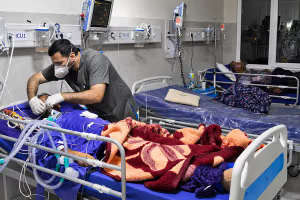
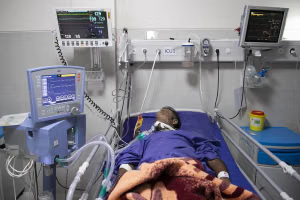
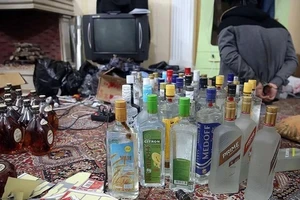
Bootleg alcohol has killed 20 people and poisoned 356, including a 12-year-old, across Iran since early November, the Health Ministry said on Tuesday, as cases spread from Neyshabur in the northeast to cities from Shiraz to Zabol.

Of those poisoned between November 1 and Tuesday morning, 187 were in hospital, 33 of them in intensive care, the ministry’s deputy for treatment said. Eighty were on dialysis or receiving it, 16 had blurred vision and 142 had been discharged. The average age was about 30, and several were under 18.

Neyshabur, in Razavi Khorasan province, has been hardest hit, with 211 cases. The ministry also recorded 66 in Shiraz, 37 in Hormozgan province, 19 in Alborz province, west of Tehran, eight in Khoy in West Azarbaijan, seven in Mashhad, three each in Zanjan and in Khalkhal in Ardabil province, and two in Zabol in Sistan and Baluchestan.

Most patients in Hormozgan had kidney damage and some had blurred vision, a provincial health spokeswoman said, symptoms that fit methanol poisoning.

Deaths and arrests

  • Deadly poisonings fuel anger over Iran's alcohol ban

    Deadly poisonings fuel anger over Iran's alcohol ban

  • Bootleg alcohol poisons 120 in northeastern Iran, four dead

    Bootleg alcohol poisons 120 in northeastern Iran, four dead

In Hormozgan, on the Persian Gulf, four people died in Bandar Abbas and one on Qeshm Island, the province’s university of medical sciences said.

In Neyshabur, four people had died and four had been declared brain dead by Monday evening, health officials said, and 34 patients had been sent to Mashhad and Sabzevar for treatment.

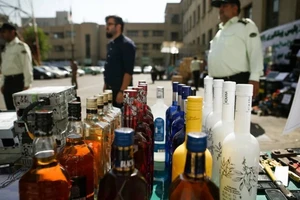
Neyshabur’s prosecutor said three people had been arrested in the case. Police had earlier said 12 suspects were detained.

In Fars province, one person has died in Shiraz and nearby Marvdasht, the provincial police chief said.

The Shiraz prosecutor said one patient in intensive care had been declared brain dead, seven people had been arrested for distributing counterfeit drinks and three production sites had been sealed.

‘Legal sales and health checks’

  • Bootleg alcohol identified as top cause of deaths from poisoning in Iran

    Bootleg alcohol identified as top cause of deaths from poisoning in Iran

  • Who is behind the sale of lethal bootleg alcohol in Iran?

    Who is behind the sale of lethal bootleg alcohol in Iran?

Some Iranians who wrote to Iran International said the ban on alcohol had fed a market where nobody checks what is in the bottle. Rather than blaming those who were poisoned, they called for legal sales and health inspections.

Alcohol is banned in Iran for Muslims, who face flogging if caught drinking, and only recognized religious minorities may make it for private use.

Homemade and counterfeit drinks, often made with cheap industrial alcohol, kill people in Iran several times a year. Methanol, a common cause, damages the kidneys and eyes.

In November 2025, eight people died after drinking bootleg alcohol in Iranshahr and Bampur, in the southeast, and one lost their sight. In early 2020, hundreds died after drinking methanol in the false belief that it protected against COVID-19.

Alcohol accounted for about 5 percent of deaths from poisoning in Iran in the five months to August 2025, according to the Legal Medicine Organization.

Iranian media walk back tanker convoy claims after days of blockade-breaking hype

Nov 24, 2026, 09:43 GMT+0
•
Maryam Sinaiee
100%
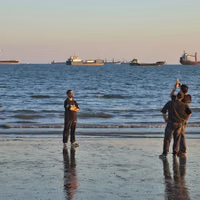
People on the waterfront in Bandar Abbas, Iran’s main port on the Strait of Hormuz, November 20, 2026.

Iranian state media and officials have denied that Iran was about to send tankers through the US naval blockade, after four days in which Guards-linked outlets, lawmakers and Friday prayer leaders spread the claim and AI-generated images showed ships breaking through.

The denials began on Sunday, the same day President Donald Trump said that if Iranian ships tested the blockade, “they’ll all be at the bottom of the sea like the rest of the navy.”

How the story grew

The reports began on Thursday, when the oil tracker TankerTrackers said Iran appeared to be preparing to ship out oil again. The Revolutionary Guards-affiliated Fars news agency had already published a commentary proposing a tanker convoy to break the blockade, and many readers took it as an operational plan.

  • Iran readies tankers to run US blockade, threatens Persian Gulf oil if fired on

    Iran readies tankers to run US blockade, threatens Persian Gulf oil if fired on

  • Iran hardliners push tanker convoy to defy US blockade

    Iran hardliners push tanker convoy to defy US blockade

The claims did not come only from commentators and social media. Friday prayer leaders in several cities called for the blockade to be broken, and some said tankers would soon sail from Kharg Island for China. Lawmakers repeated the claim over the weekend, and Foreign Minister Abbas Araghchi said on Friday that “the blockade must be broken.”

Hardliners welcomed the prospect of a confrontation. Propaganda images and videos, some built from real footage and others generated with artificial intelligence, claimed that an Iranian tanker named Khat Shekan, or “Line Breaker,” had crossed the blockade on Saturday. On Sunday, claims that 14 tankers had crossed spread widely online.

TankerTrackers said no tanker called Line Breaker existed. It also said an Iran-linked liquefied natural gas tanker named Tania Star that appeared in ship-tracking data on Sunday was a spoof, and that the vessel did not exist.

‘No basis in reality’

The Guards-affiliated Tasnim news agency said on Sunday that no operation had been planned for the weekend. The claims, it said, grew out of “a series of proposals by some individuals in the media or on social media,” and people had stitched together reports, some unrelated, to suggest an operation on Saturday or Sunday.

But Tasnim said Iran would not put up with the blockade forever. “Whether Iran will tolerate the naval blockade in the long term is not an issue of uncertainty; it will certainly break it, and this has been repeatedly stated by official military and civilian officials,” it said.

Iran was planning measures against the blockade and had prepared equipment and logistics, Tasnim said, but claims of an operation in the past day or two had “no basis in reality.” It accused people it called “capitulationists” of hoping to present a failed operation as proof that Iran had run out of options and should give in, and said the “enemy front” wanted to paint it as the failure of an Iranian military strategy.

Foreign Ministry spokesman Esmail Baghaei called the reports “media speculation” on Monday, blaming news sites, Telegram channels and other social media.

The state news agency IRNA, citing an account called the “War Message Center,” said no tanker convoy was moving toward the blockade as described or at the time claimed. The reports came from misreadings of ship-tracking data and speculation that hardened into claims of a confirmed operation through reposting, it said.

Iran’s response to the blockade was not limited to “a media scenario,” it said, and there were ways to get around or break the blockade whose details were not necessarily made public.

It is not clear who runs the War Message Center. It has not said it belongs to any state body, though accounts under that name have published war news and military statements since March.

‘Zero hour’

Nour News, which is close to the Supreme National Security Council, said on Sunday that the episode should not be judged only by whether an operation was confirmed or denied. The time for Iran to decide on breaking the blockade was “approaching rapidly,” it said, and everyone from Washington to regional governments and mediators should prepare for the coming “zero hour.”

Ending the blockade was becoming a public demand, it said, and the diplomatic window was not unlimited.

Mehdi Kharratian, a hardline commentator, told state TV’s Jahan Ara program on Sunday that he had not confirmed the tanker reports but that such news could influence decision-makers.

He urged officials to act, whether by halting all oil traffic through the Strait of Hormuz, confronting the UAE over what he called smuggling through the strait’s southern channel, or targeting ships heading for Arab ports.

“Ultimately, there are several solutions, and one of them has to be implemented,” he said.

Another hardline commentator, Ruhollah Jomei, wrote on X that the “project” had achieved its goals by stepping up regional diplomacy to lift the blockade. Regional capitals had been made to understand that “the Strait of Hormuz is either for everyone or for no one,” he wrote.

Fereydoun Majlesi, a former diplomat, told the Fararu news site that holding back a tanker operation, or denying it, showed “timely rationality.” The publicity and the threat of a US military response could have turned a maritime operation into a trap and a wider war, he said. “I believe we should not put the country in a position from which it would be difficult to exit, and which could cause damage that cannot be repaired.”

‘Lose-lose’

Some pro-government social media users asked why the reports had been allowed to run for days before being denied.

One, Abuzar Mashayekhi, suggested the reports had been a security operation to test reactions abroad, including in Arab countries, and public opinion at home, and that the late denial may have been deliberate.

Others said the confusion had damaged public trust. A user named Ario wrote on X that if the reports had only been meant to test the US response and measure support at home, the outcome was “lose-lose.” “Both the pragmatic credibility [of the approach] and social capital would be damaged,” the user wrote.

Flogging of Iranian singer Parastoo Ahmadi sparks outrage on social media

Nov 24, 2026, 03:47 GMT+0
100%
Iranian singer Parastoo Ahmadi performs alongside her band at the historic Deir-e Gachin Caravanserai near Qom, Iran, in December 2024.

The flogging of Iranian singer Parastoo Ahmadi and four members of her concert team on Monday sparked outrage on social media, with artists, activists and other users condemning the punishment and denouncing restrictions on women’s artistic expression in Iran.

Ahmadi, concert organizer Mohsen Lashkari and musicians Soheil Faghih-Nasiri, Amin Taheri and Amirali Pirnia each received 74 lashes at the prosecutor’s office in Qom, their lawyer Mostafa Nili said.

Women have been banned from singing solo in public in Iran since the 1979 Islamic Revolution.

Singer Mehdi Yarrahi, who himself received 74 lashes in March 2025 over a protest song challenging compulsory hijab, shared footage of Ahmadi’s performance on Instagram, expressing solidarity with her and her concert team.

Musician Hana Kamkar also condemned the punishment in an Instagram video, asking Islamic Republic officials what the artists had offered other than humanity, joy and beauty.

Ahmadi’s December 2024 concert was filmed at the historic Deir-e Gachin Caravanserai near Qom, a Shiite holy city and a center of religious conservatism in Iran.

Wearing a long, sleeveless black dress with her hair uncovered, Ahmadi sang alongside male musicians in a performance staged without a live audience. The virtual concert, which defied both mandatory hijab rules and restrictions on women singing publicly, has drawn more than 3.2 million views on YouTube.

Activist Zeinab Zaman highlighted the contrast between the virtual performance and the physical punishment inflicted on the singer.

“Her concert was virtual, but the lash on her body was real,” Zaman wrote on X. “We are recording act after act of courage and shame upon shame in this history. Bodies are eyewitnesses.”

The flogging also reignited accusations of double standards in the Islamic Republic’s treatment of female singers.

In April, as Iran was at war with the United States and Israel, footage of Lebanese singer Julia Boutros was screened at nighttime gatherings of government supporters in Tehran’s Ferdows Garden. Boutros is known for her songs in support of the Lebanese resistance.

Translator Emily Amraee recalled the gatherings in a post on X, noting that the authorities had “enthusiastically” broadcast the Lebanese singer’s performances over several consecutive nights, only to flog an Iranian woman for singing months later.

Others questioned the government’s priorities amid a conflict it has portrayed as a threat to its very existence.

“If possible, in the midst of what you yourselves call an ‘existential’ war, refrain from flogging the daughters of this country. Is that so difficult for you?” Mojtaba Najafi wrote on X.

Mahmood Amiry-Moghaddam, director of Norway-based Iran Human Rights, pointed to the government’s failure to address the country’s economic and infrastructure crises while continuing to punish women for defying its restrictions.

“She sang; the Islamic Republic responded with the lash,” he wrote on X.

“A government that is incapable of resolving the crises of livelihoods, water and electricity, yet does not hesitate to flog a woman for her voice, has reached the end of its life.”

The communications office of Iran’s exiled Crown Prince Reza Pahlavi condemned the flogging in a statement on X, describing it as an attempt to humiliate and suppress the artists and accusing the Islamic Republic of fearing women’s voices.

“The virtual concert staged by Parastoo Ahmadi, a young artist, two years ago and livestreamed on social media remains a lasting symbol of the voices of Iranian women who cannot be silenced,” the statement said.

“Before 1979, Iran was a cradle of art and music and women were pioneers in these fields. Today, however, the regime flogs courage and beauty,” it added.

The statement said the Islamic Republic would soon fall and that women would once again play a prominent role in Iran’s artistic, social, economic and political life.

Ahmadi and the four members of her concert team were convicted of offending public decency by producing and publishing what the court deemed vulgar and immoral content online.

An appeals court upheld their sentences in September, including two-year bans on artistic and musical activities and foreign travel.

Amnesty International had previously called on Iranian authorities to halt the flogging sentences, describing flogging as torture and urging an end to compulsory hijab and corporal punishment.

Iraqi forces enter Iran-backed militia stronghold, but who holds power?

Nov 24, 2026, 03:00 GMT+0
•
Truska Sadeghi
100%
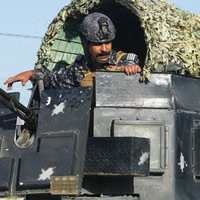
A member of the Iraqi police takes part in a security deployment on the outskirts of Jurf al-Sakhar, Babil province, Iraq, November 20, 2026. REUTERS/Alaa Al-Marjani

Iraq’s deployment of government forces to Jurf al-Sakhar, a longtime stronghold of Iran-backed Kataib Hezbollah, has raised questions about whether Baghdad can restore state authority or has merely reached a new compromise with powerful armed groups.

Experts told Iran International that the deployment marked a significant step in the government’s efforts to rein in militias, but cautioned that a withdrawal of Kataib Hezbollah fighters would not necessarily end Tehran’s influence.

Mukhlad Hazem, a former security adviser to the Iraqi parliament’s leadership, described the deployment as a step no previous Iraqi prime minister had dared to take, but said it was too early to assess its success.

Ahmed al-Sharif, an Iraqi strategic affairs expert, said even if Kataib Hezbollah withdrew from Jurf al-Sakhar, it could relocate its fighters to another strategically important area.

Iraqi Prime Minister Ali al-Zaidi announced on Friday the start of a drive to extend state authority across the country as army and federal police forces entered Jurf al-Sakhar, an area south of Baghdad that had been under the group’s control for 12 years.

“We have not entered a war. Everyone there is your brother,” Zaidi said in a video message to troops deployed in the area, officially known as Jurf al-Nasr.

Zaidi said his government sought to extend its authority throughout Iraq, combat corruption and end the presence of weapons outside state control.

Government forces entered without major clashes despite earlier threats by Kataib Hezbollah and mounting tensions with Baghdad.

However, subsequent reports indicated that Kataib Hezbollah fighters remained in the area even after government forces entered.

A deal to avert confrontation

The standoff escalated earlier this month after details of a confidential 19-page report on suspected oil smuggling in Jurf al-Sakhar appeared in Iraqi media on November 9.

Based on satellite imagery and an examination of oil transportation routes and tanker movements, the report identified suspicious activity near oil pipelines dating back to 2021.

Kataib Hezbollah denied allegations of involvement in illegal oil-related activities.

Zaidi ordered an investigation, but the dispute quickly widened into a confrontation over security control of the area.

Kataib Hezbollah defended its presence, saying it was necessary to prevent the resurgence of Islamic State and protect routes leading to the Shiite holy city of Karbala.

As tensions mounted, Esmail Qaani, commander of the Quds Force of the Islamic Revolutionary Guard Corps (IRGC), traveled to Baghdad for talks with Iraqi political leaders and armed groups.

Kataib Hezbollah confirmed on November 19 that its secretary-general, Abu Hussein al-Hamidawi, had met Qaani alongside Badr Organization leader Hadi al-Amiri and Popular Mobilization Forces (PMF) chairman Falih al-Fayyadh.

Iraqi media reported that Zaidi and Qaani had reached an understanding on the peaceful withdrawal of Kataib Hezbollah and its replacement by a joint security force.

Reuters also reported that Shiite political leaders had mediated a deal to avert an armed confrontation.

Under the arrangement, security responsibilities in Jurf al-Sakhar were divided among the army, federal police, energy police and units of the PMF.

Withdrawal or redeployment?

Sharif described Jurf al-Sakhar as one of Tehran’s key strongholds in its confrontation with the United States.

He said a gradual withdrawal could give Kataib Hezbollah time to await developments in negotiations between Tehran and Washington amid the risk of renewed escalation.

Sharif said Tehran opposed efforts to bring all weapons under Iraqi state control because doing so would deprive Iran of an important source of leverage in its dealings with Washington.

In his assessment, Tehran’s intervention was intended to prevent an armed confrontation between Iraqi government forces and Kataib Hezbollah while securing more time for the group to redeploy its fighters.

The US State Department said on November 18 that Washington expected the Iraqi government to hold Iran-aligned armed groups accountable for their violent and destabilizing activities.

Twelve years of displacement

Located in northern Babil province near the Euphrates River, Jurf al-Sakhar lies close to key routes connecting Baghdad with Anbar and Karbala provinces.

The predominantly Sunni Arab area was recaptured from Islamic State in October 2014 by Iraqi government forces and Shiite armed groups, including Kataib Hezbollah.

The group subsequently took control of security in the area, restricting access for displaced residents, journalists and many government officials.

More than 6,000 families have been displaced from Jurf al-Sakhar since 2014, according to Iraq’s Ministry of Migration and Displacement, with many still living elsewhere.

Hazem said Sunni political factions wanted the issue resolved and displaced families allowed to return.

He said the deployment of government forces and the establishment of an operations center had diminished Jurf al-Sakhar’s status as an area beyond the reach of state authorities.

Completing that process, however, would depend on bringing weapons exclusively under state control and addressing outstanding security and economic issues.

Hazem cautioned that Jurf al-Sakhar’s infrastructure had been severely damaged and that displaced residents would be unable to return without reconstruction.
Tehran claims its missiles can reach Europe. What has it shown?

Nov 24, 2026, 00:59 GMT+0
•
Negar Mojtahedi
100%
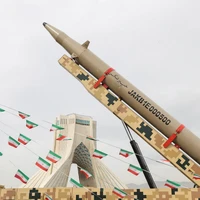
Iranian flags hang next to a missile on display during the forty-seventh anniversary of the Islamic Revolution in Tehran, Iran, February 11, 2026. Majid Asgaripour/WANA/Reuters

An Iranian lawmaker’s claim that Tehran’s missiles can now travel 4,500 kilometers and a front-page boast by Tehran daily Hamshahri that all of Europe is within reach have renewed questions about Iran’s ability to strike the continent.

Experts told Iran International the threat should be taken seriously, though Iran has yet to demonstrate that it can reliably hit targets at that distance.

Ahmad Bakhshayesh Ardestani, a member of Iran’s parliamentary National Security and Foreign Policy Committee, made the 4,500-kilometer claim on Monday without offering technical evidence.

Hamshahri, a newspaper run by Tehran’s municipality, touted a range of roughly 5,000 kilometers. The Islamic Revolutionary Guard Corps (IRGC) has said it lifted its self-imposed 2,000-kilometer limit but has given no details about whether longer-range missiles have been deployed.

100%

What the Diego Garcia launches showed

The clearest indication that Iran may have exceeded its old 2,000-kilometer limit came in March, when it reportedly fired two missiles toward Diego Garcia, a joint US-British military base in the Indian Ocean. One was intercepted and the other failed in flight.

Jim Lamson, a senior research associate at the James Martin Center for Nonproliferation Studies at Middlebury College, assessed that both were intermediate-range ballistic missiles, or IRBMs, capable of traveling at least 4,000 kilometers.

“It does show that Iran had developed at least prototypes of IRBMs, but their design and production status remain unclear,” Lamson said.

He said US and Israeli strikes damaged Iran’s missile development and production facilities, leaving it unclear whether Tehran could build more of those missiles in the near term.

Farzin Nadimi, a senior fellow at the Washington Institute for Near East Policy who specializes in Iran’s military capabilities and Persian Gulf security, said Iran could build on its existing missile technology to extend its reach.

He suspects the two missiles fired toward Diego Garcia may have been modified versions of the Khorramshahr-4, a medium-range missile with a declared range of about 2,000 kilometers. Their identity remains unconfirmed.

“So they were technically capable of reaching Diego Garcia,” Nadimi said, citing the flight paths of both missiles.

The reported launches suggest Tehran was willing to attempt a strike well beyond its old limit.

Nadimi said some parts of southeastern Europe are already within reach of Iran’s existing missiles. He estimated that a range of 4,000 to 4,500 kilometers could put much more of Europe within reach, potentially including Britain.

What Europe should prepare for

Simone Ledeen, who oversaw US defense policy for the Middle East as a deputy assistant secretary at the Pentagon, said the threat to Britain and Western Europe is emerging and called on European governments to invest in missile defense now.

“European governments should plan for the capability arriving rather than wait for proof of it,” Ledeen said.

She said the most immediate danger comes from missiles that can already reach US forces and allies in the Middle East.

Reaching the continental United States would require a missile with substantially greater range. Ledeen and Nadimi said Iran’s space program provides some of the technology relevant to developing an intercontinental ballistic missile, a capability that would require further development and testing.

Why Tehran is making the threat now

Tehran’s latest missile claims came a day after US President Donald Trump told Fox News he was inclined to resume strikes on Iran after the new year if no deal was reached.

Kerri Bitsoff, a former senior US Treasury official who helped impose sanctions on networks supplying Iran’s missile and drone programs, said Tehran is using its longer-range missile claims to pressure Washington and its allies to back away from further military action and to turn public opinion against the war.

Bitsoff said Iran’s ability to rebuild and resupply its missile program is under strain. In her view, publicizing a longer range gives Tehran a way to exert pressure while its ability to field those missiles remains uncertain.

“I read it as once again, the regime looking for leverage,” Bitsoff said.