Ahmad Bakhshayesh Ardestani, a member of parliament's National Security and Foreign Policy Committee, said Monday that Iran's missile range had increased from 2,000 to 4,500 kilometers, placing European military bases within reach.
“Our young leader has announced that missiles must be made accurate and capable of precision strikes. This means we have Europe within our grasp,” Bakhshayesh Ardestani said.
The lawmaker offered no independent technical evidence for the 4,500-kilometer figure. Iran's previously declared missile range of approximately 2,000 kilometers already placed parts of southern and southeastern Europe within reach.
Daily threatens European bases
Hamshahri, a newspaper owned by Tehran Municipality, published an image on Monday under the headline “All of Europe within Iran's range.”
The newspaper suggested that an order to respond to attacks without geographical restrictions could signal a shift in Iran's military strategy.
“Increasing the range of ballistic missiles to approximately 5,000 kilometers has raised concerns among Western countries,” Hamshahri wrote.
On November 3, Hamshahri published a map identifying US military bases and infrastructure across Europe as potential targets. Another article published by Hamshahri Online, citing the newspaper Javan, identified facilities in Cyprus and Greece.
Ebrahim Azizi, chairman of parliament's National Security and Foreign Policy Committee, said Monday that Iran's armed forces had developed the capability to make “enemies” regret attacking the country and were at their highest level of readiness, according to Tasnim, a news agency affiliated with the Revolutionary Guards.
Khamenei orders longer-range missiles
Qassem Qoreishi, deputy head of the Basij organization, said on November 18 that Mojtaba Khamenei had ordered the armed forces to increase missile range in response to the possibility of US operations shifting to more distant bases.
The following day, Qoreishi said Khamenei had also called for greater missile accuracy.
Mohammad Mokhber, an adviser to Khamenei, previously interpreted the leader's call for responses without geographical restrictions as removing limits on missile range.
The Revolutionary Guards subsequently announced that Iran's self-imposed 2,000-kilometer limit had been lifted, without specifying whether longer-range missiles had been developed or deployed.
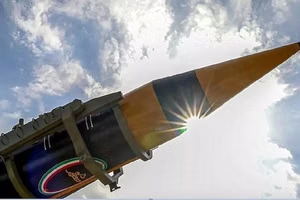
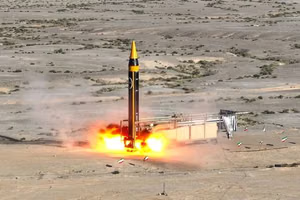
Tasnim has suggested that modifications to the Khorramshahr-4 missile, including reducing warhead weight, could extend its range to between 3,000 and 4,000 kilometers.
Missile capabilities face questions
An earlier Revolutionary Guards attack on the joint US-British base at Diego Garcia in the Indian Ocean involved two missiles, neither of which reached its target. One was intercepted and the other failed during flight.
Israeli officials estimated their range at approximately 4,000 kilometers, while the Associated Press raised the possibility that satellite-launch technology contributed to the extended range.
The unsuccessful strike did not establish that Iran possesses missiles capable of consistently delivering accurate strikes at such distances.
Damage to missile facilities and difficulties obtaining foreign components have further constrained production, leaving questions about whether Iran's declared longer-range capabilities can be deployed reliably.