• العربية
  • فارسی
BrandBrand
  • Iran Insight
  • Politics
  • Economy
  • Analysis
  • Special Report
  • Opinion
  • Podcast
  • Live TV
  • Iran Insight
  • Politics
  • Economy
  • Analysis
  • Special Report
  • Opinion
  • Podcast
  • Live TV
  • Theme
  • Language
    • العربية
    • فارسی
  • Iran Insight
  • Politics
  • Economy
  • Analysis
  • Special Report
  • Opinion
  • Podcast
  • Live TV
All rights reserved for Volant Media UK Limited
volant media logo

Iran says borders largely open, denies goods shortages despite US pressure

Nov 23, 2026, 16:13 GMT+0

Iran has experienced no shortages of goods despite mounting US economic pressure, while nearly all its land borders remain operational, Deputy Foreign Minister for Economic Diplomacy Hamid Ghanbari said Monday.

Speaking to state news agency IRNA, Ghanbari said Iran had prepared for trade disruptions by diversifying commercial routes, expanding northern trade links and developing agreements with neighboring countries and the Eurasian Economic Union.

He acknowledged that difficulties at Iran's southern ports had forced much of the country's commercial traffic toward land crossings. Ghanbari said disruptions at some eastern and western borders had been resolved, although infrastructure capacity was still being expanded to accommodate the additional cargo.

Ghanbari said US pressure had caused economic damage but argued that efforts to create shortages and public anxiety had failed. He said Iran's ability to respond to further restrictions was improving as alternative trade routes expanded.

Most Viewed

Truck drivers strike across Iran over economic hardship
1

Truck drivers strike across Iran over economic hardship

2

Iran signals readiness for Hormuz showdown despite US buildup

3

Trump threatens Iran strikes in new year, says blockade runners will be sunk

4

Inside Iran's online gun market, where a few messages can start a deal

5
EXCLUSIVE

Family source recounts Iranian girl's alleged killing by father

Banner

Spotlight

  • ‘The city smelled of blood’: Witness recalls Iran protest crackdown

    ‘The city smelled of blood’: Witness recalls Iran protest crackdown

  • Iran-linked hackers posed as US expert to target Australian broadcaster
    PODCAST

    Iran-linked hackers posed as US expert to target Australian broadcaster

  • Who gets to be a journalist? Iran seeks greater control over press
    INSIGHT

    Who gets to be a journalist? Iran seeks greater control over press

  • Iran hardliners push tanker convoy to defy US blockade

    Iran hardliners push tanker convoy to defy US blockade

  • War damage leaves Iran with few options to avert winter gas crunch
    ANALYSIS

    War damage leaves Iran with few options to avert winter gas crunch

Banner
Banner
Banner
Banner
Banner
Banner
•
•
•

More Stories

Don’t try to bypass us: Trump corridor in Armenia draws Tehran warning

Nov 23, 2026, 15:37 GMT+0
100%
FILE PHOTO: U.S. President Donald Trump holds the hands of Azerbaijan's President Ilham Aliyev and Armenian Prime Minister Nikol Pashinyan as they shake hands between each other during a trilateral signing event, at the White House, in Washington, D.C., August 8, 2025.

Iran warned Monday against using a US-backed transport corridor through southern Armenia to bypass Iranian territory, invoking the Strait of Hormuz as Armenia launched a project that would give Azerbaijan a land route to Turkey without crossing Iran.

“Fake routes will never replace real corridors, whether in Iran’s south or north,” Mohammad Mokhber, a senior adviser to Supreme Leader Mojtaba Khamenei, wrote on X. He cited both a route south of the Strait of Hormuz and the Trump corridor along Iran’s northern border, both backed by the United States.

“Iran’s geopolitical interests in the region are our red line, and we will not allow them to be bypassed,” Mokhber wrote. “Learn from the Strait of Hormuz.”

Armenian Prime Minister Nikol Pashinyan on Monday formally launched work on the Trump Route for International Peace and Prosperity (TRIPP) in Armenia’s southern Syunik region, describing it as the country’s largest economic project since independence.

"It is a great honor for me to announce the launch of the TRIPP project and the practical phase of the regional unblocking, carried out jointly by the governments of Armenia and the US," Pashinyan said, according to a statement from his office.

The Trump route would connect mainland Azerbaijan to its Nakhchivan exclave through Armenia’s southern Syunik province. Nakhchivan borders Turkey, but travel between the exclave and the rest of Azerbaijan has long depended in part on transit through Iran.

100%

Pashinyan said electricity would be an important part of the project. Armenia’s grid is already linked to Iran and Georgia. Pashinyan said his government now planned to connect it to the grids of Turkey and Azerbaijan as well.

Mokhber is the second senior Khamenei adviser this month to warn against the project. In a November 5 article in the Iranian newspaper Ettelaat, Khamenei’s foreign policy adviser Ali Akbar Velayati said he had told Armenia’s ambassador that if President Donald Trump and his allies crossed Iran’s red line, “we will break their legs.” He said Tehran would act to defend its interests in the South Caucasus with or without Russia.

Who controls the route?

The project grew out of an August 2025 White House declaration by Pashinyan and Azerbaijani President Ilham Aliyev aimed at reopening transport links after decades of conflict. Under the development agreement, Armenia would retain authority over customs, immigration and border security. A US-controlled entity would hold a 74% stake in the company developing the route, with Armenia holding the rest.

Hamed Khosroshahi, a researcher on the South Caucasus, wrote in Tehran’s Donya-ye Eghtesad newspaper that Yerevan had repeatedly assured Tehran it would retain sovereignty. For Iran, he said, “political assurances do not necessarily guarantee economic interests.”

The company’s power to choose contractors and decide where to invest would give Washington lasting influence over trade between Central Asia, the Caucasus and Turkey, Khosroshahi wrote.

He said US operators could invoke sanctions to restrict Iranian companies’ access, though Tehran could offset some of the lost transit business by improving its rail links and expanding energy trade with Armenia.

Deadly poisonings fuel anger over Iran's alcohol ban

Nov 23, 2026, 12:30 GMT+0
100%
A healthcare worker tends to a patient receiving respiratory support in an intensive care unit at a hospital in Iran.

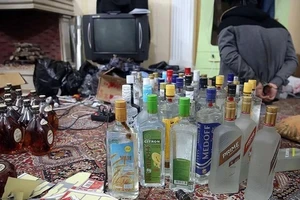
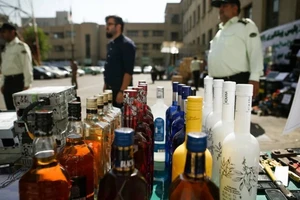
The poisoning of around 150 people and deaths of at least five from adulterated drinks have sparked widespread criticism of Iran's alcohol ban, with citizens blaming the policy for unsafe products and some accusing state institutions of distributing them.

At least five people have died after consuming counterfeit alcoholic drinks in Neyshabur, Shiraz and Marvdasht in recent days, according to official figures.

The number of people poisoned in Neyshabur reached 120, with four deaths, Milad Taqdisi Heydarian, acting deputy for treatment at Neyshabur University of Medical Sciences, said on November 22.

One patient was declared brain-dead and 11 others required intubation, according to the official figures.

Health officials in Shiraz also reported around 30 methanol poisoning cases in Shiraz and Marvdasht, leaving one person dead and four in intensive care.

Citizens blame prohibition for unsafe drinks

The poisonings prompted widespread reactions from Iran International's audience, with many arguing that the Islamic Republic's ban on alcohol production, sales and consumption has fueled an unregulated market.

  • Bootleg alcohol identified as top cause of deaths from poisoning in Iran

    Bootleg alcohol identified as top cause of deaths from poisoning in Iran

"Look at the result of prohibition. This is how they end up giving people poison," one citizen wrote.

Another criticized those who blamed the victims for drinking alcohol, questioning why Iran does not permit the sale of alcoholic drinks that meet international safety standards.

Several respondents argued that prohibition had failed to stop consumption while removing safeguards against dangerous products.

"People in our country drink alcohol. At least legalize it and regulate it. That would be better than the current situation," one citizen wrote.

"I don't drink, but its import and sale should be legalized," another said.

Fatal alcohol poisonings have repeatedly occurred in Iran. In December 2025, eight people died and one lost their sight after consuming contaminated drinks in separate cases in Iranshahr and Bampur.

Alcohol poisoning accounted for around five percent of 4,232 poisoning-related deaths during the first five months of the Iranian calendar year, according to a forensic medicine report published in October 2025.

Homemade and counterfeit alcoholic drinks were identified as major causes.

Revolutionary Guards accused of involvement

Some respondents accused institutions linked to the Islamic Republic, including the Revolutionary Guards, of distributing contaminated drinks.

"The Revolutionary Guards themselves distribute these counterfeit products," one citizen wrote.

Another described those supplying adulterated drinks as "system-affiliated sellers."

One respondent said methanol was advertised on Instagram as "90 percent corn alcohol" for 3000,000 rials per liter and accused the Revolutionary Guards of supplying it.

The actual number of alcohol poisoning cases could be [up to 10 times higher than emergency admission figures https, Deputy Health Minister Alireza Raisi said in October 2025, explaining that some victims avoid treatment because of fear or other reasons.

  • Who is behind the sale of lethal bootleg alcohol in Iran?

    Who is behind the sale of lethal bootleg alcohol in Iran?

Methanol poisoning can cause blindness, severe organ damage and death. Health officials in Neyshabur have yet to identify the substance responsible for the latest poisonings.

The deaths have renewed criticism of restrictions that citizens say leave consumers dependent on an unregulated market, with some demanding legalization and quality controls to prevent further fatalities.

Iran threatens European bases with missiles it says can reach 4,500 km

Nov 23, 2026, 10:38 GMT+0
100%
The front page of Tehran’s municipal newspaper Hamshahri on Monday featured an image under the headline “All of Europe within Iran’s range.”

Iranian officials have renewed threats against military bases in Europe, with a lawmaker saying the country's missiles can now reach 4,500 kilometers, more than twice their previously declared range.

Ahmad Bakhshayesh Ardestani, a member of parliament's National Security and Foreign Policy Committee, said Monday that Iran's missile range had increased from 2,000 to 4,500 kilometers, placing European military bases within reach.

“Our young leader has announced that missiles must be made accurate and capable of precision strikes. This means we have Europe within our grasp,” Bakhshayesh Ardestani said.

The lawmaker offered no independent technical evidence for the 4,500-kilometer figure. Iran's previously declared missile range of approximately 2,000 kilometers already placed parts of southern and southeastern Europe within reach.

Daily threatens European bases

Hamshahri, a newspaper owned by Tehran Municipality, published an image on Monday under the headline “All of Europe within Iran's range.”

  • Iran says missiles no longer bound by range limits

    Iran says missiles no longer bound by range limits

The newspaper suggested that an order to respond to attacks without geographical restrictions could signal a shift in Iran's military strategy.

“Increasing the range of ballistic missiles to approximately 5,000 kilometers has raised concerns among Western countries,” Hamshahri wrote.

On November 3, Hamshahri published a map identifying US military bases and infrastructure across Europe as potential targets. Another article published by Hamshahri Online, citing the newspaper Javan, identified facilities in Cyprus and Greece.

Ebrahim Azizi, chairman of parliament's National Security and Foreign Policy Committee, said Monday that Iran's armed forces had developed the capability to make “enemies” regret attacking the country and were at their highest level of readiness, according to Tasnim, a news agency affiliated with the Revolutionary Guards.

Khamenei orders longer-range missiles

Qassem Qoreishi, deputy head of the Basij organization, said on November 18 that Mojtaba Khamenei had ordered the armed forces to increase missile range in response to the possibility of US operations shifting to more distant bases.

The following day, Qoreishi said Khamenei had also called for greater missile accuracy.

Mohammad Mokhber, an adviser to Khamenei, previously interpreted the leader's call for responses without geographical restrictions as removing limits on missile range.

The Revolutionary Guards subsequently announced that Iran's self-imposed 2,000-kilometer limit had been lifted, without specifying whether longer-range missiles had been developed or deployed.

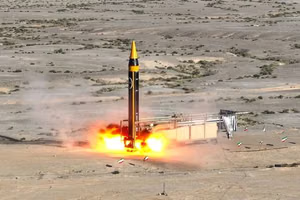
Tasnim has suggested that modifications to the Khorramshahr-4 missile, including reducing warhead weight, could extend its range to between 3,000 and 4,000 kilometers.

Missile capabilities face questions

An earlier Revolutionary Guards attack on the joint US-British base at Diego Garcia in the Indian Ocean involved two missiles, neither of which reached its target. One was intercepted and the other failed during flight.

Israeli officials estimated their range at approximately 4,000 kilometers, while the Associated Press raised the possibility that satellite-launch technology contributed to the extended range.

  • Iran state TV says modified missile could reach US base in Britain

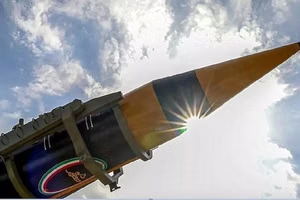
    Iran state TV says modified missile could reach US base in Britain

The unsuccessful strike did not establish that Iran possesses missiles capable of consistently delivering accurate strikes at such distances.

Damage to missile facilities and difficulties obtaining foreign components have further constrained production, leaving questions about whether Iran's declared longer-range capabilities can be deployed reliably.

Tehran's subsidence zone expands 20% in two years

Nov 23, 2026, 08:55 GMT+0
100%
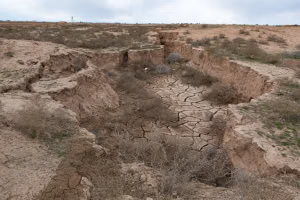
Deep cracks cut through dry ground in Iran, illustrating the impact of land subsidence.

The area affected by land subsidence in southwestern Tehran has expanded by around 20% over the past two years, driven by continuous groundwater extraction to supply drinking water to the capital, a senior Iranian official said on Monday.

Around 650 million cubic meters of groundwater are extracted annually from approximately 1,200 wells to supply Tehran and its surrounding areas, Ali Beitollahi, head of the earthquake and risk assessment department at Iran's Road, Housing and Urban Development Research Center, said.

Unlike agricultural wells, which may operate for only a few hours a day depending on seasonal demand, urban water supplies require year-round extraction, he said.

The continued pumping of groundwater in areas already affected by subsidence is lowering water tables and degrading water quality, Beitollahi said.

  • Land subsidence threatens villages and farms in southeast Iran

    Land subsidence threatens villages and farms in southeast Iran

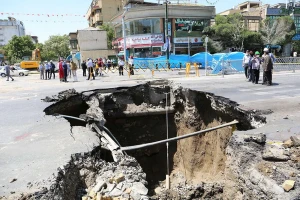
Buildings, gas pipelines, water networks and sewage systems could suffer structural damage as the ground sinks, he warned, adding that population density and earthquake risks must also be considered when assessing the danger.

Subsidence spreads across Iran

Iran's largest subsidence zones overlap with its most densely populated metropolitan areas, particularly Tehran and neighboring Karaj, followed by Isfahan, Beitollahi said.

The entire Isfahan metropolitan area is exposed to subsidence risks, he added.

The scale of the problem has expanded nationwide. Land affected by subsidence increased tenfold over eight years, from approximately 10,000 to 100,000 square kilometers, Reza Shahbazi, deputy head of Iran's Geological Survey, said in September.

A parliamentary research report cited by Shargh newspaper in June warned that subsidence had reached a critical stage, with around half of Iran's population living in affected areas.

Population concentration strains water supplies

Around 40% of Iran's population lives within 100 kilometers of 10 major population centers, including Tehran and Mashhad, according to Beitollahi.

The concentration of jobs, infrastructure and services in these areas has increased demand for water, energy and food, placing further pressure on groundwater reserves.

  • Nearly half of Iranians live in land subsidence zones, report warns

    Nearly half of Iranians live in land subsidence zones, report warns

Water conservation alone cannot resolve the problem because of the scale of population concentration, Beitollahi said.

He called for creating employment opportunities and improving living conditions elsewhere in Iran to reduce pressure on Tehran and Karaj, warning that continued population concentration would make future water supplies unsustainable.

US weighs delaying Iran strikes despite Israeli pressure for military action

Nov 23, 2026, 04:23 GMT+0
100%
US President Donald Trump arrives to speak at a press conference in the James S. Brady Press Briefing Room at the White House in Washington, DC, US, November 20, 2026. REUTERS

US President Donald Trump is considering postponing renewed strikes on Iran despite Israeli pressure for a joint military campaign, as disagreements over military action persist in Washington and regional mediators seek to revive negotiations.

The United States has decided for now to delay a potential attack by at least a week, Israeli news outlet Ynet reported Sunday, citing US administration officials. Trump is reportedly inclined to wait until after the new year before authorizing further strikes if negotiations fail.

The reported delay comes as Israeli Prime Minister Benjamin Netanyahu presses Washington for a short, intensive campaign that he believes could severely weaken Iran's government and potentially lead to its collapse. Trump's advisers remain divided over whether another offensive would achieve that objective or whether Washington should continue relying on its economic blockade of Iran.

US Central Command (CENTCOM), meanwhile, remains at maximum readiness and favors a joint strike with Israel, i24NEWS reported Sunday, citing Israeli security officials. A US source told the broadcaster that CENTCOM wanted either to proceed with an attack or stand down rather than remain on heightened alert indefinitely. An Israeli source described the atmosphere as “anxious waiting.”

Tehran is seeking to break the military and diplomatic stalemate with Washington, with more than 14 oil tankers reportedly gathering near Iran's main crude export terminal on Kharg Island for a possible attempt to breach the US naval blockade. The reported preparations, based on satellite imagery and vessel-tracking data, have not been independently confirmed, and it remains unclear whether the vessels will attempt to cross the blockade.

Asked Sunday about a possible Iranian attempt to breach the US naval blockade, Trump told Fox News: “I hope they do, they'll all be at the bottom of the sea like the rest of the navy.”

Egypt is working with Qatar, Turkey, Saudi Arabia and Pakistan to bring Washington and Tehran back to the negotiating table, Foreign Minister Badr Abdelatty said Sunday.

“I believe that there is a possibility for dialogue, for reaching a deal, and for reaching a compromise,” Abdelatty told CNN.

Iranian Deputy Foreign Minister Kazem Gharibabadi said Sunday that negotiations with Washington were continuing and that the window for diplomacy remained open. Iranian Foreign Minister Abbas Araghchi separately told a cabinet meeting that “the path of diplomacy continues.”

In a Truth Social post Sunday, Trump said Iran had intensified its missile and drone attacks following the November 3 US midterm elections.

“Iran has launched more drones and missiles in the last week than at any time for over a year,” he wrote. “Don’t worry, they’ve all been knocked down, and done no damage.”

In Washington, incoming House Speaker Hakeem Jeffries said Sunday that Democrats would seek to end the conflict when they take control of the House in January.

“We need to end this reckless and costly war of choice in Iran that has skyrocketed gas prices, food prices, and diesel prices,” Jeffries told CBS News.