• العربية
  • فارسی
BrandBrand
  • Iran Insight
  • Politics
  • Economy
  • Analysis
  • Special Report
  • Opinion
  • Podcast
  • Live TV
  • Iran Insight
  • Politics
  • Economy
  • Analysis
  • Special Report
  • Opinion
  • Podcast
  • Live TV
  • Theme
  • Language
    • العربية
    • فارسی
  • Iran Insight
  • Politics
  • Economy
  • Analysis
  • Special Report
  • Opinion
  • Podcast
  • Live TV
All rights reserved for Volant Media UK Limited
volant media logo

Iran's former IRGC Khatam al-Anbiya deputy says nuclear fatwa can change

Nov 22, 2026, 15:28 GMT+0
Mohammad Jafar Asadi, former deputy commander of the IRGC's Khatam al-Anbiya Central Headquarters

Religious rulings can change over time, with Islamic clerics potentially reaching different conclusions on the same issue, a senior Iranian Revolutionary Guards commander said Sunday.

Mohammad Jafar Asadi, former deputy commander of the IRGC's Khatam al-Anbiya Central Headquarters, was answering a question about the religious permissibility of building atomic bombs when he told Iranian media that such rulings depended on the views of qualified Islamic jurists, known as mujtahids.

"Religious rulings can change," Asadi said. "One jurist may say it is obligatory, while another may say it is recommended or discouraged."

His remarks highlight the flexibility of religious interpretations under Shiite jurisprudence and raise questions about the durability of the nuclear weapons ban attributed to the late Supreme Leader Ali Khamenei. Tehran has long cited Khamenei's religious decree, or fatwa, prohibiting nuclear weapons as evidence of its commitment to a peaceful nuclear program.

The comments come amid growing debate in Iran over changing its nuclear doctrine following US and Israeli strikes on its nuclear facilities. Foreign Minister Abbas Araghchi said Saturday that supporters of developing nuclear weapons had their arguments, but emphasized that Iran's official nuclear policy remained unchanged.

Most Viewed

Iran hardliners push tanker convoy to defy US blockade
1

Iran hardliners push tanker convoy to defy US blockade

2
ANALYSIS

War damage leaves Iran with few options to avert winter gas crunch

3

Who is Mohammad Javad Bavand, the ex-IRGC official sanctioned by US?

4

Iran signals readiness for Hormuz showdown despite US buildup

5

My mom knows, my dad doesn’t: The secret lives of young Iranian women

Banner

Spotlight

  • ‘The city smelled of blood’: Witness recalls Iran protest crackdown

    ‘The city smelled of blood’: Witness recalls Iran protest crackdown

  • Iran-linked hackers posed as US expert to target Australian broadcaster
    PODCAST

    Iran-linked hackers posed as US expert to target Australian broadcaster

  • Who gets to be a journalist? Iran seeks greater control over press
    INSIGHT

    Who gets to be a journalist? Iran seeks greater control over press

  • Iran hardliners push tanker convoy to defy US blockade

    Iran hardliners push tanker convoy to defy US blockade

  • War damage leaves Iran with few options to avert winter gas crunch
    ANALYSIS

    War damage leaves Iran with few options to avert winter gas crunch

Banner
Banner
Banner
Banner
Banner
Banner
•
•
•

More Stories

Power cuts return across Iran, threatening over one million jobs

Nov 22, 2026, 13:17 GMT+0
•
Baharan Azadi
100%
A shopkeeper works by lamplight inside a clothing store during a power outage in Iran.

Scheduled power cuts have resumed across Iran, disrupting homes, businesses and schools, with a lawmaker saying electricity shortages could cost more than one million jobs.

People in Tehran, Isfahan, Shiraz, Mashhad, Yazd, Kermanshah and Ardebil reported hours-long outages, often without notice, in messages sent to Iran International on Sunday.

“Today, November 22, we are at school and the power has gone out. It is cloudy, and we are sitting in class in the dark,” a student in Mashhad wrote.

The disruptions have also affected water supplies and internet access.

Fuel shortages force renewed power cuts

Mohammad Allahdad, chief executive of state electricity company Tavanir, announced Saturday that residential and commercial power restrictions would begin November 22 because of fuel shortages at power plants.

  • Power, water outages disrupt daily life across Iran

    Power, water outages disrupt daily life across Iran

Outages could last two hours every other day, increasing to two hours daily if temperatures fall further, Allahdad said.

The cuts have returned just two months after summer. During winter, increased household demand for natural gas used in heating reduces supplies available to thermal power plants, which generate most of Iran's electricity.

Economic journalist Mahtab Gholizadeh told Iran International that worsening gas shortages had disrupted electricity supplies even before severe winter weather arrived.

“Reforming energy consumption is the country's most urgent and important issue, and these reforms must begin with natural gas, not gasoline,” Parliament Speaker Mohammad Bagher Ghalibaf said Sunday.

Natural gas accounts for 73% of Iran's energy mix, compared with 9% for gasoline, Ghalibaf added.

Electricity shortages threaten jobs

Electricity shortages have contributed to 600,000 job losses over the past six months by reducing industrial production, lawmaker Nasrollah Pejmanfar told parliamentary news agency Khaneh Mellat on Sunday.

More than one million workers could lose their jobs if the shortages continue, Pejmanfar added.

100%
Residential buildings stand largely dark at dusk, illustrating the impact of recurring power cuts across Iran.

Around 16% of electricity demand at industrial estates went unmet during the Iranian year ending March 2026, with conditions worsening since then.

Industrial operators also face charges 4.5 times official electricity tariffs, squeezing profit margins and discouraging investment, Pejmanfar said.

Schools left in the dark

The outages have reached schools already struggling with inadequate heating.

Parents previously told Iran International that children attended lessons wrapped in blankets because heating systems were switched off.

“How are teachers supposed to teach and students supposed to learn with the lights off?” a Tehran resident asked, referring to President Masoud Pezeshkian's advice to conserve electricity.

Others described disruptions to water supplies and internet connections, alongside rising electricity bills.

In Arak, one person questioned why a 70-square-meter apartment had received a thirty-million-rial electricity bill despite continuing restrictions.

President's energy-saving advice draws criticism

President Masoud Pezeshkian said November 19 that he slept wearing a jacket and extra clothing and kept his household lights switched off to save energy.

“We sold our jackets so we could put bread on the table for our wives and children for one night,” a person in Mashhad wrote to Iran International.

Others questioned whether officials' families faced similar heating shortages.

  • Unprecedented energy shortage rattles Iranian industries

    Unprecedented energy shortage rattles Iranian industries

Government spokesperson Fatemeh Mohajerani raised the possibility of natural gas cuts earlier in November, while Pezeshkian said November 21 that winter shortages could create further problems.

Some Iranians attributed the recurring outages to mismanagement of the country's energy resources.

The renewed cuts have intensified pressure on households and businesses already struggling with rising costs and reduced industrial production.

Truck drivers strike across Iran over economic hardship

Nov 22, 2026, 12:47 GMT+0
100%
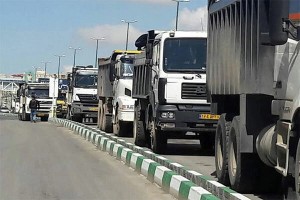
A line of trucks on a road in Iran at night, as truck drivers stage strikes over rising operating costs and worsening economic conditions.

Truck drivers in several Iranian cities have gone on strike over rising operating costs, stagnant freight rates and worsening economic conditions, with reports of work stoppages emerging on Sunday.

A video sent to Iran International showed a group of truck drivers stopping work in Shiraz, southern Iran, on Sunday.

The Telegram channel of the Union of Truck Drivers and Trucking Associations Across Iran also reported strikes in several cities, including Chabahar in southeastern Iran’s Sistan and Baluchestan Province and Dezful in southwestern Khuzestan Province, citing messages from its members.

“We went on strike because of these incompetent officials who do not care about the country or its people. We cannot go on like this anymore,” one driver wrote in a message to the union.

  • Explained: why Iran’s truckers are on strike and what it means

    Explained: why Iran’s truckers are on strike and what it means

Another driver pointed to soaring truck maintenance costs, saying 40 liters of engine oil and five filters now cost 620 million rials (approximately $230 at the free-market exchange rate).

For comparison, Iran’s minimum monthly wage in 2026 is about 166 million rials ($62), meaning the maintenance bill is equivalent to nearly four months of base pay for a minimum-wage worker.

A third driver urged colleagues to remain patient, arguing that the effects of a transport strike would take more than 24 or 48 hours to become visible.

“Be patient. Produce markets will empty, ports will empty, and factories will come to a halt,” the driver said.

Union backs nationwide strike

The Union of Truck Drivers and Trucking Associations Across Iran announced its full support for a nationwide strike on Saturday, November 21, calling on drivers across the country to stop work from November 22.

The union said freight rates had remained unchanged despite sharp increases in the prices of engine oil, tires and spare parts.

It also cited rising fuel, insurance, toll and repair costs, along with job insecurity and insufficient support for drivers, as reasons for the strike.

“This strike is a cry of protest from drivers who have spent years struggling under the weight of rising prices, injustice and neglect and can no longer endure these unbearable conditions,” the union said in its statement.

Economic pressures deepen

The strikes come as Iran faces renewed electricity outages and reports of long queues at petrol stations in several cities.

The continuation of the protests could encourage other professional groups to join, political analyst Iman Aghayari said in an interview with Iran International.

  • Truck driver strike tests Islamic Republic’s grip on road freight

    Truck driver strike tests Islamic Republic’s grip on road freight

The authorities are concerned about the potential spread of protests and are seeking to prevent other sections of society from joining through threats, inducements and repression, Aghayari added.

Iran's worsening economic conditions have placed growing pressure on households, particularly workers and pensioners struggling to meet everyday expenses.

Inside Iran's online gun market, where a few messages can start a deal

Nov 22, 2026, 12:39 GMT+0
•
Saman Rahmatian
100%

A few photographs, a price and an exchange of messages can be enough to initiate a gun deal in Iran, where sellers advertise everything from handguns and Kalashnikovs to weapons made with 3D printers.

An investigation by Iran International found dealers offering firearms through social media and messaging platforms, with some claiming they could deliver weapons anywhere in the country within two weeks.

The sellers describe a market shaped by financial hardship, fears of insecurity and demand from people seeking weapons to threaten or intimidate others.

But the scale of the trade remains unclear, as does how many advertised weapons actually change hands.

Who buys and sells guns in Iran?

One arms dealer told Iran International that some of his suppliers were livestock farmers, nomads and villagers who had owned rifles for years, including Brno, M1 and various shotguns.

Some legally possessed their weapons but had decided to sell them because of financial difficulties and rising living costs, he said.

Others owned unlicensed firearms, particularly military-style weapons, and feared their children or other family members might use them.

The dealer said he purchased weapons from their owners and resold them at a profit.

One seller said concerns about theft and personal security had prompted some wealthy Iranians to purchase firearms to protect themselves and their property.

Other customers, he claimed, were involved in illegal economic activities and sought weapons to collect debts, intimidate others or settle financial disputes.

From handguns to Kalashnikovs

Prices vary widely depending on the type, condition and country of manufacture of a weapon.

According to sellers interviewed by Iran International, prices for licensed Iranian-made firearms start at around 300 million tomans.

Handguns described as Turkish or Pakistani start at approximately 500 million rials, while weapons advertised as Beretta or Glock models can cost as much as $5,000.

One dealer quoted around 2 billion rials for a secondhand Chinese-made Kalashnikov, compared with as much as 8 billion rials for a Russian-made equivalent.

Ammunition is sold separately, with dealers quoting approximately 4,000,000 rials for a Kalashnikov cartridge and 8,000,000 rials for a Brno rifle cartridge.

These are asking prices rather than independently verified completed transactions.

Delivery across Iran

Social media advertisements examined by Iran International featured photographs and videos of firearms, accompanied by model names and prices.

One dealer claimed he could deliver weapons to different parts of Iran in less than 15 days. Another confirmed that delivery to Tehran was possible.

Some sellers demanded full payment before shipment, while others accepted deposits and the balance upon delivery.

One dealer claimed to have contacts with wholesale arms suppliers in Iraq's Kurdistan Region, allowing him to obtain different models from across the border. He promised refunds if a weapon could not be delivered.

Another seller said neither a buyer's identity nor the intended use of a weapon mattered to him. Once payment was received, he said, the firearm would be dispatched.

A market vulnerable to fraud

The proliferation of online gun advertisements has raised questions about how many sellers are genuine.

In a separate investigation conducted last year, reporters contacted five sellers advertising firearms through Telegram channels, but none provided a way to verify that they possessed the weapons on offer.

Two sent identical responses and price lists, raising questions about whether some advertisements were fraudulent or relied on common promotional templates.

Iranian police have reported operations against networks advertising and selling firearms online.

In early November, police announced that they had identified an online firearms distribution channel and seized two military-style handguns during an operation against suspects.

3D-printed guns enter the picture

The investigation also identified advertisements offering small, single-shot firearms described as having been manufactured using 3D printers.

Some have plastic bodies and unconventional shapes that can make them resemble toys, while their manufacture does not necessarily require industrial production facilities or the importation of complete firearms.

However, there is no reliable information about the number of producers in Iran, the volume of sales or the performance of the advertised models.

The emergence of such weapons has raised concerns internationally, with European researchers reporting increasingly sophisticated 3D-printed firearms and growing numbers of seizures.

Scale remains unknown

Official figures show thousands of illegal firearms being seized across Iran, although they offer only a partial picture of the market.

Police spokesman Saeed Montazerolmahdi said in November that firearms seizures had increased by 14% through the end of the Iranian month of Mehr, compared with the corresponding period a year earlier.

He said military-style weapons accounted for 31% of the firearms seized, with seizures in that category rising by 9%.

A review of police and judicial announcements across several provinces, alongside border enforcement reports, produced a combined total exceeding 12,300 firearms.

The figures cover different reporting periods and may overlap, meaning the total does not necessarily represent 12,300 separate weapons.

Iran's mission to the United Nations previously reported that more than 60,000 illegal firearms had been seized and collected during 2022 and 2023.

The Small Arms Survey estimated that Iranian civilians possessed approximately 5.89 million firearms in 2017, equivalent to 7.3 weapons per 100 people.

The estimate included both legally and illegally held weapons. No similarly comprehensive, more recent estimate is available.

The human cost

According to police figures, 1,163 shooting incidents were recorded in Khuzestan during the first six months of the current Iranian year, ranging from armed disputes to gunfire at public celebrations.

In October, two shootings involving family disputes in Dehloran and western Tehran left seven people dead. The perpetrators of both attacks also died by suicide.

The same month, lawyer Taher Ahmadi was killed after encountering an armed confrontation in Shush.

Gunfire at wedding celebrations has also claimed lives. Five-year-old Mohammad Chakeri was killed in Fanouj in August, while 12-year-old Mohammad Omar Tarek died in Dashtiari in September.

These incidents illustrate the consequences of firearm use, but no comprehensive, recent nationwide figures are available for deaths and injuries caused by guns.

Despite increased seizures and tighter laws, the true size of Iran's illegal firearms market remains unknown.

What begins with a photograph, a price and a promise of delivery can end with a weapon in the hands of someone whose intentions the seller never questioned.

Bootleg alcohol kills four, poisons 72 in northeastern Iran

Nov 22, 2026, 07:58 GMT+0
100%
A patient receives treatment in a hospital intensive care unit in Iran. (File photo)

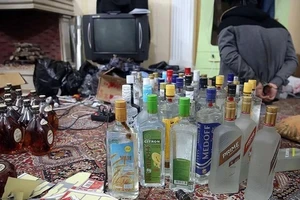
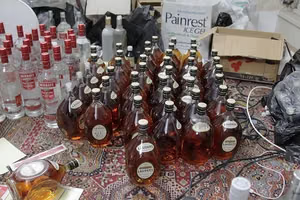
Four people have died and 72 have been poisoned by bootleg alcohol in the northeastern Iranian city of Neyshabur, health officials said on Sunday, and police said they had arrested 12 people over its production and sale.

The toll has risen quickly. A day earlier, officials reported three deaths and 66 people poisoned, up from 33.

Of the 72, 67 are men and five are women, said Milad Taghaddosi, deputy for treatment at Neyshabur University of Medical Sciences. Forty-nine patients are on dialysis, and eight have been sent to hospitals in Mashhad, the provincial capital, about 120 kilometers to the west. Earlier, officials said eight patients had been put on ventilators and one had been declared brain dead.

Police first arrested eight suspects, then three men and a woman they described as the main producers and distributors, Neyshabur's police chief, Mojtaba Mohebbati, said. The investigation was continuing, he said.

Officials have not said what caused the poisonings. Methanol, an industrial alcohol often found in counterfeit drinks, causes blindness, kidney failure and death, and dialysis is one of the main treatments for it.

A banned drink, a deadly market

Alcohol is banned in Iran for Muslims, who face flogging if caught drinking. Only recognized religious minorities are allowed to make it for private use. The ban has created a large black market in which homemade and counterfeit drinks, often made with cheap industrial alcohol, have repeatedly caused mass poisonings.

The worst came in early 2020, when hundreds of people died after drinking methanol in the false belief that it would protect them from COVID-19.

In July 2025, 31 people sought hospital treatment after drinking counterfeit alcohol in Dezful, in the southwest. One died and five were admitted to intensive care. In November 2025, eight people died of alcohol poisoning in Iranshahr and Bampur, in the southeast. One lost their sight.

  • Bootleg alcohol identified as top cause of deaths from poisoning in Iran

    Bootleg alcohol identified as top cause of deaths from poisoning in Iran

  • Bootleg Alcohol Claims One Life, Poisons 28 at Shiraz Gathering

    Bootleg Alcohol Claims One Life, Poisons 28 at Shiraz Gathering

Hidden numbers

The real number of alcohol poisonings in Iran could be up to 10 times what emergency departments record, Deputy Health Minister Alireza Raisi said in October 2025. Many people who fall ill avoid hospitals for fear of prosecution.

In September 2025, Raisi called Iran's per capita alcohol consumption a public health challenge and urged more treatment centers. Admissions for alcohol dependence at addiction treatment centers had risen by as much as 50 percent over the previous five years, the Rouydad24 news site reported that month.

100%
Medical personnel in Iran attend to a patient on a stretcher in a hospital emergency ward. (File photo)

Iran couldn’t execute them for murder, but found grounds on another charge

Nov 22, 2026, 04:35 GMT+0
•
Mahdi Amiri
100%
Milad Armoon (left) and Navid Najjaran, two Iranian political prisoners sentenced to death in Tehran's Ekbatan protest case.

Two Iranian political prisoners whose death sentences for murder had been overturned were moved to solitary confinement on Saturday, raising fears among their families that they could soon be executed on separate security-related charges.

Navid Najjaran and Milad Armoon were transferred to solitary cells at Ghezel Hesar Prison near Tehran after Iran’s Supreme Court upheld the death sentences imposed by a Revolutionary Court and referred them for enforcement, according to Dadban, a collective of pro bono lawyers in Iran.

Exiled prince Reza Pahlavi’s office published a video from Tehran’s Ekbatan neighborhood on Saturday night, saying residents chanted “Death to the Islamic Republic” amid fears for the two men.

The case began with the death of Arman Aliverdi, a member of the Basij, the Revolutionary Guards’ paramilitary force, during the Woman Life Freedom protests in Ekbatan in 2022. Security forces detained more than 50 young residents, and prosecutors brought charges against 14.

In 2024, a criminal court sentenced six defendants, including Najjaran and Armoon, to death for murder. The Supreme Court overturned those sentences in 2025. At retrial, the criminal court found that the evidence did not establish who had struck the fatal blow to Aliverdi’s head, according to the Iranian news outlet Rokna.

It acquitted Najjaran of participation in intentional murder. Armoon received five years in prison and was ordered to pay a share of the blood money.

Three days after the retrial verdicts, Judge Abolghassem Salavati sentenced Najjaran, Armoon and two other defendants to death in a parallel security case before Branch 15 of Tehran’s Revolutionary Court.

Rokna reported that the Revolutionary Court imposed the four death sentences for efsad-fil-arz, or “corruption on earth.” The rights group Iran Human Rights also identified it as the charge on which Najjaran and Armoon were sentenced to death.

Dadban gave a different account. It said the charge changed during the proceedings from moharebeh, or “waging war against God,” to “corruption on earth,” but that the final rulings were based on moharebeh.

Armoon’s lawyer, Mohammad Hossein Aghasi, told Emtedad in May that the court summoned his client from prison and told him orally that he had been sentenced to death for moharebeh. Aghasi attended the hearings but was absent when the sentence was announced. Another of Armoon’s lawyers, Ali Sharifzadeh, said he had been barred from the hearings.

“We don’t know what the ruling says or what the judge relied on,” Aghasi said at the time. “We haven’t even seen the ruling.”

Iran International has reported accounts of torture and coerced confessions in the case. In footage broadcast on state television, Armoon repeatedly denied killing anyone. A criminal court judge also found that police interrogations and the defendants’ statements against one another were insufficient proof.

In April, judiciary chief Gholamhossein Mohseni Ejei called for faster sentencing of those he described as “enemy agents.” He said, “In cases where confiscation and execution sentences must be issued against enemy agents, the process should be expedited.”

Mohammad Oliaei-Fard, a lawyer and one of the directors of the One Word Lawyers Network, told Iran International on November 21 that a court could still halt the executions by granting a retrial, even at the last moment.

He said some officials wanted to “close the case with a sacrifice” because they would see it as a defeat if no one were put to death over the Basij member’s killing.

“These executions, these prison terms and these sentences all stem from political issues and the pressure the Islamic Republic is under,” Oliaei-Fard said. He said the authorities were putting pressure on the public to buy time because they could offer no meaningful response to people’s demands.

“The Islamic Republic uses this policy to suppress people for fear that their demands will again lead to protests,” he said. “It is trying to buy time while refusing to make even the slightest change in its behavior.”