• العربية
  • فارسی
BrandBrand
  • Iran Insight
  • Politics
  • Economy
  • Analysis
  • Special Report
  • Opinion
  • Podcast
  • Live TV
  • Iran Insight
  • Politics
  • Economy
  • Analysis
  • Special Report
  • Opinion
  • Podcast
  • Live TV
  • Theme
  • Language
    • العربية
    • فارسی
  • Iran Insight
  • Politics
  • Economy
  • Analysis
  • Special Report
  • Opinion
  • Podcast
  • Live TV
All rights reserved for Volant Media UK Limited
volant media logo

Tanker hits naval mine near Strait of Hormuz, Iranian navy says

Nov 21, 2026, 11:35 GMT+0

An oil tanker caught fire after striking a naval mine in a restricted area east of the Strait of Hormuz, Iran's navy said on Saturday, following earlier reports of two attacks on tankers near Oman.

The tanker had entered the restricted zone despite warnings and had switched off its identification and navigation systems, the Iranian navy's public relations office said, describing the vessel as being in violation of maritime restrictions.

The United Kingdom Maritime Trade Operations (UKMTO) had earlier reported two attacks on oil tankers near Oman's coast in the Strait of Hormuz area.

Most Viewed

Tanker loads Iranian crude in Persian Gulf as Tehran weighs resuming exports
1

Tanker loads Iranian crude in Persian Gulf as Tehran weighs resuming exports

2

Houthi missile attack damages Riyadh’s tallest building

3

Iran readies tankers to run US blockade, threatens Persian Gulf oil if fired on

4
ANALYSIS

War damage leaves Iran with few options to avert winter gas crunch

5

Iran hardliners push tanker convoy to defy US blockade

Banner

Spotlight

  • Iran-linked hackers posed as US expert to target Australian broadcaster
    PODCAST

    Iran-linked hackers posed as US expert to target Australian broadcaster

  • Who gets to be a journalist? Iran seeks greater control over press
    INSIGHT

    Who gets to be a journalist? Iran seeks greater control over press

  • Iran hardliners push tanker convoy to defy US blockade

    Iran hardliners push tanker convoy to defy US blockade

  • War damage leaves Iran with few options to avert winter gas crunch
    ANALYSIS

    War damage leaves Iran with few options to avert winter gas crunch

  • A tough winter for Iran's cement industry, a tougher one for steel
    ANALYSIS

    A tough winter for Iran's cement industry, a tougher one for steel

  • How Iranians are turning grief into defiance
    OPINION

    How Iranians are turning grief into defiance

Banner
Banner
Banner
Banner
Banner
Banner
•
•
•

More Stories

Iran’s internet bill targets anonymity by tying accounts to real identities

Nov 21, 2026, 11:16 GMT+0
•
Hooman Abedi
100%
A woman checks her smartphone on a street in Iran at night.

A bill before Iran’s parliament would require online service providers to verify their users’ identities, making it easier for the state to trace anonymous accounts in a country where social media posts have led to prison terms and even death sentences.

Under the Cyberspace Regulation Bill, which is still under review by lawmakers, providing a digital service to anyone whose identity has not been verified would become a violation.

Users would not have to show their real names in public. But accounts run under pseudonyms could be linked to real people through the data providers collect, and handed to regulators on request.

For Iranians who write under pseudonyms, the difference is between being anonymous to the public and being anonymous to the state. The bill would remove the second.

What the bill would change

Companies that offer services before verifying users would face penalties including advertising bans, a ban on registering new users, fines of up to 10 percent of annual revenue, and suspension or loss of their licenses, according to details published by the Shargh daily in late August.

Failing to hand over information requested by regulators would also count as a violation.

The bill would also strengthen the Supreme Council of Cyberspace, Iran’s highest internet policymaking body, and its executive arm, the National Cyberspace Center.

The latest draft drops an earlier clause that would have made using a VPN a crime, though the state’s powers to block content remain.

‘James the Faithless’

The case of Amirhossein Mousavi shows what can happen once the state puts a name to an account.

  • Iran sentences activist to death over X posts, lawyer says

    Iran sentences activist to death over X posts, lawyer says

Mousavi ran an account on X called James Bidin, a play on the name of the American actor James Dean. In Persian, “bidin” means “faithless” or “without religion.”

A Revolutionary Court sentenced him to death for “corruption on earth” over his online activity, his lawyer, Reza Shafakhah, said on November 4. He also received five years in prison for insulting religious sanctities.

Mousavi, held since December 2024, faced several charges over posts attributed to his account, including national security offenses and alleged cooperation with Israel.

In a letter from Tehran’s Evin prison, he rejected the charges and said his televised confessions had been extracted under pressure from interrogators.

The new bill played no part in his case. It would make the first step, identifying the person behind the account, routine.

100%
Two men use their smartphones on a street in Iran.

A long line of controls

  • Iran withdraws cyber bill after outcry over free speech

    Iran withdraws cyber bill after outcry over free speech

  • Iran restores internet after 88-day blackout, keeps social media blocked

    Iran restores internet after 88-day blackout, keeps social media blocked

  • Iranians report SIM cards blocked over political posts and likes

    Iranians report SIM cards blocked over political posts and likes

  • Iranians told to post pro-government content to regain internet access

    Iranians told to post pro-government content to regain internet access

The bill follows earlier attempts to tighten state control of the internet. The Internet Protection Bill, known in Iran as the Sianat plan, sought more control over foreign platforms and online communications but stalled after widespread opposition.

The government of President Masoud Pezeshkian withdrew a separate bill on “combating the dissemination of false content in cyberspace” in July 2025 after criticism.

Iran has repeatedly cut off the internet during unrest and war, including during the January massacre and for 88 days after the US and Israel launched their war on Iran on February 28, cutting millions of Iranians off from independent news and from the outside world.

Major international platforms remain blocked, and many Iranians rely on VPNs to get online.

Iran International has documented cases of people whose SIM cards were blocked after political posts or interactions on social media.

Some who tried to have their service restored were asked for personal details, home addresses and the names of their social media accounts.

Iran-linked hackers posed as US expert to target Australian broadcaster

Nov 21, 2026, 10:09 GMT+0
•
Negar Mojtahedi
100%
Australian broadcaster Erin Molan says she was targeted in an Iran-linked cyber-espionage operation after someone posing as a US think tank expert sent her an online meeting invitation.

Australian broadcaster Erin Molan said she was targeted by Iran-linked hackers posing as a US think tank expert, and that the head of Australia’s domestic intelligence agency told her she was one of three Australians targeted.

The other two were journalist Sharri Markson and political commentator Michael Kroger, she said. Molan, host of The Erin Molan Show, told Iran International’s Eye for Iran podcast that she found a security alert she had missed only after reading about a similar approach to Markson.

She contacted police and the head of the Australian Security Intelligence Organization, ASIO, who told her the operation had been linked to Iran.

The case adds to a list of suspected Iranian hacking operations aimed at journalists and public figures who speak out against Tehran, and comes a year after Australia expelled Iran’s ambassador over arson attacks that ASIO linked to Iran.

A message about her father

The first message arrived on X. The sender praised Molan’s work, cited specific things she had said in support of the Iranian people and brought up her late father, Jim Molan, a retired major general and senator.

“Anyone knows the way to my heart is talking to me about my dad,” Molan said. “It’s my favorite subject.”

The name on the message belonged to a real think tank expert. Molan found her profile on the organization’s website and saw she had appeared on CNN. About a month after the first approach, Molan clicked a link to join a meeting.

The screen behaved oddly and she heard strange noises, she said. Nobody joined. When she emailed to ask what had happened, the sender said the expert had been called away and would reschedule. Molan said she was annoyed at having set aside the time, and moved on.

Months later, Markson’s account prompted her to search her inbox, where she found an alert showing a security breach. She sent the material to police.

“The person inside her account was not her,” Molan said of the expert.

A borrowed account

Markson told NewsNation that she had received messages that appeared to come from a former Trump administration official she had known for years. The senders used his X account without his knowledge and repeatedly tried to set up an online meeting. She grew suspicious and contacted him directly. He knew nothing about it.

  • 'Charming Kitten' exposed: spy unit led Iran’s surveillance for deadly plots

    'Charming Kitten' exposed: spy unit led Iran’s surveillance for deadly plots

Markson said Australian intelligence officials linked the operation to Charming Kitten, a hacking group tied to Iran’s Revolutionary Guards that has long impersonated journalists and think tank experts to win targets’ trust.

She said she believed she was singled out for her coverage of antisemitism, her support for Israel and her criticism of the Islamic Republic.

Molan said the messages to her referred to her public statements distinguishing between Iran’s rulers and its people. “They were referencing specific things that I had said in defense of the Iranian people,” she said.

An FBI call

Jonathan Harounoff, a journalist and former Israeli spokesperson to the United Nations, told Eye for Iran that he received an Instagram message from someone posing as a reporter for Britain’s Telegraph.

The sender said they had read his book, Unveiled, and cited specific points they wanted to discuss in an interview.

  • UK running offensive cyber operations against Iran, Russia and China - Sky News

    UK running offensive cyber operations against Iran, Russia and China - Sky News

  • EU, UK tell Iran to stop ‘hybrid attacks on European soil’ and Hormuz strikes

    EU, UK tell Iran to stop ‘hybrid attacks on European soil’ and Hormuz strikes

He was ready to agree, he said, until the sender grew impatient and began sending more links. He contacted the reporter through her work email. She had not sent the messages, and the account was later disabled.

About six months later, he said, the FBI called to tell him he had been targeted in a hacking attempt it attributed to the Iranian state.

From hacking to sabotage

Iran’s cyber operations in the West have gone beyond espionage. On November 10, France blamed a Guards-affiliated unit for an October sabotage campaign against refrigeration controls at more than 700 stores, which French officials said caused fires and spoiled food worth tens of millions of euros (tens of millions of dollars).

Paris summoned Iran’s ambassador. Tehran rejected the accusation.

  • France probes blood freezer hack after blaming Iran for similar attacks

    France probes blood freezer hack after blaming Iran for similar attacks

Molan said the experience made her question even routine encounters. When she arranged to hand her laptop to police in Sydney, she said, she wondered how she could be sure the people she was meeting were really officers.

She has faced threats before. After bomb threats following the October 7 attacks in Israel, she needed police escorts, and people close to her urged her to step away from the subject. She was back on air the following week.

“I cannot be silenced,” she said. “I will never be silenced.”

Bessent says Iran’s rulers will turn on each other, Pezeshkian warns of hard winter

Nov 21, 2026, 09:21 GMT+0
100%
US Treasury Secretary Scott Bessent leaves after a press conference in the James S. Brady Press Briefing Room at the White House in Washington, DC, US, November 20, 2026.

US Treasury Secretary Scott Bessent said Iran’s rulers were “wounded cornered animals” who would soon turn on each other, as President Masoud Pezeshkian told business leaders on Saturday that Iran was in a silent economic war harder than the missile war.

  • Shroud-wearing hardliners accuse Revolutionary Guards of defying Khamenei

    Shroud-wearing hardliners accuse Revolutionary Guards of defying Khamenei

  • War damage leaves Iran with few options to avert winter gas crunch

    War damage leaves Iran with few options to avert winter gas crunch

  • Iran readies tankers to run US blockade, threatens Persian Gulf oil if fired on

    Iran readies tankers to run US blockade, threatens Persian Gulf oil if fired on

  • Iran hardliners push tanker convoy to defy US blockade

    Iran hardliners push tanker convoy to defy US blockade

“We are two and a half months into Operation Economic Outcast, and it is the greatest program in the history of the world to isolate a single country. And it is working,” Bessent said in a Newsmax interview on Friday.

“The Iranians thanks to our great Navy have no oil in the water for the first time since they have begun producing oil.”

“The regime is starting to turn on itself, and they are starting to warn the Iranian people that it’s going to be a tough winter,” he said.

Members of the Revolutionary Guards might turn on each other, he said, adding: “We’re starting to see signs of that from public statements.”

Bessent, who moved with his family to a military base this month over threats US officials attribute to Iran, said he regarded “the bounty that they have on my head as a sign of success.”

Tehran might lash out with “indiscriminate shooting in the Middle East,” he said. “But they are wounded cornered animals.

Asked whether it would count as a failure if the Islamic Republic outlived the Trump administration, he said it would depend on whether Tehran chose “to do what’s best for the Iranian people” or kept its “fanatical and fantastical determination to get a nuclear weapon.”

  • Iran's wartime rallies turn against officials, fuel political feuds

    Iran's wartime rallies turn against officials, fuel political feuds

  • Hardline daily accuses government of scaring Iranians, says there is no crisis

    Hardline daily accuses government of scaring Iranians, says there is no crisis

Chinese President Xi Jinping and Russian President Vladimir Putin had both agreed at their summit with Trump in Shenzhen that Iran could never have a nuclear weapon and that the Strait of Hormuz should be open, he said.

“We’ve seen them kill tens of thousands of innocent Iranian people,” Bessent said. “I’m not going to be cowed.”

‘A silent war’

In Tehran on Saturday, Pezeshkian told an annual capital markets conference that Iran faced a war “much harder than a war in which missiles are fired and destruction happens.”

“It is an economic war, and not a simple one,” he said. The enemy had expected famine and empty shelves, he said, but production had kept going.

He acknowledged that the coming winter would be hard. Iran already faced energy shortfalls before the war, he said, and attacks on its gas production capacity had made them worse. “The expectation is that we will face problems in winter,” he said.

  • Iran could launch dirty-bomb attack, but risks make it unlikely

    Iran could launch dirty-bomb attack, but risks make it unlikely

  • Iran says the US must ‘surrender’ to seven conditions. What are they?

    Iran says the US must ‘surrender’ to seven conditions. What are they?

If gas or power ran short, industry would be the last to be cut, Pezeshkian said, and government offices would lose electricity before factories. In the past, he said, factories had been the first to be cut “so that people would not protest.”

He also criticized loss-making state companies, one of which he said held 2,100 trillion rials (about $770 million) in assets and another 1,900 trillion rials (about $700 million), and questioned why their managers still received bonuses. “We cannot keep doing this forever,” he said.

Araghchi mocks threats behind Bessent’s move

Foreign Minister Abbas Araghchi, in an interview with the government daily Iran published on Saturday, mocked the threats that led Bessent to move to a military base.

US officials, he said, had accepted “ridiculous” claims that Iran planned to attack Washington with a chemical bomb, assassinate American leaders or hide missiles under dams. “Mr. Bessent goes to a military base and changes where he lives,” he said.

  • Iran's top clerical governing body calls for nuclear doctrine review

    Iran's top clerical governing body calls for nuclear doctrine review

  • Debate continues in Tehran over prospects for US deal after midterms

    Debate continues in Tehran over prospects for US deal after midterms

Araghchi said Iran had sent Washington a seven-day plan through Qatar in late September, under which the United States would carry out its commitments first, Iran would reopen the Strait of Hormuz and talks on a final deal would begin.

About 10 days before the US midterm elections, at the mediators’ suggestion, Tehran shortened it to two days, he said, but Washington never replied. The plan was still on the table, he said, if President Donald Trump stated clearly that he wanted a deal and took confidence-building steps.

“If Iran’s demands are met, the Strait of Hormuz will be opened,” he said, adding that the two-day timeline could even be cut to “two hours.”

On Iran’s roughly 400 kilograms of uranium enriched to 60 percent, close to weapons grade, Araghchi set out two red lines: it would not leave the country, and it would be used for Iran’s needs “with whatever definition we have of those needs.”

He also gave unusual space to calls inside Iran to change the country’s nuclear doctrine, a debate in which some officials and clerics have urged leaving the Nuclear Non-Proliferation Treaty.

Those who want a change argue that staying in the treaty and under UN inspections had not protected Iran’s nuclear sites from being bombed, he said.

“We should not imagine that those who want to change the doctrine have weak logic,” he said. “They too have strong logic.”

The official doctrine had not changed, he said, and Russia and China opposed a change.

Who gets to be a journalist? Iran seeks greater control over press

Nov 21, 2026, 06:01 GMT+0
•
Behrouz Turani
100%
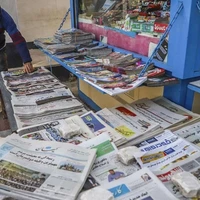
File photo: A man browses newspapers at a newsstand in Iran.

Iran is moving to tighten controls on journalists at home while threatening to pursue exiled media figures abroad, as lawmakers revive a controversial licensing proposal and the judiciary seeks to enlist Interpol in its crackdown on dissidents.

The proposed legislation would require journalists to obtain government-approved licenses to work, potentially placing their professional credentials under direct state oversight.

The proposal, first introduced in 2014, was shelved following strong opposition from journalists and media professionals. Hardliners in parliament revived it last week.

Babak Negahdari, head of the Majles Research Center, was quoted by the hardline news outlet Young Journalists Club as saying the proposal "has been finalized as a bill" and would be brought to a parliamentary vote within the next three months.

The legislation calls for the creation of a "Journalism Organization" modelled on the Iranian Medical Council, which regulates the licensing and professional practice of physicians.

Critics argue that the proposed body would undermine press freedom by placing journalists' professional credentials under state control.

Media lawyer Kambiz Nowrouzi said this week that the bill remains "the same 2014 draft with the same serious problems and fundamental flaws."

In an editorial in the moderate daily Shargh, he argued that the proposed Journalism Organization would effectively function as a government body, creating "a double filter for greater control over professional press organisations."

When introduced in 2014, the proposal was described as "abnormal" and "catastrophic" by journalism professor Hassan Namakdust, who warned it would leave "nothing of journalists' independence, status, and dignity."

Public reaction to its revival has so far been muted, possibly because of the intense security pressures facing journalists today.

The political environment has also changed. Parliament is dominated by hardliners, and the latest proposal originates from lawmakers rather than a government ministry.

Chasing exiled dissidents

Meanwhile, Iran's judiciary has announced efforts to pursue the arrest and extradition of dissidents and media figures living abroad through Interpol, alongside the confiscation of their assets inside Iran.

At a November 17 press briefing, Judiciary Spokesman Asghar Jahangir said authorities had confiscated assets belonging to a number of Iranians living abroad whom Tehran accuses of "treason" and other offences.

He said the judiciary was working through Interpol and its International Affairs Department to secure their arrest and extradition.

Although Jahangir did not release a full list of names, state television and affiliated outlets have repeatedly singled out exiled journalists working for Persian-language broadcasters such as Iran International, BBC Persian and VOA Persian when threatening asset confiscation, consular restrictions and Interpol Red Notices.

However, Article 3 of Interpol's Constitution prohibits the organisation from undertaking activities of a political, military, religious or racial character.

An Interpol Red Notice is also not an international arrest warrant, and Western host countries routinely reject extradition requests based on political or speech-related charges.

Nevertheless, the announcement has heightened concerns among Iranian journalists in Europe and the United States, some of whom fear questioning or delays at border crossings and airports when travelling internationally.

Other restrictive bills

The revived Journalism Organization Bill is the third in a series of legislative initiatives that critics say are intended to restrict freedom of expression and tighten state control over information.

The first two were the Foreign Influence Bill and the Bill to Organise Cyberspace.

The Foreign Influence Bill, which would criminalize interviews and other forms of contact with foreign-based media outlets, received initial parliamentary approval on August 16 by 183 votes to four, with five abstentions.

President Masoud Pezeshkian's cabinet formally opposed the legislation on August 23, but the government has no veto over parliamentary bills. The measure still requires a final parliamentary vote and Guardian Council approval.

The Bill to Organise Cyberspace, also known as the Protection (Sianat) Bill, was submitted to parliament on August 26.

Critics have described it as a rebranded version of the previously shelved Sianat internet bill. Among other measures, it would require internet service providers to identify and verify their users.

The legislation must undergo review by parliament's Social Commission before a floor vote and final consideration by the Guardian Council.

Together, the three proposals would expand state oversight of traditional and digital media, while the judiciary's latest announcement signals continued pressure on Iranian journalists abroad. Whether the revived licensing bill becomes law remains uncertain, but it is now being considered by a hardline-dominated parliament alongside other measures aimed at tightening controls on information.

Iran hardliners push tanker convoy to defy US blockade

Nov 21, 2026, 02:29 GMT+0
•
Maryam Sinaiee
100%
An illustration published by the Revolutionary Guards-affiliated Fars News Agency depicts the mythical Persian hero Fereydoun leading a convoy of Iranian oil tankers escorted by warships

Iranian hardliners are calling for a convoy of oil tankers to challenge the US naval blockade, threatening military retaliation against regional energy infrastructure if Washington attempts to stop the vessels.

The proposal, published Thursday by the Revolutionary Guards-affiliated Fars News Agency, calls for tankers to sail to China and threatens strikes on oil facilities in the United Arab Emirates, Saudi Arabia and Qatar if the US intervenes. It emerged shortly after reports that an unsanctioned tanker had been loaded at Iran's Kharg Island oil terminal.

Fars dubbed the plan “Operation Fereydoun,” after a legendary hero in the Persian epic Shahnameh.

No official plans for a convoy have been announced, although Foreign Minister Abbas Araghchi said Friday that Iran would break the blockade.

“A blockade is a military action. A military action also has a military response,” political and military analyst Nima Akbarkhani said during a Thursday night discussion on Iranian state television.

Akbarkhani described a previously discussed scenario in which Iranian tankers would sail individually with their Automatic Identification System (AIS) signals switched on and Iranian flags displayed, while Tehran announced in advance which regional facilities it would target if any vessel were attacked.

During the Be Vaght-e Iran program, host Ruhollah Razavi suggested placing media teams, members of the public and international anti-war activists aboard the tankers to increase the political and media costs of any US intervention.

Akbarkhani endorsed the idea, arguing that unlike vessels sent to Gaza, which Israel prevented from reaching their destination despite extensive media coverage, Iran could deter attacks on blockade-breaking tankers by threatening military retaliation.

Support for confrontation grows

Political analyst Mostafa Najafi, recently described in Iranian media as an adviser to Supreme National Security Council Secretary Mohsen Rezaei, wrote on X that Supreme Leader Mojtaba Khamenei had ordered an end to the “neither war nor peace” situation some time ago.

Najafi suggested that the effort extended beyond diplomacy, with military options also under consideration.

“Apparently, Tehran no longer wants to sit back and watch the blockade and threats,” he wrote.

Majid-Reza Hariri, president of the Iran-China Chamber of Commerce, called on Iranians across the political spectrum to support efforts to break the blockade.

“After months of pursuing negotiations in various ways, every Iranian patriot, regardless of political outlook, should support the government in breaking the naval blockade imposed by the aggressive United States by any means possible,” he wrote Friday.

Media analyst Alireza Shiva argued that Iran was signaling that energy security in the Persian Gulf could not be defined unilaterally.

“You cannot target Iran's oil exports while expecting the energy exports of others to continue in complete security,” he wrote on X.

A high-risk strategy

Hardline journalist Parisa Nasr argued that Iran had made a strategic mistake by treating the blockade as a negotiating issue rather than a wartime measure intended to weaken the country and force its surrender.

She advocated a strategy of “bringing the crisis to the brink” to pressure Washington into easing the blockade while strengthening Iran's deterrence against attacks on its tankers.

Energy analyst Abdullah Babakhani offered a more cautious assessment, suggesting that US forces might initially allow some Iranian tankers through before pursuing and potentially seizing them in international waters.

He compared the scenario to operations involving the pursuit and seizure of tankers linked to Venezuela last year, saying Iran's response to such an eventuality remained unpredictable.

China, Iran's largest oil buyer before the blockade, has been identified as the intended destination for the proposed convoy. Whether Beijing would accept the shipments remains unclear.

The proposal therefore presents Tehran with a potentially consequential choice: continue seeking a negotiated end to the blockade or test Washington's willingness to enforce it at the risk of a wider military confrontation.