• العربية
  • فارسی
BrandBrand
  • Iran Insight
  • Politics
  • Economy
  • Analysis
  • Special Report
  • Opinion
  • Podcast
  • Live TV
  • Iran Insight
  • Politics
  • Economy
  • Analysis
  • Special Report
  • Opinion
  • Podcast
  • Live TV
  • Theme
  • Language
    • العربية
    • فارسی
  • Iran Insight
  • Politics
  • Economy
  • Analysis
  • Special Report
  • Opinion
  • Podcast
  • Live TV
All rights reserved for Volant Media UK Limited
volant media logo

Guards say they await US ground operation, threaten helicopters

Nov 19, 2026, 13:42 GMT+0

Iran's Revolutionary Guards are prepared for a potential US ground operation and have greater capabilities in ground combat than in air or naval warfare, spokesman Hossein Mohebbi said Thursday.

"We are actually waiting for the US to launch a ground operation so it can test its capabilities and see what happens," Mohebbi said.

Mohebbi also said the US military lacked the capability to conduct helicopter-borne operations because Iranian forces would shoot down its helicopters.

Most Viewed

How Thai clerics in Iran were recruited to attack Israeli embassy in Bangkok
1
EXCLUSIVE

How Thai clerics in Iran were recruited to attack Israeli embassy in Bangkok

2

US strikes Qeshm Island after Iran drone attack on American base in Bahrain

3

Iran's wartime rallies turn against officials, fuel political feuds

4

Killing of Iranian schoolgirl sparks calls for legal reform

5
ANALYSIS

A tough winter for Iran's cement industry, a tougher one for steel

Banner

Spotlight

  • GTA 6 costs, slow internet frustrate Iranian gamers, fuel satire

    GTA 6 costs, slow internet frustrate Iranian gamers, fuel satire

  • A tough winter for Iran's cement industry, a tougher one for steel
    ANALYSIS

    A tough winter for Iran's cement industry, a tougher one for steel

  • Tehran seizes on NYT dam report to widen retaliation threats

    Tehran seizes on NYT dam report to widen retaliation threats

  • How Iranians are turning grief into defiance
    OPINION

    How Iranians are turning grief into defiance

  • A cow's sit-in: why a comedy sketch struck a nerve in Iran

    A cow's sit-in: why a comedy sketch struck a nerve in Iran

  • Iran could launch dirty-bomb attack, but risks make it unlikely
    ANALYSIS

    Iran could launch dirty-bomb attack, but risks make it unlikely

Banner
Banner
Banner
Banner
Banner
Banner
•
•
•

More Stories

GTA 6 costs, slow internet frustrate Iranian gamers, fuel satire

Nov 19, 2026, 13:01 GMT+0
•
Hooman Abedi
100%
Promotional displays for the upcoming video game "Grand Theft Auto VI" (GTA 6) ahead of its scheduled release on November 19 inside a Saturn electronics store in Berlin, Germany, November 17, 2026

The release of Grand Theft Auto VI has sparked excitement, frustration and political satire among Iranian gamers, who face soaring prices, slow internet speeds and barriers to international payments.

For many Iranian gamers, the challenge goes beyond affording the game, with slow internet connections making downloading its roughly 200 gigabytes another obstacle.

"I really want to buy and download GTA, but when I think about having to download 200 gigabytes with this miserable internet speed and all the frustration that comes with it, I give up for now," one user wrote on X.

Another joked about the time required to download the game.

"With Iran's internet speed, I think my 200-gigabyte GTA download will finish by the time the next GTA comes out," the user wrote.

A game priced beyond many gamers' reach

GTA 6 costs an estimated 210 million rials in Iran, compared with 1.9 million rials for GTA 5 in 2013 and just 400,000 rials for GTA 3 in 2001.

That makes the latest installment more than 110 times as expensive as GTA 5 was 13 years ago and over 500 times the price of GTA 3 in 2001.

The increase largely reflects the rial's depreciation against the dollar. The US currency has risen from around 8,000 rials to 2.66 million rials on Iran's free market, an increase of more than 33,000%, while the game's international price has risen by just 60%, from $50 to $80.

For some gamers, purchasing the game is only part of the financial challenge.

"I want to play GTA, but I don't have the console. I'm just 1.9 billion rials short," one user joked, posting a bank account number alongside the message.

Another described the difficulties of buying the game legally through a gift card because Iranian consumers lack ordinary access to international credit cards and payment networks.

"I really went through hell to buy it. I wish we could use credit cards and the global financial system as easily as everyone else," the user wrote.

100%
Promotional displays for the upcoming video game "Grand Theft Auto VI" (GTA 6) ahead of its scheduled release on November 19 inside a Saturn electronics store in Berlin, Germany, November 17, 2026

The gamer said the purchase had eventually succeeded after a complicated process, adding that alternatives existed but they wanted to experience buying a game the way people with international credit cards do.

Download speeds expose digital divide

The game's large download size has also highlighted the difference between internet access inside Iran and abroad.

One Iranian user living outside the country posted that downloading approximately 210 gigabytes had taken just 32 minutes.

The post prompted a wave of responses from gamers inside Iran comparing their much longer download times.

"My download speed is great too," one user joked, sharing a screen showing 15 hours remaining.

Another user said downloading the game over an ADSL connection would take 72 hours, while a third reported an estimated 27 hours.

Gamers turn frustration into political satire

The excitement surrounding GTA 6 has also inspired digitally created images combining the game's release with jokes about Iran's political leadership and internet restrictions.

One satirical image shows Mojtaba Khamenei, Iran's supreme leader, reflected in a television displaying a PlayStation download screen for GTA 6.

Another manipulated screenshot replaces the game's estimated download time with the words "Until Mojtaba shows up," referring to new supreme leader’s continued absence from public view since the death of his father, Ali Khamenei, and his subsequent rise to power.

Other posts focused on the country's internet speeds, including a fabricated download screen estimating that the game would take 86 years and 22 days to download.

"I think the timing is perfect. By then, I'll have saved enough money to buy it, and we can play together," one commenter responded.

"Maybe in the next life, God willing," another wrote.

Excitement meets frustration

Despite the financial and technical barriers, anticipation for the game has remained high among Iranian social media users.

Some celebrated finally purchasing it, while others expressed disappointment at being unable to afford the necessary hardware or even watch gameplay videos online.

"The whole world is playing GTA 6 and having fun," one user wrote, describing their frustration with internet access in Iran.

"I don't even have enough internet to watch it in 240p," the user added.

Iranian students report heating restrictions despite cold weather

Nov 19, 2026, 10:20 GMT+0
100%
An empty classroom in an Iranian school, with a radiator alongside rows of desks.

Students in Iran have reported restrictions on heating in schools despite cold weather, forcing some to bring electric heaters into classrooms, according to messages sent to Iran International.

One student said education authorities had issued a directive prohibiting schools from switching on heating systems until mid-December.

“The weather is very cold, and nobody is responding. The principal and deputy principal just tell us to wear more clothes,” the student said.

“We had to bring an electric heater into the classroom to keep ourselves a little warmer, although it barely makes a difference,” the student added.

  • Students shiver in classrooms as Iran government warns of gas cuts

    Students shiver in classrooms as Iran government warns of gas cuts

The complaints come as Iran faces renewed pressure on its energy supplies ahead of winter, with natural gas shortages affecting industrial production and raising concerns about heating and fuel availability.

Gas shortages affect schools and industries

Iran International has recently reported on gas supply problems affecting the steel and cement industries, where restrictions have disrupted production.

Authorities have also warned of possible gas cuts during the winter if consumption rises sharply, with officials estimating a potential daily supply deficit of up to 430 million cubic meters.

  • Gas-rich Iran turns to Russia for an energy lifeline

    Gas-rich Iran turns to Russia for an energy lifeline

The country's heavy reliance on natural gas for residential heating, electricity generation and industrial production means that shortages can affect several sectors simultaneously as temperatures fall.

Gasoline shortages have also disrupted road transport, with truck drivers forced to wait overnight at fuel stations for their next fuel allocation, a citizen told Iran International in a message.

The person said truck drivers were parking overnight near roadside fuel stations because they could not obtain enough diesel to continue their journeys.

The account comes after recent reports of long queues at gasoline stations across Iran, including in Shiraz, Asaluyeh, Genaveh, Gerash and Jam.

Food prices and bread restrictions add to household pressures

Messages from residents across Iran also described rising food prices and restrictions on bread purchases.

A resident of Malard near Tehran said the price of a cream cheese product had increased from 1.6 million rials ($0.60) to 2.5 million rials ($0.94) within a week, an increase of more than 56 percent.

The increases come as Iran's statutory minimum monthly base wage stands at approximately 166 million rials ($62), excluding allowances, leaving low-paid workers particularly exposed to rising food prices.

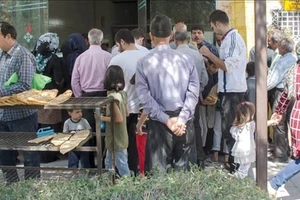
Bread shortages have added to the financial pressure on households, with residents in Ghiamdasht, southeast of Tehran, Qazvin, parts of the northern province of Mazandaran, and Khorramabad, the capital of western Lorestan province, reporting flour shortages and restrictions on bread purchases.

  • Daily reports secret bread rationing in two Iranian provinces

    Daily reports secret bread rationing in two Iranian provinces

A resident of Ghiamdasht said a bakery was limiting customers to two loaves of sangak traditional bread because of flour shortages. In Mazandaran, another resident said purchases of subsidized bread were restricted to six loaves per national identification number.

In Qazvin, a resident described flour rationing at bakeries, while a resident of Khorramabad said bread was being distributed according to household size and that flour purchased for home baking was of poor quality.

Hundreds of writers urge Iran to halt poet's execution

Nov 19, 2026, 09:27 GMT+0
100%
Peyman Farahavar, an Iranian poet sentenced to death on charges of armed rebellion and waging war against God.

Hundreds of poets and prominent literary figures worldwide have joined an international campaign calling on Iran to halt the execution of imprisoned poet Peyman Farahavar, whose death sentence has been upheld and referred for enforcement.

“Nowhere in the world should words and poetry be punishable by hanging,” the signatories said in a joint statement urging international action to save his life.

Among those backing the campaign are Goncourt Prize winners Leila Slimani and Marie NDiaye, International Booker Prize winner David Diop, American poet Charles Bernstein and French writer Daniel Pennac.

  • Iranian poet faces execution after review of death sentence denied

    Iranian poet faces execution after review of death sentence denied

Iranian poets and writers, including Hafez Mousavi, Fatemeh Ekhtesari, Fatemeh Shams, Mehdi Moosavi and Ziba Karbassi, also signed the appeal.

Death sentence upheld

The Writers' Association of Iran announced on November 15 that Farahavar's death sentence on charges of baghi (armed rebellion) and moharebeh (waging war against God) had been finalized.

Nobel Peace Prize laureate Narges Mohammadi said the same day that his case had been referred to the sentence enforcement department.

Human rights news agency HRANA reported on November 11, citing a source close to Farahavar's family, that he had informed relatives by telephone on November 9 that he had received official notification that his death sentence had been referred for enforcement.

100%
Peyman Farahavar, an Iranian poet sentenced to death on charges of armed rebellion and waging war against God.

Farahavar was sentenced to death in May 2025 by Branch One of the Revolutionary Court in Rasht. The Supreme Court upheld the sentence later that year and rejected his request for a retrial in April 2026.

Writers denounce forced confessions

Farahavar was arrested in 2022 over protest poetry, videos of poetry readings shared online and a solitary street demonstration, according to the campaign statement.

“His initial trial was conducted without a lawyer, and confessions extracted under duress formed the basis of his death sentence,” the signatories said.

The writers described the sentence as “manifestly unjust and contrary to recognized human rights standards and the principles of a fair trial.”

The statement also highlighted broader concerns about executions in Iran, particularly those involving protesters and people prosecuted for exercising freedom of expression.

“We, the poets signing this letter, call on the Iranian public, the media and international organizations, in the name of freedom and justice, to use every means at their disposal to compel the authorities of the Islamic Republic to immediately halt Peyman Farahavar's execution,” the statement said.

  • Jailed Iranian poet's death sentence upheld by Supreme Court

    Jailed Iranian poet's death sentence upheld by Supreme Court

The Writers' Association of Iran also said at least 20 writers and poets were serving prison sentences or being held in prolonged detention, with several facing serious charges.

The campaign called for an end to death sentences imposed for peaceful expression, warning that Farahavar's case reflected wider concerns over the treatment of writers and dissenting voices in Iran.

A tough winter for Iran's cement industry, a tougher one for steel

Nov 19, 2026, 04:13 GMT+0
•
Umud Shokri
100%
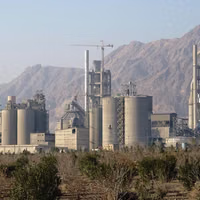
File photo: Tehran Cement factory has faced restrictions because of environmental concerns over air pollution in nearby populated areas of Iran's capital

The question facing Iran’s steel and cement industries this winter is not simply whether their gas supplies are cut, but how much they can continue producing afterward.


Iran faces a peak gas deficit of about 430 million cubic meters daily, compared with 300 million before US-Israeli strikes damaged its energy infrastructure.

Households take priority, but how much of the shortfall will fall on either industry remains uncertain.

Cement needs heat, which can come from alternative fuels. Much of Iranian steelmaking, however, needs gas to transform iron ore itself.

A cement factory that loses natural gas may still have a working kiln tomorrow. A steel plant that loses the gas feeding its iron-reduction unit may not.

Cement: The challenge of getting fuel

Iran's grey-cement producers were receiving only five to eight million cubic meters of gas daily against normal industry demand of 28 million before losing the remainder in late October, according to Tasnim. Most had already turned to mazut, a heavy fuel oil.

Iran nevertheless produced 6.44 million tonnes of clinker in October. That provides a baseline before the cutoff, not evidence that production continued at the same rate afterward.

Using the International Energy Agency's energy benchmark, maintaining October's clinker output without gas would require approximately 19 million liters of mazut daily, equivalent to about 760 deliveries by 25,000-liter tankers.

These are estimates, not forecasts. Kilns differ in efficiency, and the fuel must actually arrive. Losing 200 tanker deliveries would mean losing enough heat to produce roughly 54,000 tonnes of clinker daily, assuming no backup fuel.

Cost is another obstacle. Tasnim reported mazut transport charges of 2,000–2,500 tomans per liter. At 19 million liters, trucking alone would cost 38–47.5 billion tomans daily, excluding fuel purchases. Power plants also compete for the same tankers and mazut.

Iran International reported that 22 cement factories stopped their kilns in December 2024. Tehran Cement could not burn mazut because of pollution restrictions near populated areas. A 2026 report described Lamerd Cement operating at around 60 percent of capacity over the preceding two years because its distance from fuel suppliers made reliable mazut deliveries uneconomic.

Having an alternative fuel, in other words, does not guarantee that a factory can use it.

Cement can outlast its kilns, briefly

Even when a kiln stops, a grinding mill can turn stored clinker into finished cement, provided electricity remains available. This can conceal the scale of disruption.

In July, clinker production fell nearly 39 percent year-on-year, while cement production rose 5 percent.

October cement output averaged approximately 214,000 tonnes daily. Assuming clinker accounts for 80 percent of finished cement, sustaining that rate with every kiln stopped would consume about 171,000 tonnes of stored clinker each day.

At that pace, one million tonnes of accessible clinker would last fewer than six days. Maintaining production for a month would require more than five million tonnes. National inventories are not publicly verified.

October's exports included 668,000 tonnes of cement and 285,000 tonnes of clinker, adding to competition for available supplies. Slower production can stretch stocks but reduces sales, while electricity shortages can stop grinding mills even sooner.

Steel: Gas is an ingredient

Iran's electric-furnace steel industry is particularly exposed because much of it relies on direct-reduced iron, also known as sponge iron.

In these plants, natural gas is converted into hydrogen and carbon monoxide to remove oxygen from iron ore.

Iran produced about 14 million tonnes of sponge iron during January–June 2026. Using a published benchmark of 265 cubic meters of gas per tonne of sponge iron, maintaining that production rate would require approximately 20.5 million cubic meters of gas daily.

A daily gas reduction of five million cubic meters could put roughly 19,000 tonnes of sponge-iron production at risk; a ten-million-cubic-meter cut could put 38,000 tonnes at risk.

These are estimates of potential exposure, not predictions of actual production losses.

Plants also cannot necessarily operate at half capacity when their gas supply is halved. Iron-reduction units require specific gas flows, temperatures and chemical conditions. Below certain levels, an entire unit may have to shut down.

Where the alternatives run out

Steelmakers can keep their furnaces running for a time by using stored sponge iron, purchasing other iron materials or increasing their use of scrap metal. Iran's smaller blast-furnace operations also rely on a different production process.

Replacing just ten days of Iran's recent sponge-iron output would require around 770,000 tonnes of suitable material. Finding that much would be difficult when supplies are tight, prices are high and electricity shortages are already disrupting operations.

Some steel production could therefore continue after gas supplies are cut, but maintaining normal output would become difficult as available materials run low.

Cement producers have more flexibility, but their experience shows that fuel substitution depends on delivery, cost and permission to burn alternative fuels. Neither industry's losses can be reliably forecast without knowing how much fuel and material individual factories have in reserve.

Both industries may continue producing after gas supplies are cut, but their output will depend on the availability and cost of alternative fuels and raw materials.

What matters this winter is not simply whether factories remain open, but how much they can produce, at what cost and for how long.

Trump says he won’t ask Xi or Putin for help on Iran

Nov 19, 2026, 03:46 GMT+0
100%
US President Donald Trump, Russian President Vladimir Putin and China’s President Xi Jinping attend a photo session before the welcome banquet at the Asia-Pacific Economic Cooperation (APEC) summit in Shenzhen, Guangdong province, southern China, November 18, 2026. Iori Sagisawa/Pool via REUTERS

US President Donald Trump said Wednesday in an interview with Fox News that he would not ask Chinese President Xi Jinping or Russian President Vladimir Putin for help ending the war with Iran.

The three leaders are scheduled to meet Thursday afternoon in Shenzhen, China, on the sidelines of the Asia-Pacific Economic Cooperation (APEC) summit.

Speaking to Fox News senior White House correspondent Jacqui Heinrich in Shenzhen, Trump said: “We don't need any help. We've defeated their navy. We've defeated their air force. We've defeated their anti-aircraft.”

“I'm not going to go in asking for help,” he said, adding that the United States had total control of the Strait of Hormuz.

Earlier this week, Trump said he planned to discuss Iran, the war in Ukraine, nuclear arms control and trade with Xi and Putin. The precise agenda remains unclear.

The diplomatic gathering also comes amid differences between Washington, Beijing and Moscow over trade and international security. Xi criticized trade protectionism and called for open trade, while Putin said Western sanctions imposed on Russia over the war in Ukraine had backfired.

Trump also told Fox News that a preliminary agreement with Iran reached in Islamabad had been “a waste of time,” while pledging to bring the war to an end soon.

“I want a deal that can be lasting,” he said. “I'm going to finish it off — soon. One way or the other, we'll finish it off.”

He praised the US naval blockade of Iran as Washington's most effective measure and said the preliminary understanding had allowed the administration to assess Tehran's approach to negotiations.

The comments came amid reports that Washington was considering renewed military action against Iran. The New York Times reported Wednesday that Trump was weighing another round of extensive strikes, although no decision had been made.

Trump warns of Iran's chemical, biological weapons

Trump also said there were indications Iran was exploring chemical and biological weapons following US efforts to curb its nuclear program.

“There is an indication that Iran is looking at gas, is looking at bio, because we've shut them out with the nuclear,” he told Fox News.

Asked about reports of a possible Iranian plot to detonate a radioactive dirty bomb in Washington, Trump warned of retaliation.

“If it does happen, we wipe them out,” he said.

CNN reported Monday, citing seven US officials, that intelligence indicated Iran was developing plans to potentially target senior Trump administration officials in Washington with a radioactive dirty bomb or chemical weapon.

US officials differed over whether Iran had the capability or intention to carry out such an attack, according to CNN.

The New York Times also reported Wednesday that US Treasury Secretary Scott Bessent's relocation to a military base was linked to Israeli intelligence about an Iranian plot to use chemical agents against senior American officials, citing a person briefed on the intelligence.