Trump says he won’t ask Xi or Putin for help on Iran

US President Donald Trump said Wednesday in an interview with Fox News that he would not ask Chinese President Xi Jinping or Russian President Vladimir Putin for help ending the war with Iran.
US President Donald Trump said Wednesday in an interview with Fox News that he would not ask Chinese President Xi Jinping or Russian President Vladimir Putin for help ending the war with Iran.
The three leaders are scheduled to meet Thursday afternoon in Shenzhen, China, on the sidelines of the Asia-Pacific Economic Cooperation (APEC) summit.
Speaking to Fox News senior White House correspondent Jacqui Heinrich in Shenzhen, Trump said: “We don't need any help. We've defeated their navy. We've defeated their air force. We've defeated their anti-aircraft.”
“I'm not going to go in asking for help,” he said, adding that the United States had total control of the Strait of Hormuz.
Earlier this week, Trump said he planned to discuss Iran, the war in Ukraine, nuclear arms control and trade with Xi and Putin. The precise agenda remains unclear.
The diplomatic gathering also comes amid differences between Washington, Beijing and Moscow over trade and international security. Xi criticized trade protectionism and called for open trade, while Putin said Western sanctions imposed on Russia over the war in Ukraine had backfired.
Trump also told Fox News that a preliminary agreement with Iran reached in Islamabad had been “a waste of time,” while pledging to bring the war to an end soon.
“I want a deal that can be lasting,” he said. “I'm going to finish it off — soon. One way or the other, we'll finish it off.”
He praised the US naval blockade of Iran as Washington's most effective measure and said the preliminary understanding had allowed the administration to assess Tehran's approach to negotiations.
The comments came amid reports that Washington was considering renewed military action against Iran. The New York Times reported Wednesday that Trump was weighing another round of extensive strikes, although no decision had been made.
Trump warns of Iran's chemical, biological weapons
Trump also said there were indications Iran was exploring chemical and biological weapons following US efforts to curb its nuclear program.
“There is an indication that Iran is looking at gas, is looking at bio, because we've shut them out with the nuclear,” he told Fox News.
Asked about reports of a possible Iranian plot to detonate a radioactive dirty bomb in Washington, Trump warned of retaliation.
“If it does happen, we wipe them out,” he said.
CNN reported Monday, citing seven US officials, that intelligence indicated Iran was developing plans to potentially target senior Trump administration officials in Washington with a radioactive dirty bomb or chemical weapon.
US officials differed over whether Iran had the capability or intention to carry out such an attack, according to CNN.
The New York Times also reported Wednesday that US Treasury Secretary Scott Bessent's relocation to a military base was linked to Israeli intelligence about an Iranian plot to use chemical agents against senior American officials, citing a person briefed on the intelligence.










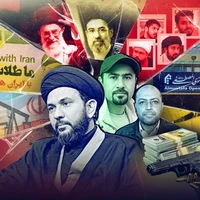

US Treasury Secretary Scott Bessent's relocation to a military base was linked to Israeli intelligence about an alleged Iranian plot to use chemical agents against senior American officials, The New York Times reported Wednesday, citing a person briefed on the intelligence.
Bessent relocated from his Washington-area home to a military base earlier this month following threats attributed to Iran. In a Friday interview with CNBC, he said he had followed Secret Service instructions and would not be intimidated by the threats.
The Treasury secretary has spearheaded Washington's economic pressure campaign against Iran, including Operation Economic Outcast, launched in August to tighten sanctions and financial restrictions and pressure Tehran to reopen the Strait of Hormuz.
The reported threat comes amid broader US intelligence concerns about possible Iranian attacks against senior American officials.
CNN reported Monday, citing seven US officials, that intelligence indicated Iran was developing plans to potentially target senior Trump administration officials in Washington with a radioactive dirty bomb or chemical weapon.
US officials differed over whether Iran had the capability or intention to carry out such an attack.
President Donald Trump said Tuesday that Washington was examining the intelligence and warned Iran of severe consequences if it carried out an attack.
“Well, if there is, they will pay a price the likes of which no country has ever paid before,” Trump told reporters in Manila when asked whether an attack was imminent.
Secretary of State Marco Rubio said Wednesday that he did not believe Washington faced an imminent threat.
“I don't think there is any imminent threat,” Rubio told reporters, adding that US authorities remained alert to potential dangers.
Iran's Foreign Ministry rejected the allegations as baseless. The White House said it was monitoring potential threats but had identified no credible threat to the US homeland at that time.
Israeli officials have also warned that Iran could equip drones with chemical or biological weapons to attack Israel or neighboring countries, according to the Times.
US intelligence officials have identified indications of Iranian efforts to strengthen chemical and biological weapons capabilities, the newspaper reported. However, the Times said US intelligence officials largely assessed that Iran was developing those capabilities as a deterrent against major US or Israeli attacks, rather than for preemptive use.
US Director of National Intelligence Jay Clayton told a congressional hearing Wednesday that threats from Iran against Americans at home and abroad had increased substantially, although he declined to discuss specific intelligence about the reported Washington attack plot.
US officials warned Wednesday of Iranian threats against Americans and sanctioned Tehran-linked networks, while Iranian officials threatened regional oil infrastructure, missile strikes and revenge for Ali Khamenei's killing.
In written testimony submitted to the House Homeland Security Committee, FBI Deputy Director Christopher Raia accused Iran of espionage, cyber operations and plots against American officials and dissidents, citing 18 Iran-related counterintelligence and espionage arrests since President Donald Trump returned to office.
Homeland Security Secretary Markwayne Mullin warned that Iranian cyber operatives increasingly targeted US transportation, healthcare, water, energy and financial services.
Director of National Intelligence Jay Clayton also described a substantial increase in threats from Iran, particularly plots targeting Americans at home and abroad.
Washington's response extended to Iran's regional financial networks, with the Treasury Department sanctioning a Hezbollah-linked charity and a gold-and-cash smuggling network in Lebanon and Turkey.
The department said the network transferred funds from the Revolutionary Guards' Quds Force to Lebanon on Hezbollah's behalf, while Treasury Secretary Scott Bessent pledged continued action against Tehran's financing operations.
Iranian officials warn of retaliation and wider attacks
In Tehran, officials issued a series of threats of their own. The Intelligence Ministry said it was awaiting an opportunity to avenge the killing of former Supreme Leader Ali Khamenei and other Iranian officials, while Ahmadreza Pourkhaghan, head of the armed forces' judicial organization, called for identifying and targeting US and Israeli military bases in the region.
The warnings extended to Iran's missile capabilities. Deputy Basij chief Ghasem Ghoreishi said Supreme Leader Mojtaba Khamenei had ordered the armed forces to extend their missile range, while Army Chief Amir Hatami warned of a stronger response to “adversaries' mistakes.”
Hassan Ghashghavi, spokesman for parliament's national security committee, went further, saying: “Today, the enemy does not know on which continent the Islamic Republic’s missiles will land.” He also dismissed the prospect of concessions to Washington.
Earlier Wednesday, the US military warned that vessels receiving Iranian cargo through ship-to-ship transfers could face seizure or other enforcement action under Washington's naval blockade.
Deputy Parliament Speaker Hamidreza Haji Babaei turned his attention to regional energy infrastructure, calling for attacks on oil pipelines and ship-to-ship transfers bypassing the Strait of Hormuz.
He argued that other countries should be prevented from exporting oil while Iran's exports remained blocked and threatened energy facilities in countries allowing attacks on Iran from their territory.
Wednesday's developments reflected an increasingly confrontational exchange, with Washington targeting Iranian security and financial networks while Tehran threatened to expand the geographic reach and economic consequences of any renewed conflict.
Iraq's army was awaiting orders Wednesday to take control of a stronghold of Iran-backed Kataib Hezbollah south of Baghdad, as reports emerged that IRGC Quds Force commander Esmail Qaani had met Iraqi Prime Minister Ali al-Zaidi to help defuse the escalating standoff.
“The army is awaiting zero hour to move and take control of the area of Jurf al-Sakhar,” Defense Ministry spokesperson Yahya Rasool said, according to Lebanese newspaper An-Nahar, adding that the operation would follow a plan approved by Prime Minister Ali al-Zaidi.
Rasool said security forces were coordinating their efforts and expressed hope that the operation would proceed without confrontation. According to the Defense Ministry, the army would protect energy transmission lines and help displaced residents return to the area, provided they were not wanted by judicial or security authorities.
Earlier Wednesday, Iraq's armed forces command approved a plan to deploy army, federal police and Popular Mobilization Forces (PMF) units to take control of Jurf al-Sakhar, a stronghold of Kataib Hezbollah. Under the plan, an army brigade, a federal police brigade and two PMF brigades would each take responsibility for a sector, while energy police would secure oil pipelines.
The planned deployment follows a warning Tuesday from Kataib Hezbollah that it would confront government forces if they attempted to enter Jurf al-Sakhar, which the group has controlled for more than a decade.
“If a war is imposed on us we will fight,” a Kataib Hezbollah official told journalists visiting the area, according to the Associated Press.
The standoff poses a test of Zaidi's efforts to bring Iran-backed armed groups under state control, amid concerns about possible fighting.
Two Kataib Hezbollah officials told AP Tuesday that Qaani, commander of the Islamic Revolutionary Guard Corps' Quds Force, arrived in Baghdad on Monday to help mediate the dispute between the militia and Iraqi authorities.
Iraqi Kurdish outlet Rudaw reported Wednesday, citing two senior Iraqi officials, that Qaani met Zaidi on Monday night and was told the militia must withdraw peacefully or face intervention by Iraqi security forces.
The tensions intensified after Iraqi authorities launched an investigation into allegations that Kataib Hezbollah had used Jurf al-Sakhar, in Babil province about 60 kilometers southwest of Baghdad, to smuggle oil worth tens of millions of dollars.
Iraqi lawmaker Ali Anhair told the state-run Iraqi News Agency (INA) that investigators reviewed documents and surveillance footage showing about 25 tanker trucks, each capable of carrying 36,000 liters of oil.
“The reports reviewed by the committee were shocking and included evidence and documents proving the existence of smuggling operations in Jurf al-Nasr, supported by photographs, videos and footage captured by drones,” he said.
Authorities also dismissed nine security and administrative officials and referred suspects to the judiciary.
Kataib Hezbollah denied the smuggling allegations. An official from the group told journalists visiting Jurf al-Sakhar on Tuesday that two facilities in the area refined oil solely to fuel its vehicles and electricity generators, AP reported.
The United States has backed efforts to disarm Iran-backed militias in Iraq as part of its broader push to reduce Tehran's regional influence. The United States designated Kataib Hezbollah as a foreign terrorist organization in 2009.
Lebanon’s Hezbollah, acting under the IRGC Quds Force’s direction, recruited six Thai clerics who had studied in Qom for a plot to attack the Israeli embassy in Bangkok, a Western intelligence source and a source close to the Quds Force told Iran International.
The sources identified the six men as recruits of Unit 910, the overseas operations unit of the Iran-backed Lebanese group. They said the plot was thwarted.
One member of the network said a Lebanese man he knew as Abu Hassan was his direct handler and supplied him with information for the planned attack.
The two sources identified Abu Hassan as Majed Abdullah, also known as Fadi Kassab, and said he began recruiting students at Al-Mustafa International University in Qom around 2020 with help from the Quds Force.
Kassab’s earlier mission in Bangkok
Kassab’s involvement in Thailand dated back to at least 2012, the sources said. That year, he entered the country under an assumed name to plan and oversee attacks on Israeli interests in Bangkok. The sources identified Hussein Atris, a Swedish-Lebanese national arrested at Bangkok airport that year, as one of his operatives.
Atris led Thai police to a warehouse outside the capital where bomb-making materials had been stored. A Thai court convicted him the following year of illegally possessing the materials.
The two sources said Kassab prepared recruits for Unit 910 and had also been linked to operations in Cyprus, Bulgaria, the United States and Canada. They described a division of responsibilities in Iran. A Lebanese national named Mohammad Hassan oversaw Hezbollah’s operations in the country and trained recruits, while Kassab planned attacks on Israeli interests.
From Qom’s seminaries to Bangkok
At the center of the Thai network, the sources said, was Mubarak Hosseini, a cleric who had spent more than three decades in Iran and later became head of Al-Mustafa’s alumni association.
His family’s ties to Iran went back to 1985, when his cousin Salman Hosseini, a Shia cleric, came to the country and was recruited by the Hojjatieh Association, the sources said. Salman subsequently made regular trips to Thailand to recruit others, including Mubarak.
In a 2023 interview with the Iranian publication Ofogh-e Howzeh, Mubarak said he arrived in Iran in 1991 and studied first at Qom’s seminary, then at the International Centre for Islamic Studies. He later pursued a doctorate in political science at Al-Mustafa, which was founded in 2008 on the orders of then-Supreme Leader Ali Khamenei.
The US Treasury sanctioned the university in 2020, saying the Quds Force used it to recruit for intelligence work and overseas operations.
Mubarak went on to head the Association of Thai Clerics and manage the Thai-language website of Khamenei’s office. In Bangkok, he established the Ahl al-Bayt religious center and founded an association called Supporters of Velayat-e Faqih, a reference to the doctrine of clerical rule underpinning the Islamic Republic.
Speaking to Iranian state television, Mubarak said he founded the association to “express affection for the Supreme Leader and the leader of Muslims” and to “prevent British and American Shiites from gaining influence in Thailand, in accordance with the Supreme Leader’s instructions.”
Family ties among the recruits
Mubarak and Salman helped Hezbollah recruit five other men from among Al-Mustafa’s students, the two sources said. Four of the five had family ties to Mubarak or to one of the other recruits.
The sources identified two of Mubarak’s sons-in-law, Mohammad Koim Akbar Syed and Seyyed Abbas Sadarsan, as members of the network. A third recruit, Ismail Pathan, was Mohammad Koim’s brother-in-law. Pathan graduated from Al-Mustafa and is active in the Ahl al-Bayt World Assembly, an Iranian religious organization that operates under the supreme leader’s supervision.
The fourth was Mubarak’s nephew, Ahmad Hossein Prathansakul, also an Al-Mustafa graduate, the sources said.
The sources identified Syedaree Sakkitticha as the only one of the six with no fa
mily connection to the others. They said he organized anti-Israel demonstrations in Bangkok. In 2023, Sakkitticha accompanied Meysam Motiei, an Iranian religious chanter associated with Khamenei’s office, during a visit to Thailand.
Quds Force source names three financial backers
The source close to the Quds Force identified three Iranian institutions affiliated with the supreme leader as financial backers of the network. They were Al-Mustafa International University, the Ahl al-Bayt World Assembly and Astan Quds Razavi, a wealthy Iranian religious foundation with extensive business holdings. The source said the World Assembly helped raise money for the network through seminars.
Motiei spoke publicly about financial support for Thai Shiites after his 2023 trip. He told Iranian state television that he and his companions had received no payment for the visit and had taken money with them for Thai Shiites he described as facing severe hardship. Motiei said Khamenei had encouraged him to spend as much as possible on the young people he met.
Mubarak also has business interests in Iran. He serves on the boards of Mobin Masir Mandegar Apadana and Pishtaz Sanat Mobin Pars, both of which trade in oil and petrochemical products.
After the closure of the Strait of Hormuz, Mubarak addressed rising oil prices in a Facebook post aimed at Thais. He told them Thailand’s Energy Ministry was not responsible, blamed the United States and Israel, and urged people to demonstrate outside their embassies in Bangkok.
On April 26, Mubarak was seen at a nighttime rally in Qom in support of Mojtaba Khamenei, who succeeded his father as supreme leader.
US fighter jets struck a Revolutionary Guards missile launch site on Iran’s Qeshm Island on Tuesday after Iranian drones targeted Bahrain, in an exchange that threatened efforts to ease the conflict.
A US military official said American aircraft used precision munitions to hit the site, describing the strike as an act of self-defense.
“The strike was in response to IRGC aggression targeting US personnel and assets,” the official said. “US Central Command remains highly vigilant and fully postured to protect Americans across the region.”
Iranian provincial official Ahmad Nafisi said the attack on Qeshm caused no damage to residential or commercial areas or vital infrastructure.
Iranian media reported that US forces had hit an air defense missile launcher in the island’s Nariman area. The IRGC-affiliated Tasnim news agency reported that several projectiles had struck the island.
The strike came hours after the Guards said they had targeted a US radar system at Bahrain’s Isa Air Base in response to what they described as continued violations of Iranian airspace by US military drones.
The US military said the Iranian drones had been intercepted without damaging American equipment or injuring US personnel.
“Multiple Iranian one-way attack drones launched by the IRGC today towards Bahrain were intercepted without any damage to US equipment or injury to American personnel,” US Central Command said on X, adding that US and partner forces remained highly vigilant.
Iran’s army separately said it had shot down a LUCAS drone over the Strait of Hormuz using domestically developed air defenses. The US has not commented on the army’s claim.
Regional condemnation
US Secretary of State Marco Rubio discussed the Iranian attacks with Bahraini Foreign Minister Abdullatif bin Rashid Al Zayani, Bahrain’s Foreign Ministry said. Rubio condemned the attacks and reaffirmed Washington’s commitment to Bahrain’s security and that of its regional partners.
Saudi Arabia called for an immediate halt to Iranian attacks on countries across the region and urged that diplomacy be given a chance. Qatar also condemned the attacks on Bahrain, warning that their continuation marked a serious escalation that undermined efforts to ease tensions.
The Guards, meanwhile, issued a further warning to Bahrain.
Spokesman Hossein Mohebbi accused its government of cooperating in attacks on Iran and relying on a US “security bubble,” saying those policies would cast doubt on Bahrain’s survival in a new regional security order.
The exchange came as Qatar said it would meet Iranian officials to discuss proposals aimed at narrowing differences between Tehran and Washington.
It also followed Iranian Foreign Minister Abbas Araghchi’s visits to Pakistan and Oman, who have long been acting as mediators in Iran-US tensions.
Shipping under threat
The violence also coincided with further reports of vessels being hit around the Strait of Hormuz.
The UK Maritime Trade Operations agency said a vessel sustained a second strike about seven nautical miles north of Khasab, Oman, causing a fire. Its crew were unaccounted for, and the extent of the damage was unknown, the agency said, citing a maritime security agency.
Iran’s Guards Navy separately claimed that a supertanker carrying more than two million barrels of crude and a liquefied gas carrier had struck sea mines in the strait. Iran’s army also reported a mine strike on a tanker east of the waterway.
It was unclear whether the Iranian statements and the UKMTO alert referred to the same incidents.