• العربية
  • فارسی
BrandBrand
  • Iran Insight
  • Politics
  • Economy
  • Analysis
  • Special Report
  • Opinion
  • Podcast
  • Live TV
  • Iran Insight
  • Politics
  • Economy
  • Analysis
  • Special Report
  • Opinion
  • Podcast
  • Live TV
  • Theme
  • Language
    • العربية
    • فارسی
  • Iran Insight
  • Politics
  • Economy
  • Analysis
  • Special Report
  • Opinion
  • Podcast
  • Live TV
All rights reserved for Volant Media UK Limited
volant media logo
ANALYSIS

Iran could launch dirty-bomb attack, but risks make it unlikely – experts

Nov 18, 2026, 12:20 GMT+0

Iran could carry out a radiological or chemical-weapons attack in the United States, but operational hurdles and retaliation risks make it unlikely, experts told Iran International following reports of plots targeting senior US officials.

The assessments followed a CNN report citing seven US officials who said intelligence indicated Iran was developing plans to potentially target senior Trump administration officials in Washington with a dirty bomb or chemical weapon.

"Dirty bomb is not typically what you would use to assassinate someone," said David Albright, a physicist and president of the Institute for Science and International Security.

Farzin Nadimi, a senior fellow at the Washington Institute specializing in Iran's military affairs, assessed the likelihood of an attack as "low to very low," citing operational difficulties and the prospect of US retaliation.

Continue reading

Most Viewed

Trump deploys extra aircraft carrier, says Iran is making ‘big mistakes’
1

Trump deploys extra aircraft carrier, says Iran is making ‘big mistakes’

2
INSIGHT

Iraq shuts more border crossings with Iran under US pressure to seal land routes

3

Iran faces global condemnation over Kuwait attack that killed two Italians

4

Iran’s central bank chief admits economic squeeze is hurting families

5

A dark, cold office: Pezeshkian's austerity gesture backfires

Banner

Spotlight

  • Iran cries wolf over nuclear treaty withdrawal
    ANALYSIS

    Iran cries wolf over nuclear treaty withdrawal

  • Who flogs a singer? The ‘public decency’ case against Parastoo Ahmadi
    PODCAST

    Who flogs a singer? The ‘public decency’ case against Parastoo Ahmadi

  • A dark, cold office: Pezeshkian's austerity gesture backfires

    A dark, cold office: Pezeshkian's austerity gesture backfires

  • Iranian women break silence on a lifetime of violence
    VOICES FROM IRAN

    Iranian women break silence on a lifetime of violence

  • Too poor to marry, young Iranians are offered religious workarounds
    INSIGHT

    Too poor to marry, young Iranians are offered religious workarounds

Banner
Banner
Banner
Banner
Banner
Banner
•
•
•

More Stories

Iran could launch dirty-bomb attack, but risks make it unlikely

Nov 18, 2026, 11:20 GMT+0
•
Negar Mojtahedi
100%
A US Capitol Police officer patrols the east front of the US Capitol in Washington, US September 15, 2021.

Iran could carry out a radiological or chemical-weapons attack in the United States, but operational hurdles and retaliation risks make it unlikely, experts told Iran International following reports of plots targeting senior US officials.

The assessments followed a CNN report citing seven US officials who said intelligence indicated Iran was developing plans to potentially target senior Trump administration officials in Washington with a dirty bomb or chemical weapon.

"Dirty bomb is not typically what you would use to assassinate someone," said David Albright, a physicist and president of the Institute for Science and International Security.

Farzin Nadimi, a senior fellow at the Washington Institute specializing in Iran's military affairs, assessed the likelihood of an attack as "low to very low," citing operational difficulties and the prospect of US retaliation.

Two sources cited by CNN said the planning included specific locations and targets, although there was no evidence that Iranian leaders had decided to proceed. Officials differed over whether personnel were already in place.

  • Iran developing unconventional warheads for ballistic missiles, sources say

    Iran developing unconventional warheads for ballistic missiles, sources say

The White House said there were "no credible threats to the homeland" at the time. President Donald Trump said Tuesday that Washington was investigating the information and taking the possibility seriously.

Iran denied the allegations, while Homeland Security Secretary Markwayne Mullin described the planning as "aspirational."

Iran's chemical-weapons history

Iran's history of acquiring and transferring unconventional weapons provides grounds for taking the warnings seriously, Behnam Ben Taleblu, senior director of the Foundation for Defense of Democracies' Iran Program, said.

"These are threats that do need to be taken seriously," Taleblu said. "Conversely, the intelligence leaks and the sources should also be scrutinized."

Taleblu cited Iran's past transfers of chemical weapons to Muammar Gaddafi's Libya.

US State Department compliance reports have identified Iran's failure to declare chemical-weapons transfers during the Libya-Chad war as a violation of the Chemical Weapons Convention.

  • Rights groups call for probe into alleged chemical use in Iran protests

    Rights groups call for probe into alleged chemical use in Iran protests

A 2019 report cited chemical-filled artillery projectiles and aerial bombs transferred to Libya, alongside chemical mortar rounds assessed to be of Iranian origin found in Iraq, as evidence supporting Washington's assessment that Iran had filled and possessed chemical weapons.

A subsequent report identified Iran's pursuit of pharmaceutical-based agents for offensive purposes as another compliance violation.

Despite that history, Taleblu did not regard the latest warnings as necessarily signaling a change in Iran's military doctrine.

"I think this is a lot more of the same," he said.

Would a dirty bomb be effective?

The alleged assassination objective raises questions about the choice of weapon, particularly whether a radiological device would be effective against individual targets.

A dirty bomb combines conventional explosives with radioactive material. The US Centers for Disease Control and Prevention says its primary immediate danger generally comes from the explosion, although radioactive contamination can create additional health risks.

Such a device could force evacuations and spread fear, but would be less suited to killing a particular individual, Albright said.

"In terms of an assassination method, I wouldn't consider it very effective," he said.

Chemical agents could be more effective for targeting individuals, Albright argued, citing research published by his institute in 2024 identifying evidence of Iranian work on delivering pharmaceutical-based agents using drones.

Whether that work produced an operational capability or was connected to a specific US attack plan remained unclear.

"I think it's also important to keep in mind that the story said there was no imminent threat," Albright added.

Operational obstacles and retaliation risks

Beyond the choice of weapon, carrying out an attack would require access to materials, reliable personnel and the ability to evade US security measures.

Iranian intelligence services could potentially construct a crude radiological device if they obtained the necessary material inside the United States, Nadimi assessed.

"The likelihood I believe is low to very low, given the risks associated with such an action and the high possibility of retaliation," he said.

Questions about operational readiness also concerned Mark Fowler, a former CIA operations officer with extensive experience involving Iran, who questioned who was discussing the alleged attack and how far preparations had advanced.

"It's not clear to me that they actually have that in hand at this point," Fowler said, referring to the required materials.

CNN reported that Iranian communications suggested bomb-making materials were already inside the United States. Officials disputed the credibility of that information, although some considered it likely that materials had been positioned in advance.

Nadimi considered domestic acquisition theoretically possible, while Albright emphasized US accounting and security measures that make obtaining radioactive material more difficult.

A 2021 National Academies study identified vulnerabilities involving some civilian radioactive sources and warned that even relatively small radioactive releases could have lasting socioeconomic consequences.

The warnings could also strain US security resources even without an attack, Mike Pregent, a former intelligence officer who has testified before Congress about Iran's overseas terrorism networks, said.

"They've already got everybody spinning up on it," Pregent said.

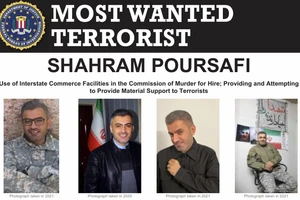
  • FBI adds IRGC member accused in Bolton plot to most wanted terrorists list

    FBI adds IRGC member accused in Bolton plot to most wanted terrorists list

Any radiological or chemical-weapons attack could also harden American public opinion against the Islamic Republic and provoke severe retaliation, Nadimi said.

The reported consideration of such an operation, however, "does not show a decision is made to act," he added.

Iraq’s move on militia stronghold may do little to curb Iran’s influence

Nov 17, 2026, 04:52 GMT+0
•
Negar Mojtahedi
100%
A mourner attends the funeral of a commander from Iraq's Kataib Hezbollah armed group who was killed in what they called a "Zionist attack" in the Syrian capital Damascus on Friday, during a funeral in Baghdad, Iraq September 22, 2024. REUTERS/Thaier Al-Sudani/File Photo Purchase Licensing Rights

Iraq’s attempt to reclaim a stronghold of Iran-backed militia could test Baghdad’s authority over armed factions while leaving much of Tehran’s influence over the country’s politics, security forces and economy intact, experts told Iran International.

Baghdad ordered troops on Monday to enter Jurf al-Sakher, south of the capital, following an investigation into suspected oil smuggling. The faction has been given until Friday to withdraw, according to a security source cited by AFP.

The move comes amid US pressure to rein in Iran-backed militias, but taking control of the town would not necessarily dismantle the political and financial networks that sustain their power.

“It’s going to be once again a theatrical show,” said Omar Mohammed, an Iraqi historian who documented life under Islamic State through his blog Mosul Eye.

Senior Iraqi officials told Reuters that Kataib Hezbollah had operated an oil-smuggling network for years, generating hundreds of millions of dollars since 2021. The US-designated terrorist organization, which has attacked American forces in the region, has long controlled Jurf al-Sakher, also known as Jurf al-Nasr, in Babil province south of Baghdad. Kataib Hezbollah denied the smuggling allegations, Anadolu reported.

Why Jurf al-Sakher matters

Mohammed described Jurf al-Sakher as a financial hub Iran has used to evade sanctions. He said the town’s location near roads linking Baghdad with Karbala and Anbar gives whoever controls it strategic leverage over the capital. He also pointed to the displacement of Sunni residents, whose prolonged exclusion has fueled sectarian tensions.

More than 100,000 people from Jurf al-Sakher and surrounding communities remain unable to return more than a decade after Iraqi forces retook the area from Islamic State in 2014, Shafaq News reported. Government committees have entered the area in recent months, but such visits have been unusual and required high-level security and political coordination, the outlet said.

Prime Minister Ali al-Zaidi “ordered the armed forces to enter” Jurf al-Sakher, government spokesman Haidar al-Aboudi told the Iraqi News Agency, adding that “a deadline has been set for the armed faction to exit the area.” A security source told AFP the deadline was Friday.

Al-Aboudi said investigators found evidence of pipeline tampering. Nine security and oil officials were dismissed following the investigation, Reuters reported.

Sources told The New Arab that fighting between Iraqi forces and Iran-backed factions was possible. A senior Iraqi official told the outlet that the government had deployed armored vehicles to the town’s outskirts.

The militias’ reach beyond the town

David Patrikarakos, a special correspondent for the Daily Mail and author of Nuclear Iran: The Birth of an Atomic State, recalled seeing a separate line of commercial trucks at a checkpoint outside Mosul when he reported from Iraq a few years ago. His local contacts told him the truck drivers had to pay Iran-backed militias a levy to enter the city.

Patrikarakos welcomed Baghdad’s attempt to push back but said the government had limited room to maneuver. He pointed to the factions’ political wings and their role in the Popular Mobilization Forces, a state-funded security body that formally answers to the prime minister. Some factions, he said, retain their own weapons, separate chains of command and ties to Iran.

“I think maybe the Iranian-backed militias will allow them some cosmetic gains, but there’s no way that Iran is going to allow its footprint in Iraq to disappear,” he told Iran International.

Patrikarakos said Tehran sees Iraq as part of its strategic depth and that Iran-backed factions could make limited concessions while retaining much of their power. He said clashes were possible and questioned whether the Iraqi government could prevail in an armed confrontation.

Mohammed, whose recent memoir is Mosul Eye: A Scholar’s Clandestine War Against ISIS, said al-Zaidi’s reach was limited by how deeply the militias were embedded in Iraq’s economy and politics. He cited their access to US dollars and what he described as their grip on commerce in Mosul. In his view, taking Jurf al-Sakher would leave much of that influence intact.

Even if al-Zaidi is sincere, Mohammed said, his government lacks the political will and institutional capacity to rein in the Iran-backed factions. “Militias are still in control,” he said.

US pressure puts al-Zaidi to the test

Former US Ambassador John Craig called Baghdad’s move “about 10 years overdue.” He said Washington was putting significant pressure on al-Zaidi and that the prime minister appeared to understand that Iraq’s stability depended on reining in Iran-backed militias.

Craig questioned whether Iraqi forces had the training and resources to push back against factions that have had years to entrench themselves. He said some doubt al-Zaidi’s independence from the militias and see the order as an effort to satisfy Washington. The prime minister’s actions, Craig said, would show how serious he was.

Al Arabiya, citing unnamed sources, reported that al-Zaidi left a meeting of the ruling Shiite Coordination Framework after disagreements over Jurf al-Sakher.

An Iranian delegation arrived in Baghdad on Monday for talks aimed at defusing the standoff, Al Arabiya reported, citing sources. The delegation was expected to meet Iraqi officials, Shiite Coordination Framework leaders and armed factions to prevent a military confrontation.

Some Coordination Framework leaders proposed replacing Kataib Hezbollah fighters with Popular Mobilization Forces units affiliated with Iraq's religious shrines as a compromise, according to the report.

Mohammed said the troop order gave Baghdad something to show Washington. He argued that sustained pressure from the United States and Iraq’s neighbors could push the government toward more substantive action.

A lasting crackdown, he said, would require political will, a clear strategy and institutions capable of carrying it out.

2019 crackdown failed to break cycle of Iran street protests

Nov 15, 2026, 11:45 GMT+0
•
Ata Mohamed Tabriz
100%
People protest against increased gas price, on a highway in Tehran, Iran November 16, 2019.

Iran's deadly crackdown on protests in November 2019 failed to prevent successive uprisings, fueling a cycle of unrest driven by economic hardship, restrictions on personal freedoms and increasingly forceful repression.

The November 2019 protests marked a turning point in Iran's political landscape, widening the divide between the Islamic Republic and much of society.

Authorities sought to deter further demonstrations through mass arrests, lethal force and nationwide internet shutdowns. But the grievances that brought people into the streets persisted, and new sources of discontent accumulated.

  • Grieving Mothers Speak Out On Anniversary Of Iran’s Bloody November

    Grieving Mothers Speak Out On Anniversary Of Iran’s Bloody November

The cycle continued through protests in 2021, the Woman, Life, Freedom uprising in 2022 and another nationwide wave in January 2026, which began over economic hardship and faced the deadliest crackdown in recent decades.

November 2019: From fuel prices to mass killings

The November 2019 protests erupted against a backdrop of rising inflation, regional inequality and growing poverty on the outskirts of major cities.

On November 15, authorities announced overnight increases of 200 percent in the price of unsubsidized gasoline and 50 percent for subsidized fuel, without prior public notice.

The decision triggered demonstrations that rapidly expanded beyond opposition to fuel prices into a broader rejection of the political system and Supreme Leader Ali Khamenei.

Within 48 to 72 hours, protests had spread to between 100 and 200 cities across 22 to 28 provinces, with major centers in Khuzestan, the outskirts of Tehran, Alborz and several western and central provinces.

Many participants came from what sociologists describe as the impoverished middle class: residents of smaller cities and urban peripheries whose expectations resembled those of the middle class but whose economic circumstances were closer to those of lower-income groups.

The demonstrations lacked established organizations and coordinated leadership, contributing to their rapid, decentralized spread.

The rejection of Iran's political establishment had already emerged during protests in December 2017 and January 2018, when demonstrators chanted that both reformists and conservatives had exhausted their political relevance.

  • Anatomy of a massacre, and the mothers who refuse to let November end

    Anatomy of a massacre, and the mothers who refuse to let November end

By November 2019, opposition to the Islamic Republic itself was evident from the beginning.

The government, backed by reformist political forces, implemented the fuel price increase and internet shutdown before distancing itself from responsibility for the consequences.

Officials described protesters as "thugs" and characterized the demonstrations as "urban warfare," presenting the crackdown as necessary to protect national security and public order.

Authorities imposed a nationwide shutdown of international internet access under a decision by the country's security council.

Special police units, the Revolutionary Guards and the Basij militia deployed alongside armed personnel using live ammunition. Between 7,000 and 8,600 people were arrested.

In Mahshahr, southern Iran, security forces fired bursts from heavy weapons at protesters and residents who had sought refuge in nearby marshlands.

Reuters subsequently reported, citing sources familiar with the decision-making, that Khamenei had ordered the protests stopped at any cost.

The scale of the killings became a central source of public anger, compounded by the absence of accountability for those responsible.

"Well, shots were fired at their legs too," then-Interior Minister Abdolreza Rahmani Fazli said when questioned about why protesters had been shot in the head, according to former lawmaker Mahmoud Sadeghi.

The remarks did not lead to the prosecution of officials who ordered the crackdown. An effort to impeach Rahmani Fazli also failed to advance in parliament.

Mojtaba Zolnouri, then head of parliament's national security committee, defended the minister's actions as implementation of presidential orders and decisions by the country's security authorities.

Estimates of the death toll varied widely. Then-Interior Minister Abdolreza Rahmani Fazli put the figure at between 200 and 225, while Amnesty International documented hundreds of deaths. Reuters, citing Iranian Interior Ministry officials, reported that approximately 1,500 people had been killed.

The wide differences between official and independent estimates of the death toll, coupled with the lack of accountability, helped sustain demands for justice long after the protests had subsided.

How the memory of 2019 shaped the 2022 uprising

The legacy of November 2019 extended beyond the immediate political consequences of the crackdown.

Cultural sociologist Jeffrey Alexander argues that suffering can become a collective trauma when a wider community identifies with the victims through a shared narrative of their suffering and those responsible.

Families seeking justice for those killed in November 2019 helped construct such a narrative.

Annual commemorations, repeated publication of victims' names and accounts shared by grieving mothers on social media transformed the losses of hundreds of families into a wider public concern.

The protest slogan "Aban continues," referring to the Iranian calendar month in which the killings occurred, captured the persistence of that memory.

The anniversary of the crackdown helped determine the timing of protest calls in November 2022, during the Woman, Life, Freedom uprising.

Families of those killed in 2019 also provided a model for relatives seeking accountability after subsequent crackdowns.

In April 2025, Kamelia Sajadian, whose son Mohammad Hassan Torkaman was killed during the 2022 protests, launched the "I too am someone's mother" campaign.

The initiative drew on words associated with Pouya Bakhtiari, killed in November 2019, and subsequently repeated by his mother, Nahid Shirpisheh. Mothers of victims from both the 2019 and 2022 protests joined the campaign.

But the persistence of protest cannot be explained by collective memory alone.

Economic conditions that helped fuel the 2019 demonstrations deteriorated over the following three years.

Persistent inflation, the declining value of the national currency and shrinking household purchasing power pushed more middle-class Iranians toward poverty and deepened hardship among those already struggling.

The Islamic Republic also consolidated political power following the 2021 presidential election, leaving reformist political forces with little remaining capacity to mediate between the state and society.

At the same time, authorities intensified restrictions on personal freedoms, particularly women's clothing.

A July 2022 decision tightening enforcement of mandatory hijab rules, alongside an expanded presence of morality police patrols, increased pressure on women.

  • Iran's Raisi Orders Strict Enforcement Of Hijab Amid Crackdown

    Iran's Raisi Orders Strict Enforcement Of Hijab Amid Crackdown

The death of Mahsa Amini in September 2022 after her detention by morality police triggered another nationwide uprising.

Unlike the initial fuel-price protests of 2019, the 2022 movement brought together women, young people, middle-class Iranians, lower-income communities and protesters from different ethnic backgrounds.

Its demands centered on personal freedom, dignity and opposition to compulsory hijab, alongside rejection of the Islamic Republic's political structure.

A younger generation with limited attachment to official ideology or traditional political organizations occupied a central role.

The decentralized character of the demonstrations resembled November 2019, although tactics such as nighttime rooftop chanting also drew on earlier protest movements, including those of 2009.

Repression contains protests but leaves grievances unresolved

The November 2019 crackdown did not end nationwide protest in Iran.

Demonstrations over water shortages in Khuzestan in 2021, the 2022 uprising and the protests of January 2026 demonstrated the continued importance of the streets as a place of confrontation between citizens and the state.

Each wave involved different immediate grievances, but all unfolded against a backdrop of accumulated economic and political dissatisfaction.

Authorities repeatedly used arrests, violence and communications restrictions to contain demonstrations.

  • Tehran quelled street protests but economic troubles persist

    Tehran quelled street protests but economic troubles persist

Those measures increased the risks of participation and disrupted protesters' ability to organize, without addressing the conditions that had brought them into the streets.

The January 2026 protests followed the same broader trajectory.

Beginning with economic grievances, the demonstrations developed into a wider challenge to the political establishment and were met with the deadliest crackdown in decades.

The recurrence of protest also highlights the limits of interpreting the absence of demonstrations as public acceptance of existing conditions.

Participation depends not only on the depth of dissatisfaction but also on people's assessment of personal risk, their ability to communicate and their expectations about whether others will join them.

Lethal repression raises the perceived cost of taking to the streets, while internet shutdowns make it harder to coordinate gatherings or learn where protests are taking place.

Such measures can temporarily reduce demonstrations even when the underlying grievances remain.

Economic hardship continues to affect access to basic necessities, while restrictions on clothing and personal behavior sustain another source of dissatisfaction.

Authorities have also linked opposition to some of these restrictions with espionage or cooperation with foreign adversaries, extending security enforcement into everyday life.

That approach can increase the consequences of dissent while generating additional resentment over state interference.

The continuing economic strain, restrictions on personal freedoms and reliance on security measures have left the conditions for renewed protest largely intact.

From November 2019 to January 2026, the Islamic Republic has repeatedly demonstrated its capacity to suppress demonstrations, but not to prevent the emergence of new ones.

The central pattern remains unchanged: authorities can regain control of the streets through force, but suppressing a protest movement has not eliminated the grievances that brought it into being.
Can higher fuel prices curb Iran’s smuggling problem?

Nov 15, 2026, 08:28 GMT+0
•
Umud Shokri
100%
Screengrab from a viral video showing a large gathering of fuel smugglers aboard boats in Iran’s southeastern Sistan and Baluchestan province.

Long queues and empty pumps have brought Iran’s fuel shortages into sharper focus, raising a difficult question: how much would charging consumers more change where the country’s subsidized fuel ends up?

Esmail Saghab Esfahani, a vice president who heads the state energy efficiency agency, acknowledged this week that “we really have a supply problem.” He told Iranians they could no longer count on fuel stations to cover their needs and should save part of their monthly ration before traveling.

“All the gasoline the government has, it has given to the people,” he said. “Nothing has been held back to supply more.”

On Thursday night, residents of Bandar Abbas, the main port on the Persian Gulf, blocked a road near a fuel station in the city’s Rajaei district with their cars, protesting long lines and empty pumps. Drivers on the Minab–Bandar Abbas route had protested earlier over the lack of fuel.

The economic argument for higher prices is straightforward. Fuel is inexpensive domestically and costly abroad, making it profitable to move illegally. Narrowing that gap could reduce the incentive to smuggle.

But the price difference alone does not explain how large volumes leave a state-controlled distribution system, who obtains them or why enforcement so often focuses on those transporting the fuel. Nor should gasoline shortages and diesel diversion be treated as interchangeable problems.

Where fuel leaves the system

Journalist Yashar Soltani, in a recent interview, alleges that approximately 30 million liters of fuel are smuggled out of Iran daily with assistance from people within state institutions. That would represent roughly 11 billion liters annually. His estimates and allegations of official involvement have not been independently verified.

The allegations nevertheless raise a question that deserves investigation. Transporting millions of liters requires more than individual drivers willing to cross a border. It requires access to supplies, storage, vehicles, financing and buyers. The people carrying the fuel are visible; those deciding where it comes from and who receives the proceeds may be much harder to identify.

Soltani’s November 2024 investigation into a southern Iranian smuggling case described the alleged use of forged delivery documents, reused permits and payments to secure passage through checkpoints. If those mechanisms operate as described, the decisive breach occurs before the border, when fuel is released or diverted under false pretenses.

Higher prices could affect the profitability of that trade. They would not, by themselves, repair the controls that allowed the diversion.

The Razzaq scheme requires particular care. It is reportedly an authorized fuel allocation program intended to support border communities. Its existence does not establish that every shipment made through it is illegal. Equally, official authorization does not remove the need to examine who controls allocations, how transactions are recorded and how much income reaches households.

Conflating authorized trade with smuggling would make reform less credible. Authorities should distinguish legal exports, administrative discrepancies and proven diversion, then publish comparable figures. Otherwise, seizure statistics and alarming estimates can obscure the basic question of where public resources go.

Who would pay more?

The incentive created by price differences is substantial. In December 2025, Financial Tribune reported diesel selling domestically for around 300 tomans per liter while fetching nearly 50,000 tomans across the border. These were reported prices at that time, rather than current quotations, but they illustrate the potential margins.

The effect of a price increase depends on its size, currency movements, operating costs and how traders obtain supplies. Someone buying fuel lawfully faces a different calculation from an organizer acquiring it through a fraudulent allocation or an unrecorded transfer.

Small increases may leave lucrative margins intact. Larger increases could reduce them, but would also raise costs for legitimate freight operators and farmers, with consequences for household budgets. A subsequent fall in the rial could widen the international price gap again.

The distinction between fuels is equally important. Evidence of large-scale diesel diversion does not, on its own, establish that higher gasoline prices for motorists would address it. Officials should explain which fuel is disappearing, where losses occur and how each proposed adjustment would tackle that specific problem.

The distinction between participants matters, too. A household carrying fuel because other income is scarce does not exercise the same control as someone managing bulk supplies, financing and distribution. Enforcement should examine responsibility and financial benefit rather than assume that the easiest person to arrest is the most consequential.

Removing a driver’s livelihood may leave an organizer able to recruit somebody else. It can also deepen local dependence on whoever controls access to work. Alternative employment should therefore be part of enforcement policy, rather than postponed until restrictions have made families poorer.

Iran’s earlier subsidy reform provides a practical lesson. An IMF working paper on the 2010 reform describes compensatory payments deposited before higher prices took effect. That experience does not establish a lasting solution to smuggling, but it shows that household protection can be prepared before costs rise.

Following the fuel and the money

Soltani’s allegations of official involvement need independent investigation. Authorities should trace fuel from refineries and depots to its intended customers, comparing deliveries with quotas and transport records. When fuel goes missing, investigators should examine who approved its release, who received it and who benefited.

Tracking devices are useful only if someone acts on the evidence. They cannot prevent diversion on their own if records are altered or officials facilitate it. Any investigation must also be able to scrutinize politically connected operators.

Authorized border programs should make clear what households are entitled to receive, account for the money paid to them and provide a way to challenge unfair deductions. Families need realistic alternatives, including access to legal trade, support for local businesses and training that leads to paid work.

Higher prices can help narrow the margins that make smuggling profitable. But if the opaque allocations and protection arrangements described in these reports persist, households and legitimate businesses could face higher costs while those controlling diverted supplies continue to profit.

The test of reform is therefore more demanding than whether it raises revenue or produces more arrests. It is whether less fuel disappears, investigations reach those organizing its diversion, and vulnerable households receive support before their costs rise. Without those changes, consumers could end up paying more without knowing whether the next station will have fuel.

Iran’s Janfada campaign gives Basij recruitment a patriotic banner

Nov 15, 2026, 02:59 GMT+0
•
Pooya Jahandar
100%
A government-organized Janfada mobilization gathering held in Iran in October 2026.

Iran’s Revolutionary Guards are expanding a campaign built around sacrifice for the homeland into a route for military training and Basij paramilitary recruitment, giving a force associated with decades of domestic repression a broader patriotic appeal.

The Janfada initiative — roughly meaning someone willing to sacrifice their life — presents participation as service to Iran. Its development raises a question: how far can the authorities use national loyalty to attract recruits who might otherwise hesitate to join the Islamic Republic’s security institutions?

On November 2, Hassan Hassanzadeh, commander of the Guards’ Tehran corps, said the first Janfada brigade had been organized, completed supplementary training and received equipment. Speaking at the opening of a training center in Tehran’s Tajrish Square, he said the unit was preparing for practical exercises and specialist shooting-range training.

The announcement marked a further step toward turning a public mobilization campaign into organized military units.

A new route into the Basij

Launched on March 28 by the Guards-linked Baqiyatallah cultural and social headquarters, Janfada initially invited volunteers to participate in defense, security and relief activities during the war with the United States and Israel.

By September, organizers were announcing plans for 1,000 national resistance battalions. Training programs subsequently included firearms handling, urban defense and rescue skills.

Ali Kowsari, the Basij’s deputy for training, has said participants who complete supplementary courses can join the organization’s combat structure. Esmail Faraji, its deputy for operations, has said the campaign attracted volunteers who had not previously belonged to the Basij, although the scale of that recruitment has not been independently established.

The distinction matters because the Basij, a paramilitary organization subordinate to the Revolutionary Guards, combines military mobilization with ideological organization and domestic security. Its network extends through neighborhoods, universities, schools and workplaces, and its members have participated in successive protest crackdowns.

  • Protest crackdown veteran Taeb returns to lead Basij, expand intel network

    Protest crackdown veteran Taeb returns to lead Basij, expand intel network

A campaign emphasizing defense of the country could therefore provide a more accessible entry point than direct recruitment under the Basij name. Joining a course presented as preparation to protect Iran may carry different associations from joining an institution identified with policing dissent.

That remains an interpretation of the campaign’s appeal, rather than proof of its organizers’ intentions or success. Available evidence does not establish how many participants are new recruits, how many were already Basij members, or whether the patriotic message has broadened support beyond existing government loyalists.

National defense and domestic control

The campaign’s public presentation has combined national solidarity with explicit loyalty to the leadership.

At the September 18 Janfada parade in Tehran, participants included Basij members, uniformed volunteers and children. The event began with a declaration of allegiance to Khamenei, while President Masoud Pezeshkian described it as a display of national cohesion.

That combination illustrates how the campaign places defense of Iran alongside support for the political system.

Its activities also extend beyond preparation for an external attack. Campaign spokesman Sassan Zare said in September that Janfada provided training related to urban and public security, while responsibility for deploying volunteers at checkpoints rested with the relevant security bodies.

Those overlapping functions make the campaign relevant to domestic control, although they do not establish that every participant will undertake security duties or be deployed against protesters.

A Syrian parallel, with limits

Syria offers a comparison in how governments organize loyalist forces under the language of national defense.

During Bashar al-Assad’s rule, pro-government militias and neighborhood committees were incorporated into the National Defense Forces. Research by the Institute for the Study of War describes Iranian and Hezbollah assistance in formalizing the force along a model resembling the Basij, including training recruits.

The comparison has limits. Syria involved the consolidation of existing militias during a civil war. Janfada is presented as a recruitment and training campaign connected to institutions that remain in place. There is no evidence here that the Basij has been dissolved or formally renamed.

The more defensible argument is that Janfada offers the existing security structure an additional public identity and recruitment channel. Its language emphasizes sacrifice for the country; its training pathways lead toward institutions whose responsibilities also include preserving the Islamic Republic.

Whether that approach can repair the Basij’s reputation remains unproven. What commanders’ announcements demonstrate is a growing effort to turn patriotic participation into organized manpower.