• العربية
  • فارسی
BrandBrand
  • Iran Insight
  • Politics
  • Economy
  • Analysis
  • Special Report
  • Opinion
  • Podcast
  • Live TV
  • Iran Insight
  • Politics
  • Economy
  • Analysis
  • Special Report
  • Opinion
  • Podcast
  • Live TV
  • Theme
  • Language
    • العربية
    • فارسی
  • Iran Insight
  • Politics
  • Economy
  • Analysis
  • Special Report
  • Opinion
  • Podcast
  • Live TV
All rights reserved for Volant Media UK Limited
volant media logo

Iran could mobilize Muslims, Shiites worldwide against enemies, MP says

Nov 12, 2026, 11:30 GMT+0

Iran could draw on Muslim and Shiite communities worldwide and as part of a response to its adversaries, a lawmaker said on Thursday.

“We can now use the capacities of free people around the world, Muslims, Shiites and other groups, as a tool to defend the people and nation of Iran.” Hamed Yazdian told Iran-based website Didban Iran. “Our behavior should be such that the enemy feels safe nowhere in the world.”

Yazdian said Iran’s options were not limited to missile strikes. He added that extending missile range beyond the previous 2,000-kilometer limit was technically possible, saying that cap had been set under instructions from former Supreme Leader Ali Khamenei.

Yazdian described changing Iran’s nuclear doctrine as a serious demand and said lawmakers were waiting for Mojtaba Khamenei’s religious ruling and instructions on the issue.

Most Viewed

Workers in Iran sell organs to pay debts and cover living costs
1

Workers in Iran sell organs to pay debts and cover living costs

2
VOICES FROM IRAN

Missile city unveiling sparks anger over poverty, lack of shelters

3
INSIGHT

Trump wants to keep Iran blockade. Can the Persian Gulf sustain the standoff?

4
VOICES FROM IRAN

Students shiver in classrooms as Iran government warns of gas cuts

5
ANALYSIS

US targets Iran's land trade routes, but Tehran may hold firm

Banner
Banner
Banner
Banner
Banner
Banner
Banner

Spotlight

  • Iran state TV panelists urge tougher action against US blockade

    Iran state TV panelists urge tougher action against US blockade

  • France's cyberattack allegations against Iran should wake up Europe
    OPINION

    France's cyberattack allegations against Iran should wake up Europe

  • Trump wants to keep Iran blockade. Can the Persian Gulf sustain the standoff?
    INSIGHT

    Trump wants to keep Iran blockade. Can the Persian Gulf sustain the standoff?

  • Iran state TV debate signals cautious openness to nuclear talks

    Iran state TV debate signals cautious openness to nuclear talks

  • The price Iranians paid for 47 years of revolutionary promises
    ANALYSIS

    The price Iranians paid for 47 years of revolutionary promises

  • Trump’s Iran diplomacy faces a test: Can both sides claim victory?
    ANALYSIS

    Trump’s Iran diplomacy faces a test: Can both sides claim victory?

  • Food, medicine, hope: what Iran's economic crisis is costing its people
    VOICES FROM IRAN

    Food, medicine, hope: what Iran's economic crisis is costing its people

•
•
•

More Stories

Iranian commanders threaten to kill Trump, strike US targets worldwide

Nov 12, 2026, 09:30 GMT+0
100%
FILE PHOTO: People visit the Islamic Revolutionary Guard Corps (IRGC) Aerospace Force Museum in Tehran, Iran, November 4, 2026.

Senior Iranian military and Revolutionary Guards officials issued a series of threats against the United States and Israel on Wednesday, including a pledge to kill their leaders and warnings of attacks on American bases in Europe and targets worldwide.

“We are determined to kill Trump and Netanyahu as long as we live,” Keyoumars Heydari, deputy chief of staff of Iran's armed forces, told state television, referring to US President Donald Trump and Israeli Prime Minister Benjamin Netanyahu.

Heydari also claimed that American forces had been driven out of the Persian Gulf and that US warships had retreated hundreds of kilometers from Iranian territory.

His remarks followed threats from senior Revolutionary Guards adviser Mohammadreza Naqdi, who said Iran's armed forces had received authorization from Supreme Leader Mojtaba Khamenei to retaliate without geographical restrictions.

“If the enemy makes another wrong move and seeks to act aggressively again, it will certainly receive deadly blows in different parts of the world,” Naqdi said.

He was referring to Khamenei's October 31 instructions to military commanders to respond immediately to threats, expand their potential targets and disregard geographical limitations.

Iran's top security official, Mohsen Rezaei, meanwhile, threatened to extend retaliatory strikes beyond the Middle East if Washington resumed attacks.

“We may even target some American military bases in European countries,” Rezaei, secretary of Iran's Supreme National Security Council, told Lebanon's Al Mayadeen television.

He said American bases in Europe and on distant islands could become targets if US aircraft used them to attack Iran. The extent of Iran's ability to strike such distant locations remains uncertain.

Revolutionary Guards spokesman Hossein Mohebbi separately told the Guards-affiliated Tasnim news agency that Iran's aerospace forces had developed sufficient military capabilities to confront a global superpower and bring it to a standstill.

Mohebbi credited the late supreme leader Ali Khamenei and military commanders, particularly Hassan Tehrani Moghaddam, regarded as the architect of Iran's ballistic missile program, for developing those capabilities.

The increasingly confrontational rhetoric accompanied continuing disagreements over negotiations with Washington.

Parliament Speaker Mohammad Bagher Ghalibaf told Al Jazeera on Wednesday that Iran was determined to end its prolonged state between war and peace through sustained military deterrence, potentially without negotiations.

He said Washington had yet to formally respond to Tehran's seven conditions for reopening the Strait of Hormuz and resuming talks.

The statements followed months of US-Israeli military operations and a continuing American naval blockade, with Tehran insisting on its conditions for ending the confrontation while Washington maintains economic and military pressure.

Seven-man Iran-linked network helped orchestrate wave of attacks across Europe - ITV

Nov 12, 2026, 08:01 GMT+0
100%
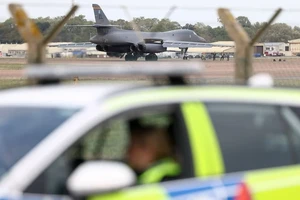
A police officer blocks a road near the RAF Fairford airbase, which hosts United States Air Force (USAF) personnel, in Fairford, Gloucestershire, Britain, September 27, 2026.

A network of seven men allegedly working on behalf of Iranian intelligence services helped coordinate a wave of attacks across Europe, using local criminals and AI-generated propaganda to target Jewish communities and spread fear, ITV News reported on Wednesday.

The British broadcaster identified two previously unnamed brothers with suspected ties to organized crime in the Netherlands as alleged members of the network, which Western security officials believe was involved in attacks across several European countries and a suspected plot against a British military base used by US forces.

ITV named Mustafa Mter Rassoul Alkyaui, who was arrested in Turkey and remains in detention, and his brother, Rassoul Mter Rassoul Alkyaui Mohsen, who remains at large.

The broadcaster said the brothers' contacts in Europe's criminal underworld were believed to have helped the network recruit local operatives to carry out attacks for money, sometimes without knowing whose instructions they were following.

The findings build on a November 10 US Justice Department indictment charging three other alleged members of the network: Mohammad Baqer Saad Dawood al-Saadi, a dual Iranian-Iraqi national; Mohsen Mohajeri, an Iranian national; and Mohammad Ali al-Hassani, an Iraqi national.

100%
Credit: ITV News

US prosecutors linked the three men to nearly 20 attacks and attempted attacks across Europe and the United States, including a September plot targeting RAF Fairford, a British air base housing American forces.

  • Iran-backed operative plotted attack on US base in Britain from NY prison

    Iran-backed operative plotted attack on US base in Britain from NY prison

  • US moves aircraft out of second British base over Iran threat - WSJ

    US moves aircraft out of second British base over Iran threat - WSJ

Investigators suspect rival Iranian agencies funded network

According to ITV, Western security officials believe the network operated from a control room in Baghdad, selecting targets and recruiting criminals to carry out attacks as Iran sought ways to retaliate following the outbreak of war with the United States and Israel in February.

Investigators suspect the network received funding from both the Islamic Revolutionary Guard Corps (IRGC) Quds Force and Iran's Ministry of Intelligence, with neither agency apparently aware of the other's involvement.

100%
An image released by the US Justice Department shows al-Hassani (left) and Mohajeri (right) allegedly meeting in April to plan terrorist attacks.

ITV reported that the group operated as a loose circle of associates rather than a conventional militant organization, using artificial intelligence to produce propaganda videos that made the network appear larger and more sophisticated.

The broadcaster publicly identified five alleged members, including the three men charged in the United States and the two brothers. The other two were not named.

Attacks targeted Jewish communities across Europe

The suspected campaign began in March with an explosion outside a synagogue in Liège, Belgium, followed by an arson attack on four ambulances belonging to the Jewish emergency medical service Hatzola in north London.

A previously obscure organization calling itself the Islamic Movement of Companions of the Right, also known by its Arabic initials HAYI, said it was responsible for the attacks.

ITV reported that al-Saadi was suspected of personally producing and distributing some of the group's AI-generated propaganda, including material relating to the March 23 ambulance attack.

100%
A drone view of four ambulances belonging to Hatzola, a Jewish community organisation, that were set on fire in an incident that the police say is being treated as an antisemitic hate crime, in northwest London, Britain, March 23, 2026.

US prosecutors said the network was involved in approximately 18 attacks in Europe during the spring, seven of them in Britain. The incidents included arson, explosions and a near-fatal stabbing of two Jewish men in London.

The Justice Department alleged that HAYI served as a front for Iran-backed Kataib Hezbollah and other US-designated terrorist organizations, helping conceal those directing the attacks.

US prosecutors detail RAF Fairford plot

The alleged network subsequently turned its attention to RAF Fairford, an air base in Gloucestershire that housed US military aircraft and personnel.

According to the Justice Department, al-Hassani directed preparations from Iran, paying contacts in Britain to conduct surveillance and obtain vehicles and materials for the September operation.

British police recovered three vans linked to the alleged plot on September 27 and arrested their occupants, according to US prosecutors.

Prosecutors also alleged that al-Saadi, who had been in US custody since May, continued coordinating with other members of the network through coded messages passed during calls with relatives in Iraq.

100%
Police officers guard an area as roadblocks remain in place near RAF Fairford airbase, after police declared a major incident at the base and arrested several men on suspicion of offences under the Explosives Act, who have since been released on bail, in Fairford, Gloucestershire, Britain, September 29, 2026.

ITV reported that Western officials believe the decision to target RAF Fairford probably received approval from senior figures within the Revolutionary Guards, unlike other attacks that the network was thought to have selected independently.

"This eight-count indictment shows the determination of Iran to commit terrorist attacks in Europe and the US," FBI Director Kash Patel said, citing the suspected plot against RAF Fairford.

  • Two charged over alleged Iran intelligence operation at RAF Fairford

    Two charged over alleged Iran intelligence operation at RAF Fairford

  • US Treasury chief moves to military base after Iranian threats

    US Treasury chief moves to military base after Iranian threats

Security officials warn of further attacks

The ITV investigation suggested the network's operations were designed not only to cause physical damage but also to generate widespread fear, particularly within Jewish communities.

Western security officials told the broadcaster that networks operating under the HAYI name could carry out further attacks.

The report came as Iran's security chief Mohsen Rezaei renewed warnings Wednesday about military bases stretching "from West Asia to Europe," according to ITV.

The allegations concerning the network, including the suspected involvement of Iranian intelligence agencies and the newly identified brothers, have not been established in court. The three men indicted in the United States are presumed innocent unless proven guilty.

Trump vows ‘total victory’ as Iran rejects concessions and threatens wider war

Nov 12, 2026, 00:41 GMT+0
100%
US President Donald Trump attends a Veterans Day ceremony at Arlington National Cemetery in Arlington, Virginia, US, November 11, 2026. REUTERS

US President Donald Trump predicted Wednesday that the war with Iran would end soon, but Tehran rejected nuclear concessions and threatened US bases as far away as Europe, while Washington intensified economic pressure and tensions persisted in the Strait of Hormuz.

Speaking at a Veterans Day ceremony at Arlington National Cemetery, Trump declared that US forces had already defeated Iran militarily and suggested Washington could decide when to end the conflict.

“We won. It’s just a question of when we end it,” Trump said.

“I want to make sure we have a total victory, not a 93 percent victory,” he added, predicting that the conflict would end soon.

Tehran, however, showed little willingness to accept Washington's terms. Parliament Speaker Mohammad Bagher Ghalibaf said Iran was determined to end its prolonged state between war and peace through military deterrence, potentially without negotiations.

In an interview with Al Jazeera, Ghalibaf said Washington had not formally responded to Tehran's seven conditions for reopening the Strait of Hormuz and resuming talks. He insisted that those conditions must be fully implemented before either could proceed.

His remarks followed comments by President Masoud Pezeshkian on Monday that Supreme Leader Mojtaba Khamenei had ordered an end to the country's “no war, no peace” situation. Pezeshkian said Iran could resolve the dispute through negotiations but would not yield to pressure.

The impasse extends to Iran's nuclear program, one of the central disputes between the two countries.

Mohsen Rezaei, secretary of Iran's Supreme National Security Council, said Tehran would not transfer any of its enriched nuclear material abroad, rejecting a possible arrangement involving Russia.

“We have informed our Russian friends that the enriched material will remain in Iran, and we will use it ourselves,” Rezaei told Lebanon's pro-Hezbollah Al Mayadeen television.

Russia's Foreign Ministry said Wednesday that its offer to receive the material remained available, while emphasizing that Tehran alone would decide what happened to its stockpile.

The disagreement highlights the obstacles facing any diplomatic settlement, even as Pakistan continues efforts to mediate between Washington and Tehran.

Pakistani Prime Minister Shehbaz Sharif, who met Pezeshkian on the sidelines of the COP31 climate summit in Turkey, called for restraint and sustained diplomacy, saying negotiations offered the only path to lasting peace.

The Wall Street Journal reported Wednesday that US Vice President JD Vance was considering face-to-face talks with Iran's Supreme National Security Council Secretary Mohsen Rezaei, citing US and Middle Eastern officials and people familiar with the negotiations.

Trump has authorized Vance to negotiate with Iran, according to the report. Vance sent Rezaei a letter in October requesting a meeting, but no date has been set, with Doha under consideration as a possible venue.

But prospects for direct talks appeared uncertain. Mehdi Mohammadi, an adviser to Ghalibaf, said Tehran had rejected a request from US Vice President JD Vance for direct negotiations before Washington delivered its final response to Iran's proposal.

The Wall Street Journal, meanwhile, reported that Trump had privately questioned whether a Pakistan-brokered agreement reached in June had allowed Tehran to regroup before the United States imposed its naval blockade.

With negotiations stalled, Washington is seeking to intensify the economic pressure already imposed through maritime restrictions and sanctions.

The New York Times reported Wednesday that US officials had spent weeks unsuccessfully pressing Iran's neighbors, particularly Iraq, Turkey and Pakistan, to restrict trade across their land borders.

The effort gained a new dimension with the establishment of Task Force Iron Gate, a US Central Command initiative aimed at disrupting the movement of weapons, sanctioned goods and illicit revenue across Iran's land borders and the Caspian Sea.

But neighboring governments have resisted measures that could damage their own economies and provoke unrest in communities dependent on cross-border trade.

According to the Times, Iraq rejected a US request to close all but two crossings with Iran, while Turkey has largely declined to change its border policies.

The Group of Seven foreign ministers pledged Wednesday to maintain economic and political pressure if diplomacy failed to address Iran's nuclear program and regional security concerns.

Iran's response has combined diplomatic resistance with increasingly expansive military threats.

Rezaei warned Wednesday that any US military base involved in a renewed war against Iran could be targeted, including facilities in Europe.

“NO SAFE DISTANCE. NO SAFE HAVEN. NO IMMUNITY,” he wrote on X.

Other senior Iranian military figures issued similar warnings. Deputy armed forces chief Keyoumars Heydari said Iran had prepared an expanded list of potential targets beyond the Middle East, while Revolutionary Guards adviser Mohammadreza Naghdi said the armed forces had authorization to retaliate without geographical restrictions.

Mohammadi, the adviser to Ghalibaf, also warned that Iran could consider preemptive military action if Washington continued tightening economic pressure. He claimed the United States was preparing for a limited strike, although there was no independent confirmation of such a plan.

An adviser to Supreme Leader Mojtaba Khamenei also warned that countries helping enforce a blockade against Iran could be treated as participants in an act of war.

Those threats came as the Strait of Hormuz remained a flashpoint, complicating efforts to restore commercial shipping and energy exports from the Persian Gulf.

Reuters reported Wednesday, citing three sources familiar with the matter, that Iran had attacked navigation infrastructure on Oman's Didamar island used to support shipping through the waterway. The extent of any damage was unclear.

Iran's navy also said a tanker had caught fire after striking a mine east of the strait, describing the area as unsafe and restricted and urging shipowners to coordinate passage with Iranian forces.

Iran state TV panelists urge tougher action against US blockade

Nov 11, 2026, 23:01 GMT+0
•
Maryam Sinaiee
100%
A photo released by US Central Command shows USS Donald Cook (DDG 75) transiting the Arabian Sea while an MH-60S Sea Hawk flies nearby.

Tehran's rhetoric toward Washington is hardening, with senior Iranian officials threatening US military bases in Europe and commentators on state television calling for a complete closure of the Strait of Hormuz to force American concessions.

The increasingly confrontational language comes as Iran faces a continuing US naval blockade and uncertainty over whether the two countries can reach an agreement to end the war.

Mohsen Rezaei, secretary of Iran's Supreme National Security Council, warned Wednesday that Tehran could target US military bases in Europe and on distant islands if Washington attacked Iran again.

During a November 10 discussion on the state broadcaster's nightly talk show Be Vaght-e Iran, three analysts argued that Iran should use the Strait of Hormuz to drive up oil prices, deter further US attacks and pressure Washington to accept Tehran's terms for ending the war.

Nima Akbarkhani, a political and military analyst and regular panelist, argued that the United States would launch another war only after bringing oil prices down as far as possible, allowing it to contain the resulting increase once hostilities began.

He rejected the argument that a tighter closure of the Strait of Hormuz, or an Iranian attempt to break the US naval blockade, could prompt President Donald Trump to launch a full-scale war.

“We must definitely go after the blockade militarily. We must recognize that a blockade is a military action and demands a military response,” Akbarkhani said.

“Americans are monitoring the situation, and if it serves their interests, war will happen. We must do something to make it work against their interests.”

He argued that Washington had limited its military response even after US personnel were killed during the earlier war over Hormuz.

Yousef Azizi, an international relations and Middle East analyst, said Iran should keep oil prices high by closing the strait to deter another US attack.

Azizi also urged Iran's diplomatic apparatus to avoid releasing information that could drive oil prices down, including reports of possible meetings with officials from Iraq and Gulf Cooperation Council countries.

His remarks followed a denial by Rezaei of reports about a possible meeting with US Vice President JD Vance in Qatar and claims that negotiations with Washington were continuing.

In an interview with Al Mayadeen on Tuesday, Rezaei called the reports “completely false and a lie,” arguing that American claims about ongoing negotiations were intended to “reduce economic pressure and bring down oil prices.”

Azizi said Washington appeared to have concluded that it could not achieve its objectives through war. He considered a cycle of limited clashes, temporary ceasefires and interim understandings more likely than either side accepting all the other's demands.

Vahid Khazab, another regular analyst on Be Vaght-e Iran, said the costs of war could push the US and global economies into a deep recession and damage Trump's legacy.

An agreement, however, would require Washington to accept Iran's preconditions for ending the war and beginning nuclear negotiations, he said.

“More precisely, there is no unity, consensus or even a majority within the ruling camp in the United States in favor of making such concessions,” Khazab said.

Of three possible scenarios — war, an agreement ending the conflict, or continued economic pressure and a naval blockade — Khazab considered the third the most likely because it was the least costly option for Washington.

He argued that Iran should therefore close the Strait of Hormuz completely, denying Washington the option of maintaining economic pressure while some energy supplies continued to pass through.

Rather than focusing solely on raising oil prices, Khazab said Tehran should seek to influence market expectations about future supplies. A complete closure would prevent Trump from signaling that the strait might soon reopen, encouraging expectations of a return to normal traffic.

“Of course, this will also be reflected in prices, albeit with some delay,” he added.

He also argued that a tighter closure would prompt regional countries to pressure Washington to reach a resolution favorable to Tehran, without Iran having to attack their infrastructure.

Khazab said Tehran should present Washington with a stark choice: “Your only option is to reach an agreement with me and accept my seven conditions. If we want to get to this point, the way to do it is to close the strait.”

Iran adds war, Khamenei death commemorations to official calendar

Nov 11, 2026, 20:42 GMT+0
100%
A woman holds a print of Iran's slain Supreme Leader Ali Khamanei, at a state-sponsored rally to mark the anniversary of the seizure of the US embassy in Tehran in 1979, November, 4, 2026

Iran is adding 23 commemorations to its official calendar, including days marking the US-Israeli war, the killing of former supreme leader Ali Khamenei and the selection of his son Mojtaba as his successor.

The additions to the Iranian year 1406, running from March 2027 to March 2028, were reported Wednesday. Five of the new observances relate to the war and the transfer of power.

The “Day of the Epic Defense of Iran,” designated for February 28, commemorates the killing of Ali Khamenei and senior military commanders during the opening attacks of the war in 2026.

The Day of the Martyrs of the Third Sacred Defense honors those killed in the war, while the Day of the Dena Warship Martyrs commemorates sailors killed when a US submarine sank the Iranian naval vessel off Sri Lanka in March.

The new calendar also includes a day marking Mojtaba Khamenei's selection as supreme leader following his father's death.

Other additions include Iranian Ethnic Clothing Day, a commemoration of the 18th-century Turkmen poet Magtymguly Pyragy, Iranian Naval Power Day, Nomads Day and Polo Day.

Religious and ideological additions include Nahj al-Balagha Day, named after a collection of sermons, letters and sayings attributed to Imam Ali, the first Shiite imam. The calendar will also recognize Quran Day, a day promoting zakat, the Islamic charitable tax, and Interfaith Dialogue Day.

Other observances include Crisis and Natural Disasters Management Day, Muhammad Iqbal Lahori Commemoration Day, Sacred Defense Intelligence and Operations Day, Software Movement and Free Thought Day and Boys' Day.

Four further commemorations listed in the calendar's appendix are Kordestan Day, West Azarbaijan Day, Healthy Nutrition Day and Nahavand Day.

Iran's official calendar already contains numerous Shiite religious observances, including Ashura, Arbaeen and anniversaries marking the births and deaths of Shiite imams.

Ideological commemorations include Islamic Revolution Victory Day, Islamic Republic Day, the anniversary of Ayatollah Ruhollah Khomeini's death and the Day of Struggle Against Global Arrogance, marking the 1979 seizure of the US Embassy in Tehran.

The calendar also recognizes Nowruz, Persian cultural figures and other national traditions, but its extensive religious and revolutionary commemorations reflect the ideological priorities of the Islamic Republic's leadership.