Qatari, US air force chiefs discuss military cooperation
Qatar’s air force commander, Faisal Khalid Al-Ghanem, met US Air Forces Central commander Daniel Lasica during Lasica’s visit to Qatar, the Qatari Defense Ministry said Wednesday.
They discussed issues of mutual interest and ways to strengthen cooperation, the ministry said, adding that senior officers from both sides attended.
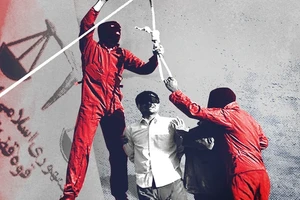
Iran executed at least 77 people in October, bringing the total recorded this year to 691, including 36 protesters, Norway-based Iran Human Rights (IHRNGO) said on Tuesday.
The group's latest report also documented three cases in which men were executed for deaths it said were caused or provoked by police violence, with evidence of misconduct allegedly ignored or concealed by authorities.
The findings come amid continued executions linked to Iran's December-January nationwide protests, including the hanging of two more men on Tuesday.
Protesters among those executed
According to IHRNGO, 39 people were executed for murder in October, 31 for drug-related offenses, six on national security charges and one for rape.
The six security-related executions included three protesters arrested in connection with January's demonstrations, two political prisoners affiliated with banned opposition groups and an Iraqi national convicted of espionage for Saudi Arabia.
The group said only 13 of October's 77 executions were publicly announced by Iranian authorities. It verified the remaining 64 through independent sources.
From January through October, IHRNGO recorded 691 executions, including 36 protesters, 15 political prisoners affiliated with banned opposition groups and 17 people accused of espionage or collaboration with foreign governments.
The total also included 23 women, 28 foreign nationals and three men who were under 18 at the time of their alleged offenses.
The organization said it had received reports of more than 500 additional executions that remained unverified and were therefore excluded from its figures.
Rights group alleges police violence was concealed
The report identified three men executed between September 30 and October 12 after being convicted of killing police officers, despite evidence that IHRNGO said pointed to police misconduct.
Jaber Khosravi, 43, was executed in Damghan Prison on September 30 following an incident in which a police officer was fatally shot.
According to IHRNGO, Khosravi was experiencing a severe psychiatric episode when officers assaulted him during an emergency hospital response. The group said he discharged a firearm unintentionally, killing an officer, but medical records documenting his condition were disregarded.
Danial Jahanian, 37, was hanged in Bandar Abbas on October 11 over the death of a police officer in a traffic collision.
IHRNGO said forensic evidence and court documents indicated that plainclothes officers shot Jahanian in both legs, causing him to lose consciousness before the collision. The organization also alleged that authorities concealed evidence suggesting another vehicle had fatally injured the officer.
Abolhassan Ranjbar, a 39-year-old Baluch man, was executed in Minab on October 12. The rights group disputed the authorities' account of a deliberate vehicular attack, saying the fatal collision followed a confrontation initiated by police.
"The Islamic Republic uses the death penalty not only to silence dissent, but also to cover up abuses by its own security forces," said Mahmood Amiry-Moghaddam, director of Iran Human Rights.
He accused Iranian authorities of systematically denying defendants fair trials and due process.
Two more men executed over January protests
The report coincided with the executions of Amirhossein Maleki and Amirhossein Ebrahimi, who were hanged on Tuesday in connection with January's protests in Isfahan.
Iran's judiciary-linked Mizan news agency alleged that the men had been armed and said the Supreme Court had upheld their death sentences.
They were among 12 defendants sentenced to death in a case stemming from protests at Alikhani Square on January 8, when authorities accused protesters of involvement in the deaths of four security personnel and other offenses.
Seven other defendants in the case had already been executed since July 19, according to Iran Human Rights.
A lawyer representing defendants has disputed the official account, saying none had been formally charged with murder and the alleged killings had not been tried.
The two executions announced Tuesday were not included in IHRNGO's October figures.
UN raises concerns over mass trials
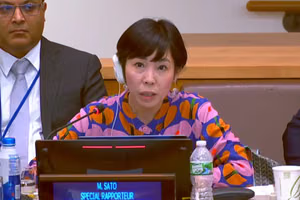
The latest findings follow warnings from UN Special Rapporteur on Iran Mai Sato, who told the UN General Assembly on October 28 that at least 34 people had been executed in connection with January's nationwide protests.
Sato described mass trials in which dozens of defendants faced proceedings lasting only days, raising concerns about whether individual criminal responsibility had been established.
In one case, she said, 34 defendants were tried over five days, with 12 sentenced to death.
The UN's Independent International Fact-Finding Mission concluded that the suppression of January's protests amounted to crimes against humanity.
Iran rejected the UN findings, describing the investigative mechanisms as politically motivated and illegitimate.
Rights groups have repeatedly raised concerns about Iran's use of broadly defined national security offenses, restricted access to lawyers and convictions based on alleged forced confessions.
IHRNGO warned that the true number of executions could be substantially higher than the cases it has independently verified.
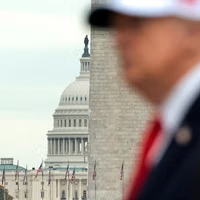
The US Capitol looms in the distance as US President Donald Trump departs following his remarks ahead of the midterm elections at the National Mall in Washington, DC, US, November 2, 2026.
Democrats' victory in both chambers of Congress could strengthen oversight of Donald Trump's war with Iran, but some analysts say the electoral setback may encourage the US president to intensify military operations before the new Congress takes office in January.
The Democratic takeover gives opponents of the war greater influence over military spending, congressional investigations and legislation restricting presidential authority. Yet it also creates a nearly two-month period in which Trump can pursue military objectives before lawmakers assume their new positions on January 3.
The possibility that electoral defeat could encourage further military action emerged in assessments by foreign policy specialists and analysts interviewed by Iran International on Tuesday.
"We can expect Trump to carry out a major military operation, perhaps even more intense than what he would have undertaken had he retained control of Congress," international relations analyst Fereshteh Pezeshk told Iran International.
Pezeshk argued that Trump could seek to demonstrate his authority and influence the media narrative following Republican losses. She said the incoming Congress might delay military funding or create other obstacles, but would have limited power to restrain the president, who would remain commander-in-chief after January 3.
Trump acknowledged the economic impact of the Iran war after the Republican defeat but rejected the suggestion that voters opposed the military campaign itself.
"I don't think it's the war. I think it's a gasoline price. People agree with what I'm doing on Iran, but they really probably weren't willing to do the short-term consequence of paying more for gasoline," Trump told Fox News.
The president nevertheless defended his Iran policy.
"I am totally convinced that my decision on Iran for the long term good of our country and even the world was absolutely the correct one and it continues to be," Trump told Politico.
Could defeat encourage a bigger offensive?
The administration was preparing a major new offensive against Iran before the midterms, and the election result could strengthen Trump's incentive to proceed during the transition period, Barbara Slavin, a distinguished fellow at the Stimson Center, wrote on November 2.
Slavin identified reopening the Strait of Hormuz and securing Iran's stockpile of highly enriched uranium as possible objectives.
But she said that renewed attacks could expose American allies in the Persian Gulf to further Iranian retaliation, increase energy costs and cause extensive destruction without achieving Washington's goals.
A military escalation could also offer Trump a way to seek a decisive outcome before Democrats acquire greater oversight powers.
Trump's calculations differ from those of conventional presidents because he places considerable weight on his personal political achievements, journalist and political analyst Omid Memarian told Iran International.
A person walks near the US Capitol building during the US midterm elections, in Washington, DC, US, November 3, 2026.
"Trump is an unconventional president whose calculations of costs and benefits are very different from those of other politicians and former presidents," Memarian said.
He argued that the president could use the period before January to launch a concentrated military operation, weaken Iran's military or nuclear capabilities, declare victory and then seek negotiations or reduce American involvement.
"I think it may even have increased the likelihood of an attack," Memarian said.
A Democratic Congress would make managing the war more difficult through investigations, committee hearings and scrutiny of military decisions, Memarian said. That could increase Trump's incentive to seek a faster conclusion rather than simply abandon military options.
The possibility has a historical parallel. After Republicans lost the 2006 midterm elections, President George W. Bush increased US troop deployments to Iraq the following year despite mounting public opposition to the conflict.
That precedent does not establish what Trump will do, but it illustrates why an electoral defeat need not produce an immediate reduction in military operations.
How much power will Democrats have?
Control of Congress gives Democrats substantial legislative and budgetary authority, but the president remains commander-in-chief.
Congress can investigate the administration, restrict appropriations and pass legislation addressing military operations. Trump, however, can veto restrictive legislation, requiring two-thirds majorities in both chambers to override him.
"Even if Democrats hold a majority in both houses, their influence will be limited to the legislative and political tools of Congress," former national security adviser John Bolton told Deutsche Welle.
Democrats have already sought to use Congress's financial authority against the war.
Senator Tim Kaine, who has repeatedly challenged Trump's military operations without congressional authorization, pledged in August to continue efforts to cut off funding.
"I'm going to keep doing all that I can to cut off funding for what will go down in history as one of America's most foolish foreign policy catastrophes of all time," Kaine said in an official statement.
Other Democrats, including Senator Chris Coons, have distinguished between replenishing American military stockpiles and financing operations that would effectively extend the conflict.
Yet restricting funding may become politically harder if Trump orders a major offensive before January.
Democrats could inherit responsibility for decisions about supplying American troops already engaged in combat, political analyst Morad Veisi said. Opposing the war would not necessarily make lawmakers willing to withhold resources from deployed forces.
Could Trump pursue the Islamic Republic's downfall?
The possible objectives of further military action remain a major point of disagreement among analysts interviewed by Iran International.
Trump could regard the remainder of his presidency as an opportunity to secure a historic legacy, potentially including military action contributing to the Islamic Republic's downfall, Veisi said.
"I think Trump could leave behind a political legacy by helping bring about the downfall of the Islamic Republic. I'm not saying he will definitely do it, but it would be consistent with his character, and he has 60 days," Veisi said.
Veisi linked that possibility to what he described as Israel's increasingly explicit pursuit of the Islamic Republic's removal. He argued that Trump might support a broader campaign if he believed it could deliver a defining political achievement.
The analyst also suggested that an expanded conflict launched before January could leave incoming Democrats confronting military commitments they would find difficult to reverse.
Pezeshk offered a different assessment, distinguishing between forcing the Islamic Republic to submit to American demands and deliberately seeking its overthrow.
"We still do not see evidence that Trump is taking steps that would lead us to conclude he intends to overthrow the Islamic Republic rather than force it to submit," Pezeshk told Iran International.
She argued that Trump appeared more attracted to a Venezuela-style approach than an Iraq-style intervention involving prolonged American responsibility for political reconstruction.
She also questioned whether Washington had a clear plan for replacing Iran's governing institutions.
Could Tehran misread the election?
Iranian parliament speaker Mohammad Bagher Ghalibaf portrayed the election result as a rejection of the war and warned Washington against disregarding what he described as the will of American voters.
"Conscience or the cost of living, Americans said NO TO WAR, and we endorse this message," Ghalibaf wrote on X.
"If the US govt betrays their public will to serve international paymasters and blackmailers, it will learn our NO comes with a Nightmare," he added.
Ghalibaf's message combined his interpretation of the election with a warning of consequences if Washington continued its military campaign.
But the shift in congressional control does not necessarily signal a corresponding change in Washington's strategic objectives.
Iranian leaders should not mistake political divisions in Washington for a weakening of American power, Washington-based national security specialist Amir Hamidi told Iran International.
"President Trump may lose his congressional majority, but he has not lost his presidential authority. An electoral defeat for one party is not a defeat of America's national power," Hamidi said.
Hamidi added that the Islamic Republic could pay a heavy price for misreading the election result, arguing that the US president remains commander-in-chief and retains significant authority over diplomacy and crisis management.
Congressional oversight of military operations and war spending could increase under Democratic control, but that would not necessarily diminish US deterrence or its longstanding security commitments, Hamidi said.
A narrowing window before January
The Democratic victory may have changed the political timetable for the Iran war without changing who controls its immediate course.
Until the new Congress takes office on January 3, Trump retains the authority to make military decisions that could shape the conflict well beyond the transition period. A major offensive during those weeks could leave incoming lawmakers confronting decisions already made and military commitments difficult to reverse.
The election result also presents a question for the Islamic Republic: whether Washington's domestic political divisions will translate into restraint or whether an approaching deadline could encourage further military action.
The coming weeks may therefore matter more than the new balance of power in Congress. A vote intended to change the direction of American politics could precede a decisive turn in a war that the incoming lawmakers have yet to gain the power to influence.
German Foreign Minister Johann Wadephul holds his phone before entering the cabinet meeting at the Chancellery in Berlin, Germany October 28, 2026.
Iranian Foreign Minister Abbas Araghchi regularly requests talks with his German counterpart as Berlin works with regional countries to prevent renewed US and Israeli attacks on Iran, German Foreign Minister Johann Wadephul said on Wednesday.
“I am not pushing to speak with Iran’s foreign minister; he regularly asks me to speak with him again,” Wadephul said on the Politik mit Anne Will podcast.
Wadephul said Germany was maintaining contact with Tehran while urging Iran to engage constructively in negotiations and pressing Washington to give diplomacy a chance.
He described the coming days as critical, saying a decision on further US military action had not yet been made.
Germany urges both sides to pursue negotiations
Wadephul said he had discussed the risk of renewed fighting with the foreign ministers of Israel, the United Arab Emirates and Qatar, including in conversations following a recent G20 meeting.
The discussions focused on identifying possible areas of agreement, bringing the parties back to negotiations and preventing further escalation.
“You have to persuade Iran to be ready to negotiate, which is not easy because its leadership is very divided and there are several factions,” he said.
“I cannot guarantee that this will succeed, but it is my task, together with my colleagues, to do everything we can to resolve this crisis through diplomacy and avoid another round of fighting that would make all of us suffer.”
Wadephul also pointed to a recent meeting in Istanbul, where the foreign ministers of Germany, France, Italy, Britain, Turkey, Egypt, Saudi Arabia and Pakistan jointly called for restraint.
He said Germany's relationships with Washington and Israel allowed it to communicate its concerns directly to both governments.
Military action cannot bring political change, Wadephul says
Despite his criticism of Iran's leadership, Wadephul argued that another military campaign would not produce political change in Tehran.
He described the Islamic Republic as a government that imprisons, tortures and executes its citizens, but said any change in the country's political system would have to come from Iranians themselves.
"Such change cannot be brought about militarily. It can only develop from within Iran," he said.
At the same time, Wadephul accused Tehran of pursuing nuclear weapons capabilities and supporting armed groups in neighboring countries, including Hezbollah in Lebanon and militias in Iraq.
"The cause of this conflict, of course, is an Iran that is preparing to arm itself with nuclear weapons and supports militias in many neighboring countries that do not respect those countries' sovereignty," he said.
He argued that Iran's activities had prompted military responses, while maintaining that further attacks would not provide a lasting solution.
Wadephul said Germany continued to favor economic sanctions and diplomatic pressure over renewed military action.
Berlin warns of risks around Strait of Hormuz
Wadephul expressed particular concern about the possibility of another escalation around the Strait of Hormuz, a vital route for international oil shipments.
He said Germany and its partners were urging the United States to refrain from further strikes while encouraging Iran to negotiate, although neither side's response could be guaranteed.
The foreign minister also said he trusted US Secretary of State Marco Rubio, who had indicated that President Donald Trump had not made a final decision on resuming major military operations against Iran.
"We're in critical days," Wadephul said. "No one can say exactly how the coming days will unfold."
He said the economic consequences of the conflict reinforced the need for a diplomatic settlement, pointing to higher energy prices affecting consumers and businesses across Europe.
German Chancellor Friedrich Merz made a similar appeal Friday, saying the conflict could not be resolved militarily and calling for negotiations.
Speaking in Seoul, Merz said higher energy costs associated with the war had imposed more than 100 billion euros in additional expenses on European businesses and consumers over the past eight months.
He said Germany was intensifying diplomatic coordination with regional governments to help bring the conflict to an end.
US President Donald Trump delivers remarks ahead of the midterm elections at the Lincoln Memorial Reflecting Pool, after being reopened following months of repairs, on the National Mall in Washington, DC, US, November 2, 2026.
US President Donald Trump said his decision to launch the war against Iran remained in the long-term interests of the United States and the world, despite rising fuel prices and Republican losses in Tuesday's midterm elections.
Democrats secured control of both the House and Senate in Tuesday's midterm elections, although counting continued in some races. The Iran war and its impact on fuel prices were among the issues raised during the campaign.
"I am totally convinced that my decision on Iran for the long term good of our country and even the world was absolutely the correct one and it continues to be," Trump told Politico.
Speaking separately to The Wall Street Journal, Trump said the conflict had contributed to the election results, but maintained that he did not regret launching the military campaign alongside Israel in February.
"Iran was a piece of it," he said when asked whether the war had affected Republican performance.
"I did the right thing. I would have done it again," he added.
Trump points to gasoline prices
In an interview with Fox News, Trump said higher fuel prices resulting from the Iran war had affected voters more than the military campaign itself.
"I don't think it's a war," he said when asked about the conflict's impact on the elections. "I think it's a gasoline price."
"People agree with what I'm doing on Iran, but they really probably weren't willing to do the short-term consequence of paying more for gasoline," he said.
Trump described the increase in fuel costs as a temporary consequence of a policy he believed would produce longer-term benefits.
"It's a short-term problem, but for long-term gain," he said.
The conflict has disrupted energy markets and shipping through the Strait of Hormuz, contributing to higher fuel costs in the United States and internationally.
No immediate plans for new strikes
In a separate interview with the Financial Times, Trump said Washington had no immediate plans to launch another major attack on Iran, although American forces remained prepared to act if necessary.
"We seem to be getting everything we want," he said.
"We're ready. We're locked and loaded if we need to go, but there may be no reason for it."
Asked by Politico whether the US would escalate military operations against Iran following the elections, Trump said, "We're going to do what's best for this country."
Trump also played down the current level of hostilities, saying he did not consider the confrontation comparable to other major wars.
"I don't consider that we're in war like Ukraine, wars like World War I, World War II," he told the Financial Times.
His remarks followed an overnight US strike on an Iranian air defense facility on Monday. Trump described that operation as limited, saying it was "just a minor attack" and "wasn't war."
He also said indirect negotiations with Tehran were continuing over Iran's stockpile of enriched uranium, which he described as "nuclear dust."
Tehran responds to US election results
Iranian Parliament Speaker Mohammad Bagher Ghalibaf commented on the midterm elections on Wednesday, interpreting the Republican losses as a sign that American voters opposed the war.
"Conscience or the cost of living, Americans said NO TO WAR, and we endorse this message," he wrote on X.
Ghalibaf also warned Washington against disregarding what he described as the message from American voters.
His comments followed remarks earlier this week in which he said Tehran had delivered a "firm and rational response" to the United States and that the ball was now in Washington's court to prevent renewed fighting.
Diplomatic efforts continue
Qatar has been mediating between Washington and Tehran as both sides consider proposals intended to advance negotiations.
On Tuesday, Qatar's Foreign Ministry said the United States and Iran remained committed to the mediation process and were reviewing suggestions aimed at narrowing their differences.
A source briefed on the talks told Reuters that Qatari mediators expected responses from Washington and Tehran within 36 hours on a new proposal.
A senior Iranian official, however, told Reuters that the two countries remained far from reaching an agreement to end the war and that Tehran would not accept Washington's "excessive demands."
Chinese Foreign Minister Wang Yi welcomes Russian Deputy Foreign Minister Sergey Ryabkov and Iranian Deputy Foreign Minister Kazem Gharibabadi, before a meeting regarding the Iranian nuclear issue at Diaoyutai State Guest House on March 14, 2025, in Beijing, China. Pool via REUTERS
Iran has turned to Beijing and Moscow for backing in talks with Washington over the Strait of Hormuz. Mediators are weighing whether China could help guarantee that Washington delivers on sanctions relief in return for Iranian nuclear concessions.
Al Hadath reported on October 30 that mediators were considering a plan to match each Iranian nuclear concession with a US step to ease sanctions. The draft raised the possibility of China serving as a guarantor. Beijing’s account of its talks with an Iranian envoy on Monday gave no indication it had accepted that role.
The question has practical consequences for Tehran. In 2018, President Donald Trump withdrew the United States from the 2015 nuclear agreement and reimposed sanctions. Matching concessions step by step could limit how much Iran gives up before it sees an economic return. What China would do if Washington later restored sanctions remains unclear.
Beijing also has a stake in reopening Hormuz
Ali Bagheri Kani, deputy secretary of Iran’s Supreme National Security Council, told Chinese Foreign Minister Wang Yi in Beijing on Monday that Tehran wanted China to play a greater role in regional diplomacy. According to China’s foreign ministry, Wang backed Iran’s sovereignty and urged all sides to make concessions to avoid renewed fighting.
Wang’s separate meeting that day with Saudi national security adviser Musaed al-Aiban helps explain the limits of that backing. Wang stressed the need to protect energy supplies and shipping routes. China relies on oil shipped through Hormuz, giving it an interest in reopening the waterway even if Tehran would prefer to keep it closed until Washington meets its demands.
Beijing also announced plans to send its Middle East envoy, Zhai Jun, to Iran, Oman and Saudi Arabia. Oman’s Sultan Haitham bin Tariq welcomed a larger Chinese role during his own visit to Beijing. Qatar, meanwhile, continues to mediate between Tehran and Washington.
Where Moscow and Tehran agree
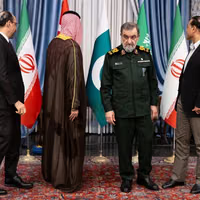
Mohsen Rezaei, who heads Iran’s Supreme National Security Council, spoke by phone with Russian President Vladimir Putin on Monday. The council said they discussed regional developments. Its public account gave no details of any agreement on the US naval blockade.
Putin said in October that he wanted shipping through Hormuz to resume and sanctions on Iran eventually lifted. Russia has also offered to take custody of Iran’s enriched uranium, giving Moscow a potential role if Tehran and Washington can agree on what happens to the stockpile.
For Tehran, the order of concessions matters. Rezaei said Tuesday that Washington must act on Iran’s seven conditions before the strait reopens. A senior Iranian official told Reuters the demands include oil sanctions waivers, an end to the naval blockade and the release of frozen funds. Moscow supports sanctions relief, but Putin has stopped short of endorsing Tehran’s demand that Washington move first.