• العربية
  • فارسی
Brand
  • Iran Insight
  • Politics
  • Economy
  • Analysis
  • Special Report
  • Opinion
  • Podcast
  • Live TV
  • Iran Insight
  • Politics
  • Economy
  • Analysis
  • Special Report
  • Opinion
  • Podcast
  • Live TV
  • Theme
  • Language
    • العربية
    • فارسی
  • Iran Insight
  • Politics
  • Economy
  • Analysis
  • Special Report
  • Opinion
  • Podcast
  • Live TV
All rights reserved for Volant Media UK Limited
volant media logo

Democrats seize on Iran war costs to hit Trump ahead of midterms

Sep 18, 2026, 20:39 GMT+1
he current price of gasoline at a filling station in San Diego, California, U.S., August 19, 2026.

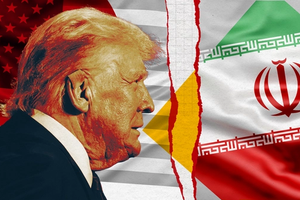
Democrats are intensifying attacks on President Donald Trump over the Iran war as the midterm elections approach, seeking to tie the six-month conflict to an issue closer to American voters’ wallets: the rising cost of gasoline and everyday goods.

Democratic lawmakers have increasingly portrayed the war not simply as a foreign-policy dispute but as a contributor to the cost-of-living pressures weighing on American households.

“There’s no plan. No strategy,” Representative Jason Crow of Colorado said. “The President started a war with Iran that he doesn’t know how to win or get us out of. Americans are paying the price every day.”

The argument comes as disruptions to oil supplies and shipping through the Strait of Hormuz have pushed energy prices sharply higher, making gasoline an increasingly prominent political issue ahead of the November elections.

Representative Rosa DeLauro of Connecticut sought to connect those costs directly to the war, saying commuters were paying nearly $1 million more a day for gasoline than in July.

“This is a crisis that is only beginning,” she said. “We are about to enter a winter where millions of Americans will experience the disastrous effects of Trump’s illegal war in Iran.”

Public opinion suggests widespread concern over both the war and energy costs.

A Marquette Law School national poll conducted September 2-9 found that 80% of adults said gasoline prices had risen over the previous six months, including 55% who said they had risen “a lot.”

Only 20% approved of Trump’s handling of gasoline prices, while 80% disapproved. On Iran, 26% approved of his handling of the conflict and 73% disapproved, while 79% said the war had not been worth its cost.

Trump has continued to defend his approach while suggesting an end to the conflict may be approaching. He said this week that Iran wanted an agreement and that “hopefully we're toward the end of the war,” though negotiations remain stalled.

Vice President JD Vance has argued that ending US involvement could itself carry severe economic consequences, saying this week that leaving the region while Iran continued attacking shipping would risk a worldwide energy crisis.

Democrats, however, are increasingly trying to make the economic consequences of the war part of their argument to voters.

Representative Ro Khanna of California on Friday introduced what he called the Illegal War Refund Act, proposing $1,700 payments to taxpayers funded from the Defense Department budget.

“Trump’s illegal war in Iran has cost Americans in food and gas prices an estimated $230 billion,” Khanna said. “Today, I introduced the Illegal War Refund Act to put that money back in the pockets of Americans.”

The conflict continues more than six months after US and Israeli strikes on Iran began on February 28. The US naval blockade has sharply restricted Iranian oil exports, while attacks on shipping and disruption around the Strait of Hormuz have added pressure to global energy markets.

For Democrats, the prolonged war abroad and higher prices at home are increasingly becoming a single argument as the midterms approach.

Banner

Most Viewed

Video of Iran's police sexually abusing teenager draws fury
1

Video of Iran's police sexually abusing teenager draws fury

2

US House passes Iran sanctions as Trump signals war may be nearing end

3

Iran rapidly rebuilding site tied to past nuclear weapons research - report

4

Trump weighs major Iran escalation as China steps up diplomatic push

5

Calls to quit NPT grow in Iran as critics warn of strategic trap

Banner
Banner

Spotlight

  • Tehran ‘ashamed’ as Iranians struggle to make ends meet

    Tehran ‘ashamed’ as Iranians struggle to make ends meet

  • Iran faces postwar winter with a third of gas capacity lost
    ANALYSIS

    Iran faces postwar winter with a third of gas capacity lost

  • Iran’s nightly pro-state rallies become factional battleground
    INSIGHT

    Iran’s nightly pro-state rallies become factional battleground

  • Woman, Life, Freedom and the Iran that cannot go back
    OPINION

    Woman, Life, Freedom and the Iran that cannot go back

  • From Halkbank to Golden Global: Turkey’s Iran banking ties under US scrutiny

    From Halkbank to Golden Global: Turkey’s Iran banking ties under US scrutiny

Banner
•
•
•

More Stories

Tehran ‘ashamed’ as Iranians struggle to make ends meet

Sep 18, 2026, 17:07 GMT+1
•
Behrouz Turani
100%
Workers sort freshly harvested dates in a palm grove in Bushehr province, southern Iran, September 15, 2026

Iran’s economic hardship has grown so acute that senior government officials are increasingly acknowledging in public the scale of the pressure on ordinary households.

“We are ashamed that the public’s income does not cover their expenses, especially for wage earners,” First Vice President Mohammad Reza Aref said Thursday. “You cannot increase salaries by 20% when inflation is running above 60–70%.”

Government spokeswoman Fatemeh Mohajerani has disclosed a roughly 310-trillion-toman shortfall in expected tax revenues during the first half of the current year, while the head of the Food and Drug Administration says medicine prices have risen roughly 103% this year.

President Masoud Pezeshkian has offered an equally stark assessment of the public mood, invoking the 2019 fuel-price protests as a warning against imposing further economic pressure.

“People are now on the edge; if I impose another pressure, they may fall off,” he said.

The warning has not prevented the government from doubling the gasoline price for high-volume consumers, highlighting the difficult choices facing Tehran as it tries to contain household pressure while confronting the economic costs of war.

The household squeeze

The free-market dollar has traded at around 2.30–2.33 million rials this week, with the Iranian currency losing roughly 44% of its value against the dollar over the past six months.

Food and beverage inflation has officially exceeded 127% year on year, contributing to a sharp contraction in consumption of protein, dairy products and legumes among urban working-class households.

State-run ILNA has published unusually blunt reports on the cost of living, including unofficial bread-price increases in Tehran, families cutting meat from their diets and rents doubling.

The financial daily Donya-ye Eghtesad has warned of signs of a “new inflationary regime” in which persistent price rises are shaping contracts, expectations and everyday economic decisions, making confidence in the rial increasingly difficult to restore.

The approaching academic year provides another measure of the squeeze.

According to Donya-ye Eghtesad, equipping a single primary or secondary-school student with basic uniforms, a schoolbag, shoes and stationery now costs between 150 million and 200 million rials.

A basic pack of notebooks that cost around 3.5 million rials last year now costs approximately 15 million, forcing some lower-income families to reuse old school supplies.

War adds to the strain

Iranian oil exports have reportedly fallen from around 2 million barrels per day before the war to approximately 220,000–255,000 barrels per day in August, sharply reducing one of Tehran’s principal sources of foreign currency.

The Economy Ministry has established an “Economic War Headquarters” as officials increasingly frame the economic crisis as part of the broader confrontation with Washington. But falling oil revenues leave the government with fewer resources to cushion households against rising prices and a weakening currency.

Oil-industry workers have staged weekly Monday protests over pay and taxes at offshore platforms and in Assaluyeh, while nurses demonstrated in Kermanshah on September 8 over unpaid wages.

Accounts in Iranian media offer a more immediate picture of the pressure behind such discontent: street vendors struggling with higher rents, households going months without eating meat and parents weighing school expenses against basic food costs.

The combination of high inflation, declining purchasing power and sharply reduced oil revenues leaves Tehran with increasingly limited room to ask households to absorb further economic costs from the war.

Iran faces postwar winter with a third of gas capacity lost

Sep 18, 2026, 11:49 GMT+1
•
Umud Shokri
100%
A worker during maintenance operations at facilities in Iran's northeastern Khangiran gas field, September 13, 2026

Iran is racing to restore gas infrastructure before winter after losing about a third of its pre-war production capacity, a reconstruction challenge that could force Tehran into difficult choices between keeping homes warm, power plants running and industry supplied.

Iranian officials say attacks have knocked out about 230 million cubic metres a day of gas-production capacity, compared with pre-war output of roughly 650 million cubic metres a day. That is just over a third of pre-war production.

Tehran has begun trying to claw some of that capacity back. Officials have said roughly 100 million cubic metres a day could be restored in the coming months, still less than half the capacity reported lost.

But restoring production is only part of the problem. Rystad Energy estimated in April that repairing damage to Iran’s energy infrastructure could cost as much as $19 billion, affecting gas processing, refining and export facilities.

That figure covers physical repairs rather than the wider economic consequences of lost production, disrupted exports and industrial shutdowns. Rystad has also identified shortages of critical equipment and workers as major obstacles to recovery.

Winter could provide the first major test of whether Iran can repair enough of its energy system quickly enough to prevent wartime damage from developing into a broader economic crisis.

A system already under pressure

Iran entered the war with an energy system already struggling to match supply with demand.

The US Energy Information Administration has said sanctions slowed development of the country’s natural-gas infrastructure and that limited storage capacity left Iran poorly equipped to manage seasonal swings in consumption.

In 2022, residential and commercial consumers accounted for 33% of Iran’s gas consumption, industry including petrochemicals for 27%, and electricity generation for another 28%, according to the EIA.

Household and commercial gas consumption rises during winter, while demand from the electricity sector is highest during summer.

The loss of production capacity therefore leaves Tehran having to allocate a reduced supply among households, power stations, petrochemical plants and other industrial users.

The problem is not simply how much gas Iran has underground. Gas reserves alone do not guarantee reliable supply: the country also needs functioning processing plants, pipelines and storage facilities, as well as electricity, maintenance, equipment and skilled workers to keep the system operating.

Damage beyond gas

Reduced gas supplies to power plants could constrain electricity generation, while restrictions on industrial users could hit petrochemicals and energy-intensive sectors such as steel, aluminium and cement.

That means the eventual cost of the damage cannot be measured solely by the reconstruction bill. Lower production can also translate into weaker industrial output and exports at a time when Tehran needs resources to finance repairs.

Iran's broader energy sector is already under severe financial pressure. The war and US naval blockade have sharply curtailed Iranian oil exports, leaving tens of millions of barrels stranded in storage and depriving Tehran of crude export revenue.

The combination creates the risk of a cycle in which energy shortages constrain economic activity while reduced revenues make restoring the energy system more difficult.

A longer-term problem

The war has also magnified structural weaknesses that predate the conflict.

South Pars, which Iran shares with Qatar, is the country's largest non-associated natural-gas field and the centre of its gas industry. But the EIA had already warned before the war that without additional investment Iran could struggle to satisfy domestic demand while meeting its export commitments.

Sanctions have restricted access to foreign investment, technology and specialised equipment, leaving Tehran with an existing infrastructure challenge before US and Israeli attacks added an urgent reconstruction burden.

Rystad said delays in procuring critical equipment were likely to determine how quickly damaged energy infrastructure could be restored, while shortages of workers were another major obstacle.

The winter test

For Tehran, the immediate question is how much of the reported 230 million cubic metres a day of lost gas capacity can be restored before colder weather drives household demand higher. How severe the remaining deficit becomes will depend on demand, further repairs and whether additional infrastructure is damaged.

Tehran may have to balance household heating against industrial production and electricity generation while trying to rebuild infrastructure under sanctions.

Rystad's $19 billion estimate gives a sense of the potential physical repair bill. The larger test is whether Iran can restore enough of the system to prevent damaged gas infrastructure from feeding through into electricity shortages, industrial disruption and further economic pressure.

The coming winter should provide the clearest indication yet.

Trump weighs major Iran escalation as China steps up diplomatic push

Sep 18, 2026, 01:03 GMT+1
100%
US Marines train on the flight deck of the USS Portland in the Arabian Sea. (CENTCOM/X)

President Donald Trump said Thursday he was weighing renewed large-scale strikes on Iran as China intensified diplomatic contacts with Washington and Tehran amid mounting pressure to contain the regional conflict.

Trump told Axios he was approaching a major decision on whether to resume broad attacks on Iran, after saying a day earlier that he hoped the war was nearing its end.

“I have a big decision coming up. Do I want to go in and annihilate them [the Iranian regime] or do I not? It's a big decision. Anything could happen with me,” Trump said in an interview published Thursday.

He is expected to meet leaders from Saudi Arabia, the United Arab Emirates, Qatar, Bahrain, Kuwait and Oman on the sidelines of the UN General Assembly next week before deciding on the next phase of the war. Axios reported that Trump wants to hear from regional allies before making his decision.

The consultations come as Washington’s partners and rivals push in different directions over whether the war should be contained or intensified.

China intensifies diplomatic push

China expanded its diplomatic engagement over the conflict Thursday, when Foreign Minister Wang Yi spoke with US Secretary of State Marco Rubio, one day after holding talks with Iranian Foreign Minister Abbas Araghchi in Beijing.

China’s Foreign Ministry said Wang and Rubio discussed preparations for the next stage of high-level exchanges between the two countries and exchanged views on the Middle East.

During Wednesday’s talks with Araghchi, Wang urged Iran and the United States to exercise restraint and resume substantive consultations, while also calling for the Strait of Hormuz to reopen.

Beijing’s diplomacy comes as the conflict threatens shipping routes at both ends of the Arabian Peninsula, increasing the risk of wider disruption to regional energy flows.

China has also privately asked Iran to use its influence to rein in Yemen’s Houthis after Saudi Arabia appealed to China for help, Reuters reported Thursday, citing three Iranian sources familiar with the matter.

The sources said Saudi Arabia sought Beijing’s intervention as Houthi advances around Bab el-Mandeb increased risks to oil exports and commercial shipping. China asked Tehran to help prevent the fighting from spreading further across energy routes important to Beijing.

The intensified diplomacy has not narrowed broader differences between Beijing and Washington over Iran.

Russia and China on Thursday vetoed a US-drafted Security Council resolution extending the mandate of the UN panel monitoring sanctions on Tehran, underscoring the continuing divide over the international sanctions framework.

Israel signals campaign is not over

While China pressed for restraint, Israel signaled that it was not ready for the military campaign to end.

Prime Minister Benjamin Netanyahu said Israel still had work to complete against Iran and its regional allies and said Israel intended to bring down Iran’s regime.

“We have done most of the work, but there is still work to complete, and we will complete it,” Netanyahu said in remarks published Thursday by his official account.

Defense Minister Israel Katz separately said Israel still had “important goals” to achieve against Iran and in other arenas, adding that the broader military campaign was not over.

“We will act with military force and political wisdom to achieve them,” Katz said.

Shipping pressure persists from Hormuz to Aden

The stakes surrounding Trump’s decision were also visible at sea, where commercial traffic remained severely depressed and new security incidents were reported along key regional shipping routes.

Only three commodity vessels transited the Strait of Hormuz Wednesday, down from 12 a day earlier and well below the 10-day average of about 17, Reuters reported Thursday, citing preliminary ship-tracking data.

The figures exclude vessels that may have crossed with their Automatic Identification System transponders switched off.

Fresh maritime security reports added to concerns over the region’s main shipping routes.

UK Maritime Trade Operations said it received a report of a security event in the Strait of Hormuz about 16 nautical miles northeast of Khasab, Oman. The crew was reported safe and no environmental impact had been confirmed while authorities investigated.

Farther west, a westbound tanker in the Gulf of Aden reported being pursued by a skiff that attempted to intercept it about 75 nautical miles east of Aden, according to UKMTO.

Trump has not said when he will decide whether to resume large-scale strikes. His meeting with six Persian Gulf leaders next Tuesday will bring him face to face with governments exposed to the economic and security costs of a wider conflict, as Washington weighs whether to intensify the campaign or pursue another diplomatic opening.


US offers substantial whistleblower rewards for tips on Iran sanction evasion

Sep 17, 2026, 21:40 GMT+1
100%
A general view of the Treasury Building on day two of a partial government shutdown in Washington, D.C., U.S., February 1, 2026.

The US Treasury is offering whistleblowers up to 30% of collected penalties for information leading to enforcement actions over Iran-related sanctions evasion or money laundering, as Washington seeks intelligence on Tehran’s financial networks abroad.

The offer is detailed in a Financial Crimes Enforcement Network bulletin seen by Iran International. FinCEN said it is seeking tips from both US and non-US whistleblowers about individuals or entities suspected of violating American sanctions or the Bank Secrecy Act, including Iranian proxies and facilitators operating outside Iran.

Information that results in a successful Treasury or Justice Department action collecting more than $1 million in penalties can qualify for an award of 10% to 30% of the amount collected, Treasury said. It added that awards may, at its discretion, even go to people working directly or indirectly for the Iranian government or state-owned enterprises.

FinCEN’s whistleblower program predates Operation Economic Outcast, but the latest bulletin specifically solicits information on Iran-related illicit finance. Earlier this year, FinCEN issued a separate whistleblower bulletin on fraud-related anti-money laundering and sanctions violations and proposed rules for administering whistleblower awards.

The Iran bulletin identifies activity involving the United Arab Emirates, Turkey, Iraq and China among potential indicators of sanctions evasion. It also points to suspicious shipping documentation, exchange houses, front companies and digital-asset transactions as areas where people with direct knowledge could provide information.

The initiative comes under Operation Economic Outcast, launched by Treasury Secretary Scott Bessent on August 24. The campaign expanded the scope of secondary sanctions and warned foreign companies and financial institutions that facilitating Iranian sanctions evasion or money laundering could jeopardize their access to the US financial system. Treasury says it is targeting financial channels used by Tehran for oil sales, payments, procurement and other revenue.

Bessent highlighted the whistleblower push in a post on X on Monday, saying people anywhere in the world with actionable information could qualify for an award “no matter where you live or who signs your paycheck.”

“If you see something, say something,” he added.

Increased risks for foreign firms

The whistleblower appeal follows a series of actions against foreign financial channels that Washington says have helped Iran move money internationally.

Treasury sanctioned Turkey’s Golden Global Bank and two subsidiaries on September 4, alleging that the Istanbul-based lender facilitated tens of millions of dollars in transactions for the Revolutionary Guards’ Quds Force and helped move Iranian oil proceeds from China into Turkey. Golden Global denied the allegations and said it complied with applicable banking regulations.

In the UAE, Washington has used a different mechanism. FinCEN proposed on August 28 to bar the UAE operations of Egypt’s Banque Misr from US correspondent banking after identifying them as a “primary money laundering concern.” FinCEN said the branches had processed about $1.8 billion between January 2024 and June 2026 for 103 companies potentially connected to Iranian shadow-banking networks. The proposed measure applies only to Banque Misr’s UAE operations and has not yet become a final rule.

An Iran International investigation earlier this month found that Iran’s shadow banking network extended substantially beyond the institutions targeted by Washington. Leaked Bank Parsian correspondence and transaction records showed one sanctioned Iranian bank directing funds through 15 banks in China and the UAE and 33 beneficiary companies over a seven-month period.

  • US crackdown leaves much of Iran’s shadow banking untouched

    US crackdown leaves much of Iran’s shadow banking untouched

Thirteen of those 15 foreign banks had faced no publicly recorded US enforcement action over their role at the time of the investigation. Iran International found no evidence that the UAE and Chinese banks knowingly facilitated Iran’s efforts to circumvent US sanctions.

Bessent has repeatedly reinforced Treasury’s warnings to foreign institutions. After Golden Global was sanctioned, he wrote on X that financial institutions were “finding out the hard way” that Washington was serious about Economic Outcast, adding: “We know who you are, we know where you are.” Days later, he told Real America’s Voice that Washington would continue the campaign “until everyone stops dealing with this regime,” warning of potentially severe financial consequences for those that continued.

Bessent told lawmakers this week that Washington had held “very good private discussions” with China over Iran’s financial links and pointed to public signals from the UAE about restricting Tehran’s access to financing. He is due to meet Chinese Vice Premier He Lifeng this weekend ahead of talks between Presidents Donald Trump and Xi Jinping.

The FinCEN bulletin adds a financial incentive for insiders to provide evidence that could underpin future cases, potentially giving US authorities information from within the same banking, trading and intermediary networks they are seeking to target.

US House passes Iran sanctions as Trump signals war may be nearing end

Sep 17, 2026, 13:11 GMT+1
100%
Ukraine's President Volodymyr Zelenskiy welcomes US Senator Lindsey Graham (R-SC) before their meeting in Kyiv on July 10, 2026.

The US House of Representatives passed the Lindsey O. Graham Sanctioning Russia and Iran Act of 2026, clearing the sweeping measure for President Donald Trump’s signature as Washington also signaled that the Iran war could be approaching a diplomatic turning point.

The House approved the sweeping sanctions legislation by a vote of 262-159 on Wednesday, after the Senate passed it 86-11 last month. Fifty-eight Democrats supported the bill, while seven Republicans opposed it.

The legislation would authorize the president to impose tariffs of up to 100% on the largest purchasers of Russian oil and natural gas and sanction senior Russian officials, oligarchs, banks and financial institutions. At Trump’s request, lawmakers also expanded the measure to include sanctions targeting Iran’s energy and weapons sectors.

Republican Representative Joe Wilson welcomed its passage and said lawmakers were looking forward to Trump signing it into law.

The measure could affect major importers of Iranian and Russian energy. India said Thursday that it had noted the bill’s passage while emphasizing that it remained committed to securing energy supplies through diversified sourcing and in response to changing market conditions.

The sanctions push came alongside indications that Washington and Tehran may be exploring a path toward ending the war. Trump said on Wednesday after arriving in North Carolina that he hoped the conflict was nearing its conclusion, adding that Iran was seeking an agreement.

“Well, hopefully we’re toward the end of the war,” Trump told reporters. “Iran is very much wanting to make a deal. We’ll see how that works out.”

Trump is also expected to meet leaders or foreign ministers from the six Persian Gulf states on the sidelines of the UN General Assembly in New York next Tuesday, Axios reported. The meeting is expected to address the next phase of the war and US proposals for a postwar strategy.

Iranian Foreign Minister Abbas Araghchi, meanwhile, said consultations during his visit to China had been successful and endorsed Chinese President Xi Jinping’s proposals for ending the conflict.

China’s Foreign Ministry said Araghchi told Foreign Minister Wang Yi that Iran did not want the hostilities to continue and hoped to return to diplomacy. Wang urged Iran and the United States to revive the negotiating framework established under the Islamabad memorandum, called for the reopening of the Strait of Hormuz and backed dialogue between Iran and Persian Gulf states.

Araghchi also held separate telephone calls from Beijing with Turkish Foreign Minister Hakan Fidan and Pakistan’s army chief, Field Marshal Asim Munir, to discuss regional developments.

A parallel diplomatic channel emerged in Oman, where US officials met senior representatives of Yemen’s Iran-backed Houthis over the weekend, Reuters reported. The Houthis said they had no intention of attacking American vessels and remained committed to their 2025 ceasefire with Washington, according to the report.

Two sources told Reuters that the group promised not to target US ships. A Yemeni source said the Houthis also pledged not to attack Israeli or other commercial vessels, with the exception of Saudi ships.

The discussions took place against a backdrop of continued fighting between the Houthis and Saudi Arabia. Riyadh said it intercepted a Houthi drone near Mecca this week, an allegation the group denied. Saudi Arabia has also sought air-defense assistance from France, Britain, Pakistan and Egypt as its interceptor stocks decline, the Associated Press reported.

Houthi-run media said Saudi strikes in Yemen on Thursday hit telecommunications towers in Taiz and killed one person in Abs. The Houthis also released footage they said showed the downing of a Saudi F-15, a claim that Saudi Arabia had not confirmed.

Maritime traffic through the Strait of Hormuz remained severely constrained despite the diplomatic activity. Only three commodity vessels transited the waterway on Wednesday, down from 12 a day earlier and far below the 10-day average of about 17, Reuters reported, citing preliminary ship-tracking data.

US Central Command maintained that commercial traffic was still moving and that Iran did not control the strait. Its spokesperson said US forces had helped vessels carrying more than 900 million barrels of crude pass through the waterway since early May and had cleared mines from internationally recognized shipping lanes.

The sanctions bill, diplomatic contacts and continuing disruptions at Hormuz and in Yemen left Washington applying further economic pressure while testing whether negotiations could reduce the regional fighting.