Iran International asked its Instagram followers whether they would prepare emergency kits in the event of another war, drawing around 4,000 replies, many of which cited poverty, rising prices and a lack of public shelters.
Others described growing exhaustion after the 12-day war in June 2025 and the 40-day conflict from February to April 2026, both involving the United States and Israel, as well as decades of political and economic uncertainty.
The responses come after The Atlantic reported last month that the Trump administration was considering renewed strikes on Iran following the US midterm elections, with energy infrastructure among the potential targets.
Some respondents said they would not prepare emergency supplies, although their reasons varied.
‘We buy yogurt in four installments’
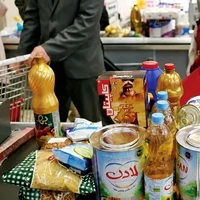
Financial hardship was a recurring reason cited by respondents, many of whom said meeting everyday needs had become difficult, let alone stockpiling food, medicines and emergency equipment.
"We buy yogurt in four installments, and then they expect us to stockpile three months' worth of food!" one respondent wrote.
Several Iranians pointed to the considerable cost of putting together even a basic emergency kit containing a flashlight, radio, canned food and other essential supplies.
"Putting together this bag costs 200 million rials [about $73]. Where are we supposed to get that money?" another respondent said.
One person questioned how anyone earning 250 million rials ($91) a month could afford an emergency kit costing at least 150 million rials ($55).
Another estimated the cost of a kit at nearly 300 million rials ($109), saying it was difficult for people who could not afford food for the following day.
The concerns reflect a broader cost-of-living crisis in Iran.
Iran's Statistical Center reported that point-to-point inflation, which compares prices with the same month a year earlier, reached 88.7% in the Iranian month of Mehr, which ended in October.
"We have no money, we're unemployed, and even covering the cost of daily food has become difficult," one respondent said.
Some said they could afford only a few basic items.
"Only things like sanitary pads, pills, tissues and biscuits. I can't afford the rest," one person wrote.
Others said they intended to prepare emergency kits despite the costs, particularly because of concerns about prolonged disruptions to water, electricity and gas supplies.
Several respondents with cardiovascular conditions, diabetes or epilepsy said they had stockpiled several months' worth of essential medication.
‘Where are we supposed to go?’
A lack of safe shelter was another major concern among respondents, with some questioning the purpose of preparing emergency supplies when they had nowhere to escape to.
"Even if we pack a bag, where are we supposed to go? The main question is, where do we go?" one person wrote.
Another said sarcastically: "During a war, all I can do is move from one room to another."
The shortage of public shelters has been acknowledged by Iranian officials.
On September 15, Tehran City Council Chairman Mehdi Chamran said metro stations should be equipped to serve as emergency shelters. He had previously acknowledged that the capital lacked fully equipped and ready-to-use shelters for residents.
Some respondents questioned whether emergency supplies would make any meaningful difference if strikes damaged essential infrastructure, leaving households without electricity, running water or gas for extended periods.
"If they strike the infrastructure, what can you possibly do with a backpack that, at most, can get you through one week?" one wrote.
Iran’s First Vice President Mohammad Reza Aref said on September 27 that damage to gas infrastructure during the two recent wars had reduced supplies, adding to the country’s energy shortages.
‘Our entire lives have been a state of emergency’
Beyond financial hardship and the lack of shelter, many responses reflected psychological exhaustion and a growing sense of resignation after repeated conflicts.
Some joked that preparing emergency kits was something only people experiencing war for the first time would do.
"It was only during the 12-day war that the anxiety felt new," one respondent wrote.
Another recalled preparing supplies during the first conflict but gradually abandoning the effort.
"We only packed one the first time. Then we needed our belongings and kept taking them out of the bag. The second time, we just entrusted ourselves to God," the respondent said.
Iran International documented similar sentiments in a June 8 report, when respondents described exhaustion with war, economic pressures and uncertainty about the future.
Despite concerns about the consequences of further fighting, some expressed hope that another conflict could bring political change.
That contradiction was also evident in the latest responses, with some saying they no longer feared renewed war and were instead waiting for it to begin.
"Now I'm more stressed about the possibility that war might not happen," one person wrote.
Others spoke of growing fatigue with the uncertainty surrounding the country's future.
Several respondents blamed the Islamic Republic for keeping Iran in what they described as a state of "suspension and crisis," "constant anxiety" and "living on red alert" throughout its 47 years in power.
One respondent summed up the sentiment shared by many: "Our entire lives have been in a state of emergency."