US strike on Iran nuclear sites risks wider war, analyst says
A potential US strike on Iran's underground nuclear facilities could trigger a wider, prolonged regional war, with Iranian retaliation potentially targeting energy infrastructure across the Middle East, defense analyst Farzin Nadimi told Iran International.
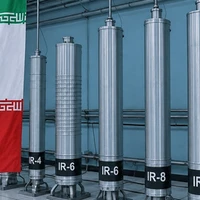
Responding to Tucker Carlson's remarks about a possible US nuclear strike on Iran's underground Pickaxe Mountain facility, Nadimi warned that such an attack could release radioactive materials and cause widespread environmental contamination.
He said US strikes could also target Iran's missile bases, military industries and command centers, raising the risk of a broader conflict.
US Vice President JD Vance’s reported bid to meet Iran’s security chief Mohsen Rezaei for peace talks with Tehran raises a troubling question for Washington: Does it understand the man it would face across the table?
For more than four decades, Rezaei has occupied positions of power from which he could make decisions that imposed extraordinary human and economic losses on Iranians, while he and his factional allies in the Islamic Republic remained largely insulated from their consequences.
Understanding this track record and how he calculates the costs of diplomacy is essential to understanding how he might negotiate with Washington, how much he is prepared to tolerate, and what could finally persuade him to compromise.
The wartime calculus
The origins of Rezaei’s cost-benefit calculus go back to 1981, when the founder of the Islamic Republic, Ruhollah Khomeini, appointed the 27-year-old Rezaei as commander of the Islamic Revolutionary Guard Corps (IRGC). The IRGC was at the time a newly established institution in which revolutionary commitment and willingness to sacrifice often carried greater weight than professional military judgment.
Rezaei flourished in that environment and, in turn, helped consolidate a command culture that treated heavy casualties as an acceptable cost of pursuing ideological or factional objectives. The relationship was mutually reinforcing, as the institution rewarded commanders willing to endure enormous losses, while those commanders perpetuated a system in which the political consequences of those losses rarely affected the people responsible for them.
That high threshold for enduring costs paid by others became particularly consequential in 1982, after Iranian forces recaptured the city of Khorramshahr and Iraq subsequently offered negotiations. As IRGC commander, Rezaei was among those who argued for entering Iraqi territory rather than halting at the border. A war begun by Saddam Hussein's invasion now became another six years of bloody battles for goals extending beyond Iran's capacity.
During the catastrophic Operation Ramadan near the port city of Basra in July 1982, Iranian troops, including forces under Rezaei's IRGC command, repeatedly attacked entrenched Iraqi positions. Historians Anthony H. Cordesman and Abraham R. Wagner estimate between 20,000 and 30,000 Iranian troops were killed or critically wounded. Some Iranian leaders nevertheless saw progress in exhausting Iraq.
Mohsen Rezaei (second from left) alongside Ali Khamenei (center) during the Iran-Iraq War.
One of my uncles was killed in Operation Ramadan, and another in the offensive campaigns Rezaei had advocated after Khorramshahr. In this calculation, a battlefield disaster became an investment in a hypothetical victory in the long run. That victory never came.
Iranian forces did improve tactically, as a US National Defense University study demonstrates in its account of the successful 1986 assault on Iraq’s Faw Peninsula. Yet those improvements rarely prompted Iranian commanders to reconsider whether their objectives justified the mounting human suffering and material losses, allowing the same strategic mistakes to persist even as battlefield methods evolved.
Later that year, Operation Karbala-4 proceeded despite warnings that Iraqi forces anticipated the assault and that the operation had been exposed. Thousands of mostly Iranian youths were killed, wounded or went missing. Decades afterward, Rezaei called the operation a “diversion” preceding Operation Karbala-5, before acknowledging that it began as a principal attack.
File photo of Iranian forces preparing for Operation Karbala-4 during the Iran-Iraq War.
Here was another early expression of a dangerous institutional habit among Iranian decision-makers: a battlefield defeat could be treated as an investment in eventual victory, regardless of whether that victory was becoming more attainable or not.
The following year, Iranian forces continued operations toward Iraq’s Basra. A 2009 US National Defense University study, based on extensive interviews with former Iraqi Republican Guard commander Ra'ad Hamdani, described the fighting as the "Somme of the Iran-Iraq War," recalling frontal assaults with high casualties, enormous artillery concentrations and extraordinary destruction.
The National Defense University researchers concluded that repeated attacks reflected Iran’s persistent unwillingness to learn from previous failures. By 1987, they observed, Iranian political and military leaders were struggling to motivate soldiers who had suffered heavy losses without any meaningful gains.
Rezaei’s demands in the final year of the Iraq war exposed the deeper problem with his leadership style. In 1988, Rezaei set out requirements for rebuilding Iran’s offensive capacity over the following five years, including 350 infantry brigades, 2,500 tanks and 300 combat aircraft, while Prime Minister Mir-Hossein Mousavi’s government warned it could no longer finance the war.
Rezaei merely counted the weapons necessary for victory without offering a comparable accounting of the human cost of continuing the war. Ruhollah Khomeini accepted a ceasefire, and Rezaei remained commander until 1997.
Power and privilege
Peace brought Rezaei new positions and privileges, but the wartime mentality that allowed him to accept enormous costs borne by others followed him into politics. He served as secretary of Iran's Expediency Council from 1997 to 2021 and expanded his influence beyond the military.
He ran unsuccessfully for president in 2009, 2013 and 2021, but those electoral defeats did little to diminish his access to senior positions within the Islamic Republic.
Mohsen Rezaei displays his identification document and inked finger as he registers to run in Iran’s presidential election.
A Tehran Bureau investigation identified him as the owner of Tabnak, a major news website whose corporate structure included relatives and associates. He now had assets and networks worth protecting, even as he continued to regard sacrifice by others as an acceptable price for pursuing political objectives.
Rezaei’s response to his son’s dissent also illustrated the tension between family ties and political loyalty. Ahmad Rezaei had publicly criticized the Islamic Republic and fled the country. Mohsen Rezaei denounced him and declared that he would be treated like any dissident if he returned. Ahmad subsequently returned to Iran in 2005 and was not prosecuted, before leaving the country again.
Ahmad was found dead in Dubai in 2011. Police reported an apparent suicide, although questions persisted. Nevertheless, Rezaei's public response to his son's dissent suggested that even family ties could be subordinated to his position in a political order he had devoted his career to building.
In peacetime economic policy, the same institutional tolerance for high costs borne by Iranian citizens found another arena. Rezaei carried his understanding of costs into economics. Former associates of his presidential campaigns told me he conceived what became slain Supreme Leader Ali Khamenei's "resistance economy" and brought the idea to him.
As vice president for economic affairs under President Ebrahim Raisi from August 2021 to June 2023, he helped direct economic policy amid inflation and declining purchasing power. Once again, ordinary people financed the "resistance," while Rezaei retained his position and influence.
In an interview for this article, former Kayhan editor-in-chief and representative of Ali Khamenei Mehdi Nasiri alleged that Rezaei sought a share of Tehran’s roughly €2 billion electric-vehicle procurement deal with China under hardline Mayor Alireza Zakani in 2024, but declined to elaborate on the basis for his allegation. Separately, investigative journalist Yashar Soltani reported that the deal bypassed standard procurement procedures and involved intermediaries whose selection and financial qualifications were unclear. His report did not name Rezaei.
In August 2026, Rezaei became secretary of Iran's Supreme National Security Council, returning to decisions over war and diplomacy. The body, chaired by President Masoud Pezeshkian, coordinates Iran's security and foreign policy. Rezaei brings decades of relationships within the IRGC into its deliberations, along with the same institutional mentality that shaped his earlier career.
His recent words reveal how much of his wartime calculation survives. In an October 2026 interview, Rezaei acknowledged that a prolonged blockade would hurt Iranian families and investment, then insisted that "economic pain and strategic collapse are not the same thing". Four decades after the Iran-Iraq war, he continues to distinguish between the suffering of ordinary Iranians and the ability of their rulers to continue costly confrontations.
Yet Rezaei also has reasons to protect what he himself has acquired. Political scientist Robert A. Pape's influential research showed that even suicide terrorism can follow strategic calculations. The broader point is that ideological commitment need not exclude strategic calculation. Rezaei’s record suggests a high tolerance for losses borne by Iranians and a potentially much lower threshold when his survival, wealth and the political institutions he serves face danger.
Implications for Washington
Pressure directed mainly at Iranian households may therefore leave his incentives intact, since the leadership has long learned to transfer the consequences of its decisions to the population. His estrangement from his son Ahmad Rezaei also makes family ties an uncertain source of restraint.
The calculation changes when leaders themselves face costs they can no longer transfer, particularly when the institutions and networks sustaining their power are directly threatened. This may help explain why Parliament Speaker Mohammad Bagher Ghalibaf, also a former IRGC commander, met JD Vance in Switzerland in June 2026, a few months after US-Israeli strikes killed Supreme Leader Ali Khamenei and other IRGC commanders.
A “credible threat” can bring Tehran to the negotiating table, although the problem of durability remains. Once the threat recedes, the incentives that sustained decades of confrontation may return, leaving agreements vulnerable to reversal. Any lasting settlement therefore needs verification and enforceable consequences for reneging, even after the immediate threat has passed.
For Washington, the implication is that a credible threat must alter the calculations of those making decisions in Tehran. Pressure that the leadership can transfer to civilians has repeatedly proved insufficient. A lasting agreement requires the regime's decision-makers to understand that renewed confrontation would carry sustained consequences for themselves. Those consequences must remain credible even after the immediate danger has receded.
Iranian state media eagerly repeat the claim that Iranian politicians are exceptionally tough negotiators. Much of that toughness comes from their ability to draw on other people’s wealth and lives, which allows them to prolong confrontation without personally bearing its consequences.
Mohsen Rezaei's career illustrates the extraordinary bargaining advantage of making decisions while others pay the price. Anyone who negotiates with other people’s lives and resources can afford to be a tough negotiator.
A worker stands inside a production facility at JEMCO, one of Iran’s largest electric motor manufacturers, October 19, 2026
Iran could face an economic contraction comparable in scale to the Great Depression in the United States, economists say, as the loss of oil revenue and wartime disruption threaten to drive an ailing economy into a deeper crisis.
Their assessments follow a prediction by US Treasury Secretary Scott Bessent, who told Iran International that Iran's economy would shrink by more than 25% between March 2026 and March 2027.
Iranian-American economist Ali Dadpay told Iran International that he found Bessent's forecast plausible, particularly as Tehran attempts to finance wartime spending by expanding the money supply.
That risks accelerating inflation and weakening the rial further, he said, creating a cycle of rising prices, falling purchasing power and declining economic activity.
Mohamad Machine-Chian, an Iran International economist, offered a stark comparison.
"The United States lost about 26% of its output in the Great Depression, over four years, from 1929 to 1933. Secretary Bessent is describing a loss of Great Depression size in twelve months," Machine-Chian said.
Iran's economy contracted by 21.6% in 1980, the first year of the Iran-Iraq War, World Bank data shows.
How much worse could it get?
Even the severe sanctions of 2018 and 2019 produced a smaller cumulative contraction of approximately 12%, despite oil exports plunging from about 2.7 million barrels per day to roughly 650,000.
Economic output was already approximately 10% lower in spring 2026 than a year earlier, according to figures from Iran's Statistical Center.
For the economy to contract by more than 25% over the full year, the decline would have to accelerate considerably.
Machine-Chian estimated that even with an 8% contraction over the summer, output would have to fall far more sharply during autumn and winter for the annual decline to approach Bessent's forecast.
The disruption of oil exports is central to that outlook. Energy intelligence firm Kpler reported no new Iranian crude loadings since late August, while revenue from earlier shipments is running out.
But the damage extends beyond the oil industry. Factories depend on imported materials, transportation companies require replacement parts, and businesses need financing to sustain operations.
As supplies and revenue dwindle, manufacturing, construction and other industries face further disruption.
The cost for ordinary Iranians
The economic deterioration is already visible in the price of everyday necessities.
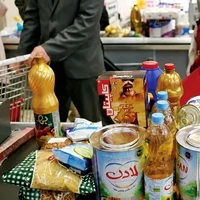
Food prices in September were more than double their level a year earlier, according to Iran's Statistical Center. Eggs cost three and a half times as much, rice nearly twice as much, and official bread prices in Tehran have doubled.
“The minimum wage increased 60% this year while inflation approached 90%,” Machine-Chian said. “In dollar terms, a minimum-wage worker now earns approximately $61 a month, compared with $96 a year earlier.”
He also warned about savings being eroded. With the dollar costing two and a half times as much as a year ago, money held in rials has lost approximately 60% of its value against the US currency.
Further disruption to imports could bring shortages of medicines, industrial materials and vehicle parts, potentially forcing factories to reduce production or close and putting more jobs at risk.
Dadpay described a possible future resembling aspects of the economic crises in Venezuela and Zimbabwe, where severe currency depreciation and inflation pushed people toward dollars, gold, secondhand markets and barter.
As production declines and essential goods become harder to obtain, even those who remain employed could struggle to afford basic necessities.
Sanctions policy analyst Max Meizlish expects pension payments and civilian services to come under pressure as revenues decline, while military and security personnel could continue receiving salaries.
That could allow the Islamic Republic to preserve institutions central to its political survival even as living standards deteriorate.
Political consequences
Economic devastation does not necessarily translate into political collapse, particularly if Tehran can preserve its security institutions and access to financial channels abroad.
Washington has not fully targeted the Chinese financial institutions facilitating Iranian transactions, partly because of concerns about wider economic consequences, Meizlish said.
"It's just not clear that this level of economic constraint on its own will be enough to produce some sort of measurable political change," he said.
Dadpay argued that years of economic mismanagement and decisions prioritizing the survival of the political system had left Iran particularly vulnerable to the current crisis.
"As long as Islamic Republic is in place with this mindset, with this dynamic of decision-making, this is what's going to happen," he said.
For ordinary Iranians, the consequences are already evident in collapsing purchasing power, dwindling savings and rising prices.
Whether Bessent's forecast proves accurate or not, the economic damage could outlast the confrontation that has accelerated it.
Senior officials from Iran, Turkey, Pakistan and Saudi Arabia meet in Tehran, October 26, 2026.
Regional powers are intensifying efforts to prevent a wider war with Iran, but their diplomacy comes with explicit demands of Tehran: reopen the Strait of Hormuz, stop threatening Persian Gulf states and allow international nuclear inspectors to work without obstruction.
Qatar and Pakistan, two of the principal mediators between Tehran and Washington, made those demands publicly on Tuesday, just one day after Saudi, Pakistani and Turkish officials traveled to Tehran for talks.
The military and security makeup of the delegation reflected the two tracks regional powers are pursuing: diplomacy aimed at containing the conflict alongside deeper defense cooperation in case it spreads.
The parallel efforts reveal the limits of the latest diplomatic push. These countries want to prevent another round of war, but they also want changes in Iranian behavior and are preparing to protect their interests if talks produce none.
After a Qatari delegation visited Tehran earlier this week, Doha said Tuesday that Iran needed to show “good intentions” for mediation efforts to succeed.
A Qatari Foreign Ministry spokesperson called on Tehran to stop threatening Persian Gulf Arab states and open the Strait of Hormuz.
Pakistan also set out what it expects of Tehran at the UN Security Council on Tuesday. Its representative pointed to the June Islamabad Memorandum of Understanding between Iran and the United States as evidence that diplomatic progress remained possible, while insisting that the International Atomic Energy Agency be allowed to operate without obstruction.
Islamabad said it continued to seek a ceasefire, reduce tensions and create conditions for renewed negotiations between Tehran and Washington.
Preparing for failure
Saudi Arabia, Pakistan and Turkey are strengthening military cooperation under the Mecca defense pact. Talks with Tehran therefore do not mean military preparations have stopped.
Houthi attacks on Saudi Arabia and insecurity along maritime routes have imposed serious costs on the kingdom and affected countries across the region and beyond. For Riyadh, de-escalation with Iran is closely linked to protecting infrastructure, trade and economic stability.
On October 23, Turkey, Egypt, Pakistan and Saudi Arabia, the R4 group, held talks with Britain, France, Germany and Italy in Istanbul. Their joint statement stressed resolving disputes through dialogue and reducing tensions.
The R4 statement emphasized diplomacy but also condemned Houthi attacks, expressed solidarity with Saudi Arabia and Yemen’s government and called for safe and unhindered passage through Hormuz. These are not the positions of countries offering Tehran unconditional support.
Before Istanbul, the possibility emerged of an informal division of labor: direct US and Israeli pressure on Iran on one track, with regional states seeking to contain the consequences of the war, particularly Houthi attacks, on another. The subsequent diplomacy does not rule that out.
Better protection for Saudi Arabia could indirectly benefit US operations, but that does not establish a coordinated strategy or secret agreement. Nor can regional states be treated as part of the same coalition as Israel.
Their opposition to expanding attacks on Iran and continued contacts with Tehran point to different objectives, even if some of their actions have complementary effects.
Two visions of security
The Tehran meeting also exposed sharply different interpretations of what regional diplomacy is intended to achieve.
Ali Bagheri, deputy secretary of Iran’s Supreme National Security Council, described the talks in terms of “endogenous security,” presenting Iran’s defense model as a basis for regional security and linking cooperation with Tehran to countering US and Israeli involvement.
Tehran is seeking to show that despite the war and pressure it faces, it remains indispensable to discussions about the region’s future. But the presence of foreign officials in Tehran does not by itself amount to endorsement of that vision.
Riyadh has emphasized de-escalation, a diplomatic solution and support for Qatari and Pakistani mediation, without suggesting either acceptance of Tehran’s security model or a reduced US role in the region.
Qatar’s latest demands suggest that regional diplomacy is not an embrace of Tehran’s position but an attempt to change its behavior while avoiding a wider war.
Pakistan’s position adds another condition: renewed diplomacy should go alongside unobstructed international oversight of Iran’s nuclear program.
Diplomacy, with limits
The Tehran talks were not an isolated attempt at mediation. Pakistan and Qatar helped secure the June Iran-US memorandum, and both have continued trying to revive negotiations.
The renewed mediation efforts amid a major US military buildup and Israeli threats show that regional countries still see space for diplomacy. But their public demands also demonstrate how far they remain from Tehran on some of the central issues driving the crisis.
The presence in Tehran of Saudi Defense Minister Khalid bin Salman carried particular weight. His previous visit was on April 17, 2025, less than two months before Israel launched its June attacks on Iran.
Regional governments are therefore trying to preserve the possibility of an Iran-US agreement without tying their security to its success. They want to contain Houthi attacks, protect Saudi Arabia and keep Hormuz open, while avoiding a wider confrontation with Iran.
That balancing act is becoming harder. Diplomacy remains active, but so do preparations for what happens if it fails.
Saudi Arabia’s Defence Minister Prince Khalid bin Salman, Pakistan’s Chief of Defence Forces Field Marshal Asim Munir, and Turkish intelligence chief Ibrahim Kalin during a meeting with Iranian officials in Tehran, Iran, October 26, 2026. (ISNA)
Talks involving Saudi Arabia and its defense partners in Tehran may offer a final diplomatic opportunity before a collective military response, a regional affairs analyst said Monday, amid attacks on Saudi territory and threats of renewed US-Iran fighting.
Mohamed Fahmy, a journalist and regional affairs analyst, described the visit as an exercise in "coercive diplomacy," arguing that the alliance was combining negotiations with preparations for a possible military response.
"This may be the last chance before a collective imminent military action," he told Iran International.
Saudi Defense Minister Khalid bin Salman, Pakistani army chief Asim Munir and Turkish intelligence chief Ibrahim Kalin met Iranian President Masoud Pezeshkian and Supreme National Security Council Secretary Mohsen Rezaei, with Rezaei hosting the four-way talks.
Riyadh said the visit by representatives of the Mecca Joint Defense Agreement was part of efforts to reduce tensions and promote dialogue.
The attacks on Saudi Arabia have presented the first major test of the agreement, signed by Saudi Arabia, Turkey and Pakistan in August, which pledges collective action when a member comes under attack.
Iranian state television reported that the four countries agreed to continue discussions on regional peace and security. No agreement to halt the Houthi attacks was announced.
The talks also unfolded against renewed threats of military action between Washington and Tehran. President Donald Trump has kept open the possibility of renewed strikes, while Iranian officials have warned of retaliation.
"The main objective is pressure," Fahmy said.
He said Saudi Arabia and its partners were attempting to exhaust diplomatic options while demonstrating that continued Houthi attacks could bring a collective response.
Professor Saad bin Tefla al-Ajmi, a former Kuwaiti information minister, told Iran International that the seniority of the delegation demonstrated the lengths to which Iran's neighbors were prepared to go to prevent another war.
He described the visit as an extraordinary diplomatic effort to prevent renewed hostilities, but said it could be interpreted in sharply different ways within Tehran, either as evidence of Iranian strength or as an opportunity to pursue a diplomatic settlement.
Iranian hardliners, he said, could portray the arrival of senior Saudi, Turkish and Pakistani officials as evidence that the Islamic Republic had gained the upper hand, forcing its neighbors to seek accommodation on Iranian territory.
A more pragmatic interpretation would see the visit as an opportunity for Tehran to demonstrate a willingness to cooperate with neighboring countries and pursue a diplomatic settlement, while portraying Washington and Israel as responsible if negotiations failed.
"It depends on whose mind you are reading in Tehran now," al-Ajmi said.
Attacks test the Mecca pact
Al-Ajmi also pointed to a hardening Saudi position toward the Houthis, arguing that Riyadh had exhausted its attempts to accommodate the group.
"I think that they have made their mind that the Houthi will have to go and they can't take it anymore," he told Iran International.
Al-Ajmi said Saudi Arabia was seeking international diplomatic and political support while demonstrating that it had been the target of aggression by the Houthis and their Iranian backers.
The urgency of the talks follows a series of deadly attacks on Saudi civilian and strategic infrastructure.
The Houthis claimed fresh attacks Monday on Saudi oil infrastructure and Riyadh airport, although Saudi authorities did not immediately confirm those claims.
The Saudi-led coalition also reported destroying Houthi missile infrastructure in Yemen, while Egypt's parliament authorized military support to help defend Saudi Arabia, potentially drawing another regional power more directly into the confrontation.
Egypt's decision, Fahmy argued, adds another dimension to the confrontation, with potential consequences for the country's already vulnerable economy.
The diplomatic effort may also involve financial concessions.
Israel Hayom reported Monday, citing unnamed Persian Gulf diplomatic sources, that Saudi Arabia was discussing a possible $1 billion payment to the Houthis through Iran as part of a ceasefire arrangement.
The Israeli newspaper said a Saudi official did not confirm any transfer but acknowledged that earlier understandings with the Houthis included financial assistance for public-sector salaries and reconstruction in exchange for an end to attacks.
Iran International could not independently verify the reported $1 billion proposal.
The possibility of a negotiated settlement comes as the Mecca pact's ability to fulfill its military commitments faces growing scrutiny.
Historian and political analyst Dr. Shahram Kholdi told Iran International that the alliance had failed to deliver the protection promised to its members.
"The Mecca Pact has effectively been a paper tiger," Kholdi said.
He argued that despite military cooperation among the three countries, Saudi Arabia remained vulnerable to Houthi missile and drone attacks.
Obstacles to a lasting settlement
Kholdi believes the delegation's principal objective is to persuade Tehran to restrain the Houthis, potentially in exchange for efforts to convince Washington to reconsider some of the conditions preventing renewed US-Iran negotiations.
He said Turkey and Pakistan were reluctant to confront the Houthis directly because of the risk of Iranian retaliation, leaving Saudi Arabia pursuing diplomacy while continuing to face attacks.
Even securing Tehran's cooperation, however, may not produce a lasting settlement.
Kholdi argued that the Houthis could demand political guarantees amounting to the effective partition of Yemen before agreeing to stop their attacks.
Such an arrangement could leave Saudi Arabia facing an entrenched hostile entity along its southern border, an outcome Riyadh has so far resisted.
Other regional diplomatic efforts have focused on the US-Iran standoff. Qatari officials visited Tehran on Sunday, while Pakistan has continued to serve as an intermediary between the United States and the Islamic Republic.
Disagreements remain over the US naval blockade of Iranian ports, access through the Strait of Hormuz and the terms of a broader settlement addressing Iran's nuclear program.
Kholdi expects the diplomatic effort could produce a temporary reduction in hostilities, but doubts it will deliver a lasting ceasefire. He warned that even a brief lull could unravel through miscalculation.
The Mecca pact was established to provide collective security. Continued attacks on Saudi Arabia are now testing that commitment while its members pursue talks with Iran.
With no announced agreement to halt the Houthi attacks and the US-Iran standoff unresolved, the risk of a military confrontation extending well beyond Yemen remains.
Smoke billows following missile attack from Iran on Israel, at Tel Aviv, Israel, June 13, 2025.
The war with Iran raises a familiar question for Israel: Can battlefield gains produce lasting peace? Its military history offers mixed answers, from unresolved victories to withdrawals and ceasefires that left adversaries armed.
Destroying Iran’s military capabilities and preventing their reconstruction are different objectives, requiring different measures of success.
Since 1948, Israel has fought conventional Arab armies and armed organizations such as Hezbollah and Hamas, and has increasingly confronted Iran directly through missile, drone and air attacks far beyond its borders. These forms of warfare have overlapped, posing different challenges for bringing the fighting to an end.
Their endings show how battlefield outcomes interact with diplomacy, outside pressure and arrangements for security after the fighting.
1948: Survival without peace
Fighting between Jewish and Arab communities followed the UN’s 1947 partition plan. After Israel declared independence in May 1948, neighboring Arab armies entered the conflict. Israel survived and gained territory beyond the boundaries proposed for the Jewish state.
In 1949, it signed separate armistice agreements with Egypt, Lebanon, Jordan and Syria. These established lines separating the forces, rather than permanent political settlements. The Egyptian agreement explicitly envisaged a subsequent peaceful settlement.
Israel’s survival did not resolve the territorial dispute or the displacement of Palestinians. The fighting ended without peace between Israel and its neighbors.
1956: Military gains, withdrawal under pressure
During the Suez crisis, Israel attacked Egypt in coordination with Britain and France, rapidly advancing across Sinai.
Pressure from the United States, the Soviet Union and the United Nations forced a withdrawal, completed in March 1957. Israel could not retain the territory it had captured, despite its battlefield success.
The outcome nevertheless brought security gains: Israel regained access to the Straits of Tiran, while a UN emergency force deployed in Sinai. The US State Department’s historical account distinguishes those gains from the territorial withdrawal.
The episode illustrates why withdrawal is not automatically evidence of military defeat, and why military superiority alone does not determine a war’s political outcome.
1967: Six days of fighting, decades of consequences
Israel’s opening airstrikes devastated Egypt’s air force. Within six days, Israeli forces had captured Sinai, Gaza, the West Bank, East Jerusalem and the Golan Heights. The war ended through ceasefires, without a formal surrender by the defeated Arab states. Israel’s decisive battlefield victory transformed the territorial balance but did not settle the conflict.
UN Security Council Resolution 242 subsequently established a framework linking Israeli withdrawal from occupied territory with an end to belligerency and recognition of states’ right to live within secure, recognized boundaries.
The military result was immediate. Disputes over occupation, borders and Palestinian rights lasted far beyond the fighting.
Egyptian fighter jets are seen after being destroyed by Israel's Air Force. File photo
1973: From surprise attack to a peace treaty
Egypt and Syria attacked Israeli forces in Sinai and the Golan Heights in October 1973, initially making substantial gains. Israel counterattacked and crossed the Suez Canal before US-Soviet diplomacy and UN ceasefire resolutions helped stop the fighting.
The US State Department’s history describes the war as opening the way for Henry Kissinger’s shuttle diplomacy and, ultimately, the Egyptian-Israeli peace treaty. Egypt did not recover all Sinai through military action, but the war helped break the diplomatic stalemate.
The 1978 Camp David accords provided the framework for the 1979 treaty. Israel agreed to withdraw from Sinai in exchange for peace with Egypt. The main withdrawal was completed in 1982; the disputed Taba area was returned in 1989 following arbitration.
Egypt recovered territory through a combination of war and diplomacy. Israel exchanged territorial control for a political agreement with a major adversary.
Israel’s 1982 invasion drove into Beirut, where US-mediated arrangements secured the departure of Palestine Liberation Organization leaders and fighters. This was an evacuation from Beirut, not the elimination of every Palestinian armed presence in Lebanon.
Israel withdrew much of its force in 1985 but retained a southern security zone alongside the allied South Lebanon Army. Its remaining troops left in May 2000, following years of conflict with Hezbollah. UNIFIL’s historical account records both withdrawals.
The withdrawal was unilateral, without a peace treaty or formal Israeli surrender. Hezbollah portrayed it as a victory; Israel ended a prolonged deployment without resolving the underlying confrontation.
The departure of one armed organization’s leadership in 1982 had not produced a lasting end to fighting.
Israeli tanks are positioned near Israel's border with Lebanon, in northern Israel. File Photo
2006: A ceasefire without disarmament
The 2006 war followed Hezbollah’s cross-border attack and capture of two Israeli soldiers. Israel launched extensive air and ground operations, but Hezbollah remained armed and continued firing rockets during the conflict.
Neither side’s survival or military performance alone explains the settlement. The operative mechanism was UN Security Council Resolution 1701, adopted on August 11, followed by a cessation of hostilities on August 14.
It called for Hezbollah to stop attacks, Israel to stop offensive operations, and Israeli forces to withdraw as Lebanese troops and an expanded UNIFIL deployed. It envisaged an area between the Blue Line and Litani River free of armed personnel and weapons other than those of the Lebanese government and UNIFIL.
Hezbollah was not disarmed. Nevertheless, UNIFIL says the arrangements helped sustain almost 17 years of relative calm before the escalation beginning in 2023. An incomplete settlement still had significant practical effects.
A view shows houses and buildings destroyed in Israeli strikes, in Jabalia in the northern Gaza Strip. File Photo
Gaza: Repeated campaigns and rebuilding
The Gaza wars of 2008–09, 2012, 2014 and 2021 ended without Hamas surrendering or losing all its military capabilities.
Scholars Efraim Inbar and Eitan Shamir described Israel’s approach as “mowing the grass”: periodically degrading an adversary’s capabilities and restoring deterrence rather than expecting a permanent political resolution through force. Their study appeared online in 2013 and in the Journal of Strategic Studies in 2014.
After Hamas’s October 7, 2023 attack, Israel set broader objectives, including dismantling its military and governing capabilities and recovering the hostages. Shamir argued that the attack marked a departure from the previous limited-campaign approach. That was his strategic assessment, rather than proof that eliminating Hamas was achievable.
The ensuing war devastated Gaza. The October 2025 ceasefire did not settle its future: a year later, the UN human rights office was still reporting killings despite the agreement.
Lebanon after 2023: Military damage and state authority
Israel’s 2024 campaign killed Hezbollah leader Hassan Nasrallah and other senior commanders, severely damaging its leadership. The fighting nevertheless moved toward a negotiated cessation of hostilities rather than formal surrender.
The US-French-brokered arrangement took effect on November 27, 2024, and again rested on implementing Resolution 1701, Lebanese state authority and Israeli withdrawal.
Disarmament remained contested. In October 2026, The Wall Street Journal reported that Hezbollah demanded the return of explosives seized by Lebanese authorities, illustrating the continuing struggle over weapons outside state control.
Missiles launched from Iran are intercepted as seen from Tel Aviv, Israel, June 13, 2025.
Iran: Ending operations or preventing reconstruction?
The June 2025 war involved Israeli attacks on Iranian military and nuclear targets and direct US strikes on Fordow, Natanz and Isfahan. US involvement therefore preceded the broader war of 2026.
Israel’s Foreign Ministry described the nuclear threat as “existential and imminent” in its account of the operation. That characterization was Israel’s stated justification, not an independently established finding that Iran possessed nuclear weapons. The same document records Israel’s acceptance of a US-proposed ceasefire on June 24. The broader confrontation in 2026 extended to shipping and energy supplies. By October, the US naval blockade and the standoff over reopening the Strait of Hormuz remained unresolved.
Netanyahu has explicitly advocated moving beyond containment. Addressing military cadets in February 2026, he declared there would be “no more containment of threats” and emphasized preemptive action. This supports describing a shift in his stated approach, without assuming a uniform doctrine across every Israeli institution.
Destroying launchers or facilities has measurable immediate effects. Preventing their reconstruction depends on industrial capacity, supply networks, political decisions and whatever monitoring or enforcement follows.
Possible scenarios
Within the approach of seeking to prevent Iran from rebuilding its military threat, two scenarios can be considered. Neither is a prediction or an exhaustive account of how the conflict might end.
The first is a military defeat sufficiently extensive to destroy much of Iran’s offensive capability and substantially constrain its reconstruction. Lasting results would depend on measures that prevent replenishment, rather than destruction alone. The second combines military defeat with the end of the Islamic Republic and its replacement by a political system that abandons hostility toward Israel and support for armed proxies.
That scenario depends on more than a change of leadership. It assumes a successor government both chooses and can enforce a different policy, including ending financial, military and operational support for allied armed groups. A government’s collapse would not itself establish those conditions.
The scenarios may overlap, but neither guarantees stability. Their outcomes would depend on political authority, security arrangements and the capacity to enforce commitments after combat ends.
Other possible outcomes include a negotiated agreement that constrains Iran’s capabilities without changing its government, or a prolonged armed standoff sustained by deterrence. Neither would necessarily eliminate the underlying hostility, though either could bring the current fighting to an end.
Israel’s earlier wars provide different benchmarks: territorial withdrawal under international pressure in 1956, land exchanged for peace with Egypt, unilateral withdrawal from Lebanon, and ceasefire arrangements that reduced fighting without disarming Hezbollah. Each ended a particular phase of conflict; only some produced a broader political settlement.