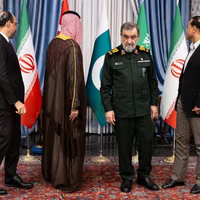
Mohsen Rezaei, secretary of Iran’s Supreme National Security Council, said on Saturday, October 31, that neither the government nor the broader establishment had made a new decision on changing the country’s nuclear doctrine. However, he acknowledged discussion of whether Iran should retain its existing policy if war resumes.
Rezaei said attacks on Iran’s nuclear facilities had prompted public demands for reconsidering the policy. He argued that Iran had cooperated fully with International Atomic Energy Agency inspections.
“When people see this, they ask us why we should continue with this situation,” he said.
On September 19, Rezaei had also said that US and Israeli actions gave Iran grounds to withdraw from the Nuclear Non-Proliferation Treaty (NPT).
In recent days, hardliners have increasingly called on Mojtaba Khamenei to overturn his father Ali Khamenei’s religious decree prohibiting the production of nuclear weapons and declare their manufacture permissible.
Ahmad Naderi, a hardline member of parliament, told Khaneh Eqtesad in October that circumstances had changed and Ali Khamenei’s decree on nuclear weapons could be reconsidered.
“From Mojtaba Khamenei’s behavior, my understanding is that his fatwa will be different,” Naderi said.
Tasnim news agency reported on Saturday that Mojtaba Khamenei had instructed senior military commanders during a meeting to respond to any threat immediately and effectively, and “without geographical limitations”.
Before details of the meeting were published, hardliners on social media had expressed hope that he had ordered the development of nuclear weapons. The published account did not announce such an order.
Supporters of developing nuclear weapons have also cited remarks Ali Khamenei made during a meeting with students in November 2024. At the time, students called for a change in Iran’s nuclear doctrine. Responding to their demands, Khamenei said that whatever was necessary to confront the enemy would certainly be done.
An analysis published on Saturday by Khorasan newspaper, which is close to parliament speaker Mohammad-Bagher Ghalibaf, argued that changing the nuclear doctrine would not contradict the late leader’s guidance.
“Contrary to what some people are saying from certain platforms, changing the nuclear doctrine not only does not conflict with the wisdom and leadership of the martyred leader, but is actually a move along the path that he himself had laid out,” it said.
A commentary published by the Revolutionary Guards-affiliated Tasnim on Saturday raised another possibility besides a complete change of nuclear doctrine.
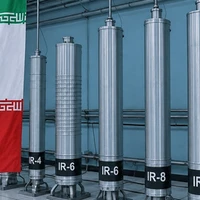
It argued that, with the leader’s approval, Iran could instead deepen its existing doctrine without formally changing it. This would involve enriching uranium to levels suitable for producing a nuclear weapon while stopping short of manufacturing one.
Calls for a nuclear bomb from official platforms
The demand for a change in nuclear policy has increasingly featured in official speeches and Friday prayer sermons.
Mohammad-Javad Haj Ali-Akbari, Tehran’s interim Friday prayer leader, said on Friday that calls to review the country’s nuclear doctrine reflected national awareness rather than a hasty or emotional reaction to American bad faith.
Ahmad Alamolhoda, the influential representative of the supreme leader in Razavi Khorasan province, has gone further, saying that anything necessary to intimidate the enemy, including possessing nuclear weapons, is religiously “obligatory”, according to Khorasan newspaper.
Citing statements by Tehran’s Friday prayer leader, Alamolhoda and the late Ali Khamenei, Khorasan argued that Iran’s security circumstances had changed and that acquiring nuclear weapons had become a demand aimed at strengthening deterrence.
Mohammad-Taghi Naghdali, an MP representing Khomeini Shahr, said on Sunday that the slogan among pro-government demonstrators had changed from “Nuclear energy is our indisputable right” to “Nuclear warhead is our indisputable right.”
Speaking to ChandSanieh news website, Ahmad Bakhshayesh, a member of parliament’s National Security and Foreign Policy Committee, said that if Iran decided to change its nuclear doctrine, it should first build a bomb and then withdraw from the NPT.
“Withdrawing without building a bomb would eliminate the [current] benefits of IAEA oversight,” he said.
Claims of public support
Proponents of revising Iran’s nuclear doctrine have presented the proposal as a popular demand. Haj Ali-Akbari said on Friday that unspecified polls had shown more than 70% of Iranians supported reconsidering the doctrine. The report of his remarks did not provide details of those polls or their methodology.
Mahmoud Nabavian, a hardline member of parliament, said in a post on X on October 29 that he had called on the supreme leader to authorize the production of an atomic bomb during a pro-government gathering in Qom. He said the crowd welcomed his request.
Such gatherings have continued in different parts of the country since the outbreak of the recent war.
IRGC-affiliated media outlets, particularly Fars and Tasnim, have also extensively covered calls for nuclear weapons in recent days, prominently highlighting them as popular demands.
Fars has promoted calls on its My Fars online platform for Iran to build nuclear weapons and increase the range of its missiles to 13,000 kilometers.
Opponents of the proposal, including reformist politician Mostafa Hashemitaba and social media users, have challenged claims of widespread public support and called for a referendum.
In September, Hashemitaba said that if media outlets such as Kayhan believed their position enjoyed popular support, they should endorse holding a referendum.
Warnings against political pressure
The campaign has also prompted warnings against putting political pressure on nuclear decision-making.
Nour News, a website close to Iran’s Supreme National Security Council, published an article on Saturday titled “Reviewing the Nuclear Doctrine: How and Through Which Path?” warning against reducing the complex implications of changing the doctrine to a simple division between supporters and opponents.
Referring to the issue being raised in Friday prayer sermons and at nightly pro-government gatherings, the article argued that decision-makers should be able to examine all available options without political pressure, temporary emotions or expectations that had already been created.
“People’s voices should be heard, but the voices of crowds should not be turned into a substitute for expert assessment and national decision-making,” Nour News wrote.
The issue has also received extensive coverage in reformist and moderate media, which have warned about the consequences of giving prominence to calls for nuclear weapons.
The moderate conservative website Asr-e Iran accused hardliners of using provocative issues to maintain cohesion within their own ranks and control the domestic political atmosphere. It warned that raising the prospect of building an atomic bomb could have serious consequences for Iran’s international standing.
“This will only become an excuse to legitimize the war-mongering scenarios of Iran’s enemies and seriously undermine the country’s peaceful image, which it has spent years trying to establish,” the website said.
Javad Emam, spokesman for the Reformist Front, also responded to the Tehran Friday prayer leader’s remarks in a post, warning that the issue went far beyond political slogans.
“Changing the nuclear doctrine and raising the issue of building an atomic bomb is not a simple decision that can be reduced to slogans. The country’s security, economy, national interests and future are at stake,” he wrote, adding: “Can one speak on behalf of the nation without evidence and impose the costs of such a decision on the people?”