• العربية
  • فارسی
BrandBrand
  • Iran Insight
  • Politics
  • Economy
  • Analysis
  • Special Report
  • Opinion
  • Podcast
  • Live TV
  • Iran Insight
  • Politics
  • Economy
  • Analysis
  • Special Report
  • Opinion
  • Podcast
  • Live TV
  • Theme
  • Language
    • العربية
    • فارسی
  • Iran Insight
  • Politics
  • Economy
  • Analysis
  • Special Report
  • Opinion
  • Podcast
  • Live TV
All rights reserved for Volant Media UK Limited
volant media logo

US military says Iranian attacks killed more than 20 civilian mariners

Nov 2, 2026, 02:32 GMT+0

US Central Command said Iranian attacks had killed more than 20 civilian mariners in recent months, rejecting a claim by Iran’s foreign minister that Tehran had not attacked civilians in neighboring countries.

In a social media post, CENTCOM accused Iran of deliberately targeting civilian infrastructure, residential neighborhoods and other facilities in neighboring Persian Gulf countries, as well as civilian mariners at sea, calling Iran’s actions “indiscriminate aggression”.

Most Viewed

Iran court sentences 21-year-old protester to death
1

Iran court sentences 21-year-old protester to death

2

Iran says US tone shifts but demands still block talks

3

Iran rejects nuclear talks despite ongoing mediation with US

4

'No geographic limits': Tehran projects readiness for all-out war

5
PODCAST

Netanyahu or not, the next move on Iran may be Trump's

Banner
Banner

Editors' Pick

  • Iran says US tone shifts but demands still block talks

    Iran says US tone shifts but demands still block talks

  • Halloween gathering in Tehran ends in arrests and police crackdown

    Halloween gathering in Tehran ends in arrests and police crackdown

  • Netanyahu or Eisenkot? Tehran sees little difference on war
    INSIGHT

    Netanyahu or Eisenkot? Tehran sees little difference on war

Banner
Banner
Banner
Banner

Spotlight

  • Qatar turns to US LNG to cushion Iran war losses

    Qatar turns to US LNG to cushion Iran war losses

  • Mohsen Rezaei’s negotiating calculus: someone else always pays the price
    ANALYSIS

    Mohsen Rezaei’s negotiating calculus: someone else always pays the price

  • Iran’s nuclear bomb debate gains ground on official platforms

    Iran’s nuclear bomb debate gains ground on official platforms

  • Residents describe struggle to afford basic needs as Iran inflation hits 88.7%
    VOICES FROM IRAN

    Residents describe struggle to afford basic needs as Iran inflation hits 88.7%

  • Netanyahu or not, the next move on Iran may be Trump's
    PODCAST

    Netanyahu or not, the next move on Iran may be Trump's

  • New Baha'i memoir recounts life inside Iran's prisons

    New Baha'i memoir recounts life inside Iran's prisons

•
•
•

More Stories

Iran’s nuclear bomb debate gains ground on official platforms

Nov 2, 2026, 00:40 GMT+0
•
Maryam Sinaiee
100%
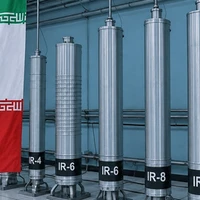
File photo shows different generations of centrifuges displayed in an exhibition in Iran

Calls to revise Iran’s nuclear doctrine and build an atomic bomb are gaining prominence on official platforms after gathering momentum in hardline circles, although the country’s top security official says no policy change has been approved.

Mohsen Rezaei, secretary of Iran’s Supreme National Security Council, said on Saturday, October 31, that neither the government nor the broader establishment had made a new decision on changing the country’s nuclear doctrine. However, he acknowledged discussion of whether Iran should retain its existing policy if war resumes.

Rezaei said attacks on Iran’s nuclear facilities had prompted public demands for reconsidering the policy. He argued that Iran had cooperated fully with International Atomic Energy Agency inspections.

“When people see this, they ask us why we should continue with this situation,” he said.

On September 19, Rezaei had also said that US and Israeli actions gave Iran grounds to withdraw from the Nuclear Non-Proliferation Treaty (NPT).

In recent days, hardliners have increasingly called on Mojtaba Khamenei to overturn his father Ali Khamenei’s religious decree prohibiting the production of nuclear weapons and declare their manufacture permissible.

Ahmad Naderi, a hardline member of parliament, told Khaneh Eqtesad in October that circumstances had changed and Ali Khamenei’s decree on nuclear weapons could be reconsidered.

“From Mojtaba Khamenei’s behavior, my understanding is that his fatwa will be different,” Naderi said.

Tasnim news agency reported on Saturday that Mojtaba Khamenei had instructed senior military commanders during a meeting to respond to any threat immediately and effectively, and “without geographical limitations”.

Before details of the meeting were published, hardliners on social media had expressed hope that he had ordered the development of nuclear weapons. The published account did not announce such an order.

Supporters of developing nuclear weapons have also cited remarks Ali Khamenei made during a meeting with students in November 2024. At the time, students called for a change in Iran’s nuclear doctrine. Responding to their demands, Khamenei said that whatever was necessary to confront the enemy would certainly be done.

An analysis published on Saturday by Khorasan newspaper, which is close to parliament speaker Mohammad-Bagher Ghalibaf, argued that changing the nuclear doctrine would not contradict the late leader’s guidance.

“Contrary to what some people are saying from certain platforms, changing the nuclear doctrine not only does not conflict with the wisdom and leadership of the martyred leader, but is actually a move along the path that he himself had laid out,” it said.

A commentary published by the Revolutionary Guards-affiliated Tasnim on Saturday raised another possibility besides a complete change of nuclear doctrine.

It argued that, with the leader’s approval, Iran could instead deepen its existing doctrine without formally changing it. This would involve enriching uranium to levels suitable for producing a nuclear weapon while stopping short of manufacturing one.

Calls for a nuclear bomb from official platforms

The demand for a change in nuclear policy has increasingly featured in official speeches and Friday prayer sermons.

Mohammad-Javad Haj Ali-Akbari, Tehran’s interim Friday prayer leader, said on Friday that calls to review the country’s nuclear doctrine reflected national awareness rather than a hasty or emotional reaction to American bad faith.

Ahmad Alamolhoda, the influential representative of the supreme leader in Razavi Khorasan province, has gone further, saying that anything necessary to intimidate the enemy, including possessing nuclear weapons, is religiously “obligatory”, according to Khorasan newspaper.

Citing statements by Tehran’s Friday prayer leader, Alamolhoda and the late Ali Khamenei, Khorasan argued that Iran’s security circumstances had changed and that acquiring nuclear weapons had become a demand aimed at strengthening deterrence.

Mohammad-Taghi Naghdali, an MP representing Khomeini Shahr, said on Sunday that the slogan among pro-government demonstrators had changed from “Nuclear energy is our indisputable right” to “Nuclear warhead is our indisputable right.”

Speaking to ChandSanieh news website, Ahmad Bakhshayesh, a member of parliament’s National Security and Foreign Policy Committee, said that if Iran decided to change its nuclear doctrine, it should first build a bomb and then withdraw from the NPT.

“Withdrawing without building a bomb would eliminate the [current] benefits of IAEA oversight,” he said.

Claims of public support

Proponents of revising Iran’s nuclear doctrine have presented the proposal as a popular demand. Haj Ali-Akbari said on Friday that unspecified polls had shown more than 70% of Iranians supported reconsidering the doctrine. The report of his remarks did not provide details of those polls or their methodology.

Mahmoud Nabavian, a hardline member of parliament, said in a post on X on October 29 that he had called on the supreme leader to authorize the production of an atomic bomb during a pro-government gathering in Qom. He said the crowd welcomed his request.

Such gatherings have continued in different parts of the country since the outbreak of the recent war.

IRGC-affiliated media outlets, particularly Fars and Tasnim, have also extensively covered calls for nuclear weapons in recent days, prominently highlighting them as popular demands.

Fars has promoted calls on its My Fars online platform for Iran to build nuclear weapons and increase the range of its missiles to 13,000 kilometers.

Opponents of the proposal, including reformist politician Mostafa Hashemitaba and social media users, have challenged claims of widespread public support and called for a referendum.

In September, Hashemitaba said that if media outlets such as Kayhan believed their position enjoyed popular support, they should endorse holding a referendum.

Warnings against political pressure

The campaign has also prompted warnings against putting political pressure on nuclear decision-making.

Nour News, a website close to Iran’s Supreme National Security Council, published an article on Saturday titled “Reviewing the Nuclear Doctrine: How and Through Which Path?” warning against reducing the complex implications of changing the doctrine to a simple division between supporters and opponents.

Referring to the issue being raised in Friday prayer sermons and at nightly pro-government gatherings, the article argued that decision-makers should be able to examine all available options without political pressure, temporary emotions or expectations that had already been created.

“People’s voices should be heard, but the voices of crowds should not be turned into a substitute for expert assessment and national decision-making,” Nour News wrote.

The issue has also received extensive coverage in reformist and moderate media, which have warned about the consequences of giving prominence to calls for nuclear weapons.

The moderate conservative website Asr-e Iran accused hardliners of using provocative issues to maintain cohesion within their own ranks and control the domestic political atmosphere. It warned that raising the prospect of building an atomic bomb could have serious consequences for Iran’s international standing.

“This will only become an excuse to legitimize the war-mongering scenarios of Iran’s enemies and seriously undermine the country’s peaceful image, which it has spent years trying to establish,” the website said.

Javad Emam, spokesman for the Reformist Front, also responded to the Tehran Friday prayer leader’s remarks in a post, warning that the issue went far beyond political slogans.

“Changing the nuclear doctrine and raising the issue of building an atomic bomb is not a simple decision that can be reduced to slogans. The country’s security, economy, national interests and future are at stake,” he wrote, adding: “Can one speak on behalf of the nation without evidence and impose the costs of such a decision on the people?”

Netanyahu pressing Trump to strike Iran immediately after midterms - Axios

Nov 1, 2026, 18:25 GMT+0
100%
FILE PHOTO: U.S. President Donald Trump and Israeli Prime Minister Benjamin Netanyahu at the Knesset on the day of Trump's address, amid a U.S.-brokered prisoner-hostage swap and ceasefire deal between Israel and Hamas, in Jerusalem, October 13, 2025.

Israeli Prime Minister Benjamin Netanyahu is pressing US President Donald Trump to strike Iran immediately after Tuesday's midterm elections, but Trump wants to let negotiations play out for now, Axios reported Sunday, citing an Israeli and a US source.

The two leaders had a candid phone call Saturday about the state of US negotiations with Iran and how quickly to return to combat, according to the report.

The Israeli source described the call as "tough," while the US source called it "direct."

Trump is pursuing diplomatic efforts to restart negotiations with Tehran while preparing for a possible resumption of major military operations after the November 3 elections, according to the report.

US Secretary of State Marco Rubio said Saturday that Trump had not decided whether to launch further strikes against Iran and preferred a diplomatic solution.

"He hasn't made a decision. I have no announcement in that regard with you today, and nor do we take any of it lightly," Rubio told reporters in Atlanta.

Trump told reporters Saturday that negotiations with Iran were "going fine" and that he was not "in much of a hurry," but said the United States still needed to "take care" of one or two Iranian nuclear sites.

"We can do that in 10 minutes. We have that planned. You can look at Pickaxe Mountain. We need to take care of that. We can do that very quickly," Trump said, referring to a suspected nuclear facility built into a mountain.

Iran considers US outreach

US Vice President JD Vance sent a letter last week to Mohsen Rezaei, secretary of Iran's Supreme National Security Council, about the possibility of restarting negotiations.

Rezaei said Saturday that he had received and read the letter but had not responded, according to Iranian state media.

"I read the letter. I haven't yet responded. Their tone has completely changed," Rezaei said in remarks broadcast on Iranian television.

IRGC-affiliated Tasnim news agency also reported that Tehran continued to insist on its seven conditions being met by Washington, saying any position contradicting that framework was unacceptable.

Qatar-mediated talks continue

Qatari mediators met with Iranian officials Sunday for a third consecutive day in an effort to reach a deal to restart direct negotiations between Washington and Tehran.

Iranian Foreign Minister Abbas Araghchi said Tehran was discussing a proposal that could allow the Strait of Hormuz to reopen within two days if Washington met Iranian conditions.

Araghchi said Sunday that consultations were continuing but had not produced a final agreement, stressing that progress depended on the United States responding to Iran's questions.

"We are making every effort in this regard and hope that the other side will demonstrate enough rationality to choose diplomacy over other paths," he said.

Iran seizes art school assets over founder's alleged insult to Shiites

Nov 1, 2026, 16:53 GMT+0
100%
Alireza Ordoubadi, founder and CEO of Inverse School

Iranian authorities have seized assets of a private Tehran art and design school’s founder and begun confiscation proceedings, an IRGC-affiliated outlet reported, alleging he had insulted Shiite Muslims and spread anti-Islamic Republic propaganda on social media.

The report by Fars News concerned Alireza Ordoubadi, founder of Inverse School, and posts on his personal accounts.

It came a day after the school said authorities had frozen all its bank accounts and payment systems, blocked its website and seized its property, forcing it to suspend registration and sales of new courses.

Students who had already purchased courses would retain access to educational materials and support services, the school said.

Ordoubadi said the institution had never engaged in political activities and was being targeted because of his personal views, with the measures affecting its employees, instructors and students.

"The people of Iran have the right to think freely, make choices, protest and decide their own future. I will not ask anyone's permission to say this," he wrote in a statement published on the school's Instagram account.

"Their issue is with me, and they're making the school and its people pay the price," he wrote.

Founded in 2008, Inverse provides training in graphic design, animation, fashion, programming and other creative and digital skills. Ordoubadi said more than 70,000 people had studied at the institution over its 18 years of operation.

He said the school had lost students aboard Ukraine International Airlines Flight PS752 in January 2020, seen others imprisoned during the 2022 Woman, Life, Freedom protests, and lost two more students, whom he identified only by their first names, Amirali and Sima, during the latest nationwide protests.

"If the price I must pay for standing alongside these people is losing these 18 years, then I am willing to sacrifice those 18 years for Iran," he wrote.

Paying tribute to protesters killed during successive waves of anti-government demonstrations in Iran, from the 2009 and 2022 uprisings to the latest nationwide protests in December 2025 and January 2026, he added:

"This country belongs to Neda Agha-Soltan, Nika and Sarina, Hamidreza Rouhi, Majidreza Rahnavard, Sadra Soltani, Sepehr Shokri, Hamid Mahdavi and thousands of honourable people who gave their lives for its freedom. It belongs to their families and all those who continue to live with so much grief and deserve a future. My place is alongside these people."

"Seizure is your decision, and continuing is ours. And we will continue," he wrote.

The action comes amid a series of asset seizures involving Iranian public figures and supporters of anti-government protests.

On Tuesday, the lawyer for award-winning filmmaker Jafar Panahi said his client had been sentenced in absentia to five years and one month in prison and ordered to forfeit all his assets.

Earlier, authorities in the city of Qom announced the seizure of property and cryptocurrencies belonging to businessman Sadegh Saedinia, who supported nationwide anti-government protests in January.

Iran rejects nuclear talks despite ongoing mediation with US

Nov 1, 2026, 14:15 GMT+0
100%

Iranian officials rejected nuclear negotiations, demanded acceptance of their conditions for ending the war and threatened military retaliation, despite continuing diplomatic contacts with Qatari mediators on Sunday.

Iranian officials rejected nuclear negotiations, demanded acceptance of their conditions for ending the war and threatened military retaliation, despite continuing diplomatic contacts with Qatari mediators on Sunday.

“The window for negotiations with our adversaries is now closed because they have nothing new to offer,” Ali Nikzad, deputy speaker of Iran's parliament, said on Sunday.

Nikzad accused what he called adversaries of repeatedly breaking commitments and attacking Iran's nuclear facilities. He said that renewed military action would trigger an “immediate, effective response without geographical limits.”

Foreign Minister Abbas Araghchi, however, said consultations with Qatari mediators were progressing without a final agreement.

  • Iran says US tone shifts but demands still block talks

    Iran says US tone shifts but demands still block talks

“Consultations with the mediators regarding the two-day plan are continuing and moving toward implementation, but we have not yet reached a definitive conclusion,” Araghchi said.

Washington keeps negotiations open

The United States remains open to negotiations but is prepared to pursue other options, Donald Blome, US assistant secretary of state for Near Eastern affairs, said at the Manama Dialogue security forum in Bahrain, according to the Associated Press.

“The hand of negotiation has been extended, and those channels have continued to be open and active,” Blome said.

Blome warned that Washington could take a different course and would not allow Iran to threaten the region and global economy.

Iranian negotiators were in Doha for a third consecutive day of indirect talks aimed at ending the war with the United States and Israel, Reuters reported, citing an official briefed on the discussions.

Araghchi said the delegation had no plans to meet US officials directly.

Iran sets conditions and threatens retaliation

Iran will not negotiate with Washington until seven conditions announced by the secretary of its Supreme National Security Council are implemented, lawmaker Esmail Kowsari said Sunday.

Nikzad also demanded unconditional acceptance of those conditions, including Iran's proposed arrangements for the Strait of Hormuz.

Ebrahim Azizi, chairman of parliament's National Security Committee, threatened a punitive response to hostile actions in the waterway.

  • Vance offers to meet Iran's Rezaei for peace talks as Qatar renews mediation efforts

    Vance offers to meet Iran's Rezaei for peace talks as Qatar renews mediation efforts

Iranian army spokesman Mohammad Akraminia said that another war could spread beyond the Middle East and said the military was shifting toward an offensive doctrine.

Defense Minister Mehrdad Akhlaghi said Iran was strengthening its military readiness and weapons production to respond to threats without geographical restrictions.

Calls grow to leave nuclear treaty

Lawmaker Nasser Pejmanfar urged Iran to withdraw from the Nuclear Non-Proliferation Treaty, arguing that membership had brought no benefits.

  • NPT withdrawal returns to Iran debate as diplomacy gains pace

    NPT withdrawal returns to Iran debate as diplomacy gains pace

Mohsen Araki, a member of the Assembly of Experts and Expediency Discernment Council, separately called for reviewing Iran's membership, according to the Revolutionary Guards-affiliated Tasnim news agency.

The calls to reconsider Iran's nuclear treaty commitments add another obstacle to efforts to resolve the dispute through diplomacy.

Negotiations through Qatari mediators continue in Doha without a final agreement. Washington has kept the door open to talks, but Iranian officials insist that their seven conditions must be accepted before the war can end.

Public schools in Iran pressure parents to pay for basic supplies

Nov 1, 2026, 13:42 GMT+0
•
Baharan Azadi
100%
Students gather and play in the courtyard of a school in Iran.

Public schools across Iran are demanding payments from parents for basic supplies, utility bills and repairs, with some withholding report cards or pressuring students to secure the money, according to accounts sent to Iran International.

Parents responding to an inquiry described repeated requests for payments ranging from stationery and cleaning products to multimillion-rial fees, despite government assurances that contributions to public schools must be voluntary.

"Only teachers' salaries are left for them to collect from parents," one parent wrote after being asked to contribute money for paper.

The accounts contrast with Education Minister Alireza Kazemi's September 20 announcement that public schools were prohibited from charging families for enrollment or the start of the academic year.

Financial contributions from parents must be entirely voluntary, Kazemi said.

Parents asked to cover utility bills and cleaning supplies

Families described being required to cover routine school expenses, including water, electricity, gas, cleaning supplies and equipment repairs.

  • Parents lament hidden school fees in Iran

    Parents lament hidden school fees in Iran

"The government provides no assistance to schools," several respondents wrote in messages.

At a school meeting in early October, parents were told the government had no budget and public schools would have to operate with financial support from families, one parent said.

The school subsequently presented a list of monthly expenses covering water, electricity, drinking-water facilities, cleaning, heating and cooling equipment.

At another school, parents were asked to pay 2.5 million rials each to purchase paper.

Other families described requests for money to buy whiteboard markers, light bulbs, A4 paper, garbage bags and even to repair a broken classroom door.

One mother said her child's school demanded money for hand soap despite toilets being so dirty and unusable that her child avoided using them throughout the five-hour school day.

Parents have also been asked to purchase materials for basic science experiments because schools lack adequate laboratory equipment, according to another account.

Some schools have sought contributions for government and religious ceremonies, requesting money and sweets from families.

Voluntary contributions become compulsory payments

Some families described payments equivalent to tuition fees at public schools, even though the schools are not permitted to charge compulsory enrollment fees.

One parent said their child's public school collected 50 million rials despite having virtually no facilities.

Iran's minimum monthly wage was set at 166 million rials for 2026, equivalent to about $61 at an exchange rate of 2.72 million rials to the dollar.

Another described a public school with approximately 300 students attending in two shifts that collected between 17 million and 20 million rials from each student, regardless of the family's financial circumstances.

Examination paper costs were charged separately, the parent said.

100%
A student wearing a backpack stands in the courtyard of a school in Iran as parents and children gather near the entrance.

Several parents said schools refused to release students' report cards until additional payments were made.

The accounts contradict the education ministry's position that contributions must be optional.

Government funding shortages should not result in financial pressure on families, Akbar Pouladi, a member of parliament's education committee, said on August 26, criticizing compulsory payments at some schools.

In some cases, families said enrollment or the distribution of textbooks was conditional on payment.

Higher payments, inadequate facilities

Despite the growing financial demands, some parents said school conditions had not improved.

Nearly two months into the academic year, one parent said their child's school still lacked a proper door, whiteboard, curtains and enough desks, even though families were being charged to cover operating expenses.

  • Iran students go without as elite schools charge billions

    Iran students go without as elite schools charge billions

A teacher said the school where they worked had relied on parental contributions for years.

At the beginning of each academic year, administrators told parents that without their financial support, the school could not remain operational, the teacher said.