• العربية
  • فارسی
BrandBrand
  • Iran Insight
  • Politics
  • Economy
  • Analysis
  • Special Report
  • Opinion
  • Podcast
  • Live TV
  • Iran Insight
  • Politics
  • Economy
  • Analysis
  • Special Report
  • Opinion
  • Podcast
  • Live TV
  • Theme
  • Language
    • العربية
    • فارسی
  • Iran Insight
  • Politics
  • Economy
  • Analysis
  • Special Report
  • Opinion
  • Podcast
  • Live TV
All rights reserved for Volant Media UK Limited
volant media logo

Iran lawmaker warns rising production costs threaten industry

Nov 2, 2026, 19:20 GMT+0

Production costs in Iran have risen sharply over the past year under economic pressure from the war, with producer inflation outpacing consumer inflation, lawmaker Mohsen Zanganeh said Monday.

Zanganeh, chairman of parliament's Special Committee for Supporting Production, said reports indicated that rising production costs were threatening the manufacturing sector.

“Some decisions made by executive agencies, particularly the Central Bank, are inconsistent with the goal of supporting production,” he said.

Most Viewed

Iran rejects nuclear talks despite ongoing mediation with US
1

Iran rejects nuclear talks despite ongoing mediation with US

2

Iran’s nuclear bomb debate gains ground on official platforms

3

Netanyahu pressing Trump to strike Iran immediately after midterms - Axios

4
PODCAST

Netanyahu or not, the next move on Iran may be Trump's

5
VOICES FROM IRAN

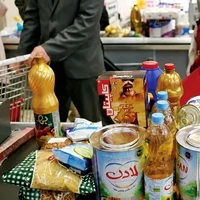
Residents describe struggle to afford basic needs as Iran inflation hits 88.7%

Banner
Banner

Editors' Pick

  • Iran says US tone shifts but demands still block talks

    Iran says US tone shifts but demands still block talks

  • Halloween gathering in Tehran ends in arrests and police crackdown

    Halloween gathering in Tehran ends in arrests and police crackdown

  • Netanyahu or Eisenkot? Tehran sees little difference on war
    INSIGHT

    Netanyahu or Eisenkot? Tehran sees little difference on war

Banner
Banner
Banner
Banner

Spotlight

  • Qatar turns to US LNG to cushion Iran war losses

    Qatar turns to US LNG to cushion Iran war losses

  • Mohsen Rezaei’s negotiating calculus: someone else always pays the price
    ANALYSIS

    Mohsen Rezaei’s negotiating calculus: someone else always pays the price

  • Iran’s nuclear bomb debate gains ground on official platforms

    Iran’s nuclear bomb debate gains ground on official platforms

  • Residents describe struggle to afford basic needs as Iran inflation hits 88.7%
    VOICES FROM IRAN

    Residents describe struggle to afford basic needs as Iran inflation hits 88.7%

  • Netanyahu or not, the next move on Iran may be Trump's
    PODCAST

    Netanyahu or not, the next move on Iran may be Trump's

  • New Baha'i memoir recounts life inside Iran's prisons

    New Baha'i memoir recounts life inside Iran's prisons

•
•
•

More Stories

Israel denies pressing Trump for Iran strikes amid diplomatic push

Nov 2, 2026, 18:39 GMT+0
100%
A woman passes by a banner depicting Israeli Prime Minister Benjamin Netanyahu and US President Donald Trump day after the country held a national election, in Jerusalem, October 28 , 2026.

Israel’s UN envoy denied that Prime Minister Benjamin Netanyahu was pressing Donald Trump to resume strikes on Iran and dismissed claims that a nuclear attack was under consideration, while mediators pursued a deal ahead of Tuesday’s US midterm elections.

“Prime Minister Netanyahu is not pressing President Trump. President Trump knows exactly what he wants to achieve and how he wants to achieve it,” Danny Danon told Al Arabiya English.

“Israel will collaborate with the United States. We will support the decision of the United States, but it is not us pressing anyone,” he added.

Danon’s remarks followed an Axios report Sunday, citing an Israeli and a US source, that Netanyahu was urging Trump to strike Iran immediately after the November 3 elections, while the US president preferred to allow negotiations to continue.

The Israeli source described the leaders’ Saturday phone call as “tough,” while the US source called it “direct.”

Trump confirmed Sunday that he had spoken with Netanyahu about Iran, describing their conversation as “a very good talk,” without providing further details.

Danon also rejected a claim by US commentator Tucker Carlson on X that a nuclear strike against Iran was being considered, calling the idea “delusional.”

“No one is even discussing it in the US, nor in Israel,” he said.

Washington weighs military options and diplomacy

Trump said Saturday that negotiations with Iran were “going fine” and that he was in no hurry to resume military action, although he said Washington still needed to target one or two sites, including the suspected underground nuclear complex at Pickaxe Mountain.

US Secretary of State Marco Rubio said Saturday that Trump had not decided whether to launch further strikes.

“He hasn’t made a decision,” Rubio told reporters in Atlanta, adding that Washington preferred to resolve the conflict peacefully.

Rubio said diplomatic contacts had remained active, often through intermediaries, and declined to set a deadline for negotiations.

Iran says diplomatic contacts remain active

Iranian Foreign Minister Abbas Araghchi said Monday that consultations through mediators, including Qatar and Pakistan, remained intensive, after several days of talks with Qatari officials ended without a breakthrough.

“Everything depends on the political rationality of Washington,” Araghchi said, according to the state-run IRNA news agency.

Araghchi said a revised proposal developed through mediation could allow the Strait of Hormuz to reopen within two days if Washington accepts Iran’s conditions.

Tehran’s earlier seven-day plan called for Washington to lift its blockade of Iranian ports, release frozen Iranian assets and waive sanctions on Iranian oil sales before negotiations resumed.

Iranian President Masoud Pezeshkian also said Monday that Supreme Leader Mojtaba Khamenei had granted the government “certain authorities” regarding peace talks with the United States, according to IRNA.

Pezeshkian said Iran would seek to resolve the conflict through dialogue, without specifying the scope of those powers.

An Iranian source cited by the Revolutionary Guards-affiliated Fars news agency said Monday that indirect communications with Washington had produced no breakthrough and that Tehran still insisted on its seven conditions for progress. Exchanging messages through intermediaries was routine, the source said.

Despite the diplomatic contacts, Danon said in his Monday interview that Israel remained prepared for military action regardless of uncertainty surrounding the formation of a new government following last week’s Israeli elections.

“The military is prepared, we are ready and if we will need to protect our people, we will do it,” he said.

Iran bans sales of jewelry with monarchy-linked symbols in Khamenei hometown

Nov 2, 2026, 18:07 GMT+0
•
Azadeh Akbari
100%
A woman wears a gold necklace featuring Iran's Lion and Sun emblem

Iranian authorities have banned the display and sale of jewelry and coins bearing the Lion and Sun emblem or imagery associated with the country's former monarchy in the northeastern city of Mashhad, according to a notice issued by the city's gold traders' union.

The Mashhad Gold, Jewelry, Silver and Coin Dealers' Union said the order, issued on instructions from the police department responsible for supervising public establishments, covers bracelets, pendants, necklaces and commemorative coins featuring the symbols.

"Under instructions from the Department for Supervision of Public Establishments, the sale or display of any gold, silver or coins ... bearing images of the Pahlavi dynasty or the Lion and Sun is prohibited," the union said in a notice published on its Telegram channel.

It warned that any violations would be dealt with in accordance with regulations, without specifying the penalties.

Mashhad is home to the shrine of Imam Reza, the eighth Shiite imam, and is the hometown of Iran’s Supreme Leader Mojtaba Khamenei and his slain father and predecessor, Ali Khamenei.

100%
Necklaces displayed on a hand, featuring Iran’s Lion and Sun emblem and portraits of Reza Shah Pahlavi and Mohammad Reza Shah Pahlavi.

The semi-official Mehr news agency and local media also reported the restriction, saying traders had been instructed to review their inventories and shop displays to comply with the order.

The ban comes amid signs of growing demand for jewelry, decorative artwork and other products featuring the Lion and Sun and Pahlavi-era symbols, according to accounts received by Iran International from cities across Iran and observations of social media posts.

The Lion and Sun, a centuries-old Iranian emblem that appeared on the country's national flag before the 1979 revolution, has become a prominent symbol of opposition to the Islamic Republic's theocratic rule.

100%
A woman wears a gold pendants featuring Iran's Lion and Sun emblem, a historic national symbol that appeared on the country's flag before the 1979 Islamic Revolution.

Restrictions on historical and royal symbols

The Islamic Republic removed the Lion and Sun from Iran's flag and official insignia following the 1979 revolution that overthrew Shah Mohammad Reza Pahlavi.

Ruhollah Khomeini, the Islamic Republic's founding leader, denounced the Lion and Sun as a symbol of the former monarchy and called for its removal from government ministries and offices.

"The accursed Lion and Sun emblem should be removed from all ministries and offices," Khomeini said in a March 1979 speech in Qom, according to the official collection of his speeches. He also called for the removal of symbols associated with the former monarchy and their replacement with Islamic emblems.

In the decades since, the authorities have sought to promote an interpretation of Iranian history aligned with the Islamic Republic's ideology, while artists and intellectuals advocating secular and pre-Islamic aspects of the country's heritage have faced pressure and restrictions.

The restrictions have also extended to historical sites associated with Iran's pre-Islamic past, including the tomb of Cyrus the Great, the founder of the ancient Persian Achaemenid Empire who ruled in the sixth century BC.

On October 29, a date observed by many Iranians as Cyrus the Great Day, citizens reported security checkpoints and road closures blocking access to Pasargadae, the site of the ancient Persian king's tomb in southern Iran.

Iran International has previously documented similar restrictions in past years, when authorities prevented people from gathering at the tomb to commemorate Cyrus.

Protesters targeted over tattoos

The restrictions on jewelry come amid growing popularity of national and monarchist symbols, which have also become expressions of resistance through tattoos worn by Iranian protesters.

A September investigation by Iran International documented cases of security forces allegedly torturing and killing protesters bearing tattoos of the Lion and Sun, the Pahlavi crown and other symbols associated with Iran's national identity during January's nationwide crackdown.

Among those documented was Farid Ramezani, 29, who was shot by security forces in Tehran on January 8. An informed source said officers fired at a finger bearing a Pahlavi crown tattoo after he fell to the ground.

In another case, sources close to the family of Amirhossein Nobakht Pardasti, 21, said security forces cut into the tattooed area of his arm after he was wounded and detained during protests on January 8. When his family received his body, they said the skin bearing tattoos of Reza Shah and the imperial crown had been mutilated.

The investigation, based on accounts from protesters, tattoo artists, former political prisoners and relatives of those killed, documented how tattoos had become expressions of grief, identity and resistance, even as those bearing them faced violence and punishment.

  • The body as a battleground: Iran's resistance etched in ink and blood

    The body as a battleground: Iran's resistance etched in ink and blood

Students in Iran report tighter school surveillance, military pressure

Nov 2, 2026, 13:23 GMT+0
•
Baharan Azadi
100%
Students attend a school assembly featuring military-themed posters and portraits in Iran.

Students across Iran have described tighter surveillance, restrictions on gatherings and pressure to participate in military and ideological activities, with some facing threats of expulsion or police referral, according to accounts received by Iran International.

The messages from schools in several cities describe compulsory displays of images of Iran's Supreme Leader Mojtaba Khamenei, increased classroom monitoring, enforcement of mandatory hijab rules and the presence of Basij forces.

Students at a school in Dezful were ordered to pose for photographs with two banners depicting Ali Khamenei, Iran's slain former ruler, and warned they could be expelled or referred to police if they refused, a student told Iran International.

In Marvdasht, education department officials visited a school on November 1 to inspect compliance with mandatory hijab rules, according to another student.

Students who failed to observe the dress code would be expelled, the school's principal warned, the student said.

A student in Tehran also described compulsory Quran recitations, saying school authorities had warned that those who refused would receive failing grades in core subjects.

Basij forces enter schools for military activities

Other accounts described the presence of Basij forces and plans for military exercises on school grounds.

Students at a school in Alborz province were informed that a missile launcher would be brought into the schoolyard and armed forces personnel would conduct a military drill, one student said.

In Lorestan province, students at a school for gifted children were taken to apro-establishment rally on October 28 without their parents being informed in advance, according to a family.

Iran International earlier reported that students in six provinces had faced pressure to participate in Jan-Fada (Self-Sacrifice), a system-backed initiative involving military training and mobilization activities. Some students were warned of expulsion or consequences for their parents if they refused to take part.

  • Iran turns to younger children in postwar ideological push

    Iran turns to younger children in postwar ideological push

Basij members visiting another school instructed students to stay out of politics, according to a student who described the exchange.

"How can we stay out of politics when we have lost more than 40,000 brothers and sisters?" the student said in response.

Another citizen described seeing a group of students on the streets wearing camouflage uniforms and military-style scarves and carrying batons.

Military equipment and activities in schools have featured in earlier accounts received by Iran International.

Based on earlier reports, students at some schools had been given identification tags or instructed to obtain and wear them.

Other accounts described armed personnel and military vehicles entering schools and children receiving weapons training.

The Education Ministry's spokesperson denied reports of military identification tags being issued to students on October 23, saying school principals were not permitted to announce measures that could cause concern among families.

Schools increase surveillance and restrict gatherings

Surveillance cameras in classrooms at a public high school in Tehran's District 19 doubled on October 28, according to a student.

Previously, a single camera had been installed at the front of each classroom facing students. Another camera has since been added behind them, the student said.

In Gonbad-e Kavus, northern Iran, school officials prohibited students from gathering in groups of more than two, according to another account.

  • Iran mobilisation drive extends to children under 15

    Iran mobilisation drive extends to children under 15

The restrictions follow similar measures documented in an earlier report, when students from several cities described classroom cameras, audio recording, searches of personal belongings and clothing inspections.

Another student described armed officers accompanying a school excursion to a park and repeatedly instructing high school girls to comply with hijab requirements and wear their headscarves properly.

Tehran PhD student attempts self-immolation after security pressure

Nov 2, 2026, 07:53 GMT+0
100%
Shahin Shokouhi, a University of Tehran sociology doctoral student who attempted self-immolation.

A University of Tehran doctoral student reportedly attempted self-immolation outside a university building after repeated disciplinary summonses and security pressure, the student-run Tehran-Daneshjoo channel said Sunday.

The channel identified him as Shahin Shokouhi, a sociology PhD candidate, and said the incident occurred around midday outside the Foolad building on 16 Azar Street. He was taken for medical treatment, but his condition remained unknown.

The account said Shokouhi had been repeatedly summoned before university disciplinary authorities and pressured by security agencies outside the campus.

The channel said he continued to face questioning and security pressure despite his injuries, and expressed concern that he could be detained or face legal proceedings before completing treatment.

Shokouhi had previously been detained during protests at the university on December 30, 2025. According to Scholars at Risk, he and four other students arrested that day were all released later the same day.

A growing record of pressure on students

The Foolad building had already appeared in student accounts of security pressure. In October, Tehran-Daneshjoo reported increased summonses to university security offices there, on 16 Azar Street.

Some students described threats and humiliation during questioning. The channel said Intelligence Ministry personnel attended certain meetings and confronted students with information about their private lives.

The pressure extends beyond summonses. In May, University of Tehran polymer engineering student Amir Mohammad Karimi received a two-semester suspension after a disciplinary hearing conducted in his absence while he was detained, according to Scholars at Risk.

The Center for Human Rights in Iran reported that seven students at Sharif University of Technology faced preliminary expulsion orders in June over social media activity and cases linked to the nation-wide January protests. Three students at Tehran's Khajeh Nasir University of Technology had two-semester suspensions upheld in July.

In February, Tehran-Daneshjoo, citing the newspaper Shargh, reported that at least 180 students at universities in Tehran had received disciplinary summonses by text message, while more than 60 others had been barred from campus through telephone notifications.

An April gathering in Mashhad offers another example. Security agents detained students who had met with a former teacher, according to the Middle East Studies Association. Four faced national security charges, including University of Tehran literature student Mohammad Parsa Golchin.

100%
Ahmad Baledi was a 20-year-old Iranian who died after setting himself on fire in November 2025 during a confrontation with municipal authorities over the demolition of his family's food kiosk in Ahvaz, southwestern Iran.

An earlier tragedy in Ahvaz

In November 2025, Ahmad Baledi, a 20-year-old in Ahvaz, died after setting himself on fire during a confrontation over the demolition of his family's food kiosk. President Masoud Pezeshkian ordered an investigation, and local officials faced disciplinary and legal action.

His death recalled the Tunisian street vendor Mohamed Bouazizi whose self-immolation in December 2010 preceded mass demonstrations that forced President Zine El Abidine Ben Ali from power.

Shokouhi’s condition remained unknown as of Sunday. Tehran-Daneshjoo said it had received no update from university authorities.

Qatar turns to US LNG to cushion Iran war losses

Nov 2, 2026, 04:40 GMT+0
•
Dalga Khatinoglu
100%
QatarEnergy's liquefied natural gas (LNG) production facilities, amid the US-Israeli conflict with Iran, in Ras Laffan Industrial City, Qatar March 2, 2026.

Qatar is securing long-term supplies of US liquefied natural gas to protect revenues against disruptions in the Strait of Hormuz, while pursuing mediation between Tehran and Washington to end the war.

The country’s dependence on the waterway leaves its gas industry exposed to prolonged shipping disruptions. For state-owned QatarEnergy, buying supplies produced outside the Persian Gulf offers a way to earn trading income when its own exports are constrained.

The new contracts will begin delivering in 2030 or later. They offer protection against future losses, but cannot restore shipments from Qatar’s damaged facilities or reopen its export route.

The risks were underscored on Friday, when a Qatari LNG carrier was struck by “unidentified objects” in the Persian Gulf, the same day Qatari mediators held talks in Tehran aimed at reaching a deal between Iran and the United States.

The Al Mayeda was hit Friday evening, its owner Nakilat said Sunday. No crew members were injured or environmental damage reported, and the vessel remained operational.

Qatar condemned the attack as a “dangerous act” threatening maritime navigation and global energy supplies, saying investigations were underway to identify those responsible.

War exposes Qatar’s dependence on Hormuz

Qatar is particularly vulnerable to disruption in the Strait of Hormuz. LNG accounts for half of its foreign-currency export revenues, and shipments to markets beyond the Persian Gulf must pass through the waterway.

Unlike some neighboring oil exporters, Qatar has no pipeline route capable of replacing those shipments. Its oil exports amounted to just 530,000 barrels per day last year, leaving its foreign-currency revenues largely dependent on gas.

According to official Qatari government statistics, the country exported 79 million tonnes of LNG last year, supplying 17% of global LNG consumption. Another 20 billion cubic metres of natural gas, equivalent to approximately 15 million tonnes, was delivered to the UAE and Oman through the Dolphin pipeline. By volume, LNG accounted for nearly 84% of Qatar’s total gas exports.

Qatar was forced to almost completely halt LNG exports for three months starting in March, with shipments gradually recovering from June. According to Kpler data, however, it exported only 4.58 million tonnes in the third quarter, less than a quarter of the volume recorded a year earlier.

September exports reached 1.6 million tonnes, the highest monthly level since the war began. That was still less than a quarter of the pre-war monthly average, with around one-third of shipments going to Kuwait and remaining within the Persian Gulf.

Damage to infrastructure has also been substantial. Iranian missile strikes in March damaged Ras Laffan’s liquefaction units, known as trains, 4 and 6, knocking 12.8 million tonnes of annual capacity offline—about 17% of Qatar’s pre-war capacity.

Energy Minister and QatarEnergy chief executive Saad al-Kaabi initially estimated repairs would take three to five years. In an October 29 interview with Reuters, he put the repair period at about three years.

QatarEnergy has extended force majeure on deliveries to Italy’s Edison until the end of December, the Italian company said on October 27. Shipping has also come under attack: in July, the LNG carrier Al Rekayyat was struck while transiting the Strait of Hormuz.

Qatar has ruled out a pipeline bypass on commercial and technical grounds. Kaabi said in September that transporting gas to another coast would require new liquefaction facilities, duplicating infrastructure already being built in Qatar. He has also warned that pipelines and associated facilities could themselves become targets.

US supplies offer protection against lost revenue

Qatar’s overseas investments predate the war, but its latest purchase agreements form part of a strategy to protect income against future shipping disruptions.

The first major overseas source is the Golden Pass LNG project in Texas. QatarEnergy owns a 70% stake, while ExxonMobil holds the remaining 30%. LNG production began on March 30, 2026.

The project has a total planned capacity of 18 million tonnes per year, giving QatarEnergy an equity share equivalent to 12.6 million tonnes of annual capacity once fully operational. The first train has a capacity of approximately 6 million tonnes per year, of which QatarEnergy’s share is 4.2 million tonnes.

The second element is long-term purchases from US producers. QatarEnergy signed two agreements with Cheniere Energy on October 22 to purchase a combined 4 million tonnes annually, split equally between its Sabine Pass terminal in Louisiana and Corpus Christi terminal in Texas.

Deliveries will begin in the early 2030s and continue through 2054. One million tonnes of the annual Sabine Pass supply is conditional on a final investment decision for an expansion project.

A week later, QatarEnergy signed a 20-year agreement to purchase up to 3 million tonnes annually from Woodside’s Louisiana LNG project. QatarEnergy expects deliveries to begin in 2030, with volumes increasing as additional production units start operating.

Together, the agreements provide for up to 7 million tonnes annually.

The Cheniere purchase price is linked to the US Henry Hub gas benchmark, plus a fixed fee. Both companies’ agreements provide for free-on-board deliveries, meaning QatarEnergy arranges transportation.

Lower US gas prices can create opportunities for profitable sales into Europe and Asia, although returns depend on liquefaction fees, shipping costs and destination-market prices.

Kaabi told Reuters the purchases were intended to generate revenue during future Hormuz disruptions. He cautioned that US cargoes could not simply replace supplies under existing long-term contracts specifying particular export terminals and destinations.

QatarEnergy is also negotiating with Venture Global. Kaabi said he expected further 20- to 25-year supply agreements with US and other producers before the end of 2026.

Qatar has overseas options Iran lacks

Iran’s own gas sector is also under pressure, but it has far fewer options to offset damage through foreign investment and overseas projects.

According to the National Iranian Gas Company, attacks in March knocked around 230 million cubic metres per day of production capacity offline at four gas processing plants. Approximately 100 million cubic metres has since been restored.

That leaves around 130 million cubic metres per day unavailable, equivalent to about 16% of last year’s daily production. Iran already faces substantial gas shortages during colder months, and the company has warned that around 11 provinces could experience supply problems this winter.

Iran’s financial capacity to rebuild damaged infrastructure is limited, while foreign participation in its energy projects is virtually nonexistent. Qatar has substantially greater financial resources to repair its damaged LNG trains and invest overseas.

Those differences do not establish how long Tehran can sustain disruptions to shipping. They do, however, give Qatar more commercial options for managing the consequences.

QatarEnergy’s equity share of Golden Pass will represent 12.6 million tonnes of annual capacity once all three trains are operational, while the Cheniere and Woodside agreements provide for purchases of up to another 7 million tonnes annually.

Those volumes will become available gradually and remain modest compared with Qatar’s pre-war annual capacity of 77 million tonnes and its planned expansion to 142 million tonnes by 2030.

Overseas trading can help cushion the financial impact of disruption. But repairing Qatar’s production facilities and securing passage through Hormuz remain essential to restoring its own exports.