Iran's Revolutionary Guards threaten new targets if attacks resume
Iran's Islamic Revolutionary Guard Corps (IRGC) warned that it had identified new enemy targets and would deploy additional military capabilities in the event of renewed attacks.
IRGC spokesperson Mohabbi said the force had identified various "tangible and intangible" enemy targets and was prepared to use new capabilities in response to any further aggression.
"In the event of renewed aggression by the enemy, we will unveil new capabilities and targets and use them to confront the enemy and destroy its targets," he said.
Mohabbi also reaffirmed the IRGC's support for Iran's regional allied groups.
"We consider the resistance front to be part of us, and at every stage of the war, we see ourselves as standing alongside this front," he said.
FILE PHOTO: U.S. President Donald Trump and Israeli Prime Minister Benjamin Netanyahu at the Knesset on the day of Trump's address, amid a U.S.-brokered prisoner-hostage swap and ceasefire deal between Israel and Hamas, in Jerusalem, October 13, 2025.
Israeli Prime Minister Benjamin Netanyahu is pressing US President Donald Trump to strike Iran immediately after Tuesday's midterm elections, but Trump wants to let negotiations play out for now, Axios reported Sunday, citing an Israeli and a US source.
The two leaders had a candid phone call Saturday about the state of US negotiations with Iran and how quickly to return to combat, according to the report.
The Israeli source described the call as "tough," while the US source called it "direct."
Trump is pursuing diplomatic efforts to restart negotiations with Tehran while preparing for a possible resumption of major military operations after the November 3 elections, according to the report.
US Secretary of State Marco Rubio said Saturday that Trump had not decided whether to launch further strikes against Iran and preferred a diplomatic solution.
"He hasn't made a decision. I have no announcement in that regard with you today, and nor do we take any of it lightly," Rubio told reporters in Atlanta.
Trump told reporters Saturday that negotiations with Iran were "going fine" and that he was not "in much of a hurry," but said the United States still needed to "take care" of one or two Iranian nuclear sites.
"We can do that in 10 minutes. We have that planned. You can look at Pickaxe Mountain. We need to take care of that. We can do that very quickly," Trump said, referring to a suspected nuclear facility built into a mountain.
Iran considers US outreach
US Vice President JD Vance sent a letter last week to Mohsen Rezaei, secretary of Iran's Supreme National Security Council, about the possibility of restarting negotiations.
Rezaei said Saturday that he had received and read the letter but had not responded, according to Iranian state media.
"I read the letter. I haven't yet responded. Their tone has completely changed," Rezaei said in remarks broadcast on Iranian television.
IRGC-affiliated Tasnim news agency also reported that Tehran continued to insist on its seven conditions being met by Washington, saying any position contradicting that framework was unacceptable.
Qatar-mediated talks continue
Qatari mediators met with Iranian officials Sunday for a third consecutive day in an effort to reach a deal to restart direct negotiations between Washington and Tehran.
Iranian Foreign Minister Abbas Araghchi said Tehran was discussing a proposal that could allow the Strait of Hormuz to reopen within two days if Washington met Iranian conditions.
Araghchi said Sunday that consultations were continuing but had not produced a final agreement, stressing that progress depended on the United States responding to Iran's questions.
"We are making every effort in this regard and hope that the other side will demonstrate enough rationality to choose diplomacy over other paths," he said.
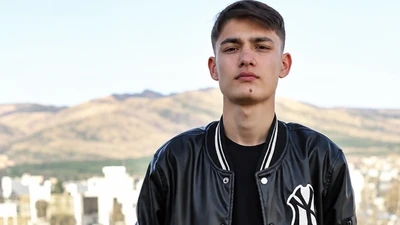
Alireza Ordoubadi, founder and CEO of Inverse School
Iranian authorities have seized assets belonging to the founder of a private art and design school in Tehran and begun confiscation proceedings, the IRGC-affiliated Fars news agency reported, a day after the school said its assets had been seized and its bank accounts frozen.
Fars alleged that Alireza Ordoubadi, founder of Inverse School, had insulted Shiite Muslims and engaged in propaganda against the Islamic Republic on his personal social media accounts.
The announcement came a day after the school said authorities had frozen all its bank accounts and payment systems, blocked its website and seized its property, forcing it to suspend registration and sales of new courses.
Students who had already purchased courses would retain access to educational materials and support services, the school said.
Ordoubadi said the institution had never engaged in political activities and was being targeted because of his personal views, with the measures affecting its employees, instructors and students.
"The people of Iran have the right to think freely, make choices, protest and decide their own future. I will not ask anyone's permission to say this," he wrote in a statement published on the school's Instagram account.
"Their issue is with me, and they're making the school and its people pay the price," he wrote.
Founded in 2008, Inverse provides training in graphic design, animation, fashion, programming and other creative and digital skills. Ordoubadi said more than 70,000 people had studied at the institution over its 18 years of operation.
He said the school had lost students aboard Ukraine International Airlines Flight PS752 in January 2020, seen others imprisoned during the 2022 Woman, Life, Freedom protests, and lost two more students, whom he identified only by their first names, Amirali and Sima, during the latest nationwide protests.
"If the price I must pay for standing alongside these people is losing these 18 years, then I am willing to sacrifice those 18 years for Iran," he wrote.
Paying tribute to protesters killed during successive waves of anti-government demonstrations in Iran, from the 2009 and 2022 uprisings to the latest nationwide protests in December 2025 and January 2026, he added:
"This country belongs to Neda Agha-Soltan, Nika and Sarina, Hamidreza Rouhi, Majidreza Rahnavard, Sadra Soltani, Sepehr Shokri, Hamid Mahdavi and thousands of honourable people who gave their lives for its freedom. It belongs to their families and all those who continue to live with so much grief and deserve a future. My place is alongside these people."
"Seizure is your decision, and continuing is ours. And we will continue," he wrote.
The action comes amid a series of asset seizures involving Iranian public figures and supporters of anti-government protests.
On Tuesday, the lawyer for award-winning filmmaker Jafar Panahi said his client had been sentenced in absentia to five years and one month in prison and ordered to forfeit all his assets.
Earlier, authorities in the city of Qom announced the seizure of property and cryptocurrencies belonging to businessman Sadegh Saedinia, who supported nationwide anti-government protests in January.
Iranian officials rejected nuclear negotiations, demanded acceptance of their conditions for ending the war and threatened military retaliation, despite continuing diplomatic contacts with Qatari mediators on Sunday.
Iranian officials rejected nuclear negotiations, demanded acceptance of their conditions for ending the war and threatened military retaliation, despite continuing diplomatic contacts with Qatari mediators on Sunday.
“The window for negotiations with our adversaries is now closed because they have nothing new to offer,” Ali Nikzad, deputy speaker of Iran's parliament, said on Sunday.
Nikzad accused what he called adversaries of repeatedly breaking commitments and attacking Iran's nuclear facilities. He said that renewed military action would trigger an “immediate, effective response without geographical limits.”
Foreign Minister Abbas Araghchi, however, said consultations with Qatari mediators were progressing without a final agreement.
“Consultations with the mediators regarding the two-day plan are continuing and moving toward implementation, but we have not yet reached a definitive conclusion,” Araghchi said.
Washington keeps negotiations open
The United States remains open to negotiations but is prepared to pursue other options, Donald Blome, US assistant secretary of state for Near Eastern affairs, said at the Manama Dialogue security forum in Bahrain, according to the Associated Press.
“The hand of negotiation has been extended, and those channels have continued to be open and active,” Blome said.
Blome warned that Washington could take a different course and would not allow Iran to threaten the region and global economy.
Iranian negotiators were in Doha for a third consecutive day of indirect talks aimed at ending the war with the United States and Israel, Reuters reported, citing an official briefed on the discussions.
Araghchi said the delegation had no plans to meet US officials directly.
Iran sets conditions and threatens retaliation
Iran will not negotiate with Washington until seven conditions announced by the secretary of its Supreme National Security Council are implemented, lawmaker Esmail Kowsari said Sunday.
Nikzad also demanded unconditional acceptance of those conditions, including Iran's proposed arrangements for the Strait of Hormuz.
Ebrahim Azizi, chairman of parliament's National Security Committee, threatened a punitive response to hostile actions in the waterway.
Iranian army spokesman Mohammad Akraminia said that another war could spread beyond the Middle East and said the military was shifting toward an offensive doctrine.
Defense Minister Mehrdad Akhlaghi said Iran was strengthening its military readiness and weapons production to respond to threats without geographical restrictions.
Calls grow to leave nuclear treaty
Lawmaker Nasser Pejmanfar urged Iran to withdraw from the Nuclear Non-Proliferation Treaty, arguing that membership had brought no benefits.
Mohsen Araki, a member of the Assembly of Experts and Expediency Discernment Council, separately called for reviewing Iran's membership, according to the Revolutionary Guards-affiliated Tasnim news agency.
The calls to reconsider Iran's nuclear treaty commitments add another obstacle to efforts to resolve the dispute through diplomacy.
Negotiations through Qatari mediators continue in Doha without a final agreement. Washington has kept the door open to talks, but Iranian officials insist that their seven conditions must be accepted before the war can end.
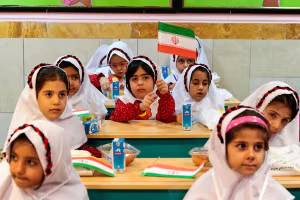
Students gather and play in the courtyard of a school in Iran.
Public schools across Iran are demanding payments from parents for basic supplies, utility bills and repairs, with some withholding report cards or pressuring students to secure the money, according to accounts sent to Iran International.
Parents responding to an inquiry described repeated requests for payments ranging from stationery and cleaning products to multimillion-rial fees, despite government assurances that contributions to public schools must be voluntary.
"Only teachers' salaries are left for them to collect from parents," one parent wrote after being asked to contribute money for paper.
The accounts contrast with Education Minister Alireza Kazemi's September 20 announcement that public schools were prohibited from charging families for enrollment or the start of the academic year.
Financial contributions from parents must be entirely voluntary, Kazemi said.
Parents asked to cover utility bills and cleaning supplies
Families described being required to cover routine school expenses, including water, electricity, gas, cleaning supplies and equipment repairs.
"The government provides no assistance to schools," several respondents wrote in messages.
At a school meeting in early October, parents were told the government had no budget and public schools would have to operate with financial support from families, one parent said.
The school subsequently presented a list of monthly expenses covering water, electricity, drinking-water facilities, cleaning, heating and cooling equipment.
At another school, parents were asked to pay 2.5 million rials each to purchase paper.
Other families described requests for money to buy whiteboard markers, light bulbs, A4 paper, garbage bags and even to repair a broken classroom door.
One mother said her child's school demanded money for hand soap despite toilets being so dirty and unusable that her child avoided using them throughout the five-hour school day.
Parents have also been asked to purchase materials for basic science experiments because schools lack adequate laboratory equipment, according to another account.
Some schools have sought contributions for government and religious ceremonies, requesting money and sweets from families.
Voluntary contributions become compulsory payments
Some families described payments equivalent to tuition fees at public schools, even though the schools are not permitted to charge compulsory enrollment fees.
One parent said their child's public school collected 50 million rials despite having virtually no facilities.
Iran's minimum monthly wage was set at 166 million rials for 2026, equivalent to about $61 at an exchange rate of 2.72 million rials to the dollar.
Another described a public school with approximately 300 students attending in two shifts that collected between 17 million and 20 million rials from each student, regardless of the family's financial circumstances.
Examination paper costs were charged separately, the parent said.
A student wearing a backpack stands in the courtyard of a school in Iran as parents and children gather near the entrance.
Several parents said schools refused to release students' report cards until additional payments were made.
The accounts contradict the education ministry's position that contributions must be optional.
Government funding shortages should not result in financial pressure on families, Akbar Pouladi, a member of parliament's education committee, said on August 26, criticizing compulsory payments at some schools.
In some cases, families said enrollment or the distribution of textbooks was conditional on payment.
Higher payments, inadequate facilities
Despite the growing financial demands, some parents said school conditions had not improved.
Nearly two months into the academic year, one parent said their child's school still lacked a proper door, whiteboard, curtains and enough desks, even though families were being charged to cover operating expenses.
A teacher said the school where they worked had relied on parental contributions for years.
At the beginning of each academic year, administrators told parents that without their financial support, the school could not remain operational, the teacher said.
A shopper stands beside a trolley of groceries at a supermarket checkout in Iran.
People across Iran say they are struggling to afford food, clothing and rent, while others face unpaid wages and falling business sales, according to messages sent to Iran International as year-on-year inflation hit 88.7% in October.
Messages describe mounting financial pressures on workers, pensioners, students, single mothers and small business owners, with some unable to meet basic needs and others facing unpaid wages and declining sales.
"I went to buy a piece of flat bread. All I got was a piece the size of my palm for 400,000 rials. I don't know how we're supposed to live," one resident wrote.
Iran's minimum monthly wage for 2026 was set at approximately 166 million rials ($61 at the current exchange rate of 2.72 million rials per US dollar).
A pensioner said their monthly income was insufficient to cover even 10 days of living expenses, illustrating the widening gap between household earnings and everyday costs.
Iran's annual inflation rate reached 76.8% in October, with prices rising 4.4% from the previous month, according to figures released by the Statistical Center of Iran.
The 88.7% year-on-year inflation rate means households had to spend an average of 88.7% more than in October 2025 to purchase the same basket of goods and services.
Food prices hit small businesses
Rising food prices have affected not only consumers but also small businesses facing a sharp decline in demand.
Groceries, including meat, vegetables, dairy products and other food items, are laid out on a table in Iran.
"Before the war, I used to sell 70 chickens every day, but because of rising prices, daily sales have dropped to 12," the owner of a poultry and egg shop in Tabriz told Iran International.
The decline represents an approximately 83% reduction in the number of chickens sold daily, reflecting the impact of inflation and weakened consumer purchasing power.
Families struggle with school and clothing costs
The rising cost of education has added to the financial burden on families, with students describing difficulties obtaining basic school supplies.
"I need stationery to study, but prices have risen so much that I can't even afford a notebook," one student wrote to Iran International.
Education recorded the highest monthly price increase among major household expenditure categories in October, rising 23.5%, according to the Statistical Center of Iran.
A mother in Mashhad said she visited a discount clothing store to buy warm clothes for her daughter but found that a hoodie and trousers cost 35 million rials ($13).
Unpaid wages compound housing pressures
Alongside inflation, delayed salary payments have deepened financial difficulties for workers already struggling with rent and family expenses.
An employee of Atlas Air said outstanding wages had not been paid, leaving the family struggling to meet its financial obligations.
"We are tenants, and we also cover the expenses of our family and our parents," the employee wrote to Iran International.
A woman who heads her household and works in the oil industry's healthcare sector said her salary had not been paid by October 29. Officials attributed the delay to a shortage of funds, she added.
Economic hardship has intensified alongside currency depreciation, inflation and declining purchasing power, while the Islamic Republic continues to pursue a confrontational foreign policy, particularly toward the United States and Israel.