• العربية
  • فارسی
BrandBrand
  • Iran Insight
  • Politics
  • Economy
  • Analysis
  • Special Report
  • Opinion
  • Podcast
  • Live TV
  • Iran Insight
  • Politics
  • Economy
  • Analysis
  • Special Report
  • Opinion
  • Podcast
  • Live TV
  • Theme
  • Language
    • العربية
    • فارسی
  • Iran Insight
  • Politics
  • Economy
  • Analysis
  • Special Report
  • Opinion
  • Podcast
  • Live TV
All rights reserved for Volant Media UK Limited
volant media logo
VOICES FROM IRAN

Growing old alone: The parents Iran’s emigrants left behind

Oct 29, 2026, 11:02 GMT+0

As more Iranians build new lives abroad, many parents back home face a less visible consequence of migration: years without seeing their children, family relationships maintained through phone screens, and growing uncertainty about who will be there for them in old age.

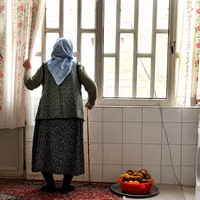
For Maryam, a 68-year-old retiree in Tehran, that distance has become part of everyday life. Her son lives in Canada and her daughter in Germany, and she has not seen either of them in years.

“I know they're building their futures, and I'm happy for them,” she told Iran International. “But sometimes I just wish they were here, even for an ordinary dinner.”

Maryam says regular calls and photographs help her stay connected with her family, particularly her grandchildren. But watching them grow up from thousands of miles away is difficult.

“They know me through the phone,” she says. “I wish I could be more than just a face on a screen in their lives.”

Last winter, Maryam was hospitalized with kidney problems. Her children arranged help through relatives, and a family member accompanied her to medical appointments.

“My daughter was very worried, and I kept telling her everything was fine,” she recalls. “Sometimes, especially when I'm ill, I just wish we weren't so far apart.”

Continue reading

Most Viewed

Tehran plans for $130 oil it struggles to sell
1
INSIGHT

Tehran plans for $130 oil it struggles to sell

2

Iran rejects Qatari peace ideas as Trump leaves door open to new strikes

3

Iran arrests fitness blogger over hijab-free workout videos

4

Tehran summit divides Iranian hardliners over Yemen and US talks

5
EXCLUSIVE

Inside the alleged IRGC Intelligence takeover of Iran’s sanctioned oil trade

Banner
Banner
Banner
Banner
Banner

Spotlight

  • Growing old alone: The parents Iran’s emigrants left behind
    VOICES FROM IRAN

    Growing old alone: The parents Iran’s emigrants left behind

  • Iran targets art, sports events where women defy hijab rules

    Iran targets art, sports events where women defy hijab rules

  • Behind Khamenei's call for peace, Tehran's unchanged demands
    OPINION

    Behind Khamenei's call for peace, Tehran's unchanged demands

  • NPT withdrawal returns to Iran debate as diplomacy gains pace
    INSIGHT

    NPT withdrawal returns to Iran debate as diplomacy gains pace

  • Iran's Great Depression? Economists weigh Bessent's dire forecast
    ANALYSIS

    Iran's Great Depression? Economists weigh Bessent's dire forecast

  • Inside the alleged IRGC Intelligence takeover of Iran’s sanctioned oil trade
    EXCLUSIVE

    Inside the alleged IRGC Intelligence takeover of Iran’s sanctioned oil trade

  • Tehran plans for $130 oil it struggles to sell
    INSIGHT

    Tehran plans for $130 oil it struggles to sell

  • Tehran summit divides Iranian hardliners over Yemen and US talks

    Tehran summit divides Iranian hardliners over Yemen and US talks

  • Iran’s neighbors push diplomacy, prepare for its failure
    ANALYSIS

    Iran’s neighbors push diplomacy, prepare for its failure

•
•
•

More Stories

Growing old alone: The parents Iran’s emigrants left behind

Oct 29, 2026, 10:55 GMT+0
•
Hooman Abedi
100%

As more Iranians build new lives abroad, many parents back home face a less visible consequence of migration: years without seeing their children, family relationships maintained through phone screens, and growing uncertainty about who will be there for them in old age.

For Maryam, a 68-year-old retiree in Tehran, that distance has become part of everyday life. Her son lives in Canada and her daughter in Germany, and she has not seen either of them in years.

“I know they're building their futures, and I'm happy for them,” she told Iran International. “But sometimes I just wish they were here, even for an ordinary dinner.”

Maryam says regular calls and photographs help her stay connected with her family, particularly her grandchildren. But watching them grow up from thousands of miles away is difficult.

“They know me through the phone,” she says. “I wish I could be more than just a face on a screen in their lives.”

Last winter, Maryam was hospitalized with kidney problems. Her children arranged help through relatives, and a family member accompanied her to medical appointments.

“My daughter was very worried, and I kept telling her everything was fine,” she recalls. “Sometimes, especially when I'm ill, I just wish we weren't so far apart.”

Caring for a spouse without the children nearby

In Karaj, 72-year-old Hamid has spent the past two years caring for his wife after a stroke left her with limited mobility.

100%
Travelers pull their suitcases through an airport terminal in Iran, amid a continuing wave of emigration that has left many families separated across borders.

Their two sons live in Sweden and Australia. Although they call regularly and provide financial support, most daily responsibilities fall on Hamid.

He describes the exhaustion of managing medication, medical appointments and household chores.

“Some people think you're fortunate when your children live abroad,” he says. “But when your wife needs help getting out of bed, what matters is having someone nearby.”

The family has hired a part-time caregiver, but Hamid still handles much of his wife's care.

“Sometimes I want to tell my sons how exhausted I am,” he says. “Then I think about how far away they are and wonder what they could possibly do.”

Hamid does not blame his children for emigrating, but says family life has changed.

“We're still very close, and we talk all the time. But it's different when you can't sit together in the same room.”

Stay in Iran or join the family abroad?

For Nahid, a 64-year-old widow in Tehran, the question is whether she should leave Iran herself.

Her only daughter has lived in London for eight years and has encouraged her mother to move closer.

“My daughter tells me to come and live with her, but I've spent my whole life here,” she says. “My sisters, my friends, all my memories are here. At the same time, every year that passes, I wish I could be closer to her.”

Nahid worries about losing her independence in a country where she does not speak the language fluently or have an established social circle.

But staying in Tehran also means facing old age far from her daughter.

“I don't want to become a burden to my daughter,” she says. “But I don't want to leave behind everything I've built here either.”

The distance that remains

Phone and video calls have helped families separated by migration remain part of one another's lives despite years of living thousands of kilometres apart. They share news, celebrate birthdays and check on each other's health, sometimes communicating more frequently than families living in the same city.

But as parents grow older, that distance takes on a different meaning. A sudden illness, a medical emergency or the growing need for help with everyday tasks can expose the limits of even the closest long-distance relationships.

For children who have emigrated, Iran remains the place where their parents are growing old. For the parents who stayed behind, each passing year brings a difficult reality into sharper focus: the people they may need most are the ones living furthest away.

Bessent's tax boycott and fuel advice sparks debate among Iranians

Oct 27, 2026, 11:28 GMT+0
•
Saba Heidarkhani
100%
Shoppers walk through a crowded bazaar in Iran, as the country faces mounting economic pressure and concerns over rising living costs.

US Treasury Secretary Scott Bessent's advice to stop paying taxes and stockpile fuel drew mixed reactions on Iran International's Instagram page, with commenters debating its practicality and the role of public resistance against the Islamic Republic.

The responses followed Bessent's interview with Iran International, in which he urged Iranians to prepare for severe fuel shortages and forecast a contraction of more than 25 percent in the country's economy in the year ending March 2027.

“My advice to the Iranian people would be: don't pay your taxes because you're not going to get anything back from the government,” Bessent told Iran International's Kambiz Tavana on Monday.

  • Bessent says Iran economy will contract by more than 25%

    Bessent says Iran economy will contract by more than 25%

Bessent also urged households to stock up on heating fuel and fill their gasoline tanks, warning that Washington's Operation Economic Outcast would intensify over the next eight weeks.

The interview prompted a discussion among Iranians commenting on Iran International's Instagram post, with responses ranging from support for economic noncooperation to questions about how individuals could implement the recommendations.

Tax boycott prompts questions over implementation

Several commenters pointed out that income taxes are deducted automatically from salaries, leaving employees with little control over whether they pay them.

“We don't voluntarily pay taxes; they take them from us. Other deductions are made too, and whatever salary remains is paid late,” one commenter wrote.

Others noted that taxes are also included in the prices of goods and services, making them difficult to avoid through individual action.

“To avoid paying taxes, we'd have to stop eating because they're built into essentials. We'd starve if we didn't pay. And what fuel are we supposed to store, and how?” another wrote.

Some business owners and other respondents raised concerns about the consequences of withholding taxes, including potential restrictions on bank accounts and payment terminals.

“If you fail to pay taxes, your card terminal and bank accounts can be blocked. A shopkeeper's livelihood depends on them. We know this route; if it worked, we'd have tried it. Why not listen to people about practical solutions?”

  • US crackdown leaves much of Iran’s shadow banking untouched

    US crackdown leaves much of Iran’s shadow banking untouched

Others questioned how much a boycott of individual tax payments would affect the Islamic Republic's finances.

Fuel recommendations draw questions

Bessent's recommendation to stockpile gasoline and heating fuel also generated discussion about household infrastructure, storage capacity and costs.

Several commenters noted that many Iranian homes use piped natural gas for heating and hot water, rather than fuel that can easily be stored.

“Where am I supposed to store fuel? I live in a 74-square-metre apartment with no balcony or storage. There's barely room for me. Even if I had fuel, how would I use it in my gas heating system?”

Another asked how households could prepare for shortages of piped gas or gasoline.

“How exactly should we stockpile fuel? How can we store the piped gas supplied to our homes, or gasoline for our cars?”

Financial considerations were another recurring theme, with some respondents describing difficulties setting aside money for additional supplies.

“A week after my salary arrives, only a small portion remains in my account, and I have to live on that until the end of the month. How am I supposed to stockpile fuel?” one wrote.

Others responded with humor, including suggestions about filling balloons with gas or storing kerosene in apartments.

Some urge collective action against the Islamic Republic

Not all responses focused on the practical challenges. Some supported Bessent's broader message, arguing that Iranians should take an active role in increasing economic pressure on the Islamic Republic.

“People of Iran, we should act too; we cannot expect the US to do everything. Let's start by not paying water, electricity and gas bills, and shopkeepers should withhold taxes.”

The suggestion also prompted questions about possible consequences, including the disconnection of essential services for nonpayment.

Others raised concerns about the wider impact of Washington's pressure campaign, including the possibility of military action and its consequences for civilians.

  • What Operation Economic Outcast means for Iran, and for everyone trading with

    What Operation Economic Outcast means for Iran, and for everyone trading with

“Are Iranians supposed to do everything – take to the streets, risk their families and lives – only for the US to bomb Iran, divide its territory and take its oil? Ordinary Iranians would be worse off,” one commenter wrote.

Bessent said the US campaign was intended to pressure Iran's leadership rather than its population, forecasting further economic deterioration and serious fuel shortages this winter.

Flour shortages force bakeries to close across Iran

Oct 26, 2026, 12:08 GMT+0
•
Saba Heidarkhani
100%
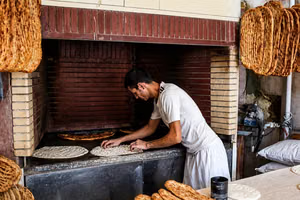
A baker prepares dough for bread at a bakery in Iran.

Flour shortages have forced bakeries to close in several Iranian cities and pushed up bread prices, with residents and bakers reporting disrupted supplies, falling purchasing power and growing uncertainty over their businesses.

Residents in Tabriz, Karaj, Kerman and Hamedan told Iran International that interruptions and delays in flour deliveries had disrupted independent bakeries and producers of various types of bread.

Several bakeries on a street in Tabriz have shut down, a resident said.

“I asked why, and they told me they weren't receiving flour. They keep promising that the flour quotas will be replenished today or tomorrow, but nothing happens.”

  • Iranians say basic food slipping beyond reach as bread prices soar

    Iranians say basic food slipping beyond reach as bread prices soar

Previous reports have also documented flour shortages and bakery closures, with residents describing bread shortages and interruptions to production caused by electricity outages.

Flour supply disruptions shut bakeries and sandwich shops

Independent bakers have reported that difficulties obtaining flour have forced businesses to suspend operations.

A citizen of Hamedan in western Iran said flour shortages and rising prices had affected not only bakeries producing specialty bread but also sandwich shops.

Flour prices have risen, and suppliers are now saying there is no flour available at all, the resident said.

“Our bakery is closed because we have no flour, and nobody is taking responsibility,” a independent baker told Iran International.

The shortages have coincided with declining purchasing power, leaving bakeries struggling to secure supplies as customers struggle to afford bread.

“They don't have flour to give us, and I swear to God, people don't have money to buy bread either. Our economic situation has become critical,” another baker said.

  • Tehran bread prices jump up to 100% in latest increase

    Tehran bread prices jump up to 100% in latest increase

Iran's flour distribution system distinguishes between subsidized bakeries and independent bakeries, which face different purchasing prices and supply arrangements.

Flour allocations to certain independent bakeries had been reduced, Bagher Khodadadi, head of supervision and inspection at the Khorasan Razavi provincial agriculture department, confirmed on October 21.

Khodadadi said the shortages in flour distribution had been addressed.

Bakeries reducing their operating hours because of flour shortages would be committing a violation and could face enforcement measures, he added.

Rising prices disrupt food retailers

The flour supply problems have also affected food retailers that depend on bakeries for their products, according to messages.

Two bakeries supplying bread to a supermarket in Kerman said they no longer had enough flour to continue production, the store's owner said.

“Two of the bakers who supply me called and said there was no flour left and they couldn't bake and deliver bread tomorrow. A famine has officially begun.”

A resident of Karaj also described a sharp increase in bread prices.

“I bought two baguettes and they cost 800,000 rials. The price of flour has also tripled.”

  • Iranian wheat farmers face planting cash crunch as payments lag, rial slides

    Iranian wheat farmers face planting cash crunch as payments lag, rial slides

Iran International previously reported on October 8 that residents had described unannounced increases in bread prices and flour shortages in several areas.

Bread prices in Tehran province had risen by as much as 100% for certain varieties by June 23.

The increases have added to the financial pressure on households already struggling with declining purchasing power.

Uncertainty over flour quotas and pricing

The disruption has raised further questions about how flour quotas are allocated and priced for independent bakeries and producers of larger and semi-industrial bread varieties.

Flour allocations to these businesses were suspended about two weeks ago, according to another message received by Iran International.

The sender said suppliers had attributed the suspension to the government's failure to announce new flour prices, leaving bakeries uncertain about when deliveries would resume.

The resident also said certain flour mills were selling supplies on the black market without issuing invoices specifying prices.

Comments by provincial grain officials about flour allocations have added to questions over the distribution system and the availability of supplies.

Iranians vent anger over rising costs of slow, restricted internet

Oct 24, 2026, 23:22 GMT+1
•
Baharan Azadi
100%

Iranians say they are paying more for slow, unreliable and heavily restricted internet after mobile operators raised data prices by up to 40%, with some reporting that their allowances run out unusually quickly.

Messages sent to Iran International described mounting frustration over the cost of staying connected, from families worried about paying for online classes to users struggling to send even a text message.

“All we have left of life in Iran is passing the time on our phones, and they are taking that away too,” one reader from Baharestan said.

Mobile operators Hamrah-e Aval and Irancell increased their data package prices by up to 40% early on Friday, October 23, according to state media.

One reader said a weekly four-gigabyte package had risen from 330,000 rials ($0.12) to 450,000 rials ($0.17). Another said a monthly six-gigabyte package that cost 530,000 rials ($0.20) three days earlier now cost 740,000 rials ($0.28).

The pressure comes as Iran’s official minimum wage stands at about 166.3 million rials per month, equivalent to roughly $62 at the unofficial-market exchange rate.

Others questioned why prices were rising again after earlier increases before and during the war.

“Didn’t they raise internet prices two months before the 40-day war? Didn’t they raise package prices again during the war, taking advantage of the blackout?” one reader asked, referring to the US-led war that began on February 28. “So what is this latest increase for?”

The higher charges have brought no improvement in service, according to accounts from users across the country.

A reader in the northern province of Mazandaran described Hamrah-e Aval’s connection as moving “at a snail’s pace,” saying Wi-Fi connections in many areas also cut out, even when accessing domestic messaging apps.

In Iranshahr, in southeastern Iran, another reader reported severely degraded ADSL service followed by a complete outage from 8 p.m. on Friday. Another said sending a text message on Telegram was difficult, let alone a photograph or video.

Iran International reported on Friday that users in Semnan, Shiraz, Tabriz, Kerman, Tehran and Tonekabon had complained of sharply slower connections, malfunctioning tools used to bypass internet filtering and difficulty accessing social media.

The Telecommunications Company of Iran has previously attributed some disruptions to “upgrading and optimizing technical infrastructure.”

The complaints come against a backdrop of extensive restrictions on internet access. Freedom House’s 2026 report gave Iran an internet freedom score of nine out of 100, down from 13.

The organization said Iran’s tiered internet system had made access to the global internet difficult and expensive, leaving much of the population restricted to a domestic network controlled by the authorities.

All global social media platforms, from X and Telegram to Facebook, Instagram, TikTok and YouTube, are banned in Iran.

Several readers also accused operators of “stealing data,” saying their allowances were depleted far faster than their usage would explain.

“I topped up my data package two days ago. Today, only 600 megabytes of my six gigabytes are left, even though we don’t have a decent connection,” one reader said.

Another said a six-gigabyte package bought for 570,000 rials ($0.21) had run out within two days despite limited use, and now cost 730,000 rials ($0.27) to replace.

Cost of education

For families, the increases have also raised concerns about the cost of education if gas shortages force schools to move classes online.

One reader said a one-gigabyte Hamrah-e Aval package cost 330,000 rials ($0.12), including tax. “With things like this, how are we supposed to buy data for online classes?”

Another said repeated price increases had left them unable to afford internet access at all.

“We live in a country with vast oil and gas resources,” another reader said, “but we earn in rials and spend in dollars.”

More patrols, slower internet suggest Tehran is bracing for trouble

Oct 23, 2026, 18:21 GMT+1
•
Saba Heidarkhani
100%
Armed men take part in a Janfada rally in Rasht, northern Iran, October 2026

Armed security forces and checkpoints have become more visible across Iran, according to witness reports sent to Iran International, while internet access has deteriorated amid fears of fresh unrest and another round of war.

Accounts from Tehran, Mashhad, Isfahan, Dezful, Hamedan and other cities over the past week describe armed Basij members and riot police at major intersections and public squares, new checkpoints and additional surveillance cameras.

Users in several provinces also say internet speeds have fallen sharply, circumvention tools have stopped working and access to social media has become increasingly difficult.

The individual reports cannot all be independently verified, but describe similar changes across widely separated parts of the country.

More armed forces on the streets

In Dezful in southwestern Iran, one resident said the city had become “heavily securitized,” particularly around the city center and Shariati Street.

The resident attributed the increased presence to government concern about possible protests around the anniversary of the November 2019 uprising, when demonstrations triggered by a sudden increase in fuel prices were met with a deadly crackdown.

In Tehran, a resident reported a Basij checkpoint on Khavaran Street from Thursday evening, while other accounts described increased security patrols elsewhere in the capital and neighboring Karaj.

Residents of Mashhad reported armed Basij members around Mellat Park.

In Isfahan, armed deployments were reported around major squares, while residents of Hamedan and Borujerd described increased security activity.

Iran International reported similar deployments in September around the fourth anniversary of the death in custody of Mahsa Jina Amini.

More cameras and surveillance

Residents have also reported an expansion of surveillance infrastructure.

A resident of Astara, a small city on the Caspian coast near the Azerbaijani border, said security cameras were being installed in squares and neighborhoods across the city.

“They are installing cameras neighborhood by neighborhood in a city this small,” the resident said. “Look how afraid they are of the people.”

Another resident reported more surveillance cameras around Tehran's Sadeghieh district.

Tehran municipality announced last year that it planned to install 15,000 surveillance cameras across the capital, while security agencies have used camera footage to identify protesters and enforce government restrictions.

Internet slowdown

Residents in Semnan, Shiraz, Tabriz, Kerman, Tehran and elsewhere told Iran International that connections had slowed markedly, VPNs had stopped functioning and social media platforms had become increasingly difficult to reach.

A Shiraz resident said internet access had been extremely slow for about six days, while in Kerman one user said even paid VPN services were failing.

A resident of Tonekabon on the Caspian coast said Irancell mobile internet was being cut at night. Other users reported disruption to both fixed and mobile connections.

The cause of the disruptions is unclear, and the accounts do not establish that the security deployments and deteriorating internet access are part of a coordinated operation.

But they come against the backdrop of Iran's extensive use of internet shutdowns during periods of political unrest and conflict.

Tech outlet Zooman reported this week that authorities had issued instructions for international internet access to be cut immediately in the event of another war.

When Israel and the US attacked Iran in February, authorities imposed a nationwide internet blackout that lasted about 88 days, the longest recorded in any country, according to NetBlocks.

The latest disruptions also coincide with sharp increases in the cost of getting online.

Iran's two largest mobile operators, Hamrah-e Aval and Irancell, raised prices for calls, text messages and internet packages by as much as 40% on Friday, citing higher equipment, maintenance and infrastructure costs.

“By making the internet more expensive, they have closed our last route to the free world,” one resident told Iran International. “For me, when the internet was my only comfort and source of income, even being present in this space is no longer possible.”