Women, some without headscarves, view artworks at Tehran Art Fair, held at the Iran Mall commercial complex in October 2026
As growing numbers of Iranian women appear in public without headscarves, authorities are pursuing organizers of cultural and sporting events over alleged violations of mandatory hijab rules.
Tehran’s prosecutor’s office announced this week that it had opened a case against the organizers of Tehran Art Fair, a privately run event held at the Iran Mall commercial complex from September 20 to 23, citing “failure to observe legal and religious requirements.”
The organizers have been summoned to court, while the fair’s ticketing website and social media account have been blocked on the prosecutor’s orders.
The announcement did not specify which activities at the event, which featured visual arts, music, theater and performance art, were considered violations.
Images and videos showed numerous female visitors without headscarves, as well as women performing without hijab.
In one performance, two women sat on the floor as red yarn was wrapped around them in a spiderweb-like pattern. Their bodies were then decorated with flowers before two other women cut the threads with scissors, freeing them.
Another video circulating on social media showed a woman in a long black dress that covered her body but left her head uncovered as she moved to music.
‘Offending public sentiment’
The action against the art fair came amid similar proceedings over Fitex Tehran, a sports equipment exhibition where women performed fitness routines and acrobatics to music without headscarves.
The judiciary announced Tuesday that an unnamed fitness blogger had been arrested on charges of “offending public sentiment” and “propaganda against the system.”
Videos of the performances, in which women wore long-sleeved tops and leggings but no headscarves, circulated widely on social media.
The prosecutor’s office ordered the event’s social media account closed for publishing “criminal content” and said an arrest warrant had been issued for one of the exhibition’s organizers.
The event drew criticism from conservative media. Tasnim, affiliated with the Revolutionary Guards (IRGC), condemned what it called widespread “deviations” at Fitex in an October 25 report and urged sports authorities and other institutions to intervene.
State broadcaster IRIB also described the event as an example of “deviance” and called for judicial action.
Beyond the exhibitions
Other cultural events have faced scrutiny over the past year, including music and theater performances and Tehran Design Week, held at the University of Tehran’s College of Fine Arts.
In some cases, judicial intervention has concerned interactions between women and men rather than hijab violations.
Last month, those involved in the play Tehran, Paris, Tehran/Bridge faced prosecution after a scene showed a female actor briefly resting her head on the chest of a male actor playing her brother.
The prosecutor’s office described the actors’ behavior as “contrary to tradition and propriety.”
Authorities have also taken action against venues hosting events attended by women without hijab.
Earlier this month, the IRGC-linked Fars News Agency reported that a banquet hall in the religious city of Qom had been sealed on the prosecutor’s orders after the wife of prominent soccer player Ali Daei attended a private company conference there without a headscarf.
A judicial case was also opened against the conference organizers, and the prosecutor warned that everyone involved would face action.
Changing streets, unchanged laws
Since the 2022 Woman, Life, Freedom movement, which followed the death in custody of Mahsa Amini, street-level enforcement of compulsory hijab has declined.
Increasing numbers of women now appear in public without headscarves, wearing clothing other than the long coats and chadors traditionally expected by authorities. Women also exercise in public parks without covering their hair.
But mandatory hijab rules remain in force, including in schools, government institutions and universities, while organizers of public events continue to face legal pressure.
Women’s rights activists and opponents of mandatory hijab argue that the growing visibility of women without headscarves does not amount to freedom of choice as long as legal restrictions remain.
The recent prosecutions show how authorities continue to enforce those restrictions through legal action against organizers, performers and venues, even as uncovered hair becomes increasingly commonplace in public.
Players from Persepolis (red) and Esteghlal (blue) compete during the first-ever women's soccer derby between the two clubs at Shahr-e Qods Stadium, west of Tehran, October 28, 2026.
Iran's two biggest soccer rivals met in their first women's derby on Wednesday, a historic occasion overshadowed by restrictions on male spectators and journalists and uncertainty over live television coverage.
Persepolis defeated Esteghlal 2-1 at Shahr-e Qods Stadium west of Tehran, marking the first-ever meeting between the women's teams of two clubs whose rivalry has dominated Iranian men's soccer for decades.
Fatemeh Rezaei and Somayeh Esmaeili scored for Persepolis in the first half before Niloufar Azimi pulled one back for Esteghlal after the break.
Female spectators were eventually allowed to attend following days of uncertainty and intervention by government officials. Men, however, remained barred from women's soccer matches under restrictions that also extended to journalists, photographers and technical personnel.
Persepolis players pose during their historic women's soccer derby against Esteghlal, which they won 2-1, west of Tehran, October 28, 2026.
Prosecutor threatens legal action
Tehran prosecutor Ali Salehi on Tuesday sent separate letters to Sports Minister Ahmad Donyamali and Iranian Football Federation President Mehdi Taj demanding that men be barred from women's soccer matches.
The restrictions covered male spectators, journalists, photographers, camera operators, security personnel and event staff. Salehi warned that prosecutors would take legal action if they were violated.
The warning followed reports of female spectators attending women's league matches without the headscarves required under Iran's mandatory hijab laws, as well as men being present at the games.
Prosecutors described the incidents as violations of Islamic regulations and public decency.
The Iranian Football League Organization had already issued a directive prohibiting men from attending women's soccer matches, including male media workers and club executives.
Farideh Shojaei, the Football Federation's vice president for women's affairs, confirmed ahead of the derby that men would not be permitted to attend.
The restrictions also raised practical questions about organizing the match, particularly the use of video assistant referee (VAR) technology, which relies on technical personnel and match officials.
The league had previously called for a male official to be removed from the VAR team for the derby, adding to uncertainty over how the technology would be operated.
The dispute over attendance came after a series of changes to the arrangements for the historic fixture.
Originally scheduled for Friday, October 23, at Kazemi Stadium, the home ground of Persepolis' women's team, the match was moved to Wednesday, October 28, at Shahr-e Qods Stadium.
The league organization cited anticipated demand from supporters and the need for better facilities, although the change also shifted the match from Iran's weekly day off to a working day.
Ticket sales were suspended twice in the days leading up to the game, while the final decision on whether female spectators could attend was referred to the Tehran Provincial Security Council.
At one point, there were concerns that the encounter could take place behind closed doors despite the anticipated interest from supporters.
Women were eventually permitted to attend following discussions involving Vice President for Women and Family Affairs Zahra Behrouz-Azar and Sports Ministry officials.
Government spokesperson Fatemeh Mohajerani also attended the match, according to Iranian media reports.
Government spokesperson Fatemeh Mohajerani also attended the match, according to Iranian media reports.
Persepolis (red) and Esteghlal (blue) players compete during their first-ever women's soccer derby west of Tehran, October 28, 2026.
Women's soccer struggles for television exposure
The restrictions extended beyond stadium access, raising questions about how widely the first women's derby would be seen.
Iran's state broadcaster, IRIB, had announced no plans to televise the match, while reports ahead of the game indicated restrictions on broadcasts through the two clubs' own platforms.
The uncertainty contrasted with the men's Esteghlal-Persepolis derby, one of Iran's biggest sporting events, which regularly attracts large television audiences.
For the women's teams, limited broadcasting and media access also restrict opportunities to build a following, attract commercial sponsors and gain wider public recognition.
Female soccer players in Iran are required to wear mandatory hijab while competing and have long faced unequal access to sporting facilities and limited media exposure.
The first meeting between the women's teams of Esteghlal and Persepolis offered an opportunity to showcase their talents to a national audience. Instead, much of the attention ahead of the match centered on restrictions over who could attend, photograph or broadcast it.
A different picture elsewhere in the region
The restrictions surrounding Iran's first women's derby contrast with similar fixtures involving major soccer clubs elsewhere in the region, where women's competitions have attracted television coverage, government support and spectators of both sexes.
In December 2021, Turkish rivals Fenerbahce and Galatasaray held their first women's derby as a friendly match at Istanbul's Nef Stadium.
Organized as part of a campaign against violence toward women, the match was attended by male and female supporters, broadcast on national television and watched by Turkey's justice and family ministers.
Then-Justice Minister Abdulhamit Gul said afterward: "Whatever the result, women are the winners."
Saudi Arabia staged its first women's Jeddah derby between Al-Ittihad and Al-Ahli in October 2022, during the opening week of the country's Women's Premier League.
The match took place at King Abdullah Stadium, with spectators attending without gender restrictions.
Saudi women's soccer subsequently secured wider television exposure. Beginning with the 2023-2024 season, Women's Premier League matches were broadcast domestically on SSC sports channels and internationally through streaming platform DAZN outside the Middle East and North Africa.
Alia Al-Rasheed, head of women's soccer at the Saudi Football Federation, described the agreement as an opportunity to attract new audiences and inspire future generations of female players.
While Turkey and Saudi Arabia have expanded opportunities for women's soccer, Iranian female athletes continue to face mandatory hijab requirements, unequal facilities and restrictions on media exposure.
For Iran's women footballers, the first derby between the country's two biggest clubs was a milestone. But the restrictions surrounding it showed how far the women's game remains from enjoying the visibility routinely afforded to its male counterpart.
Iran could lose up to 1.4 million jobs this year if its economy contracts by seven to eight percent, a senior Labor Ministry official said on Tuesday, estimating that around 2.5 million people are already unemployed.
Malek Hosseini, deputy minister for entrepreneurship and employment development, said Iran's economy contracted by 10 percent excluding oil and 4.6 percent including oil in the spring, citing official figures in an interview with labor-focused ILNA news agency.
According to two decades of Labor Ministry research, every one-percentage-point decline in economic growth corresponds to an average loss of 170,000 jobs, Hosseini said.
“If negative growth of seven to eight percent is recorded by the end of the year, around 1.2 million to 1.4 million people will have completely left the labor market” over the course of the year, he said.
The warning follows remarks by Ali Babaei Karnami, head of parliament's Social Affairs Committee, who said on October 23 that more than 1.7 million Iranian workers had lost their jobs since the start of the 12-day war.
Economist Ahmad Alavi told Iran International on October 18 that poverty, unemployment and declining purchasing power had existed before the war but had since worsened, attributing the country's economic difficulties to the Islamic Republic's policies.
More than one million leave insurance rolls
Around 1.15 million people were removed from Iran's compulsory social insurance rolls between March and August, although further analysis is needed to distinguish retirements, disabilities and new registrations, Hosseini said.
Another 300,000 people joined the unemployment benefits system by the end of August.
Iran's formal labor market recorded a net loss of approximately 500,000 workers during the Iranian year ending March 2026, according to Hosseini.
The official estimated that informal employment accounts for 54 percent of Iran's workforce, compared with 46 percent in formal employment.
“Our labor market suffers from chronic and structural problems,” Hosseini said, adding that the balance had shifted further toward informal and underemployed work since the war.
Government proposes jobs without insurance coverage
The Labor Ministry is developing a public employment program for unemployed people and informal workers affected by the economic crisis, offering short-term construction and service-sector work.
“There is absolutely no social security insurance under the public employment program,” Hosseini said.
Participants will also fall outside the protections of Iran's labor law, although existing employers and workers in registered businesses will remain subject to those regulations.
Hosseini said the ministry was working with the Central Bank to identify informal workers through banking transactions, distinguishing wage income from investment returns.
The official also warned that if raw materials are not adequately supplied, Iran's garment production and distribution chain could suffer losses equivalent to about 60 percent of its pre-war workforce, potentially affecting up to 750,000 jobs.
Workers, retirees and employees across Iran have repeatedly staged protests in recent months over low wages, unpaid salaries, rising living costs, dismissals and job insecurity.
Shoppers walk through a crowded bazaar in Iran, as the country faces mounting economic pressure and concerns over rising living costs.
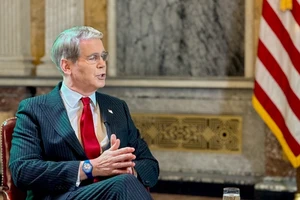
US Treasury Secretary Scott Bessent's advice to stop paying taxes and stockpile fuel drew mixed reactions on Iran International's Instagram page, with commenters debating its practicality and the role of public resistance against the Islamic Republic.
The responses followed Bessent's interview with Iran International, in which he urged Iranians to prepare for severe fuel shortages and forecast a contraction of more than 25 percent in the country's economy in the year ending March 2027.
“My advice to the Iranian people would be: don't pay your taxes because you're not going to get anything back from the government,” Bessent told Iran International's Kambiz Tavana on Monday.
Bessent also urged households to stock up on heating fuel and fill their gasoline tanks, warning that Washington's Operation Economic Outcast would intensify over the next eight weeks.
The interview prompted a discussion among Iranians commenting on Iran International's Instagram post, with responses ranging from support for economic noncooperation to questions about how individuals could implement the recommendations.
Tax boycott prompts questions over implementation
Several commenters pointed out that income taxes are deducted automatically from salaries, leaving employees with little control over whether they pay them.
“We don't voluntarily pay taxes; they take them from us. Other deductions are made too, and whatever salary remains is paid late,” one commenter wrote.
Others noted that taxes are also included in the prices of goods and services, making them difficult to avoid through individual action.
“To avoid paying taxes, we'd have to stop eating because they're built into essentials. We'd starve if we didn't pay. And what fuel are we supposed to store, and how?” another wrote.
Some business owners and other respondents raised concerns about the consequences of withholding taxes, including potential restrictions on bank accounts and payment terminals.
“If you fail to pay taxes, your card terminal and bank accounts can be blocked. A shopkeeper's livelihood depends on them. We know this route; if it worked, we'd have tried it. Why not listen to people about practical solutions?”
Others questioned how much a boycott of individual tax payments would affect the Islamic Republic's finances.
Fuel recommendations draw questions
Bessent's recommendation to stockpile gasoline and heating fuel also generated discussion about household infrastructure, storage capacity and costs.
Several commenters noted that many Iranian homes use piped natural gas for heating and hot water, rather than fuel that can easily be stored.
“Where am I supposed to store fuel? I live in a 74-square-metre apartment with no balcony or storage. There's barely room for me. Even if I had fuel, how would I use it in my gas heating system?”
Another asked how households could prepare for shortages of piped gas or gasoline.
“How exactly should we stockpile fuel? How can we store the piped gas supplied to our homes, or gasoline for our cars?”
Financial considerations were another recurring theme, with some respondents describing difficulties setting aside money for additional supplies.
“A week after my salary arrives, only a small portion remains in my account, and I have to live on that until the end of the month. How am I supposed to stockpile fuel?” one wrote.
Others responded with humor, including suggestions about filling balloons with gas or storing kerosene in apartments.
Some urge collective action against the Islamic Republic
Not all responses focused on the practical challenges. Some supported Bessent's broader message, arguing that Iranians should take an active role in increasing economic pressure on the Islamic Republic.
“People of Iran, we should act too; we cannot expect the US to do everything. Let's start by not paying water, electricity and gas bills, and shopkeepers should withhold taxes.”
The suggestion also prompted questions about possible consequences, including the disconnection of essential services for nonpayment.
Others raised concerns about the wider impact of Washington's pressure campaign, including the possibility of military action and its consequences for civilians.
“Are Iranians supposed to do everything – take to the streets, risk their families and lives – only for the US to bomb Iran, divide its territory and take its oil? Ordinary Iranians would be worse off,” one commenter wrote.
Bessent said the US campaign was intended to pressure Iran's leadership rather than its population, forecasting further economic deterioration and serious fuel shortages this winter.
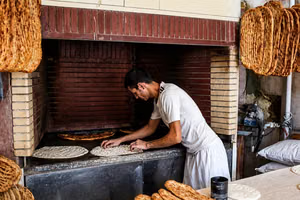
A baker prepares dough for bread at a bakery in Iran.
Flour shortages have forced bakeries to close in several Iranian cities and pushed up bread prices, with residents and bakers reporting disrupted supplies, falling purchasing power and growing uncertainty over their businesses.
Residents in Tabriz, Karaj, Kerman and Hamedan told Iran International that interruptions and delays in flour deliveries had disrupted independent bakeries and producers of various types of bread.
Several bakeries on a street in Tabriz have shut down, a resident said.
“I asked why, and they told me they weren't receiving flour. They keep promising that the flour quotas will be replenished today or tomorrow, but nothing happens.”
Previous reports have also documented flour shortages and bakery closures, with residents describing bread shortages and interruptions to production caused by electricity outages.
Flour supply disruptions shut bakeries and sandwich shops
Independent bakers have reported that difficulties obtaining flour have forced businesses to suspend operations.
A citizen of Hamedan in western Iran said flour shortages and rising prices had affected not only bakeries producing specialty bread but also sandwich shops.
Flour prices have risen, and suppliers are now saying there is no flour available at all, the resident said.
“Our bakery is closed because we have no flour, and nobody is taking responsibility,” a independent baker told Iran International.
The shortages have coincided with declining purchasing power, leaving bakeries struggling to secure supplies as customers struggle to afford bread.
“They don't have flour to give us, and I swear to God, people don't have money to buy bread either. Our economic situation has become critical,” another baker said.
Iran's flour distribution system distinguishes between subsidized bakeries and independent bakeries, which face different purchasing prices and supply arrangements.
Flour allocations to certain independent bakeries had been reduced, Bagher Khodadadi, head of supervision and inspection at the Khorasan Razavi provincial agriculture department, confirmed on October 21.
Khodadadi said the shortages in flour distribution had been addressed.
Bakeries reducing their operating hours because of flour shortages would be committing a violation and could face enforcement measures, he added.
Rising prices disrupt food retailers
The flour supply problems have also affected food retailers that depend on bakeries for their products, according to messages.
Two bakeries supplying bread to a supermarket in Kerman said they no longer had enough flour to continue production, the store's owner said.
“Two of the bakers who supply me called and said there was no flour left and they couldn't bake and deliver bread tomorrow. A famine has officially begun.”
A resident of Karaj also described a sharp increase in bread prices.
“I bought two baguettes and they cost 800,000 rials. The price of flour has also tripled.”
Iran International previously reported on October 8 that residents had described unannounced increases in bread prices and flour shortages in several areas.
Bread prices in Tehran province had risen by as much as 100% for certain varieties by June 23.
The increases have added to the financial pressure on households already struggling with declining purchasing power.
Uncertainty over flour quotas and pricing
The disruption has raised further questions about how flour quotas are allocated and priced for independent bakeries and producers of larger and semi-industrial bread varieties.
Flour allocations to these businesses were suspended about two weeks ago, according to another message received by Iran International.
The sender said suppliers had attributed the suspension to the government's failure to announce new flour prices, leaving bakeries uncertain about when deliveries would resume.
The resident also said certain flour mills were selling supplies on the black market without issuing invoices specifying prices.
Comments by provincial grain officials about flour allocations have added to questions over the distribution system and the availability of supplies.
Israeli Prime Minister Benjamin Netanyahu speaks at the State Memorial Ceremony for the three year anniversary of the October 7, 2023, Hamas attack, in remembrance of Israel Defense Forces and security members who fell in the War of Redemption in the Mt. Herzl Cemetery, Jerusalem, on Monday, October 5, 2026.
Iranians are looking to Israel's election as a potential turning point in their country's future, with supporters of Benjamin Netanyahu hoping his victory will bring renewed pressure on the Islamic Republic.
“I wish we, the people of Iran, could vote too,” one Persian-speaking Instagram user wrote beneath a post about Netanyahu.
“I've pledged a thousand salawat and 12 candles for Bibi to win,” another wrote, referring to the Israeli leader by his widely used nickname and to a religious practice involving blessings.
The comments are among hundreds of Persian-language reactions to Netanyahu and Israel's October 27 election, reflecting hopes that the vote could help advance efforts against the Islamic Republic.
The comments, however, are not a representative measure of Iranian public opinion, and Persian-language posts alone do not establish whether their authors live inside Iran or abroad.
For Netanyahu's Iranian supporters, his continued leadership offers the prospect of finishing what they consider unfinished efforts to bring down Iran's ruling establishment.
From nuclear warnings to calls for political change
Netanyahu, born in Tel Aviv on October 21, 1949, grew up in an academic family and spent part of his adolescence in the United States.
After serving in an Israeli military special forces unit, he studied at the Massachusetts Institute of Technology before entering politics. He first became prime minister in 1996, aged 46.
The leader of the right-wing Likud party is Israel's longest-serving prime minister, and confronting the Islamic Republic has been a central feature of his political career.
In September 2012, Netanyahu displayed a cartoon drawing of a bomb at the United Nations, drawing a red line across it to warn about Iran's nuclear program.
The confrontation later extended beyond nuclear warnings.
During the 12-day war in June 2025, Israel struck Iranian military and nuclear facilities. Netanyahu told Iranians that the military campaign could pave the way for them to achieve freedom from the Islamic Republic.
Joint Israeli-US strikes on February 28, 2026, which killed Iran's former Supreme Leader Ali Khamenei, marked another stage in the confrontation.
Netanyahu’s military actions against the Islamic Republic and his calls for political change in Iran have earned him support among some opponents of the country’s ruling establishment.
Iran has also emerged as a major issue in Israel's election campaign, with Netanyahu's political rivals advocating tougher action against the Islamic Republic and criticizing his failure to eliminate the threat they say it poses.
Netanyahu speaks directly to Iranians
Netanyahu has repeatedly addressed Iranians directly through video messages and Persian-language social media posts, urging them to seek political change and an end to Islamic Republic rule.
During Iran's water crisis in August 2025, Netanyahu promoted Israeli water technology and promised to send Israeli experts to help tackle the country's water shortages following a change of government.
That outreach has continued during the final days of his election campaign.
“The people of Iran deserve to live in freedom, security and dignity,” Netanyahu wrote in a Persian-language Instagram post on Thursday, October 22, five days before Israel's election.
The message came as Netanyahu faced significant political competition at home, even as Persian-speaking users expressed enthusiasm for his continued leadership.
His messages have resonated with some opponents of the Islamic Republic who hope Israeli pressure will contribute to political change in Iran.
How Bibi became Bibi Joon
Netanyahu's familiar nickname, Bibi, has taken on new forms among Persian-speaking admirers.
They call him Bibi Joon, adding a Persian term of affection, or Bibi Gol, a reference to a popular song by Iranian singer Moein.
The phenomenon has also attracted Netanyahu's attention.
Netanyahu himself referred to the nickname during a CBS News interview in May 2026, saying Iranians called him “Bibi-joon,” meaning beloved Bibi.
Netanyahu's standing among Iranians
More than half of respondents inside Iran, 50.6%, held favorable views of Netanyahu, compared with 38.1% who viewed him unfavorably, according to a survey conducted from June 20 to 27, 2026, by the Netherlands-based research group GAMAAN.
The online survey involved more than 31,000 participants and used statistical weighting to produce its findings.
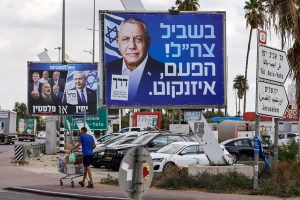
In Israel, 47% of respondents preferred former military chief Gadi Eisenkot as prime minister, compared with 37% who backed Netanyahu, according to a Madad poll published on October 23.
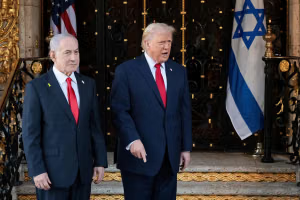
Netanyahu has also received the backing of US President Donald Trump, who urged Israelis to re-elect him to continue their joint campaign against the Islamic Republic.
“Vote for Bibi Netanyahu for Prime Minister, we have to finish the job that we started!” Trump wrote on Truth Social on Sunday.
Persian-language reactions to Israel's election go beyond support for Netanyahu's re-election, expressing hopes that he will resume military action against the Islamic Republic.
“Why don't you finish the job before the vote?” another asked.