• العربية
  • فارسی
BrandBrand
  • Iran Insight
  • Politics
  • Economy
  • Analysis
  • Special Report
  • Opinion
  • Podcast
  • Live TV
  • Iran Insight
  • Politics
  • Economy
  • Analysis
  • Special Report
  • Opinion
  • Podcast
  • Live TV
  • Theme
  • Language
    • العربية
    • فارسی
  • Iran Insight
  • Politics
  • Economy
  • Analysis
  • Special Report
  • Opinion
  • Podcast
  • Live TV
All rights reserved for Volant Media UK Limited
volant media logo
INSIGHT

Tehran plans for $130 oil it struggles to sell

Behrouz Turani
Behrouz Turani

Iran International

Oct 28, 2026, 02:00 GMT+0
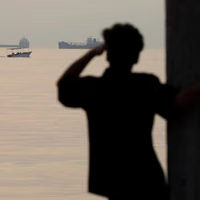
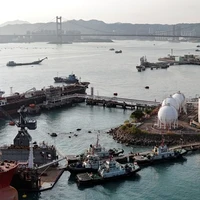
A man looks out at ships off the coast of Bandar Abbas, near the Strait of Hormuz, October 24, 2026

Iran’s budget planners are considering oil at $130 per barrel for the next Iranian year even as the conflict driving global prices higher has severely restricted Tehran’s ability to export crude.

The scenario, reported by the IRGC-linked Fars News Agency, would put the assumed price at more than twice the $55 used in the previous budget and highlights an increasingly difficult calculation for Tehran.

Plan and Budget Organization chief Hamid Pourmohammadi said Sunday that Iran’s Economic Council had approved the directive for drafting the budget for the year 1406, which begins in March 2027, and that the bill would be submitted to parliament within a month.

He did not disclose the baseline oil price the government intends to use. Fars reported separately that the PBO was considering a scenario based on oil reaching $130 per barrel.

An agreement with Washington could ease restrictions on Iranian exports but push global oil prices lower. Continued conflict could keep prices elevated while making Iranian oil even harder to sell.

A $130 scenario

Global oil prices have risen sharply since the war involving Iran, the United States and Israel and the regional conflicts that followed, climbing from around $70 to roughly $117 per barrel.

Some Iranian oil-market commentators say prices could reach $130 if the conflict continues and Tehran and Washington fail to reach an agreement.

But Iranian budgets have traditionally used more conservative oil-price assumptions to reduce the risk of revenues falling short.

Tehran’s Haft-e Sobh newspaper described the $130 figure as a “shock,” while the economic news website Faraz Energy also reported that it was under consideration.

Iran’s ability to sell crude has been severely constrained by the US naval blockade and sanctions. The higher global price therefore does not necessarily translate into higher revenues for Tehran.

Disputed export figures

Iranian officials insist that oil continues to leave the country despite US efforts to stop exports.

Mohsen Zanganeh, a member of parliament’s Planning and Budget Committee, said Iran earned more than $11.5 billion from oil during the first four months of the year and achieved 85% of its projected oil revenue.

He also claimed that Iran continued to export at least 600,000 barrels of crude per day despite the blockade and sanctions.

The US military’s Central Command presents a sharply different picture, saying its blockade of Iranian ports has prevented at least $25 billion in crude exports and that no goods other than humanitarian supplies have moved by sea.

The competing claims from parties to the conflict have not been independently verified.

Iran’s oil infrastructure has also suffered serious damage during the war, while the government has resorted to rationing and other austerity measures to curb domestic energy consumption.

Risk of a shortfall

Hossein Selahvarzi, a former head of Iran’s Chamber of Commerce, warned in comments published by the economic daily Donya-ye Eghtesad that the greatest danger would be to prepare the 1406 budget as though Iran were facing a normal year.

Such an approach, he argued, could combine optimistic revenue forecasts with existing spending commitments, producing a deficit that would fuel inflation and discourage investment.

The uncertainty surrounding both prices and export volumes makes the eventual assumptions particularly important.

If $130 becomes the government’s baseline rather than merely one scenario, and either prices or export volumes fall short, Tehran would have to find other ways to close the revenue gap.

Those could include borrowing from the National Development Fund, selling government bonds or relying indirectly on financing from the Central Bank—measures that could add to inflationary pressure and further weaken the rial.

The government has yet to disclose which oil price or export volume it will ultimately use. But the $130 scenario illustrates the unusual calculation facing Tehran: the conflict that has made oil more valuable has also made Iran’s considerably harder to sell.

Most Viewed

Bessent says Iran economy will contract by more than 25%
1
EXCLUSIVE

Bessent says Iran economy will contract by more than 25%

2
INSIGHT

'Iraq-first' message from Iran ally sparks calls for retaliation

3

Oil price surge fuels Iran hardliners’ case against US deal

4

Mecca defense pact members hold talks with Iran

5
ANALYSIS

Iran talks with Mecca pact states may be ‘last chance’ before military action

Banner
Banner
Banner
Banner
Banner

Spotlight

  • Tehran plans for $130 oil it struggles to sell
    INSIGHT

    Tehran plans for $130 oil it struggles to sell

  • Tehran summit divides Iranian hardliners over Yemen and US talks

    Tehran summit divides Iranian hardliners over Yemen and US talks

  • Iran’s neighbors push diplomacy, prepare for its failure
    ANALYSIS

    Iran’s neighbors push diplomacy, prepare for its failure

  • Three members of Iranian family die within months after protest killing

    Three members of Iranian family die within months after protest killing

  • Iran talks with Mecca pact states may be ‘last chance’ before military action
    ANALYSIS

    Iran talks with Mecca pact states may be ‘last chance’ before military action

  • 'Iraq-first' message from Iran ally sparks calls for retaliation
    INSIGHT

    'Iraq-first' message from Iran ally sparks calls for retaliation

  • Oil price surge fuels Iran hardliners’ case against US deal

    Oil price surge fuels Iran hardliners’ case against US deal

•
•
•

More Stories

Tehran summit divides Iranian hardliners over Yemen and US talks

Oct 27, 2026, 22:56 GMT+0
•
Maryam Sinaiee
100%
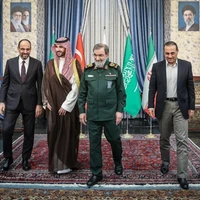
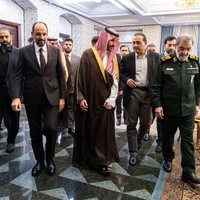
Turkish intelligence chief Ibrahim Kalin, Saudi Defense Minister Prince Khalid bin Salman, Iran’s Supreme National Security Council Secretary Mohsen Rezaei, and Pakistan’s Chief of Defense Forces Field Marshal Asim Munir pose for a photograph during a meeting in Tehran, Iran, October 26, 2026. IRNA

A visit to Tehran by senior Saudi, Turkish and Pakistani officials has exposed divisions among Iranian commentators, with some hailing it as recognition of Iran's influence and others warning that the visitors may be seeking concessions over Yemen and in talks with Washington.

The four-way meeting ended with a cautious statement committing the participants to continued dialogue on regional peace and security, without announcing specific agreements on the war involving Iran, the United States and Israel, the Strait of Hormuz or Iran's nuclear program.

Reuters reported, citing a Pakistani official, that Pakistan's army chief, Asim Munir, had presented Tehran with a proposal to end hostilities that had the approval of US President Donald Trump.

According to the official cited by Reuters, Pakistan, Turkey, Saudi Arabia and Qatar would act as guarantors if Iran accepted the proposal.

The prospect of regional powers helping broker an agreement has raised a question among Iranian commentators: whether the visitors came to offer Tehran a way out of the confrontation or to press it into concessions.

Recognition or pressure?

The state-run Iran newspaper chose the headline "Without Iran, Never" for its Tuesday report on the meeting, arguing that the presence of senior officials from three major regional powers demonstrated that no regional security order could be established without Tehran.

Abdollah Ganji, a hardline commentator and former editor of the IRGC-affiliated Javan newspaper, went further, describing Iran as the center of an emerging regional security arrangement.

"Iran is the axis of security creation in West Asia," he wrote on X, adding that a new "anti-Zionist bloc" was taking shape.

Former Foreign Minister Mohammad Javad Zarif proposed a broader West Asian security network based on non-aggression, confidence-building and shared prosperity.

"Regional security cannot be imported; it must be built together by the people of this region," he wrote.

But many hardliners were considerably less enthusiastic.

"It is far too early to judge the results of this meeting, but it does not seem that trust has replaced mistrust or cooperation has replaced competition," hardline commentator Mostafa Najafi wrote on X.

"In today's Middle East, meetings are more about managing crises and tensions, or avoiding their consequences, than resolving them."

Heshmatollah Falahatpisheh, a former chairman of parliament's National Security and Foreign Policy Committee, argued that Yemen remained a more immediate concern for the visiting countries than Iran's confrontation with Washington.

"As long as the Yemen issue remains unresolved, the Iran issue will not be put on the agenda," he told Khabar Online.

Yemen at the heart of the mistrust

The Houthis' attacks on Saudi Arabia and regional shipping have made Yemen a major security concern for Riyadh. But Tehran's relationship with the group is also regarded by hardliners as an important source of Iranian influence.

Hossein Shariatmadari, managing editor of the hardline Kayhan newspaper, questioned the purpose of the meeting in a commentary titled "Tehran Summit: Water or Mirage?"

He warned that cooperation with countries involved in the Mecca defense pact could lead to pressure on Iran to distance itself from the Houthis, insisting that Tehran would not abandon the group.

Hardline lawmaker Mahmoud Nabavian portrayed Saudi Arabia's difficulties in confronting the Houthis as a reason for Riyadh's participation in the talks.

"Let the Saudis know that as long as the unjust blockade against the oppressed people of Yemen continues, Ansar Allah's attacks will continue, and assistance from other countries will be of no benefit to them," he wrote on X, using the Houthis' official name.

Hardline journalist Fereshteh Sadeghi was equally suspicious, interpreting the visit as an attempt to warn Tehran over Yemen.

"Iran would have to be foolish to accept their words and warnings," she wrote, arguing that the Houthis would continue acting independently even if Tehran came under pressure.

The disagreement illustrates a central obstacle to regional diplomacy: measures Saudi Arabia might seek to protect itself from Houthi attacks could be viewed by Iranian hardliners as concessions that undermine Tehran's regional influence.

Can regional powers guarantee a deal?

Beyond Yemen, the meeting has also prompted debate over whether Saudi Arabia, Turkey, Pakistan and Qatar could help provide assurances against another US or Israeli attack on Iran.

Tehran has sought guarantees that any agreement with Washington would prevent renewed hostilities, an issue that has become central to discussions about reviving diplomacy.

Maryam Salari, diplomatic editor of the state-run Iran newspaper, argued that the possibility of regional guarantees showed that the principal issue was no longer simply what Iran might concede over its nuclear program.

"The question is not whether Iran should make concessions on the nuclear issue now," she wrote. "It is what guarantee there is that war will not break out again if it makes concessions."

She suggested that the visiting officials had come to Tehran to address that concern.

Reformist journalist Farid Modarresi also saw an opportunity for diplomacy, arguing that Saudi Arabia and Turkey could bring greater regional influence to mediation efforts previously led by Pakistan and Qatar.

But the contrasting reactions among Iranian hardliners show how difficult that effort could prove.

For some Iranian hardliners, the visit signals recognition of Tehran's regional influence. For others, it raises the prospect of being asked to surrender some of that influence in exchange for peace.

Iran, Russia eye joint oil and gas projects amid US blockade

Oct 27, 2026, 18:18 GMT+0
100%
Russian President Vladimir Putin shakes hands with Iranian President Masoud Pezeshkian during the official welcoming ceremony at the Summit of Heads of State and Government of the Gas Exporting Countries Forum (GECF) in Moscow, Russia, October 27, 2026.

Russian President Vladimir Putin and Iranian President Masoud Pezeshkian discussed joint oil and gas projects in Moscow on Tuesday, as Tehran seeks closer economic ties with Russia while its energy exports remain squeezed by a US naval blockade.

The two leaders discussed expanding political, economic, trade and energy cooperation, including joint projects in the oil and gas sectors, according to a readout from the Iranian government.

Pezeshkian also called for greater cooperation on natural gas exports, saying Iran produces around 280 billion cubic meters of gas annually, ranking behind only the United States and Russia.

He said global developments required greater technical and engineering cooperation and “strategic governance” of international energy markets.

The meeting took place on the sidelines of the Gas Exporting Countries Forum summit, which brought together some of the world's largest gas producers.

Putin also met Qatar's Emir Sheikh Tamim bin Hamad Al Thani on Tuesday and said Russia was ready to do everything within its power to help resolve the “complicated situation” in the Middle East.

The Qatari emir told Putin that the region was going through “difficult circumstances” because of tensions between the United States and Iran.

Moscow offers mediation

Russia has sought a role in efforts to end the US-Iran conflict, repeatedly offering to mediate between Washington and Tehran as regional governments push for renewed negotiations.

Putin has previously told US officials that he believes there remains room for diplomacy with Iran, while Moscow has also offered to help resolve one of the central nuclear disputes by taking Iranian highly enriched uranium out of the country.

Iran faces mounting economic pressure from the US blockade and sanctions, which have sharply curtailed its oil exports.

Russia has provided Iran with diplomatic backing, condemning US and Israeli military action and opposing efforts to increase pressure on Tehran at international bodies.

Moscow and Tehran signed a comprehensive strategic partnership treaty in 2025, although cooperation on major energy projects has remained more limited as the two countries are themselves major oil and gas producers.

Iran could lose 1.4 million jobs this year, official warns

Oct 27, 2026, 12:04 GMT+0
100%
Two men sit beside a fountain in an Iranian park.

Iran could lose up to 1.4 million jobs this year if its economy contracts by seven to eight percent, a senior Labor Ministry official said on Tuesday, estimating that around 2.5 million people are already unemployed.

Malek Hosseini, deputy minister for entrepreneurship and employment development, said Iran's economy contracted by 10 percent excluding oil and 4.6 percent including oil in the spring, citing official figures in an interview with labor-focused ILNA news agency.

According to two decades of Labor Ministry research, every one-percentage-point decline in economic growth corresponds to an average loss of 170,000 jobs, Hosseini said.

“If negative growth of seven to eight percent is recorded by the end of the year, around 1.2 million to 1.4 million people will have completely left the labor market” over the course of the year, he said.

The warning follows remarks by Ali Babaei Karnami, head of parliament's Social Affairs Committee, who said on October 23 that more than 1.7 million Iranian workers had lost their jobs since the start of the 12-day war.

Economist Ahmad Alavi told Iran International on October 18 that poverty, unemployment and declining purchasing power had existed before the war but had since worsened, attributing the country's economic difficulties to the Islamic Republic's policies.

More than one million leave insurance rolls

Around 1.15 million people were removed from Iran's compulsory social insurance rolls between March and August, although further analysis is needed to distinguish retirements, disabilities and new registrations, Hosseini said.

Another 300,000 people joined the unemployment benefits system by the end of August.

Iran's formal labor market recorded a net loss of approximately 500,000 workers during the Iranian year ending March 2026, according to Hosseini.

The official estimated that informal employment accounts for 54 percent of Iran's workforce, compared with 46 percent in formal employment.

“Our labor market suffers from chronic and structural problems,” Hosseini said, adding that the balance had shifted further toward informal and underemployed work since the war.

Government proposes jobs without insurance coverage

The Labor Ministry is developing a public employment program for unemployed people and informal workers affected by the economic crisis, offering short-term construction and service-sector work.

“There is absolutely no social security insurance under the public employment program,” Hosseini said.

Participants will also fall outside the protections of Iran's labor law, although existing employers and workers in registered businesses will remain subject to those regulations.

Hosseini said the ministry was working with the Central Bank to identify informal workers through banking transactions, distinguishing wage income from investment returns.

The official also warned that if raw materials are not adequately supplied, Iran's garment production and distribution chain could suffer losses equivalent to about 60 percent of its pre-war workforce, potentially affecting up to 750,000 jobs.

Workers, retirees and employees across Iran have repeatedly staged protests in recent months over low wages, unpaid salaries, rising living costs, dismissals and job insecurity.

'Iraq-first' message from Iran ally sparks calls for retaliation

Oct 27, 2026, 02:00 GMT+0
•
Maryam Sinaiee
100%
Ammar al-Hakim (center), leader of Iraq’s National Wisdom Movement, during a visit to Tehran in September 2025

Ammar al-Hakim’s warning that Baghdad must protect Iraq from US sanctions despite its solidarity with Iran has sparked a sharp backlash on Persian-language social media, with some hardliners calling for retaliation against Iraq.

An excerpt from an interview al-Hakim gave to Iraqiya TV on September 29 has gone viral in recent days.

Al-Hakim, head of Iraq’s National Wisdom Movement and a former head of the Supreme Islamic Council of Iraq, said Washington had explicitly warned Baghdad to comply with US sanctions against Iran or risk sanctions itself.

He said Iran was justified in feeling it had been treated unfairly under what he described as a US siege, but argued that countries could not be governed by emotions and aspirations alone.

Iraq, he said, stood in solidarity with the Iranian people while also having a responsibility to shield its own population from the consequences of sanctions.

‘Honour vs dishonour’

Hardline Iranian social media users accused al-Hakim of betraying Iran and showing ingratitude for its support, with some calling for retaliatory measures against Iraq.

Ehsan Salehi, an adviser to former Iranian President Ebrahim Raisi, accused al-Hakim on X of bowing to Washington, justifying that stance and moving closer to Arab Gulf rulers.

Hardline commentator Alireza Taghavinia interpreted al-Hakim’s comments as an admission that Iraq had little choice but to comply with Washington.

“When Ammar al-Hakim, a Shiite whose position he owes to Iran, says this, what can we expect from [Pakistan’s Prime Minister] Shehbaz Sharif?” he wrote.

Filmmaker Ali Zarnegar wrote: “This is precisely the line between honor and dishonor, and unfortunately, you chose to be dishonorable.”

Another user sarcastically called for Iran to prevent Iraqi oil from passing through the Strait of Hormuz.

“Our feelings are with Iraq, too, but what can we do? We have to attack tankers associated with them,” the user wrote. “Since they are so afraid that America will freeze their oil money, we will make things easier for them and prevent even a drop of their oil from being exported through the Strait of Hormuz.”

National interest first

Other users defended al-Hakim, arguing that his remarks reflected the Iraqi government's responsibility to protect its national interests and criticizing Iran’s leaders for putting ideology ahead of Iran's own welfare.

Mohsen Salehikhah, a journalist and documentary filmmaker associated with reformists, praised the Iraqi politician.

“Ammar al-Hakim said something absolutely right,” he wrote. “If the Islamic Republic also understood that it should prioritize Iran’s interests rather than sacrifice our national interests at the altar of ideological delusions and aspirations, perhaps the situation would be different today.”

Another user pointed out that al-Hakim leads one of the Iraqi political movements closest to Iran, suggesting that other Iraqi groups could hardly be expected to put Iranian interests first.

“Some people spent years selling the public the illusion that sanctions did not matter because we could maintain relations with our neighbors instead of America,” the user wrote. “Well, this is our closest neighbor.”

‘Teach others a lesson’

The backlash comes amid a separate dispute over Iraq’s closure of the al-Shaib/Chazabeh border crossing with Iran.

An adviser to Iraqi Prime Minister Ali Faleh al-Zaidi has said the crossing was closed to prevent the smuggling of narcotics and counterfeit money from Iran, while Iran’s Interior Ministry complained that Baghdad had not informed Tehran in advance.

The closure has prompted calls from some Iranian hardliners for retaliation against Iraq.

Iranian businessman Babak Zanjani called for greater restrictions on Iraq’s access through the Strait of Hormuz, saying Baghdad should be made to understand “the real meaning of a blockade and its consequences.”

He went further, arguing that Iraq should be brought closer to collapse over what he described as a strategic mistake “so that others learn a lesson.”

Bessent says Iran economy will contract by more than 25%

Oct 26, 2026, 17:49 GMT+0
100%
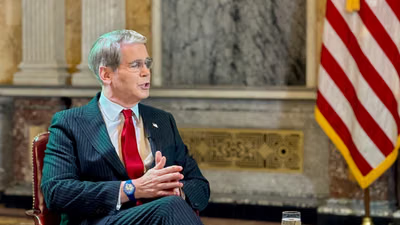
US Treasury Secretary Scott Bessent speaks during an interview with Iran International's Kambiz Tavana in Washington DC on Oct. 26, 2026.

US Treasury Secretary Scott Bessent, in an interview with Iran International, warned Iranians to stock up on gasoline and heating fuel ahead of expected shortages, predicting the economy would shrink by more than a quarter in the year ending March 2027.

Bessent said Iran was running short of foreign currency, oil production was beginning to falter and the next eight weeks of Washington's Operation Economic Outcast would be “even more intense.”

“I would predict that from March of '26 until March of '27, the economy would contract more than 25 percent, which is more than the Soviet Union contracted after its collapse,” Bessent told Iran International’s Kambiz Tavana on Monday.

The Treasury secretary said the campaign was intended to pressure Iran's leadership rather than its population, while warning of severe fuel shortages this winter.

“My advice to the Iranian people would be: don't pay your taxes because you're not going to get anything back from the government,” Bessent said.

“You should start stocking up on heating fuel. There's going to be a big heating fuel shortage. In terms of gasoline, everyone should fill up their tanks now.”

Asked about the impact on ordinary Iranians, Bessent said humanitarian channels remained open for food and medicine, but the government was running out of dollars to pay for imports.

He also said authorities were printing money, failing to pay salaries and would continue cutting social benefits.

Bessent said economic pressure was exposing disagreements among Iranian politicians, the Revolutionary Guards and the supreme leader. He described some IRGC commanders as isolated from the public and unaware of the extent of the economic deterioration.

‘More intense’ pressure ahead

Iran's economy has come under mounting pressure from two rounds of war with the United States and Israel, a US naval blockade that has sharply curtailed its oil exports and an expanding sanctions campaign targeting its remaining sources of foreign currency.

“Iran, for the first time, probably since oil was discovered, has no oil on the water,” Bessent said. “There have been no loadings at Kharg Island. Production is starting to falter.”

“We've been going for eight weeks, and I can tell you the next eight weeks is going to get even more intense,” he said.

Bessent said Washington remained prepared to negotiate, but insisted Iran could not have a nuclear weapon and must stop financing regional armed groups.

Diplomatic efforts have intensified in recent days, with Qatari mediators in Tehran on Sunday followed on Monday by senior officials from Saudi Arabia, Pakistan and Turkey seeking to de-escalate tensions and revive negotiations.

100%
US Treasury Secretary Scott Bessent (left) and Iran International's Kambiz Tavana during an interview in Washington DC on Oct. 26, 2026.

Tehran, however, has shown little sign of softening its core demands under mounting economic pressure. Iranian officials insist Washington must meet its conditions, including lifting the naval blockade.

Targeting Iran's middlemen

Bessent also appealed directly to people involved in moving Iranian government money overseas, saying some financial intermediaries were already refusing to return funds to Tehran.

Iranian officials commonly refer to such intermediaries as “trustees,” who handle oil revenues and other transactions outside the formal banking system to circumvent sanctions.

“We are seeing the regime go bankrupt,” Bessent said. “So many of the people who are holding money outside of Iran do not want to send it back in.”

He said Iranians inside the country, members of the diaspora and employees of embassies and consulates could provide information to Treasury under its whistleblower program, with rewards of up to 30% of recovered funds.

“We are happy to unsanction individuals who work with us,” he said, adding that cooperating intermediaries could potentially claim 30% of funds they were holding for Tehran.

Bessent said Treasury was also tracking Iran's attempts to move money through cryptocurrency and foreign banks.

“There are numerous banks… We shut the Dubai branches of an Egyptian bank. We closed a Turkish bank, the second-largest Russian bank, VTB. We discovered that their external branches outside of Russia were aiding the regime,” he said.

‘Nothing like this’

Bessent rejected suggestions that Iran could wait for the US midterm elections in the hope that Washington's approach would change.

“Nothing will change in terms of President Trump's calculus, in terms of how resolute we are here at Treasury, in terms of the blockade,” he said.

Asked whether the combination of sanctions and a naval blockade had any historical precedent, Bessent said the closest comparison was Washington's campaign against Venezuela, but argued that the measures imposed on Iran went substantially further.

“There's been nothing like this,” he said.

100%
US Treasury Secretary Scott Bessent (left) and Iran International's Kambiz Tavana during an interview in Washington DC on Oct. 26, 2026.