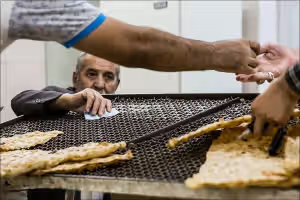
A baker prepares traditional flatbread Barbari at a bakery in Iran.
Bread prices across Tehran province have risen by as much as 100%, pushing the cost of one of the most important staple foods sharply higher and raising fresh concerns over government plans to overhaul the country's subsidy system.
Residents arriving at bakeries on Tuesday found new official prices in effect following an order issued by Tehran provincial authorities and announced by the Iran Chamber of Guilds' flour and bread working group. Under the new rates, lavash flatbread now costs 27,000 rials (2 cents), yeast-leavened barbari 100,000 rials (6 cents) and sangak 155,000 rials (10 cents).
The average monthly wage in Iran is estimated at around $150. A family relying solely on bread for its food consumption would spend roughly $8-$17 per month, depending on the type of bread purchased.
The increase came only two days after Agriculture Minister Gholamreza Nouri Ghezeljeh said bread price rises were not under consideration and that the government was pursuing plans to transfer subsidies from bakeries to households through an expanded electronic voucher system.
The latest hike continues a trend that began during the presidency of the late Ebrahim Raisi and has accelerated under President Masoud Pezeshkian. Compared with less than a year ago, official price schedules show sangak prices have risen by 104%, barbari by 85% and lavash by 93%.
Freshly baked Sangak bread is displayed at a bakery in Iran
Before September 2024, when the US dollar traded at around 600,000 rials on the free market, Lavash cost 5,000 rials ($0.008), while Barbari sold for 18,000 rials (3 cents) and Sangak for 30,000 rials (5 cents).
The increase follows similar price rises elsewhere in the country. Bread prices in West Azarbaijan province rose by 70% to 100% last month, while prices in Mashhad increased by an average of 49% in mid-June. Reports from other provinces have also pointed to either higher bread prices or reductions in dough weights, a practice some consumers and analysts describe as hidden inflation.
Card-based bread system
The latest increase comes as authorities continue to rely on the Nanino digital monitoring platform, introduced in 2022 to distribute subsidized flour based on bakery sales.
Many bakers say technical problems and disputed calculations have reduced their flour allocations. Although authorities insist there are no limits on bread purchases, consumers in many areas report restrictions as bakeries attempt to stretch subsidized flour supplies.
Subsidy cuts spark concern
The Pezeshkian administration has steadily reduced support for wheat and flour subsidies since taking office and is examining plans to integrate bread subsidies into the electronic voucher program, a move that could effectively end the current subsidy structure.
The proposal has generated concern even among media outlets generally supportive of state policies. News website Khabar Online warned that public tolerance for rising prices was wearing thin and that additional pressure linked to a staple as widely consumed as bread could provoke a strong public reaction.
"Public tolerance for price increases has reached its limit, and society may face severe tension and shock from any new pressure, particularly over a product such as bread that is consumed extensively across cities, villages and lower-income households," the outlet wrote.
Freshly baked lavash bread is displayed at a bakery in Iran.
Bakery owners say they face growing costs for labor, utilities and raw materials while operating under regulated prices and delayed subsidy payments. Economists and labor activists warn that repeated increases in bread prices disproportionately affect low-income families because bread remains a key component of household consumption.
The price rise comes as inflation remains elevated. According to Iran's Statistical Center, consumer prices in May were 83.9% higher than a year earlier, while annual inflation reached 57.7%.
As the government moves ahead with subsidy reforms, the price of bread is increasingly becoming a measure of the economic strain facing millions of families across the country.