Iran imports at least $2 billion in military supplies despite US blockade - Reuters
Women carry models of Iranian missiles during a public procession in Iran.
Iran has used a secret network of more than 5,000 military agencies to import at least $2 billion worth of equipment, explosives and heavy-duty trucks since January 2025, bypassing Western sanctions and the US naval blockade, a Reuters investigation published on Thursday found.
One agency alone, identified as MOD 346428, imported $2.3 billion in military-related goods between January 2025 and June 2026, according to shipping records examined by Reuters.
The shipments included rocket fuel ingredients, explosives, aircraft parts, industrial machinery and hundreds of heavy-duty trucks that could be adapted for military use, with goods recorded as originating in China, Russia, Germany and other countries.
The findings provide details of how Iran has continued to obtain materials used in missile and drone production during the US-Israeli war, which began in February, despite attacks on its weapons production facilities.
Thousands of agencies linked to defense ministry
Reuters identified more than 5,000 agencies whose names begin with MOD, referring to Iran's Ministry of Defense, and which share the Tehran address of the Ministry of Defense and Armed Forces Logistics.
Although their registration records list February 11, 1979, as their founding date, most were established in 2013, when Iran was facing severe economic sanctions, the investigation found.
Reuters and Israeli-American risk consultancy 240 Analytics traced the agencies through Iranian banking records, corporate filings and shipping documents, including around 19,000 import records.
Some entities were linked to the Islamic Revolutionary Guard Corps (IRGC) and large Iranian foundations known as bonyads.
The agencies use intermediaries and overseas companies to purchase goods with proceeds from oil sales that bypass sanctions, according to the investigation.
In 97% of the shipments reviewed, transactions were recorded as settled "without currency transfer," allowing purchases to be made using funds held outside Iran.
Banking records also showed that 36 agencies held about $1.2 billion in foreign currency deposits at the end of 2024, while the wider network held around $1.8 billion in local currency, Reuters reported.
The news agency said it found no evidence that the numbered agencies identified in the documents had been individually sanctioned by Western governments.
A satellite image taken on February 8, 2025, shows a customs yard containing Iveco trucks imported by Irans military, in Tehran, Iran. The yard matches the location of a video posted the same day and verified by Reuters showing the trucks. Janes, the UK-based open-source defence intelligence company, confirmed the make of the trucks seen in the social media video.
Missile materials and hundreds of trucks imported
The investigation found that Iran continued importing materials that could be used in missiles and drones after the war began on February 28.
In the first six months of 2026, deliveries included detonators, explosives, aircraft engine components and rocket fuel ingredients.
In February, shortly before the war, Iran imported 93 metric tons of Chinese titanium and hundreds of tons of chemicals that could be used in rocket propellants and explosives, according to customs records.
Between January 2025 and June 2026, MOD 346428 also imported 435 Iveco trucks, some of which matched models used as disguised mobile missile launchers, Reuters reported.
The same agency imported thousands of Toyota Hilux and Land Cruiser vehicles, as well as Toyota Tundra trucks, models that Iranian forces have used for military purposes.
The investigation also traced imports of chemicals to the port of Bandar Abbas, where an explosion in April 2025 killed at least 70 people and injured more than 1,200.
Reuters said it could not determine whether chemicals in one of the shipments it identified were responsible for the explosion.
A combination image shows a projectile reaching an imported Iveco truck (left) and explosion after imported Iveco truck was hit by a projectile at a location given as Iran during what US Central Command (CENTCOM) says are strikes targeting Iranian mobile missile-launch capabilities, in this screengrab taken from a handout video released on March 5, 2026. U.S. Central CommandHandout via REUTERS
It also could not establish that all imported goods were intended for weapons production, noting that many materials and machines have both civilian and military uses.
Imports continued during war and blockade
The materials entered Iran through several routes, including cargo vessels crossing the Caspian Sea from Russia, trucks traveling from Central Asia and freight aircraft arriving from China, Reuters reported.
Monthly imports by the identified military agency fell by 47% to $54 million in March, shortly after the war began, but recovered to $77 million by May.
The investigation identified five shipments of Russian detonators worth $7.6 million since January 2025, including a $1.9 million delivery in June 2026.
An Iveco truck is parked in a parking yard in Tehran, Iran in this screengrab obtained from a social media video released on February 8, 2025. Social Mediavia REUTERS
Since the war began, $27 million worth of goods purchased by Iran's military were recorded as originating in the United Arab Emirates, mostly arriving by sea.
The Reuters data also listed hundreds of millions of dollars in trucks, aircraft components and electronics as coming from Germany and other European Union countries.
Reuters cautioned that some customs records identified shipments only through product codes and declared countries of origin, which it could not always independently verify.
Western companies and governments respond
China's Foreign Ministry told Reuters it was unaware of the reported shipments and rejected attempts to link Beijing to the regional conflict.
"We firmly oppose attempts to maliciously link regional hostilities to China or smear China's reputation," the ministry said.
Italian truck manufacturer Iveco said it had safeguards to prevent its vehicles from reaching prohibited users and destinations but could not control products resold by third parties.
Toyota said it did not conduct business in Iran and had no knowledge of the purchases described in the investigation.
The European Union said it was examining information about Iran's efforts to strengthen its missile and drone programs.
A US Treasury spokesperson said Washington had cut off Iran's economic lifelines and would continue enforcing sanctions.
"While the regime may continue its desperate attempts to evade our powerful sanctions, fund its military and weapons programs, and access foreign currency, we are always 10 steps ahead," the spokesperson said.
Iranian government bodies and companies contacted by Reuters, including the country's presidency and its UN delegation in Geneva, did not respond to requests for comment.
A woman passes by a banner depicting Israeli Prime Minister Benjamin Netanyahu and US President Donald Trump day after the country held a national election, in Jerusalem, October 28 , 2026.
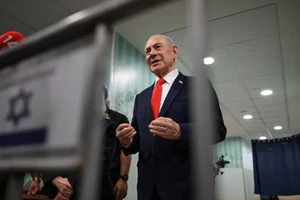
The departure of Israeli Prime Minister Benjamin Netanyahu could benefit Iran even if his successor maintained the same policies toward Tehran, Khorasan, a conservative Iranian newspaper close to Parliament Speaker Mohammad Bagher Ghalibaf, said on Thursday.
The newspaper said a change in Israeli leadership would not necessarily reduce military threats against Iran but could weaken the political and diplomatic networks Netanyahu has built during his years in power.
"Ultimately, Netanyahu's departure is in Iran's interest, not because his successor would necessarily adopt a friendly approach, but because removing one of the main architects of the confrontation with Iran would reduce the accumulated political and diplomatic capacity behind it," Khorasan wrote.
The assessment came after Israel's parliamentary election on Tuesday produced no clear winner, leaving Netanyahu and his main rival, former military chief Gadi Eisenkot, seeking support to form a government.
With nearly 86% of votes counted on Wednesday, Israeli broadcasters projected Netanyahu's right-wing bloc would secure 53 seats in the 120-member Knesset, compared with 48 for Eisenkot's opposition bloc and 19 for Arab-led parties.
Neither main bloc reached the 61 seats needed for a majority, leaving the outcome dependent on coalition negotiations.
Netanyahu's experience seen as key factor
Khorasan said Israeli political groups shared many positions on security matters despite their differences and that Eisenkot, a former military chief, was not opposed to confrontation with Iran.
It argued, however, that Netanyahu had built political and diplomatic networks over many years that a successor could find difficult to replace.
"Netanyahu is not merely a prime minister," the newspaper wrote, adding that he had developed extensive political, regional and international connections and considerable experience influencing US decision-making.
The newspaper said Netanyahu knew how to make Iran a central issue in Washington's foreign policy and connect security developments with political opportunities.
"Removing such a figure from the top of power, even if the basic structure of Israeli policy remains unchanged, means losing part of this accumulated capacity," it said.
"Netanyahu and his allies have built ties over the years between the Israeli government and some opponents of the Islamic Republic, particularly the monarchist movement," the newspaper wrote.
"Netanyahu's departure could weaken part of this political image, although one should not expect all these relationships to disappear with a change in leadership," it added.
It said political divisions within a future Israeli coalition could make decision-making more difficult, although such disagreements would not automatically reduce the risk of military action.
Election leaves Netanyahu and Eisenkot seeking coalition partners
Netanyahu's Likud-led bloc emerged ahead of Eisenkot's opposition in the preliminary results but remained short of a parliamentary majority.
Parties representing Arab Israelis were projected to secure an unprecedented 19 seats following high voter turnout, giving them a potentially important role in determining the next government.
Eisenkot could seek support from Arab-led parties to secure a majority, although several parties within his opposition bloc have opposed such cooperation.
Khorasan said the high turnout among Arab voters was one of the election's most important developments but questioned whether Eisenkot could reach an agreement with Arab parties while maintaining support from his existing allies.
Reuters reported that Netanyahu's electoral performance had strengthened his position in coalition negotiations despite the loss of his previous parliamentary majority.
The prime minister will remain in office in a caretaker capacity while the process of forming a new government continues.
Iran remains central to Israeli political debate
The election took place during the US-Israeli war on Iran, which began in February, with the possibility of further military action remaining an issue in Israeli politics.
Netanyahu has repeatedly emphasized the Iranian threat during the campaign and has received public support from US President Donald Trump.
Eisenkot has criticized Netanyahu's handling of security matters and warned against the political use of military decisions.
Khorasan said Netanyahu's departure would not necessarily bring a change in Israel's approach toward Iran, noting that different political groups shared positions on key security issues.
"Internal disagreements do not necessarily lead to a reduction in military threats," the newspaper wrote, adding that political competition could sometimes result in more aggressive behavior.
It said the removal of Netanyahu would not end the confrontation between Israel and Iran but could reduce the ability of Israeli leaders to coordinate political and diplomatic efforts against Tehran.
"Sometimes removing one player does not, by itself, end the game, but it can make the game more difficult for the opposing side," Khorasan concluded.
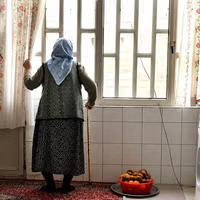
An elderly woman looks out of a window in her home in Iran.
As more Iranians build new lives abroad, many parents back home face a less visible consequence of migration: years without seeing their children, family relationships maintained through phone screens, and growing uncertainty about who will be there for them in old age.
For Maryam, a 68-year-old retiree in Tehran, that distance has become part of everyday life. Her son lives in Canada and her daughter in Germany, and she has not seen either of them in years.
“I know they're building their futures, and I'm happy for them,” she told Iran International. “But sometimes I just wish they were here, even for an ordinary dinner.”
Maryam says regular calls and photographs help her stay connected with her family, particularly her grandchildren. But watching them grow up from thousands of miles away is difficult.
“They know me through the phone,” she says. “I wish I could be more than just a face on a screen in their lives.”
Last winter, Maryam was hospitalized with kidney problems. Her children arranged help through relatives, and a family member accompanied her to medical appointments.
“My daughter was very worried, and I kept telling her everything was fine,” she recalls. “Sometimes, especially when I'm ill, I just wish we weren't so far apart.”
Caring for a spouse without the children nearby
In Karaj, 72-year-old Hamid has spent the past two years caring for his wife after a stroke left her with limited mobility.
Travelers pull their suitcases through an airport terminal in Iran, amid a continuing wave of emigration that has left many families separated across borders.
Their two sons live in Sweden and Australia. Although they call regularly and provide financial support, most daily responsibilities fall on Hamid.
He describes the exhaustion of managing medication, medical appointments and household chores.
“Some people think you're fortunate when your children live abroad,” he says. “But when your wife needs help getting out of bed, what matters is having someone nearby.”
The family has hired a part-time caregiver, but Hamid still handles much of his wife's care.
“Sometimes I want to tell my sons how exhausted I am,” he says. “Then I think about how far away they are and wonder what they could possibly do.”
Hamid does not blame his children for emigrating, but says family life has changed.
“We're still very close, and we talk all the time. But it's different when you can't sit together in the same room.”
Stay in Iran or join the family abroad?
For Nahid, a 64-year-old widow in Tehran, the question is whether she should leave Iran herself.
Her only daughter has lived in London for eight years and has encouraged her mother to move closer.
“My daughter tells me to come and live with her, but I've spent my whole life here,” she says. “My sisters, my friends, all my memories are here. At the same time, every year that passes, I wish I could be closer to her.”
Nahid worries about losing her independence in a country where she does not speak the language fluently or have an established social circle.
But staying in Tehran also means facing old age far from her daughter.
“I don't want to become a burden to my daughter,” she says. “But I don't want to leave behind everything I've built here either.”
The distance that remains
Phone and video calls have helped families separated by migration remain part of one another's lives despite years of living thousands of kilometres apart. They share news, celebrate birthdays and check on each other's health, sometimes communicating more frequently than families living in the same city.
But as parents grow older, that distance takes on a different meaning. A sudden illness, a medical emergency or the growing need for help with everyday tasks can expose the limits of even the closest long-distance relationships.
For children who have emigrated, Iran remains the place where their parents are growing old. For the parents who stayed behind, each passing year brings a difficult reality into sharper focus: the people they may need most are the ones living furthest away.
US President Donald Trump and Vice President JD Vance point to the stage during Day 1 of the Republican National Convention (RNC), at the Fiserv Forum in Milwaukee, Wisconsin, US.
US President Donald Trump confirmed he approved Vice President JD Vance's outreach to Iran, saying it focused on medical supplies, as Washington weighs a possible week-long military campaign against Tehran after next week's midterm elections.
Trump said on Wednesday that Vance had sought his approval to contact Iranian authorities but denied directing him to restart peace negotiations.
"They need help with medical supplies and various things. He asked me what I thought. I said, 'if you want to do that, that's OK,'" Trump told reporters.
"Basically, it's getting supplies in to help people that are not well," he added.
The Wall Street Journal reported that Vance had sent a letter to Mohsen Rezaei, secretary of Iran's Supreme National Security Council, seeking to restart negotiations between Washington and Tehran.
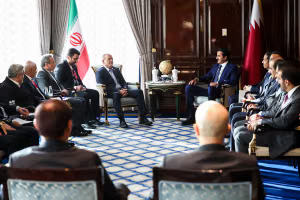
The diplomatic contacts come as regional mediators led by Qatar seek an agreement to prevent further military action, while US and Israeli officials prepare for possible strikes after the November 3 elections.
Vance seeks discussions on Iran's nuclear program
Vance's letter to Rezaei stressed that any negotiations aimed at preventing further US military strikes would require discussions on Iran's nuclear program, Axios reported, citing a US official.
The official said Vance had proposed contacting Rezaei, who has direct access to Iran's Supreme Leader Mojtaba Khamenei, and that Trump had supported the initiative.
"The President was enthusiastic about the letter," the official told Axios.
The Wall Street Journal reported that the outreach focused on exploring a possible framework for renewed negotiations rather than presenting a detailed peace proposal.
According to the newspaper, Vance had previously expressed reservations in private about prolonging the war, which began in February, while publicly supporting the US military campaign.
The vice president previously led US negotiations with Iranian representatives, but those efforts did not produce a lasting agreement.
A central issue remains Washington's demand for nuclear concessions before economic relief, while Tehran wants the US to lift its naval blockade, release frozen Iranian funds and allow oil exports before negotiations move forward.
Regional mediators led by Qatar, with support from Pakistan, Saudi Arabia, Egypt and Turkey, are working to restart negotiations between Washington and Tehran, according to Axios.
Qatari negotiator Ali al-Thawadi visited Tehran earlier this week to discuss possible terms for an agreement with the Trump administration.
One proposal under discussion would allow inspectors from the International Atomic Energy Agency (IAEA) to visit Iranian nuclear facilities damaged during US and Israeli attacks in exchange for limited sanctions relief.
The arrangement could include waivers allowing Iran to export oil and the release of some frozen funds to purchase food and other humanitarian supplies, Axios reported, citing a regional source familiar with the discussions.
The proposals seek to address differences between Washington's demand that Iran give up its enriched uranium stockpile and Tehran's insistence that the US first ease economic restrictions.
"There is some movement. We are waiting for the Iranian response," the regional source told Axios.
The source said the proposed arrangement could allow Iran to retain its enriched uranium initially while Washington secured steps toward renewed nuclear oversight.
Trump confirmed to Axios on Wednesday that negotiations were taking place through mediators but said their outcome remained uncertain.
"We need to finish the job — either through a deal or another way — we will find out if negotiations can succeed," Trump said.
Qatari mediators also presented Iran with ideas for a seven-day process to address concerns on both sides, Reuters reported on Wednesday, citing an official briefed on the negotiations.
According to the official, the draft calls for daily confidence-building measures from each side, with the process potentially beginning early next week.
Several countries would serve as guarantors of the agreement, the official said, adding that Iran was expected to respond by the end of the week.
However, a senior Iranian official told Reuters that Qatar had not presented a formal peace proposal but had instead put forward ideas Tehran considered unacceptable.
The official said Iran would show no flexibility on the nuclear issue.
Another option under discussion involves reviving a September 2025 agreement between Iran and the IAEA in Cairo that provided a framework for inspections of Iranian nuclear facilities.
The agreement was suspended after the UN Security Council reimposed sanctions on Iran the following month.
IAEA Director General Rafael Grossi told the UN Security Council on Tuesday that reviving the Cairo agreement could provide a basis for restoring inspections at facilities damaged during the war.
US and Israel prepare for possible week-long military operation
US and Israeli officials are preparing for possible renewed military action against Iran after the November 3 midterm elections, according to reports by Axios and the Wall Street Journal.
Axios reported, citing US and Israeli officials, that a potential military operation could involve a week of extensive strikes against Iranian leadership, energy infrastructure, nuclear facilities and other targets.
Israeli military chief Eyal Zamir spoke with US Central Command chief Admiral Brad Cooper on Monday to coordinate preparations for possible attacks, the report said.
The Wall Street Journal separately reported that Washington had warned several Persian Gulf countries to prepare for a possible short, intense military campaign following the elections.
The US military has been strengthening regional missile defenses, relocating personnel from vulnerable bases and replenishing munitions, according to the newspaper.
Additional naval and air forces are also being prepared for possible operations.
Trump has not made a final decision on further military action, the reports said.
Saudi officials have urged Washington to allow more time for negotiations before deciding on further strikes, Axios reported, citing a US official.
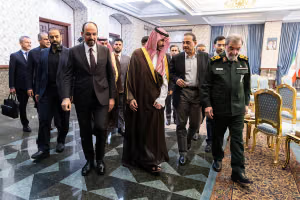
Saudi, Turkish and Pakistani security officials also discussed the situation during recent meetings in Tehran, according to the report.
Players from Persepolis (red) and Esteghlal (blue) compete during the first-ever women's soccer derby between the two clubs at Shahr-e Qods Stadium, west of Tehran, October 28, 2026.
Iran's two biggest soccer rivals met in their first women's derby on Wednesday, a historic occasion overshadowed by restrictions on male spectators and journalists and uncertainty over live television coverage.
Persepolis defeated Esteghlal 2-1 at Shahr-e Qods Stadium west of Tehran, marking the first-ever meeting between the women's teams of two clubs whose rivalry has dominated Iranian men's soccer for decades.
Fatemeh Rezaei and Somayeh Esmaeili scored for Persepolis in the first half before Niloufar Azimi pulled one back for Esteghlal after the break.
Female spectators were eventually allowed to attend following days of uncertainty and intervention by government officials. Men, however, remained barred from women's soccer matches under restrictions that also extended to journalists, photographers and technical personnel.
Persepolis players pose during their historic women's soccer derby against Esteghlal, which they won 2-1, west of Tehran, October 28, 2026.
Prosecutor threatens legal action
Tehran prosecutor Ali Salehi on Tuesday sent separate letters to Sports Minister Ahmad Donyamali and Iranian Football Federation President Mehdi Taj demanding that men be barred from women's soccer matches.
The restrictions covered male spectators, journalists, photographers, camera operators, security personnel and event staff. Salehi warned that prosecutors would take legal action if they were violated.
The warning followed reports of female spectators attending women's league matches without the headscarves required under Iran's mandatory hijab laws, as well as men being present at the games.
Prosecutors described the incidents as violations of Islamic regulations and public decency.
The Iranian Football League Organization had already issued a directive prohibiting men from attending women's soccer matches, including male media workers and club executives.
Farideh Shojaei, the Football Federation's vice president for women's affairs, confirmed ahead of the derby that men would not be permitted to attend.
The restrictions also raised practical questions about organizing the match, particularly the use of video assistant referee (VAR) technology, which relies on technical personnel and match officials.
The league had previously called for a male official to be removed from the VAR team for the derby, adding to uncertainty over how the technology would be operated.
The dispute over attendance came after a series of changes to the arrangements for the historic fixture.
Originally scheduled for Friday, October 23, at Kazemi Stadium, the home ground of Persepolis' women's team, the match was moved to Wednesday, October 28, at Shahr-e Qods Stadium.
The league organization cited anticipated demand from supporters and the need for better facilities, although the change also shifted the match from Iran's weekly day off to a working day.
Ticket sales were suspended twice in the days leading up to the game, while the final decision on whether female spectators could attend was referred to the Tehran Provincial Security Council.
At one point, there were concerns that the encounter could take place behind closed doors despite the anticipated interest from supporters.
Women were eventually permitted to attend following discussions involving Vice President for Women and Family Affairs Zahra Behrouz-Azar and Sports Ministry officials.
Government spokesperson Fatemeh Mohajerani also attended the match, according to Iranian media reports.
Government spokesperson Fatemeh Mohajerani also attended the match, according to Iranian media reports.
Persepolis (red) and Esteghlal (blue) players compete during their first-ever women's soccer derby west of Tehran, October 28, 2026.
Women's soccer struggles for television exposure
The restrictions extended beyond stadium access, raising questions about how widely the first women's derby would be seen.
Iran's state broadcaster, IRIB, had announced no plans to televise the match, while reports ahead of the game indicated restrictions on broadcasts through the two clubs' own platforms.
The uncertainty contrasted with the men's Esteghlal-Persepolis derby, one of Iran's biggest sporting events, which regularly attracts large television audiences.
For the women's teams, limited broadcasting and media access also restrict opportunities to build a following, attract commercial sponsors and gain wider public recognition.
Female soccer players in Iran are required to wear mandatory hijab while competing and have long faced unequal access to sporting facilities and limited media exposure.
The first meeting between the women's teams of Esteghlal and Persepolis offered an opportunity to showcase their talents to a national audience. Instead, much of the attention ahead of the match centered on restrictions over who could attend, photograph or broadcast it.
A different picture elsewhere in the region
The restrictions surrounding Iran's first women's derby contrast with similar fixtures involving major soccer clubs elsewhere in the region, where women's competitions have attracted television coverage, government support and spectators of both sexes.
In December 2021, Turkish rivals Fenerbahce and Galatasaray held their first women's derby as a friendly match at Istanbul's Nef Stadium.
Organized as part of a campaign against violence toward women, the match was attended by male and female supporters, broadcast on national television and watched by Turkey's justice and family ministers.
Then-Justice Minister Abdulhamit Gul said afterward: "Whatever the result, women are the winners."
Saudi Arabia staged its first women's Jeddah derby between Al-Ittihad and Al-Ahli in October 2022, during the opening week of the country's Women's Premier League.
The match took place at King Abdullah Stadium, with spectators attending without gender restrictions.
Saudi women's soccer subsequently secured wider television exposure. Beginning with the 2023-2024 season, Women's Premier League matches were broadcast domestically on SSC sports channels and internationally through streaming platform DAZN outside the Middle East and North Africa.
Alia Al-Rasheed, head of women's soccer at the Saudi Football Federation, described the agreement as an opportunity to attract new audiences and inspire future generations of female players.
While Turkey and Saudi Arabia have expanded opportunities for women's soccer, Iranian female athletes continue to face mandatory hijab requirements, unequal facilities and restrictions on media exposure.
For Iran's women footballers, the first derby between the country's two biggest clubs was a milestone. But the restrictions surrounding it showed how far the women's game remains from enjoying the visibility routinely afforded to its male counterpart.
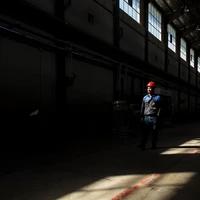
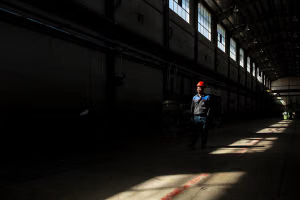
A worker stands inside a production facility at JEMCO, one of Iran’s largest electric motor manufacturers, October 19, 2026
Iran could face an economic contraction comparable in scale to the Great Depression in the United States, economists say, as the loss of oil revenue and wartime disruption threaten to drive an ailing economy into a deeper crisis.
Their assessments follow a prediction by US Treasury Secretary Scott Bessent, who told Iran International that Iran's economy would shrink by more than 25% between March 2026 and March 2027.
Iranian-American economist Ali Dadpay told Iran International that he found Bessent's forecast plausible, particularly as Tehran attempts to finance wartime spending by expanding the money supply.
That risks accelerating inflation and weakening the rial further, he said, creating a cycle of rising prices, falling purchasing power and declining economic activity.
Mohamad Machine-Chian, an Iran International economist, offered a stark comparison.
"The United States lost about 26% of its output in the Great Depression, over four years, from 1929 to 1933. Secretary Bessent is describing a loss of Great Depression size in twelve months," Machine-Chian said.
Iran's economy contracted by 21.6% in 1980, the first year of the Iran-Iraq War, World Bank data shows.
How much worse could it get?
Even the severe sanctions of 2018 and 2019 produced a smaller cumulative contraction of approximately 12%, despite oil exports plunging from about 2.7 million barrels per day to roughly 650,000.
Economic output was already approximately 10% lower in spring 2026 than a year earlier, according to figures from Iran's Statistical Center.
For the economy to contract by more than 25% over the full year, the decline would have to accelerate considerably.
Machine-Chian estimated that even with an 8% contraction over the summer, output would have to fall far more sharply during autumn and winter for the annual decline to approach Bessent's forecast.
The disruption of oil exports is central to that outlook. Energy intelligence firm Kpler reported no new Iranian crude loadings since late August, while revenue from earlier shipments is running out.
But the damage extends beyond the oil industry. Factories depend on imported materials, transportation companies require replacement parts, and businesses need financing to sustain operations.
As supplies and revenue dwindle, manufacturing, construction and other industries face further disruption.
The cost for ordinary Iranians
The economic deterioration is already visible in the price of everyday necessities.
Food prices in September were more than double their level a year earlier, according to Iran's Statistical Center. Eggs cost three and a half times as much, rice nearly twice as much, and official bread prices in Tehran have doubled.
“The minimum wage increased 60% this year while inflation approached 90%,” Machine-Chian said. “In dollar terms, a minimum-wage worker now earns approximately $61 a month, compared with $96 a year earlier.”
He also warned about savings being eroded. With the dollar costing two and a half times as much as a year ago, money held in rials has lost approximately 60% of its value against the US currency.
Further disruption to imports could bring shortages of medicines, industrial materials and vehicle parts, potentially forcing factories to reduce production or close and putting more jobs at risk.
Dadpay described a possible future resembling aspects of the economic crises in Venezuela and Zimbabwe, where severe currency depreciation and inflation pushed people toward dollars, gold, secondhand markets and barter.
As production declines and essential goods become harder to obtain, even those who remain employed could struggle to afford basic necessities.
Sanctions policy analyst Max Meizlish expects pension payments and civilian services to come under pressure as revenues decline, while military and security personnel could continue receiving salaries.
That could allow the Islamic Republic to preserve institutions central to its political survival even as living standards deteriorate.
Political consequences
Economic devastation does not necessarily translate into political collapse, particularly if Tehran can preserve its security institutions and access to financial channels abroad.
Washington has not fully targeted the Chinese financial institutions facilitating Iranian transactions, partly because of concerns about wider economic consequences, Meizlish said.
"It's just not clear that this level of economic constraint on its own will be enough to produce some sort of measurable political change," he said.
Dadpay argued that years of economic mismanagement and decisions prioritizing the survival of the political system had left Iran particularly vulnerable to the current crisis.
"As long as Islamic Republic is in place with this mindset, with this dynamic of decision-making, this is what's going to happen," he said.
For ordinary Iranians, the consequences are already evident in collapsing purchasing power, dwindling savings and rising prices.
Whether Bessent's forecast proves accurate or not, the economic damage could outlast the confrontation that has accelerated it.