• العربية
  • فارسی
BrandBrand
  • Iran Insight
  • Politics
  • Economy
  • Analysis
  • Special Report
  • Opinion
  • Podcast
  • Live TV
  • Iran Insight
  • Politics
  • Economy
  • Analysis
  • Special Report
  • Opinion
  • Podcast
  • Live TV
  • Theme
  • Language
    • العربية
    • فارسی
  • Iran Insight
  • Politics
  • Economy
  • Analysis
  • Special Report
  • Opinion
  • Podcast
  • Live TV
All rights reserved for Volant Media UK Limited
volant media logo

German court jails two men over spying for Iran's Guards

Ahmad Samadi
Ahmad Samadi

Iran International

Oct 15, 2026, 14:02 GMT+1
The exterior of the Hamburg criminal court building in Germany.

A German court convicted two men of spying on prominent Jewish figures and preparing attacks against them on behalf of Iran's Revolutionary Guards Quds Force, sentencing both to prison on Thursday.

Ali Hassan Sarwari and Tawab Mohsini gathered information about Josef Schuster, president of the Central Council of Jews in Germany, and Volker Beck, president of the German-Israeli Society, and monitored them in Berlin, according to evidence presented at the Hamburg Higher Regional Court.

Sarwari had participated in acts of "state terrorism by the Iranian regime," the presiding judge said.

The judge said Sarwari had traveled to Iran several times and met Revolutionary Guards intelligence and security operatives, including Ali Heydari and Kazem Mohammadi, from whom he received instructions.

The court sentenced Sarwari to eight years and six months in prison and Mohsini to four years and six months. Both verdicts can be appealed.

Direct orders from the Quds Force

Sarwari, a Danish citizen of Afghan origin, received instructions directly from officers of the Revolutionary Guards' Quds Force, according to the indictment.

Prosecutors said Sarwari sought Mohsini's cooperation in assassinating Beck or recruiting someone else to carry out the killing. The two eventually agreed to find a third person for the operation.

Sarwari was also accused of preparing an arson attack against a Jewish-owned kosher grocery store in Berlin.

German federal prosecutors had requested the prison terms ultimately imposed by the court, while defense lawyers sought acquittals for both defendants.

Surveillance and evidence presented in court

During the second hearing in July, an investigator from Germany's Federal Criminal Police Office described how authorities monitored Sarwari's communications and movements over an extended period.

The investigator said Sarwari had met individuals linked to the Quds Force during trips to Iran, including a man identified as responsible for the force's Israel operations.

Evidence recovered from Sarwari's phone included searches for Jewish-owned kosher grocery stores in Berlin, Schuster's address and saved photographs of Beck.

Investigators also recorded Sarwari photographing one of the stores.

The court was shown photographs of meetings between the defendants at a McDonald's restaurant. Investigators also described their use of Telegram to communicate with individuals identified as Quds Force contacts.

According to the police witness, Sarwari had asked his daughter whether she knew a Palestinian or Somali woman who needed money and would be willing to set fire to a Jewish-owned store for 30,000 Danish kroner, approximately 4,000 euros.

The testimony formed part of the evidence concerning preparations for the arson attack.

Beck, identified in the indictment as a potential assassination target, attended the second hearing.

The verdict followed months of proceedings examining the defendants' links to the Revolutionary Guards and their preparations for attacks against Jewish targets in Germany.

Most Viewed

Iran faces worse economic outlook than war-hit Mideast rivals, IMF says
1

Iran faces worse economic outlook than war-hit Mideast rivals, IMF says

2
ANALYSIS

Tehran raises the stakes, betting Washington will blink

3
ANALYSIS

Iran escalates Hormuz tanker attacks in gamble ahead of US midterms

4

Trump says Iran decision coming, suggests Tehran behind Houthi attacks

5

Tehran signals escalation in conflict IRGC likens to a ‘world war’

Spotlight

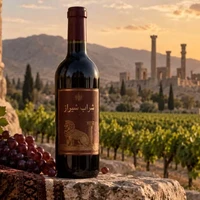
  • Shiraz and the wine industry Iran lost after 1979

    Shiraz and the wine industry Iran lost after 1979

  • Ignore prices and economy is fine, Iran ex-minister says

    Ignore prices and economy is fine, Iran ex-minister says

  • Nowhere else to go? The puzzle behind Iran’s stock rally
    INSIGHT

    Nowhere else to go? The puzzle behind Iran’s stock rally

  • Iran escalates Hormuz tanker attacks in gamble ahead of US midterms
    ANALYSIS

    Iran escalates Hormuz tanker attacks in gamble ahead of US midterms

  • Can US sanctions derail Iran’s China trade route?
    ANALYSIS

    Can US sanctions derail Iran’s China trade route?

Banner
Banner
Banner
Banner
Banner
  • Danish-Afghan man secretly visited Iran after spying on Jewish targets - Bild

    Danish-Afghan man secretly visited Iran after spying on Jewish targets - Bild

  • Denmark arrests Afghan man linked to Iran spying plot in Germany

    Denmark arrests Afghan man linked to Iran spying plot in Germany

•
•
•

More Stories

Tehran hospital locks its main building and treats patients in the courtyard

Oct 15, 2026, 13:25 GMT+1
100%
The gate of Shariat Razavi Hospital in Tehran

A Social Security hospital in Tehran has locked its main building and moved treatment into a cramped clinic in its courtyard, a member of the insurer’s healthcare oversight committee said, two months after officials listed it among the capital’s unsafe hospitals.

The main building of Shariat Razavi Hospital, run by the Social Security Organization, the state insurer that covers most of Iran’s workers and retirees, is deteriorating behind locked doors with its costly equipment still inside, Hossein Nategh told the labor-affiliated news agency ILNA on Thursday.

The move has turned a fully equipped hospital into what he called an outpatient clinic with the bare minimum of space, cutting the number of patients it can admit and the specialist care it can offer.

“The clinic set up in the yard has neither enough space for patients’ comfort nor the capacity to provide the services expected of a hospital,” he said.

The hospital’s equipment and funds belong to the workers and insured people who pay for them, Nategh said, and patients should not be left waiting in a cramped courtyard while the main building stands unused.

“If the building has a safety problem, why isn’t it being repaired? And if there is no plan to close it, why aren’t these resources being used?” he said. “This situation amounts to squandering the healthcare assets of the working community.”

He called for the main building to be reopened with its full equipment, or for an official explanation of why it was closed and what has happened to the equipment.

Neither ILNA’s report nor any statement from the Social Security Organization has explained why the building was closed or said what will happen to its equipment.

A list of unsafe hospitals

On August 18, Ali Nasiri, head of Tehran’s crisis management organization, named Shariat Razavi among 17 unsafe hospitals in the capital that were being made safe.

Warnings about the safety of Tehran’s buildings, hospitals among them, are not new. In 2024, the head of the city’s fire department said only 52 of the capital’s 189 hospitals had safety certification and that 125 were high-risk. In late 2025, a deputy fire chief, Kamran Abdoli, said 80,000 unsafe buildings had been identified in Tehran, about 27,000 of them high-risk.

Some of the warnings have ended in deaths. In June 2024, a fire at Qaem Hospital in Rasht, in northern Iran, killed at least nine patients with officials saying afterward that the hospital had never installed a fire suppression system despite earlier warnings. In early 2024, a fire broke out at Gandhi Hospital in Tehran, which fire officials said had received five safety notices beforehand and had faulty fire alarm and suppression systems.

Around the same time, Saeed Karimi, then the health ministry’s deputy for treatment, said about 100 hospitals were operating without a license because they had not fixed problems with safety or hygiene standards or with insurance contracts, and that closing them all at once would damage health services.

How Iran shielded forces over 2022 protest killings

Oct 14, 2026, 23:59 GMT+1
100%
Security forces in Iran during the 2022 nationwide protests

Iran has built impunity for the killing of protesters into its laws and judicial system, Amnesty International said in an investigation detailing how security forces accused of deadly violence can help determine whether their own actions were lawful.

Four years after the killing of Mahsa Jina Amini sparked the Woman, Life, Freedom uprising, Amnesty said official denial, firearms legislation, compromised judicial proceedings and government-appointed investigations had combined to shield those responsible for the 2022 crackdown from meaningful accountability.

The findings form part of Amnesty International's report Architects of Atrocities: State Machinery Orchestrating Crimes Against Humanity in Iran's 2022 Woman Life Freedom Uprising.

State denial and glorification

Amnesty identified six recurring narratives used by Iranian authorities and state-affiliated media to deny responsibility for the killing of protesters.

Authorities blamed unidentified individuals or protesters themselves, portrayed deaths as staged or attributed them to private disputes, illness, suicide, road accidents and other causes.

They also alleged that some victims had been killed during clashes involving armed opposition groups or while confronting security forces, without providing evidence.

According to the report, state institutions pressured families of those killed to publicly endorse the government's versions of events.

Amnesty found that authorities responded particularly rapidly to reports of women and girls being killed, circulating alternative explanations in an effort to prevent them from becoming symbols of the protest movement.

Senior judicial officials meanwhile publicly praised security forces involved in suppressing the demonstrations, which Amnesty said reinforced impunity and demonstrated a lack of judicial impartiality.

Laws protecting lethal force

Amnesty said Iranian law provides security forces with broad authority to use firearms against protesters, including at peaceful gatherings classified as unlawful.

Under the Law on the Use of Firearms, officers can open fire to disperse demonstrations deemed illegal when other measures have failed and a warning has been issued. Fewer restrictions apply to gatherings authorities classify as armed.

Amnesty said the legislation falls short of international standards restricting firearms to situations involving an imminent threat of death or serious injury.

The law also protects security personnel from criminal liability. Officers whose use of firearms is deemed lawful are exempt from civil and criminal responsibility, while compensation for an innocent person killed or injured can be paid by the relevant security institution rather than the officer.

Amnesty also highlighted legislation imposing severe penalties on armed forces personnel who refuse to use weapons or engage forces designated as enemies in certain circumstances.

The organization said the provisions could punish personnel for refusing to carry out military duties while shielding those who use lethal force in accordance with domestic law.

Security forces investigating themselves

Cases involving protesters killed by security personnel are handled within a military judicial system closely connected to the armed forces, Amnesty said.

A decree issued by Iran's supreme leader requires at least half of judges, prosecutors and administrative staff within the Judicial Organization of the Armed Forces to be members of the armed forces, including the Revolutionary Guards, police and army.

When shootings occur, an internal committee within the relevant security force assesses whether officers complied with firearms legislation. Military prosecutors and courts can then rely on those findings.

Amnesty examined 10 judicial cases across eight provinces involving protesters and bystanders killed during the 2022 uprising.

Four investigations were terminated because prosecutors said there was insufficient evidence to establish security-force responsibility. In two others, authorities acknowledged that security personnel had fired the fatal shots but still terminated criminal investigations.

Other cases resulted in convictions, but Amnesty said they demonstrated how convictions could subsequently be overturned, charges reduced or imprisonment replaced with financial compensation.

Supreme court intervention

Mohammad Jameh Bozorg was killed inside his home in Malard, west of Tehran, in September 2022 after members of the Basij paramilitary force raided the property.

Basij member Shahram Bazrbouy was initially sentenced to death under qesas, or retributive punishment, for shooting him in the face at close range.

After then-Revolutionary Guards commander Hossein Salami requested a judicial review, judiciary chief Gholamhossein Mohseni Ejei determined that the killing did not constitute intentional murder.

The Supreme Court subsequently overturned the murder conviction, sentenced Bazrbouy to three years in prison and ordered the Revolutionary Guards to pay blood money to the victim's family.

In another case, a death sentence against the police officer who killed Sepehr Biranvand in Khorramabad was twice overturned by the Supreme Court. The officer was ultimately acquitted of murder and sentenced to 10 months in prison for unlawful shooting.

Amnesty said an earlier court had cited CCTV footage showing the officer deliberately aiming at Biranvand as he fled, but the later ruling accepted his account that the shooting had been accidental.

Government investigations

Two days before the United Nations Human Rights Council voted to establish an independent fact-finding mission into the crackdown, then-Interior Minister Ahmad Vahidi announced the formation of a domestic investigative committee in November 2022.

Then-President Ebrahim Raisi established a separate special committee in May 2023, whose mandate was later extended by President Masoud Pezeshkian. Iranian authorities repeatedly cited the committee as justification for refusing to cooperate with the UN investigation.

Amnesty concluded that the committee's investigations lacked independence, impartiality and transparency.

More than two-thirds of its main 110-page report focused on accusations against foreign governments, media outlets and online platforms. Only 15 pages addressed allegations of human rights violations, with just half a page devoted to examining the deaths.

Amnesty also found that parts of the report repeated material published by Iranian intelligence and security institutions, including passages copied word for word from a joint statement by the Intelligence Ministry and the Revolutionary Guards' Intelligence Organization.

The organization said the committee had recycled official narratives rather than independently investigated allegations of unlawful killings, torture and other abuses.

Amnesty concluded that meaningful accountability would remain unattainable without fundamental changes to the laws and institutions responsible for investigating and prosecuting such crimes.

Man in Iran International attack plot told police he was paid £2,000 to film

Oct 14, 2026, 20:52 GMT+1
100%
Court sketch from Woolwich Crown Court. Credit: SWNS/Julia Quenzler

A man accused of plotting an attack on Iran International journalists in Britain told police he had received £2,000 for filming, according to interview transcripts read at Woolwich Crown Court on Wednesday.

Mostafa Sepahvand, 41, made the statement during questioning on May 15, 2025, as investigators examined his communications with contacts in Iran and his alleged role in gathering information about potential targets.

Prosecutors allege Sepahvand was receiving payments from individuals directing the operation from Iran.

Sepahvand is on trial alongside Farhad Javadi Manesh, 46, and Shapoor Qalehali Khani Noori, 57. All three deny charges under Britain's National Security Act.

Prosecutors allege the men gathered information for Iranian intelligence in preparation for serious violence against at least one target in Britain, with Sepahvand expected to carry out an attack and the other two helping with preparations.

The alleged targets included Iran International journalists Mojtaba Pourmohsen and Kambiz Hosseini.

In an earlier hearing, jurors heard a March 20, 2025, voice recording in which Sepahvand said he had been promised £150,000 and help resolving a criminal case in Iran if he completed the task.

"They have sent me £3,500, and they keep sending me fifty addresses," he said in the recording, complaining about the costs of visiting locations.

During the police interviews that were read out by prosecutors on Wednesday, Sepahvand acknowledged having access to addresses but insisted he had not carried out violence.

"We could hit them. We had the address. But I swear to the God who is up there we did not do anything," he told investigators.

The addresses discussed in the case were not limited to locations associated with Iran International journalists.

Sepahvand repeatedly maintained that he had been threatened and pressured by people he linked to the Iranian government, while denying carrying out the actions demanded of him.

"They put pressure on me to do something. They threatened me but I did not do it. I didn't do it," he said.

Asked about photographs relating to Iran International journalists, Sepahvand told investigators: "There are only those pictures and I haven't done anything."

"They came to say do it, do it with your friends. I swear to God we didn't."

The questioning also examined Sepahvand's communications with Mostafa Ghorbani, including messages about addresses, payments and assurances concerning his legal difficulties in Iran.

In one exchange dated February 24, 2025, Ghorbani relayed a message from a contact named Amin saying certain addresses should not have been sent.

Sepahvand declined to comment when questioned about that exchange.

The court also examined transcripts of police interviews with Manesh, who denied gathering intelligence on Iran International or receiving instructions to target its journalists.

During an interview on May 3, 2025, Manesh acknowledged that he might have walked or driven past the broadcaster's offices and taken photographs, but said he could not remember the details.

He described the building as beautiful and said he had been curious about it. He also told investigators he had visited a nearby car wash to obtain medication for a sore throat.

"Not at all," Manesh replied when asked whether he had targeted Iran International journalists.

Investigators subsequently questioned him about a photograph of Iran International presenter Kambiz Hosseini sent to him by Sepahvand on December 24, 2024.

Manesh denied knowing Hosseini's name, despite police pointing out that the photograph displayed both the journalist's name and Iran International's branding.

He said he had been curious about whether the person pictured was a journalist who had been beaten up.

Police also asked about an Instagram link concerning Hosseini's program and Manesh's English response of "good good" to a link sent by Sepahvand.

Manesh said the expression was a catchphrase he had picked up from a YouTuber known as AB and that it meant "I don't care."

He maintained that the phrase carried no particular meaning.

Asked about Sepahvand's subsequent message, "This is it bro," Manesh said he was unsure what it meant but suggested it might refer to the reporter he believed had been beaten up.

Manesh described his relationship with Sepahvand as a casual friendship, saying the two spoke approximately every other day, often discussing cars and health matters.

He said Sepahvand had lent him money in amounts not exceeding £300 and denied that Sepahvand knew people who could threaten him or his family.

According to the prosecution's account of their defenses, Sepahvand accepts conducting surveillance for Iran but says he feared the consequences of refusing and deliberately did a poor job. Prosecutors reject that explanation.

Manesh and Noori acknowledge visiting locations and taking photographs and videos but maintain they did not know they were assisting Iranian intelligence.

The trial is scheduled to resume Thursday at 10:30 a.m.

Iranians report months-long waits for unemployment benefits

Oct 14, 2026, 16:42 GMT+1
•
Saba Heidarkhani
100%
People wait for service at a post office in Iran, October 8, 2026

Iranians receiving unemployment benefits say payments have been delayed by up to two months, leaving some struggling to pay for food and service debts, according to messages sent to Iran International.

Recipients described repeated delays of several weeks and said banks and Social Security offices had provided little clarity over when the money would arrive, as inflation above 70% and the rial’s steep decline further squeeze household finances.

“Unemployment benefits are our only lifeline. I’m struggling to cover expenses for myself, my spouse and children,” one recipient said. “Every day the money doesn’t arrive, we’re left with an empty table and a sense of shame.”

Payments ‘weeks late’

Several recipients reported recurring delays of 20 to 25 days, while others said they had gone without benefits for as long as two months.

One person whose payment was more than a month overdue said people depended on the modest allowances to put food on the table and service debts.

The person said Bank Melli and Refah Bank had refused to accept responsibility for the delay, while the Social Security Organization said it had issued the payment check and the matter was now in the banks’ hands.

Another recipient reported a 25-day delay in receiving a monthly allowance of 160 million rials, saying Branch 15 of the Social Security Organization routinely made late payments.

A person with 22 years of employment history who had been unemployed for six months said the organization’s Shemiran branch in northern Tehran had failed to pay their benefits.

Others described receiving vague promises from local offices.

“The payment was supposed to arrive by the 15th of the month, but there’s been nothing. Some branches told us to wait until the 30th because it might be paid then,” one person said.

Under Iranian law, workers who involuntarily lose their jobs may qualify for unemployment benefits if they meet employment and insurance requirements.

For many recipients, the payments are their primary source of income while looking for work.

Social Security under strain

The delays come amid wider concerns about the finances of the Social Security Organization (SSO), Iran’s main social insurance institution responsible for unemployment benefits and pensions.

SSO chief Mostafa Salari said on July 27 that the organization faced a monthly pension shortfall of at least 170 trillion rials even if it collected all current insurance contributions. He put its debt to the central bank at 750 trillion rials.

Pensioners have also protested over delayed payments in recent months. On Sept. 20, retirees gathered in Tehran, Ahvaz, Rasht, Shush and Kermanshah to demand outstanding payments, including delayed pension adjustments.

The complaints come alongside broader reports of unpaid wages and insurance contributions across Iran.

Iran International reported last month that workers in several sectors, including factories and healthcare facilities, were facing delayed salaries and insurance contributions.

Workers laid off from Rajaee Port in Bandar Abbas have also reported unpaid wages and difficulties accessing unemployment benefits.

For those waiting for payments, however, the immediate problem is making ends meet.

“They haven’t deposited my unemployment benefits. I have countless loan repayments and debts, and I’m desperate,” one recipient said. “Social Security treats us so badly, as though we’re the ones who owe them money.”

Iran police killed brothers celebrating Khamenei’s death, source says

Oct 14, 2026, 16:32 GMT+1
•
Farnoosh Faraji
100%
Ahmadreza Feyzi (15) and Amirhossein Feyzi (19).

Iranian police fired 36 rounds at a car during a seven-minute chase near Tehran, killing two brothers aged 15 and 19 after its occupants honked their horn while celebrating the death of then-supreme leader Ali Khamenei, a source close to the family told Iran International.

Khamenei, 86, was killed on February 28 when US and Israeli forces struck his compound in central Tehran in the opening attacks of the war. His death prompted celebrations in parts of the country.

The brothers, Ahmadreza Feyzi, 15, and Amirhossein Feyzi, 19, were traveling with their father, several of his colleagues and one colleague's wife from Mehrshahr to nearby Fardis, according to the source.

Police first confronted the group at Fardis's second roundabout after hearing them honk the car horn along many more who were doing so in celebration, the source said.

Following a verbal altercation, officers alerted colleagues by radio and the vehicle was stopped at the next roundabout.

One officer confronted a colleague of the boys' father, while another smashed the car's rear windows with the stock of his rifle despite seeing the two brothers in the back seat, according to the source.

Their father drove away to get his children away from the confrontation, prompting officers to call for backup. A police emergency response unit subsequently joined the pursuit.

During a chase lasting roughly seven minutes, officers fired 36 rounds at the vehicle, the source said.

At one point, Amirhossein realized his younger brother had been shot and tried to revive him in the back seat, but Ahmadreza was unresponsive.

Their father continued driving in an attempt to get his sons to safety as officers pursued and fired at the vehicle, according to the source.

The source said officers opened sustained fire along a less congested stretch of road and fired two additional shots after the vehicle had come to a complete stop near a fire station.

Delayed medical treatment

Ahmadreza was shot in the heart, while Amirhossein suffered a gunshot wound to his side, according to the source.

Officers beat the vehicle's occupants and forced them out after the car stopped, the source said. The father realized both his sons had been shot when neither emerged.

Officers refused his request to take the brothers to Shohadaye Salamat Hospital and instead transported them to Resalat Clinic in Fardis, saying the facility fell within their jurisdiction.

The source said the clinic lacked the equipment needed to treat gunshot wounds and blamed the delay in receiving appropriate medical care for Amirhossein's death.

Plainclothes security personnel later beat family members who protested the killings, according to the source.

The brothers' bodies were subsequently placed in black body bags and taken to an undisclosed location.

Bodies withheld for four days

Security authorities withheld the brothers' bodies from their family for four days, according to the source.

During that period, the family was pressured to bury them at the remote Behesht-e Ali cemetery.

The source said the family eventually agreed so they could recover the bodies and bury the brothers as soon as possible.

Iran International could not independently verify all details of the source's account. Iranian authorities have not publicly commented on the brothers' deaths.