Iran says US strikes damaged 111 petrochemical, pharmaceutical sites
US strikes on Iran damaged 111 petrochemical and pharmaceutical facilities and disrupted supply chains, Iran’s permanent representative to the Organization for the Prohibition of Chemical Weapons said, the semi-official Mehr News Agency reported Tuesday.
Hadi Farajvand said at the 113th session of the OPCW Executive Council that 60 petrochemical complexes, 44 pharmaceutical factories and seven pharmaceutical facilities were damaged in the attacks, according to the report.
IRGC Commander-in-Chief Ahmad Vahidi attends a ceremony to pay his respects to late Supreme Leader Ali Khamenei, July 5, 2026. In 2022, Vahidi was Iran's Interior Minister and led the State Security Council
Iran’s repression of the Woman, Life, Freedom uprising was coordinated from the top through a functioning chain of command linking senior authorities to security forces on the streets, Amnesty International says.
Amnesty cites leaked orders, official statements, appointment records and documents showing internal reporting and coordination.
Among the evidence is an order issued by Iran’s General Staff of the Armed Forces on September 21, 2022, which moved through the police’s national command system to county-level forces and was entered into local police records.
It examines how security councils developed policy, ministers transmitted binding instructions, commanders deployed forces and government bodies funded prolonged operations.
Security councils set policy
At the national level, the Supreme National Security Council sets Iran’s defence and security strategies, including its response to protests. The president chairs the council, whose membership includes senior political, military and intelligence officials.
The State Security Council, headed by the interior minister, coordinates domestic security policy. Provincial and county security councils, chaired by governors, monitor local conditions, report upward and coordinate the responsibilities of security bodies.
During the 2022 uprising, these structures connected national decisions to operations in individual provinces and counties, Amnesty found.
The interior minister at the time, Ahmad Vahidi, held overlapping positions that gave him authority across the system. Alongside leading the ministry and State Security Council, he served as the supreme leader’s deputy commander-in-chief for police affairs, placing him above the police’s general commander in its command structure.
State Security Council resolutions became binding orders when communicated for implementation by the interior minister.
Amnesty examined leaked resolutions dated September 18 and 26, 2022, accompanied by cover letters signed by then deputy interior minister Majid Mir Ahmadi. Those letters transmitted instructions to senior officials and required implementation and reporting.
Police and IRGC units carried out operations
The police, known by the Persian acronym FARAJA, and the Islamic Revolutionary Guard Corps were the principal security bodies involved in lethal protest dispersals.
Within FARAJA, the Prevention Police oversaw police stations and provided the initial response to protests. Its Assistance Cohorts supplied additional personnel when stations needed support.
The Special Cohorts, commanded nationally in 2022 by Hassan Karami, were deployed when protests exceeded the capacity of those forces to disperse them.
The IRGC operated through provincial corps overseen by regional headquarters. Their subordinate forces included operational divisions, Security Cohorts and county-level Basij structures.
Amnesty found that Basij’s recruitment, training, mobilization and remuneration were governed through the IRGC, placing them within its institutional structure.
Specific order
Amnesty obtained and verified a September 21 instruction from the General Staff that called for a “firm and severe” response. Two days later, the police commander in Mazandaran province instructed forces to “respond mercilessly and go as far as causing death.”
Other orders went into operational detail, specifying the forces to deploy, their locations and the weapons and ammunition to use.
A leaked letter from Vahidi to then president Ebrahim Raisi, dated January 8, 2023, recorded a State Security Council decision the previous October to allocate nine trillion rials to the Interior Ministry for security costs.
Amnesty put that sum at approximately $22 million at the market exchange rate at the time. The letter also described costs associated with transporting, feeding and accommodating thousands of deployed personnel.
Responsibility beyond those who fired
Amnesty assessed commanders under the principle of superior responsibility, examining their control over subordinates, knowledge of crimes and failure to prevent or punish them.
For Interior Ministry officials, it focused on aiding and abetting, reflecting their alleged role in coordinating and facilitating operations.
The organization said commanders continued to praise security forces and order further repression despite mounting evidence of crimes.
It listed 10 national officials and 77 regional, provincial and county officials associated with its detailed investigations in western Iran, pointing out that the list was not exhaustive and that individual criminal responsibility must be established through independent investigations and fair prosecutions.
The organization said no responses had been received to letters seeking comments from Iran’s leadership and senior officials before publication.
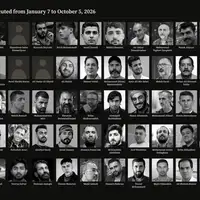
Names and photos of the political prisoners executed in Iran since January protests
Iran has executed nearly two people a week in political and security cases since the January protests, including over protest- and war-related accusations, while another 194 people face death sentences, an Iran International review of cases shows.
Among those facing execution are 113 people arrested in connection with the January protests, as well as 13 women and at least seven people who were under 18 at the time of the alleged offenses.
At least 70 people were executed from January 7 to October 5. Human rights organizations and activists say the figures are minimum totals, covering only cases that have been reported and verified.
Of the 70 people executed, 35 were put to death in cases connected to the January protests, nine in cases linked to the 12-day and 40-day wars, and 26 in other political and security cases.
The executions include people arrested in recent months as well as prisoners whose cases date back years, including to the 2022 Woman, Life, Freedom uprising and others who had spent close to nine years in prison.
January-related executions
Iran Human Rights had documented 32 executions linked to the January protests by Oct. 3. The subsequent executions of Alireza Raisi and Alireza Sepahi in Isfahan, together with that of Arvin Kheirkhah in Shahroud, bring the number identified in Iran International’s review to 35.
Iran Human Rights says defendants have been sentenced following proceedings marred by allegations of torture, forced confessions and denial of fair-trial rights.
Another nine people executed during the period had cases linked to the two recent wars.
The remaining 26 were executed in other political and security cases involving alleged links to opposition groups, earlier protests or espionage accusations.
Thirteen were accused of working with or belonging to opposition groups: nine of links to the People’s Mojahedin Organization of Iran, two to the Democratic Party of Iranian Kurdistan and four of membership in Jaish al-Adl or Ansar al-Furqan.
Their cases predated the January protests and the two recent wars.
Seven others were executed on espionage charges. Six had been detained before the 12-day war: four were accused of spying for Israel, with one also accused of working with the United States, and two of spying for an unnamed Arab country. The seventh had also been detained before the two recent wars.
The remaining four included two protesters from the Woman, Life, Freedom uprising and two people accused of membership in ISIS.
The cases of the two alleged ISIS members dated to clashes in the Bamo mountains in 2017. They were executed after nearly nine years in detention and prison.
On death row
At least 194 people in political and security cases are currently under death sentences, according to the human rights reports reviewed by Iran International.
Of those, 113 are linked to the January protests, 10 to the two recent wars and 71 to other political and security cases. Their judicial status varies, including initial death sentences, sentences upheld on appeal and cases undergoing further review.
Among the 71 prisoners whose cases are unrelated to the January protests or the wars are 19 detained over earlier protests: 17 linked to the 2022 Woman, Life, Freedom uprising and two to the November 2019 protests.
Another 44 have political and security cases dating from before the recent wars and January protests.
They range from political, civil and humanitarian activity to alleged links with the People’s Mojahedin, Kurdish, Baluch and Arab groups and espionage accusations. One prisoner has been sentenced to death for “insulting the Prophet.”
Two other cases began with resistance to the seizure of agricultural land in November 2025 and resulted in death sentences for “corruption on Earth.”
Three prisoners are accused of killing a member of the Basij, while two others face sentences in older political cases.
Women and juveniles
All 70 people executed in the period were men, but 13 women are among the 194 currently under death sentences. Seven have cases linked to the January protests, two to the wars and four to other political and security cases.
At least seven of those facing execution were under 18 when the alleged offenses took place. Five are defendants in cases stemming from the January protests, one is linked to the 2022 uprising and one to an older case.
Amnesty International has warned about the risk of execution facing five of the juvenile defendants.
Another case documented by HRANA involved a detainee who was 17 years and nine months old in June 2026, meaning he was under 18 during the January protests.
Available information is insufficient to establish how many of those already executed, if any, were under 18 at the time of the alleged offenses.
An age range could be determined for 53 of the 70 people executed and 116 of the 194 facing execution. Of those, 29 executed prisoners and 68 facing death sentences were younger than 30.
Ethnicity and nationality
Ethnicity is not routinely recorded in judicial or human rights reports, making it impossible to establish the background of most people in the dataset.
Where sources explicitly identified ethnicity, at least 18 of those executed and 51 of those facing execution belonged to ethnic minority groups.
The ethnicity of 48 executed prisoners and 143 facing death sentences could not be determined.
Those executed also included three Afghan nationals, two Iraqi nationals and one Iranian-Swedish citizen. The two Arabs among the foreign nationals were Iraqi citizens.
Among those facing execution are three Afghan nationals, one Turkish national and one Iranian-Swedish citizen. The Turkish national is Kurdish and is also included in the ethnic breakdown.
Hotspots: Karaj and Isfahan
Of the 70 executions, 32 were carried out in Karaj and 12 in Isfahan. Five each took place in Mashhad and Urmia, three each in Qom and Shahroud, and two each in Zahedan, Naqadeh and Kermanshah. Hamedan and Shahrekord recorded one each, while the location of two could not be established.
That means 44 of the 70 executions, or nearly two-thirds, were carried out in Karaj and Isfahan. The figures refer to where sentences were carried out, not the prisoners’ home provinces or places of birth.
At least 32 executions were reported at Qezel Hesar Prison, 12 at Isfahan Central Prison, seven at Urmia Central Prison and five at Vakilabad Prison in Mashhad.
The last reported place of detention could be established for 186 of the 194 people facing execution.
Isfahan accounts for the largest group: 45 were last reported at Isfahan Central Prison, two at Dowlatabad Women’s Prison and one at a juvenile detention center.
Another 32 were held at Qezel Hesar, 14 at Zahedan Central Prison and 12 at Vakilabad. Evin, Adelabad Prison in Shiraz and Sheiban Prison in Ahvaz each held 10.
Allegations of torture
The executions and death sentences come amid repeated warnings from human rights organizations about the handling of the cases.
Iran Human Rights has reported allegations of torture to obtain confessions, violations of fair-trial rights and pressure on prisoners’ families not to speak publicly about their cases.
Human rights groups say restrictions on access to information, a lack of judicial transparency and pressure on families make it difficult to establish the full number of people executed or facing execution.
The 70 executions and 194 death sentences documented in the review therefore represent cases that could be identified and verified, rather than an estimate of the full scale.
A portrait of Iran's slain Supreme Leader Ali Khamenei is displayed during a Janfada rally in Mashhad, October 6, 2026
Rhetoric is hardening on both sides of the Iran-US standoff, with even Iranian analysts traditionally optimistic about diplomacy warning that relations are slipping back to “square one” as military and economic pressure intensifies.
President Masoud Pezeshkian added to that sense of a narrowing diplomatic opening this week, declaring that “talks are meaningless” while Washington maintains what he described as a naval siege and fails to honor its existing commitments.
Pezeshkian said Tehran would not negotiate under military pressure or abandon its seven conditions for de-escalation, a position that leaves little obvious room for compromise as the US builds up forces in the region and tensions around the Strait of Hormuz continue.
Veteran foreign policy analyst Ali Bigdeli, who has traditionally taken a relatively optimistic view of diplomacy with Washington, told Fararu on Tuesday that Iran-US relations had effectively returned to “square one,” with deep mistrust and uncertainty prevailing in both capitals.
He also warned that the increased US military presence in the region, combined with mounting economic pressure on Iran, raised the risk of miscalculation.
Hardline newspaper Kayhan seized on Pezeshkian’s remarks, calling for an immediate and complete withdrawal from Qatar-mediated diplomatic channels.
The English-language Tehran Times portrayed his refusal to negotiate under naval pressure as “a principled rejection” of unilateral Western coercion.
On Monday night, international maritime security agencies issued four attack warnings within four hours following new projectile strikes on commercial oil tankers transiting the Strait of Hormuz.
Seven attacks on commercial vessels have been reported in the strait in the past week, according to maritime intelligence reports, which also describe direct radio warnings from the Revolutionary Guards Navy ordering some tankers to turn around.
IRGC-linked daily Javan highlighted the rapid succession of attack advisories and radio interdictions as evidence that CENTCOM’s naval presence has failed to guarantee freedom of navigation through the waterway.
But the same confrontation that hardliners portray as evidence of Iranian leverage is also generating warnings about its economic cost.
Economic daily Donya-ye Eghtesad argued that shadow fleets and off-radar transfers may allow crude oil to continue moving, but cannot reliably provide the raw materials needed by Iranian industry.
Once existing stocks of industrial inputs are exhausted, the newspaper warned, the combination of disrupted shipping and severed formal banking channels could push domestic industry into deeper decline.
Some Iranian outlets have increasingly focused on the possibility that a single security incident could upset the fragile balance altogether.
Moderate outlet Rouydad24 pointed to reports that American bombers were moved from RAF Fairford in Britain amid concerns about a possible Iranian or IRGC drone threat, as well as a US national security meeting last week with Iran and Yemen on the agenda.
The outlet warned that a single security incident could become a political trigger for escalation, sharply narrowing the distance between negotiation and confrontation.
Diplomatic channels have not disappeared, but harder positions in Tehran and Washington, an expanding US military presence, repeated incidents around Hormuz and growing economic pressure leave increasingly little room for error.
The emerging message from Iranian commentary is that a prolonged stalemate carries risks in either direction: deeper economic deterioration if it continues, and potentially rapid military escalation if it breaks.
Mostafa Sepahvand, 39, Shapoor Noori, 55, and Farhad Javadi-Manesh, 44, in a court sketch from Westminster magistrates’ court / Credit: SWNS
Three Iranian men spied on Iran International journalists to assist Iranian intelligence services and prepare for serious violence against at least one target, prosecutors told a London court Tuesday.
Iran International journalists Mojtaba Pourmohsen and Kambiz Hosseini were among the targets of the alleged surveillance operation, prosecutors told Woolwich Crown Court.
“Together, the defendants were engaged in what is very obviously a form of spying,” prosecutor William Emlyn Jones KC told jurors.
Mostafa Sepahvand, 41, Farhad Javadi Manesh, 46, and Shapoor Qalehali Khani Noori, 57, are accused of conducting months of surveillance and reconnaissance, including photographing and filming locations connected to their targets.
All three are charged with assisting a foreign intelligence service under Britain’s National Security Act 2023. Prosecutors say the foreign intelligence service was Iranian.
Sepahvand is also accused of conducting surveillance, reconnaissance and open-source research intending to carry out serious violence against a person in Britain. Javadi Manesh and Noori are accused of conducting surveillance and reconnaissance intending that serious violence would be carried out by someone else.
“It is the prosecution case that their ultimate objective was that one or more of their targets would be subjected to serious violence,” Jones told the jury.
The prosecution says Sepahvand was intended to carry out the violence himself, with Javadi Manesh and Noori gathering information to assist the planning of an attack.
The three men were arrested in May 2025 and are the first Iranian nationals charged under the National Security Act, which came into force in 2023.
Phones reveal surveillance operation
Prosecutors presented on Tuesday an outline of the evidence regarding the surveillance of Pourmohsen and Hosseini.
“These three defendants were carrying out surveillance and reconnaissance to locate and target at least two journalists associated with news agency Iran International,” Jones said.
The surveillance was intended to establish where targets lived and worked, their routines, the people they spent time with and the layouts of buildings connected to them, according to the prosecution.
Material recovered from Sepahvand’s phone included searches seeking Pourmohsen’s address. One search asked ChatGPT for “Mojtaba Pour Mohsen’s address,” according to evidence presented in court.
ChatGPT did not provide a home address but returned information about his career and social media contacts and suggested contacting him through Iran International, jurors were told.
Investigators also recovered from Sepahvand’s phone what prosecutors described as a briefing document or “targeting package” containing Pourmohsen’s photograph and information about locations associated with him.
The material included the address of Volant Media, Iran International’s parent company, and information about the Clayton Hotel on Chiswick High Road.
Pourmohsen had stayed at the hotel around Christmas 2024 after developing security concerns about his home address, Jones told jurors.
Prosecutors also presented photographs and videos of Malthouse Court, where Pourmohsen had lived between 2019 and 2023.
The defendants appeared not to know that Pourmohsen had already moved away, according to the prosecution.
Location data and videos
Cell-site data placed Sepahvand and Javadi Manesh in the Malthouse Court area on December 10, 2024, prosecutors said.
Data from a SIM card installed in Sepahvand’s Mercedes A200 also placed the vehicle in the area, according to evidence presented to the jury.
Javadi Manesh later sent Sepahvand photographs and videos of Malthouse Court that prosecutors say were recorded during the visit.
One video played to jurors began with a view of the river before moving toward the block of flats and zooming in.
Location data also placed Sepahvand and Noori in the Malthouse Court area on December 16, prosecutors said.
The prosecution had begun addressing the surveillance of Hosseini by the latest court update.
Sepahvand says he acted under pressure
The defendants contest crucial elements of the prosecution case in different ways.
Sepahvand accepts carrying out surveillance and reconnaissance and that he was doing so for the benefit of Iran, according to the prosecution’s account of his defence.
His position is that he did not want to carry out the activity and acted because he feared the consequences of refusing. Sepahvand also maintains that he deliberately did a poor job so the Iranian intelligence service would not receive the assistance it wanted, Jones told jurors.
The prosecution disputes that account.
“We suggest you will find nothing in any of these messages that is, or looks or even feels like, a threat to Sepahvand,” Jones said.
Javadi Manesh and Noori accept visiting relevant locations and taking photographs and videos but maintain that they did not know they were doing so to assist Iranian intelligence services, according to the prosecution’s description of their cases.
Jurors will have to consider whether they knew what the activity was intended to achieve or whether the circumstances meant they reasonably ought to have known, Jones said.
Messages presented to jury
The prosecution also took jurors through communications recovered from Sepahvand’s phone involving two Iranian telephone numbers.
One belonged to a man identified as Mostafa Ghorbani. Another was saved in Sepahvand’s phone as “Amin Mostafa’s friend.”
Both contacts appeared repeatedly in Sepahvand’s phone activity, prosecutors said.
In a December 8 exchange with Ghorbani presented in court, Sepahvand discussed information he had been sent about a person and location.
“It’s a tourist area, look. They got these [from] Iran, someone said he/she/it is here. They also sent me these few pictures from the Internet. I said ‘okay, I’ll go’, if he/she/it wasn’t there it’s their own problem,” Sepahvand wrote in a translated message read to the jury.
The following day, Sepahvand discussed plans to visit a location with the contact saved as Amin, according to the prosecution.
“I’ll definitely go tomorrow,” Sepahvand wrote.
Prosecutors say “tomorrow” referred to December 10, when location data subsequently placed Sepahvand and Manesh near Malthouse Court.
Amin responded with messages including “God willing you’ll see him/her/it” and “it’ll be sorted,” according to translations presented in court.
The prosecution argues the exchanges undermine Sepahvand’s position that he carried out the work because he had been threatened.
Jones also told jurors that some communications referred to Sepahvand being paid for his work.
Prosecutors say Sepahvand also wanted help resolving a criminal conviction in Iran. The jury was told that the conviction itself was not evidence against him and should not be held against him, but prosecutors consider his efforts to resolve it relevant to his motivation.
Another target
The surveillance outlined by prosecutors extended beyond Iran International.
Material exchanged between Sepahvand and Javadi Manesh included information about Jonathan Turner, a founder of UK Lawyers for Israel, the court heard.
Two aerial images sent by Sepahvand to Javadi Manesh in August 2024 showed addresses connected to UK Lawyers for Israel and Turner’s barristers’ chambers, prosecutors said.
The prosecution says the material relates to another person who had attracted the attention of Iranian intelligence services for reasons different from the journalists.
The majority of the evidence on which prosecutors will rely comes from material obtained from the defendants’ mobile phones following their arrests, Jones told jurors.
The indictment accuses Sepahvand, Javadi Manesh and Noori of engaging between August 14, 2024 and February 16, 2025 in conduct likely to assist a foreign intelligence service carrying out UK-related activities, knowing or reasonably being expected to know that their conduct was likely to provide material assistance.
The case is being heard by Mrs Justice Cheema-Grubb and is expected to last six to eight weeks, with the prosecution expected to spend about two weeks presenting its case.
The prosecution’s opening has begun laying out the digital trail at the center of its case, including searches for a journalist’s address, photographs and videos of locations connected to him, location records and messages discussing visits to those locations.
The jury will ultimately decide what the three men knew about the purpose of the surveillance and whether prosecutors prove it was intended to assist Iranian intelligence services and prepare for serious violence against journalists in Britain.
Economic crisis is driving some Iranians across the border to Armenia for construction, taxi and delivery work, turning a longtime holiday destination into a source of income for families struggling to make ends meet at home.
For years, Armenia meant something very different for many Iranian visitors.
Travel agencies sold packages for the country’s water festival, wine festivals and concerts. The images returning from Yerevan were largely of Iranians who had crossed the border for a few days of music, celebrations and leisure.
Those trips continue, and Iranians remain one of the largest groups of foreign visitors to Armenia.
But as economic pressures have deepened in Iran, another Iranian presence has become increasingly visible in Yerevan.
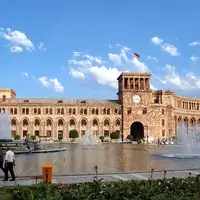
Around Republic Square, tourists stroll past fountains and the square’s distinctive stone buildings. Among them, Iranian men of different ages sit on benches speaking Persian.
Listen to some of their conversations and the subject is not where to eat or what to see.
It is work: wages, employers, rent and who is still hiring.
For some Iranians, Armenia is no longer somewhere to spend money on a few days away. It is a nearby country where they hope to earn enough to cover their own expenses and send what remains to their families in Iran.
‘Job placement’ signs in Persian
A few streets away, around Tigran Mets Avenue and the Firdusi neighborhood, the change is even more visible.
A job placement advertisement near Tigran Mets Avenue in Yerevan.
Sheets of paper attached to some walls carry a single word in Persian: job placement.
The reasons Iranians travel to Armenia vary widely. Many still come as tourists. Others choose Yerevan as a place to meet relatives who have emigrated to Western countries.
War and concerns about security have also prompted some to leave Iran temporarily.
But another group has been pushed out by the struggle to make a living.
High inflation, falling purchasing power, the declining value of the rial and the growing difficulty of covering everyday expenses have changed the calculation for some Iranian workers.
Even casual work in a neighboring country can make financial sense when the income is earned in Armenian drams and can be converted before some of it is sent back to Iran.
For these workers, a wage that is modest by Armenian standards can carry considerably more weight at home.
Working in Armenia, supporting a family in Iran
Ahmad, a 47-year-old from Sanandaj who asked to be identified by a pseudonym, left his wife and children in Iran and traveled alone to Armenia about four months ago.
He spent his first three months doing construction work in towns around Yerevan, earning about 7,000 drams a day, roughly $19.
Iran’s economic crisis has driven some citizens to Armenia in search of work.
A substantial share of that money went to the contractor.
The size of the wage was not Ahmad’s only concern. He had no written contract and worried that he might finish the job without receiving the money he was owed.
About a month ago, he switched jobs and began driving for Yandex in Yerevan.
Ahmad does not speak Armenian. He has learned only a few basic words useful for navigating the city: left, right and straight.
“From morning until the afternoon, I make enough to cover the car and my expenses. Whatever I earn after that, I can save,” Ahmad said.
That money is sent to his family in Sanandaj.
Reza, another Iranian in his 30s, arrived in Armenia from Karaj two months ago.
Friends who had traveled there before him suggested he come to Yerevan for work.
Concerns about war played a role in his decision to leave Iran, but economic pressure became the main reason for staying.
“The economic situation was so bad that I couldn’t cover my own expenses, let alone help my retired father. Now I work construction here. At least I can convert my wages into foreign currency and send money to them,” Reza said.
Reza also works without a formal written contract.
He has heard about workers whose employers failed to pay them, although he has not had problems with his own employer so far.
Construction, taxis and deliveries
The jobs newly arrived Iranians find are often in sectors where fluency in Armenian or advanced professional qualifications are not required.
Iranians were among the nationalities that filed the most employment-based residence applications in Armenia in the first half of 2026.
Construction is one of the main options, with Iranians working in jobs ranging from steel reinforcement and block laying to electrical work.
Others drive taxis through ride-hailing platforms. Some work as couriers, delivering food and other goods by bicycle, electric scooter or even on foot.
Others have found jobs in online casinos or entertainment and nightlife businesses.
Armenia’s expanding construction sector has helped create demand for workers. Official figures show construction activity increased 24.5% in the first six months of 2026 compared with the same period a year earlier.
But the attraction of these jobs for Iranian workers is not simply that Armenia pays higher wages.
The difference between the value of money earned in the two countries matters just as much.
As the rial has lost value and purchasing power has declined in Iran, earnings that may not stretch far in Yerevan can take on a different value once converted and sent home.
For some, working in Armenia is therefore not the beginning of an attempt to settle there permanently.
It is a way of keeping a household in Iran afloat.
Tourist on paper, worker in Yerevan
Official statistics provide only a partial picture of the Iranian presence in Armenia because not everyone who crosses the border and finds work appears in employment-based residency figures.
The number of Iranian tourists visiting Armenia increased from 176,453 in 2024 to 182,364 in 2025, a rise of about 3.3%.
Iranians accounted for around 8.1% of all foreign tourists in Armenia in 2025, making them the third-largest group after Russians and Georgians.
But being recorded as a tourist does not necessarily mean a visitor spends the entire trip sightseeing or on holiday.
Iranian citizens do not need visas for short-term travel to Armenia. Some who enter under those arrangements find jobs after arriving and enter the informal labor market without obtaining a work permit or employment-based residency.
That leaves open the possibility that some Iranians appearing in tourism and arrival statistics are, in practice, looking for work or returning to jobs they have already found.
High housing costs, unfamiliarity with the Armenian language and banking restrictions are among the main challenges facing newly arrived Iranians in Yerevan.
Available figures do not show how many Iranian visitors begin working after arrival, meaning the share of such workers in the overall increase in Iranian visitors cannot be calculated.
Temporary residency figures offer a clearer view of the formal side of labor migration.
A total of 8,181 foreign nationals received temporary residency in Armenia during the first half of 2026, with citizens of Russia, India and Iran making up the three leading nationalities, according to Armenia’s Interior Ministry Migration and Citizenship Service.
Of those temporary residency permits, 6,085 were issued on the basis of employment.
Citizens of Vietnam, Iran, China and India were among the nationalities filing the largest numbers of applications for employment-based residency.
The figures put Iranians among the main groups receiving temporary residency and among the leading applicants for employment-based status.
The exact number of Iranians granted employment-based residency in the first half of 2026 has not been published.
Those figures also cover only people who went through the formal process. Iranians working without permits in construction, taxis, delivery services and other sectors do not appear in that part of the data.
Tourism and residency figures therefore offer signs of a growing Iranian presence but cannot establish the actual size of the Iranian workforce in Armenia.
Earning abroad, sending money home
Employment brings its own difficulties.
Housing is among the first challenges facing new arrivals. Many Iranians stay in hostels or share rooms and apartments with several other people to keep costs down.
Access to banking services can also be difficult.
Sanctions and banks’ risk-management policies mean opening an Armenian bank account does not necessarily give Iranian nationals full access to cards and international financial services.
But workers such as Ahmad and Reza are not comparing Yerevan with wealthy European cities.
Their calculation is more immediate: what they could earn in Iran versus what they can save in Armenia and send to the people waiting for them at home.
That calculation is giving Armenia a different meaning for some Iranians.
A country associated for years with tours, concerts, festivals and short holidays is now also a place where Iranians lay blocks on construction sites, drive taxis and deliver food to earn money for households across the border.
For those families, Iran’s economic crisis is measured not only in inflation, the exchange rate or lost purchasing power. It is measured in the distance between home and the nearest place where one member of the family can still earn enough to send something back.