• العربية
  • فارسی
Brand
  • Iran Insight
  • Politics
  • Economy
  • Analysis
  • Special Report
  • Opinion
  • Podcast
  • Live TV
  • Iran Insight
  • Politics
  • Economy
  • Analysis
  • Special Report
  • Opinion
  • Podcast
  • Live TV
  • Theme
  • Language
    • العربية
    • فارسی
  • Iran Insight
  • Politics
  • Economy
  • Analysis
  • Special Report
  • Opinion
  • Podcast
  • Live TV
All rights reserved for Volant Media UK Limited
volant media logo

Iran says war-damaged satellite infrastructure restored enough to resume work

Oct 3, 2026, 09:28 GMT+1

Iran has restored key satellite-development infrastructure damaged during the war, although the facilities are not yet back to full capacity, the acting head of the Iranian Space Research Center said on Saturday.

“The infrastructure needed for satellite development that was damaged during the war was restored very quickly,” Nader Makari said at a news conference.

“The infrastructure has not yet returned to 100% capacity, but the facilities needed to resume activities are now in place,” he added.

Makari said work was continuing on several space projects, including the Saman series, the Nahid-3 satellite and the Fars-3 project, as Iran seeks to expand its domestic satellite and orbital-transfer capabilities.

Most Viewed

Iran oil exports vanish as regional flows surpass prewar levels
1

Iran oil exports vanish as regional flows surpass prewar levels

2

Trump says renewed bombing of Iran after midterms 'possible'

3

US targets Iran auto, rail and metals sectors in new sanctions blitz

4
INSIGHT

Iranian press sees diplomacy alive but narrowing after US response

5
ANALYSIS

Iran's rhetoric against UAE hardens after Netanyahu visit

Banner
Banner

Spotlight

  • Islamic Republic's 'slow meltdown' leaves it fewer ways out, analysts say
    PODCAST

    Islamic Republic's 'slow meltdown' leaves it fewer ways out, analysts say

  • Officials trade blame as Iran’s economy sinks deeper

    Officials trade blame as Iran’s economy sinks deeper

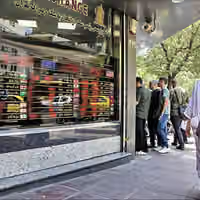
  • As the rial sinks, Iranians seek shelter in almost anything else
    INSIGHT

    As the rial sinks, Iranians seek shelter in almost anything else

  • Shot in leg, forced into hiding: Iran protester recounts January crackdown

    Shot in leg, forced into hiding: Iran protester recounts January crackdown

  • Al-Qaeda is Iran's quiet backup if the war turns, expert says

    Al-Qaeda is Iran's quiet backup if the war turns, expert says

  • Can the Caspian give Iran a way around Hormuz?
    ANALYSIS

    Can the Caspian give Iran a way around Hormuz?

  • A Mossad spy in Iran: From banking infiltration to nuclear and missile sabotage
    SPECIAL REPORT

    A Mossad spy in Iran: From banking infiltration to nuclear and missile sabotage

Banner
Banner
Banner
•
•
•

More Stories

Islamic Republic's 'slow meltdown' leaves it fewer ways out, analysts say

Oct 3, 2026, 08:49 GMT+1
•
Negar Mojtahedi
100%

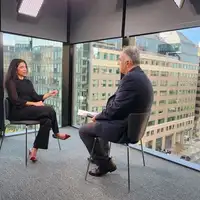
The Islamic Republic is in a "slow meltdown" that may not bring it down soon but is narrowing its options as the economy sinks, repression deepens and divisions open up among its own hardliners, analysts told Iran International's Eye for Iran podcast.

"I just don't see a pathway to rehabilitation," said Kamran Bokhari, a strategic forecaster and senior resident fellow at the Middle East Policy Council.

“This regime cannot go back to what it was.”

The pressure is coming from every direction. The rial fell past 2.5 million to the dollar this week, a record low; at that rate the minimum monthly wage of 166 million rials is worth about $66.

On Wednesday, Washington extended sanctions to Iran's auto and rail industries, on top of a naval blockade of Iranian ports and a campaign against sanctions evasion that have already cut deep into oil revenue and access to foreign currency.

At home, two people detained after January's nationwide protests were executed this week, and four others arrested during the unrest have recently been sentenced to death.

An appeals court upheld sentences of 74 lashes against the singer Parastoo Ahmadi and seven musicians and organizers over a concert she performed without a headscarf, filmed and posted online.

Human Rights Watch and the Abdorrahman Boroumand Center documented 29 executions between March and the end of August of people arrested in connection with the protests. Five were carried out in public.

'They want to show they're in charge'

Alberto Fernandez, a former US diplomat and vice president of the Middle East Media Research Institute, said the repression should be read alongside the economic pressure.

"They want to show they're in charge," he said. Extreme violence, he said, is one way of demonstrating to Iranians and to the world that the state can still impose its will. The more it relies on that, the more it shows both the power it has left and the pressure it is trying to hold down.

"The challenge of the regime is not the war," Bokhari said. "The challenge is governance and economic statecraft."

Three senior Iranian sources told Reuters last month that the US campaign against oil exports and sanctions evasion was becoming increasingly hard to withstand. The average monthly wage now covers less than a third of a household's basic costs, Reuters reported.

Even if Tehran wins some sanctions relief, Bokhari said, he sees little prospect of it recovering what it had.

"Regimes take a long time to undergo a meltdown," he said. "That meltdown was happening even before this war."

The price of eggs

David Patrikarakos, a special correspondent for the Daily Mail and an author, said he watches one basic indicator.

"I have become a keen watcher of the price of Iranian eggs," he said.

When he spoke with people inside Iran during the war, he said, the conversation kept returning to the cost of necessities.

"When the basics become too expensive, no government can deal with that," he said. "You can only terrorize people back into their homes for so many things. If they're starving, they can't afford food, there's nothing you can do."

The authorities appear to know it. More than 6,000 people have been arrested since the war began, Reuters reported this week, as officials worry about renewed protests.

But repression has limits. Bokhari called it a "precision instrument" that can backfire when used too broadly.

"You can oppress people, but if you start to do it at scale, then it can backfire," he said. "At some point, your own security forces will say, 'Where is this going?'"

'The butter part is going out'

If the Islamic Republic survives, Fernandez said, one model is what he called the "North Koreanization" or "Houthization" of Iran: a poorer, more predatory state that can still repress at home and project force abroad while its economy and institutions are hollowed out.

That was never the plan. The Islamic Republic wanted revolutionary and military power abroad and a functioning society and middle class at home, Fernandez said, the old combination of guns and butter.

"Well, the butter part is going out," he said.

Without a reversal, he said, Iran could become "a more ramshackle predatory state." "It still can bite, but it becomes much more fragile, much more fractious."

That trajectory would run against Iran's own sense of itself and the aspirations of its educated population, Patrikarakos said. "The Iranian self-image is wanting to take part in the world."

Even the Islamic Republic, for all its decades of confrontation with the West, never sought North Korea's isolation, he said.

"They don't want to go down the North Korea path," Bokhari said. "The question is, can they avoid it?"

As the options narrow, he said, survival is overriding everything else. "Regime survival is now more than ever before the primary imperative."

What to watch

Bokhari said he is watching for infighting that can no longer be contained. "I'm also watching for signs of infighting, where different elements of the regime start to disagree to a point where the disagreement isn't behind closed doors," he said.

Fernandez said the visible divisions are no longer mainly between moderates and conservatives, the old frame for Iranian politics, but among hardline factions themselves.

He is also watching the currency, and how long Tehran can hold out without real relief. Iran's leaders may be looking to the US midterm elections and the next Congress in the hope that politics in Washington will ease the pressure, he said. If that hope fails, they face a long period of no war and no peace while the squeeze continues.

The Islamic Republic has survived periods when it looked weaker, more isolated and less popular than before. Survival and recovery are not the same thing. The price of food, the value of the rial, unrest in the streets, fractures at the top and the loyalty of the security forces will show how far the meltdown has gone.

"This situation is untenable," Bokhari said.

You can watch Eye for Iran on YouTube or listen on any podcast platform.
Officials trade blame as Iran’s economy sinks deeper

Oct 3, 2026, 04:14 GMT+1
•
Maryam Sinaiee
100%
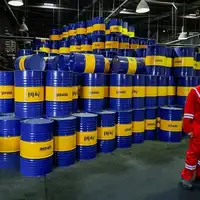
A worker at the Iranol oil refinery in Tehran, Iran, September 29, 2026

Iran’s worsening economic crisis has opened an increasingly bitter argument over who is responsible, as the government points to outside pressure and market psychology while hardliners accuse Tehran’s own economic officials of making the situation worse.

On Thursday, the end of Iran’s market week, the rial fell to another record low. Year-on-year inflation has reached almost 90 percent, with food prices rising even faster.

The deterioration comes as US sanctions and a naval blockade squeeze Iran’s sources of revenue. The blockade has severely constrained oil exports, while Washington on Thursday expanded sanctions into the automotive and rail sectors, targeting some of the country’s largest industrial companies.

US Treasury Secretary Scott Bessent has seized on the rial’s collapse as evidence that Washington’s pressure campaign is working, saying this week that it had driven the currency to its lowest level in history.

Iranian Economy Minister Ali Madanizadeh rejected Bessent’s assessment, telling the official IRNA news agency Thursday that predictions of an imminent economic collapse had repeatedly proved wrong.

“They want to create unrest and stress among the people so they rush to the currency market and the exchange rate increases; otherwise, these statements serve no purpose, and we will not allow this to happen,” he said.

The Central Bank has offered a similar diagnosis. It said Friday that the exchange rate was not “fully consistent with the economy’s fundamental variables,” attributing much of the gap to heightened uncertainty, psychological pressure and market expectations.

The bank announced Wednesday that it planned to inject $2 billion in banknotes into the market. So far, however, the intervention has failed to halt the rial’s slide.

‘The Central Bank shoots it into its own goal’

Hardliners have challenged the government’s explanation, arguing that sanctions and the war cannot by themselves account for the surge in the exchange rate and prices.

Nadergholi Ebrahimi, a hardline lawmaker, claimed in an online interview Thursday that the war had contributed no more than 25% to the recent rise in prices and accused government economic officials of deliberately fueling inflation.

Threatening to seek the impeachment of economic ministers, he accused them of waging an “economic sedition” that was reducing the public’s ability to withstand economic pressure and increasing dissatisfaction.

Hossein Samsami, an economist and hardline lawmaker, has also attacked the Central Bank’s handling of the exchange rate.

“Today, the currency is the enemy’s tool in an all-out economic war, and the measure of its success is the devaluation of our national currency,” Samsami wrote on X.

But he accused the Central Bank itself of helping drive that process by following an exchange rate he said was artificially determined by Iran’s enemies.

“The enemy passes the ball, and the Central Bank shoots it into its own goal!” he wrote.

Inflation approaches 90 percent

Whatever the relative weight of sanctions, war, expectations and domestic policy, their combined effect is increasingly visible in household finances.

According to the Statistical Center of Iran, annual inflation has reached 73.6%, while year-on-year inflation rose to a record 89.8%.

Food and beverage prices have risen substantially faster than overall inflation, hitting lower-income households particularly hard because they devote a larger share of their income to food and other essentials.

Accelerating prices have also eroded the value of government food vouchers introduced after subsidized foreign-exchange rates for a range of goods were removed amid a sharp depreciation of the rial and economic protests in December and January.

Although the government pledged to increase the value of the vouchers in line with rising prices, it has yet to do so.

Wages fall behind as prices surge

The pressure is also increasingly visible among salaried workers.

Videos circulating on social media in recent weeks have shown teachers and nurses saying low wages have left them with no choice but to resign after years in their professions.

Ali Farhadi, spokesman for Iran’s Education Ministry, dismissed reports of widespread teacher resignations as a “rumor” on Friday.

The dispute has become another front in the broader argument over the economic crisis, with government supporters alleging that expressions of discontent are being amplified to encourage unrest and critics accusing authorities of dismissing genuine economic grievances.

Samsami, however, has placed greater responsibility for the hardship on domestic economic policy than on Washington.

“The pressure imposed on people’s livelihoods by misguided economic policies is far greater than that caused by sanctions and the naval blockade,” he wrote, adding: “We are not at an impasse. By reforming our policies, we can control inflation even under these sanctions.”

'They shot on sight': Amnesty details 2022 protest killings in Kurdish areas

Oct 3, 2026, 00:55 GMT+1
100%
A scene of protests in Sanandaj in September 2022

Iranian security forces shot civilians at close range, pursued fleeing protesters and prevented wounded people from receiving help during the 2022 Woman, Life, Freedom uprising in Kurdish cities, according to Amnesty International’s investigation into the crackdown.

The organization documented the unlawful killing of 95 Kurdish protesters and bystanders, including 13 children, across 17 counties in Kurdistan, Kermanshah and West Azerbaijan provinces.

Its findings describe repeated patterns of lethal force used to disperse demonstrations, punish protesters and deter further gatherings.

Among those killed was Yahya Rahimi, a 30-year-old man shot in his car in Sanandaj on October 8, 2022, apparently in retaliation for sounding his horn in solidarity with protesters while stuck in traffic.

Sources interviewed by Amnesty said plain-clothes agents smashed Rahimi’s car windows. Shortly after, an agent aimed a shotgun at his head and fired metal pellets from about half a metre away.

Amnesty verified five videos supporting accounts of the killing and reviewed his burial certificate, which recorded extensive brain damage and shattered skull bones caused by a fast-moving projectile.

Wounded protesters left without help

The investigation also documented cases in which security forces obstructed assistance after shooting people.

Shahou Bahmani, 36, was fatally shot in Sanandaj on November 17, 2022, during protests following a memorial gathering for people killed earlier in the uprising.

According to eyewitnesses cited by Amnesty, Bahmani remained bleeding for 30 to 40 minutes while security forces fired at protesters trying to help him. People took him to hospital after the forces withdrew. He was declared dead shortly after arrival.

“The agents would shoot anyone in their sight,” one witness, identified as Iman, told Amnesty.

The organization reviewed two videos showing Bahmani wounded and bleeding as people attempted to assist him, as well as his death certificate.

In Kermanshah, Minoo Majidi was killed on September 20 while fleeing police Special Cohorts on motorcycles. Amnesty said the agents chased protesters and bystanders while repeatedly firing shotguns loaded with metal pellets, hitting Majidi at close range.

Bystanders were also killed. Fereydoon Faraji was shot in Baneh on October 27 while looking out of a window at his workplace as security forces fired at people fleeing the crackdown.

A more militarized response

Amnesty recorded 35 unlawful killings in Kurdistan province, 19 in Kermanshah and 41 in West Azerbaijan.

It found that forces in the three provinces adopted a more militarized response than elsewhere, frequently deploying military-grade firearms soon after protests began.

Weapons included assault rifles, designated marksman rifles, sub-machine guns and heavy machine guns mounted on pickup trucks.

The organization said the lethal force in the documented killings was used to disperse, intimidate or punish people, rather than defend against an imminent threat of death or serious injury.

Kurdish and Baluchi victims together accounted for about 62% of the 326 people Amnesty recorded as killed during protest dispersals or in areas with a militarized security presence.

That figure includes 106 Baluchi protesters and bystanders killed in Sistan and Baluchistan.

Amnesty concluded that the disproportionately high toll could not be explained by protest size alone.

It found that murder and torture against Kurdish and Baluchi protesters were committed with discriminatory intent on political and ethnic grounds, meeting the elements of the crime against humanity of persecution.

The uprising began after the death in custody of Zhina Mahsa Amini, a Kurdish woman arrested by morality police in Tehran in September 2022.

Amnesty said it sought comments from Iran’s leadership and senior officials before publishing its investigation on September 16, 2026. It had received no responses by publication.

Two Iranians charged over foiled plot targeting Manchester Jews

Oct 2, 2026, 21:26 GMT+1
100%
Police officers walk outside the Woolwich Crown Court in London, Britain, September 26, 2025.

Two Iranian men have been charged over a terrorist plot targeting Manchester’s Jewish community that was disrupted before it could be carried out, British police said Friday.

Rahman Salehi, 35, and Salam Ahmadyan, 36, were arrested on September 20, on the eve of Yom Kippur, in Manchester’s Northern Quarter and charged with preparing or assisting an act of terrorism.

Police allege the two men were in contact with a third party overseas who may have been in Iran, though authorities have not publicly established that the Iranian state directed the alleged plot.

Vicki Evans, the senior national coordinator for Counter Terrorism Policing, said: “This week also brought into sharp focus some of the wider threats being projected into the UK from Iran.”

The case follows a separate suspected plot near RAF Fairford, a British airbase used by US bombers in operations against Iran.

Five British men were arrested near the base on September 27 on suspicion of terrorism and explosives offences, while a dual UK-Iranian national was detained days later.

In March, police arrested four men suspected of spying for Iran and conducting surveillance of Jewish targets in London, while MI5 previously said it had disrupted 20 Iran-linked plots in Britain over a 12-month period.

In July, Britain formally designated Iran’s Islamic Revolutionary Guard Corps as a threat to national security, making public support for the organization or assistance to it punishable by up to 14 years in prison.

The IRGC is one of the Islamic Republic’s most powerful military and political institutions. Its overseas Quds Force oversees Tehran’s relationships with allied armed groups and has been accused by British authorities of directing operations against dissidents, journalists and Jewish or Israeli-linked targets in Europe.

British authorities said Quds Force members were behind the Islamic Movement of Companions of the Right which claimed responsibility for seven attacks this year against Persian-language media and locations linked to Jewish and Israeli communities in Britain.

Those incidents included an antisemitic arson attack that damaged four ambulances belonging to the Jewish emergency service Hatzola in Golders Green, north London, on March 23.

Iran denies teachers are quitting despite viral resignation videos

Oct 2, 2026, 19:38 GMT+1
100%
A teacher embraces a young student in a girls’ classroom in Iran's southern port city of Bushehr, September 2026

Iran’s Education Ministry dismissed reports of teacher resignations over working conditions and security pressure as a “rumor,” despite numerous videos of teachers announcing departures and a teachers’ council warning of a growing exodus.

Education Ministry spokesman Ali Farhadi said Friday that reports of teacher resignations were “not true” and accused unspecified actors of trying to undermine in-person education.

“The resignation of teachers is a rumor,” Farhadi told the Tasnim news agency, saying teachers and students had welcomed the return to classrooms across the country, including in southern provinces such as Hormozgan.

But the Coordinating Council of Iranian Teachers’ Trade Associations has offered a sharply different account, saying numerous videos and reports of resignations have emerged from different parts of the country in recent weeks.

The council said teachers were leaving because of a combination of wages below the poverty line, worsening living conditions, administrative pressures and what it described as the securitization of the profession, including dismissals, suspensions, arrests and legal cases against teachers and union activists.

It warned that experienced teachers were being driven out of classrooms by policies that had pushed the education system toward decline.

Videos circulating on social media in recent days have shown teachers announcing their resignations and citing financial hardship, workload and a lack of recognition for their work.

The dispute comes as Iran’s education system is already grappling with teacher shortages and longstanding discontent over pay and working conditions.

Teachers have repeatedly protested over salaries and benefits, including at a demonstration outside the Planning and Budget Organization in Tehran in September.

Labor activists have also warned that financial pressures are forcing some teachers to work multiple jobs, while shortages of teaching staff are affecting the quality of education.

The resignations have emerged against a wider backdrop of pressure on teachers and union activists, who in recent years have faced arrests, prison sentences, dismissal and suspension from work.

The Coordinating Council rejected the government’s portrayal of the unrest in schools as the product of outside agitation, arguing that the discontent stems instead from conditions within the education system itself.

Whether the resignations amount to the “wave” described by the teachers’ council is difficult to establish. The pressures it says are driving teachers out are considerably easier to document.