• العربية
  • فارسی
Brand
  • Iran Insight
  • Politics
  • Economy
  • Analysis
  • Special Report
  • Opinion
  • Podcast
  • Live TV
  • Iran Insight
  • Politics
  • Economy
  • Analysis
  • Special Report
  • Opinion
  • Podcast
  • Live TV
  • Theme
  • Language
    • العربية
    • فارسی
  • Iran Insight
  • Politics
  • Economy
  • Analysis
  • Special Report
  • Opinion
  • Podcast
  • Live TV
All rights reserved for Volant Media UK Limited
volant media logo

IRGC outlet accuses reformists of feeding Trump's pressure campaign

Sep 28, 2026, 16:54 GMT+1
Supporters of Iran’s government wave national flags during a rally in Tehran after authorities announced a two-week ceasefire in the war with the United States and Israel, April 8, 2026

Iranian reformists are helping sustain Washington’s pressure campaign by signaling that sanctions and other coercive measures are pushing Tehran toward negotiations and concessions, the IRGC-affiliated Fars news agency argued Monday.

In a commentary titled Reformists' Game in Trump's Sanctions Pressure Puzzle, Fars said Washington looks for political and social effects inside Iran whenever it applies economic, military or diplomatic pressure, and accused reformists of providing precisely the response US policymakers hope to see.

It argued that calls for negotiations under pressure, suggestions that Iran should suspend nuclear activities, support for what some reformists have termed an “honorable peace,” and doubts about the usefulness of measures such as closing the Strait of Hormuz all send Washington the message that pressure is working.

“When the other side sees that external pressure is also turning into a domestic political demand for retreat and concessions, it naturally has greater motivation to maintain and even intensify that pressure,” the commentary said.

Fars drew a distinction between the military and economic fronts, arguing that direct US military action had encountered Iranian resistance and failed to achieve its objectives, while Washington continued to see sanctions and economic pressure as effective because their impact was quickly reflected in domestic calls for compromise.

The outlet said this created a cycle in which each new US measure was reinforced by political arguments inside Iran that the country had little choice but to negotiate or relinquish some of its leverage. Iranian society and the economy ultimately bear the cost of that cycle, it said.

Fars also accused reformists of constructing a “false dichotomy” between war and peace by presenting themselves as supporters of negotiations while portraying their opponents as advocates of violent confrontation. It argued that negotiations were only one tool of foreign policy and invoked the establishment's longstanding formulation that diplomacy and the “field” — a term commonly used for military and regional power — should complement one another.

The commentary comes amid an increasingly public dispute over the scope of negotiations with Washington.

IRGC-affiliated outlets and hardline lawmakers have criticized Foreign Minister Abbas Araghchi's contact with US envoy Steve Witkoff in New York, questioning whether he was authorized to hold direct discussions.

At the same time, Major General Yahya Rahim Safavi, a military adviser to Iran's supreme leader, has said the government has been given room to pursue negotiations.

The dispute therefore extends beyond whether Tehran should negotiate at all, focusing increasingly on how talks should be conducted, what concessions Iran can offer and whether military, nuclear and maritime leverage should be maintained alongside diplomacy.

Most Viewed

Why Trump said no to Iran’s Hormuz proposal
1
ANALYSIS

Why Trump said no to Iran’s Hormuz proposal

2

Tehran seeks negotiated way out as Washington maintains pressure

3
OPINION

Iran’s oil industry has too many masters

4

Hormuz oil flows rise despite Iran threats against shipping

5

UAE outmaneuvers Iran’s Hormuz strategy, state TV analysts say

Banner
Banner

Spotlight

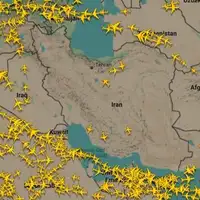
  • Iran’s shrinking air links raise costs, strain regional ties

    Iran’s shrinking air links raise costs, strain regional ties

  • Why Trump said no to Iran’s Hormuz proposal
    ANALYSIS

    Why Trump said no to Iran’s Hormuz proposal

  • Iran’s oil industry has too many masters
    OPINION

    Iran’s oil industry has too many masters

  • Iran wrong to expect midterms to restrain Trump, former US official says

    Iran wrong to expect midterms to restrain Trump, former US official says

  • Trump may be buying time on Iran until after the midterms
    PODCAST

    Trump may be buying time on Iran until after the midterms

  • US and Iran want a deal, but neither wants to move first
    ANALYSIS

    US and Iran want a deal, but neither wants to move first

Banner
Banner
•
•
•

More Stories

Iran eases Korean appliance curbs through informal border trade

Sep 27, 2026, 02:29 GMT+1
100%
Poverty pushes many in western border regions into kolbari, the hazardous practice of carrying goods on one’s back across the border

Iran on Saturday expanded limited imports of South Korean home appliances through its border trade system, five years after Ali Khamenei ordered restrictions on products from LG and Samsung.

Iran’s Trade Promotion Organization said the change applies to goods brought in by border carriers, seafarers and border cooperatives, while imports of major appliances through normal commercial channels remain prohibited.

The clarification came after Iranian media initially reported a broader lifting of restrictions on Samsung and LG.

Rather than reopening commercial imports, the measure expands a narrow exception tied specifically to Iran’s border economy.

It allows more trade and income to flow through border areas without formally abandoning a policy associated directly with Khamenei and the state’s longstanding protection of domestic manufacturers.

Destitute and discontent

Poverty and scarce employment have pushed even children and teenagers in western border regions into kolbari, the hazardous practice of carrying goods on one’s back across the border.

Allowing more goods through cooperatives and border traders could therefore provide a limited economic pressure valve.

Officials have not described the measure as an attempt to reduce discontent, but the decision to channel the exception through mechanisms designed around border employment gives it a distinct geographic focus.

Economic deprivation in Iran’s border regions also overlaps with longstanding political and security tensions. Kurdish-majority areas along the Iraqi border, where kolbari is widespread, have repeatedly seen deadly crackdowns and armed confrontations with security forces.

Protectionism

The move also comes as the industry the ban was designed to protect is itself struggling. Five years later, the objectives of the protectionist policy remain elusive.

Refrigerator production has fallen 25% year-on-year, television production 36% and washing-machine output 42%, according to the Statistical Center of Iran.

Home-appliance prices in August were 117% higher than a year earlier, while Iranian producers still import roughly $1.2 billion of components annually for four major appliance categories.

Protection has also reduced consumer choice, with the burden falling unevenly. Foreign appliances have continued to reach more affluent Iranians through unofficial channels, while lower-income consumers have fewer alternatives.

With Samsung and LG outside the normal import network, access to authorized sales, spare parts and after-sales service has also become more difficult.

Who bears the cost?

The pattern resembles Iran’s automobile industry, where imports were banned or severely restricted for years while domestic producers were shielded from foreign competition.

Khamenei himself acknowledged in 2022 that domestic car quality was poor and that public complaints were justified. Subsequent attempts to reopen imports have remained tightly controlled.

Here too, the burden has been uneven. Lower-income consumers have fewer alternatives, while wealthier Iranians have greater ability to obtain imported and luxury vehicles through more expensive channels.

The result is a recurring pattern in Iran’s protected industries. Import restrictions create scarcity and opportunities for intermediaries while imposing the greatest costs on consumers with the fewest resources.

The latest appliance measure loosens one part of that system without dismantling it: a narrow opening at the borders, while the protectionist structure that produced many of the distortions remains intact.

Pezeshkian’s Fox News nuclear overture draws hardline backlash

Sep 26, 2026, 00:15 GMT+1
•
Maryam Sinaiee
100%

Iranian hardliners have intensified attacks on President Masoud Pezeshkian after he signalled nuclear flexibility and backed negotiations with Washington in a Fox News interview.

Conservative officials and media outlets had largely welcomed Pezeshkian’s speech to the UN General Assembly on Wednesday, but his comments to Fox News a day later provoked a sharp backlash from hardliners.

Pezeshkian said Iran was prepared to reduce its level of uranium enrichment, dilute its existing stockpile of uranium enriched to 60% and allow international verification as part of efforts to ease tensions over its nuclear program.

He also said Tehran wanted a possible agreement before the US midterm elections in November and denied that Iran had a plan to assassinate US President Donald Trump.

The contrasting reactions underscored a problem confronting Pezeshkian and Foreign Minister Abbas Araghchi: declarations of defiance can command broad support within Iran’s political establishment, but the concessions involved in actually reaching an agreement with Washington are proving considerably more contentious.

“Mr. Pezeshkian, don't spout nonsense about nuclear matters and uranium!” wrote hardline activist Mohammad-Hossein Chavoshi.

“We supported you when you spoke the truth, and we'll do it again; but if you step out of line, we'll deal with you accordingly. We will not give up the nuclear issue.”

But some defended Pezeshkian’s position.

“Did he say we should abandon the nuclear program?” one user wrote. “He is talking about 60% enrichment. Should we have constant war, remain under siege and have no money?

“Go to a large pharmacy and see what the shortage of medicine is like, not to mention the state of businesses and the market. Nobody is saying we should surrender. We can move forward thoughtfully.”

Araghchi’s plan

The backlash has not been confined to Pezeshkian. Foreign Minister Abbas Araghchi has faced sustained attacks from hardliners since presenting an Iranian proposal to the US through intermediaries on Tuesday.

The proposal sets out a phased, one-week process for implementing commitments, after which direct or indirect talks on a broader agreement could resume, according to Araghchi.

He said at a press conference on the sidelines of the UN General Assembly that Iran was ready to begin implementing the plan as soon as Washington agreed to it and that negotiations on the nuclear issue would resume after the Strait of Hormuz was reopened at the end of the seventh day.

According to Araghchi, one of the conditions is US agreement on a maritime passage arrangement through the Strait of Hormuz that has been agreed between Iran and Oman.

Although Mohsen Rezaei, secretary of Iran’s Supreme National Security Council, confirmed in a television interview on Saturday that Araghchi had been authorized to convey Iran’s conditions to the US through intermediaries in New York, criticism of the foreign minister has continued.

On Wednesday, hardline parliamentarian Amir-Hossein Sabeti said he had registered an impeachment motion against Araghchi through parliament’s system.

Warnings of wider conflict

At the same time, political and military figures have stepped up warnings of escalation if US pressure continues.

Ahmad Alamolhoda, the Friday prayer leader in Mashhad, said Friday that Iran had new weapons that would be used in the event of another US attack. He said Iran could expand the geographical range of attacks against US forces as far as the Indian Ocean.

IRGC spokesman Hossein Mohebbi similarly said Iran was prepared to enter new stages of confrontation with the US and could respond to another attack by “changing the geography of the conflict, using new equipment and weapons, and selecting different targets.”

The warnings have increasingly extended to neighboring countries as restrictions on Iranian aviation have tightened. Iranian flights to Najaf, Iraq, were cancelled Friday, further narrowing the country’s remaining international connections.

Rezaei warned regional countries earlier this week that if they barred Iranian flights in cooperation with Washington, flights from their own airports could also be stopped.

Mohammad Mokhber, an adviser and aide to Supreme Leader Mojtaba Khamenei, sharpened that warning Friday.

“Flights in the region are either free for everyone or for no one,” he wrote on X. “If Iran is unable to fly and receive airport services, no country in the region will have this possibility either.”

The competing messages highlight the difficulty facing Tehran as contacts with Washington resume: Pezeshkian and Araghchi are outlining the concessions and sequencing that a negotiated settlement could require, while hardline political and security figures emphasize Iran’s ability to widen the confrontation.

IRGC outlet rebukes Iran VP over Saudi National Day celebration

Sep 25, 2026, 20:17 GMT+1
100%

The IRGC-affiliated Fars News criticized Iran’s executive vice-president on Friday for joining Saudi officials in a cake-cutting ceremony marking the kingdom’s National Day in Tehran, which it said created an overly “friendly” image at a time of heightened regional tensions.

“Jafar has done it again,” Fars wrote, referring sarcastically to Mohammad Jafar Ghaempanah.

The issue, it said, was not Ghaempanah’s attendance at the event but what it described as the creation of an overly “friendly” image at a time of heightened tensions involving Iran, Saudi Arabia and the United States.

Ghaempanah later told state television that he had not been personally eager to attend the ceremony and had done so on instructions from officials responsible for Iran’s foreign policy.

“I had no motivation to attend the Saudi National Day ceremony, but I was instructed by the relevant foreign policy authorities to take part,” he said.

Ghaempanah added that during the event he condemned what he described as US attacks on Iran carried out from Saudi territory.

Fars said Iran and Saudi Arabia have diplomatic relations and that officials attending each other’s formal ceremonies was consistent with Tehran’s neighborhood policy.

But the outlet objected to images showing Ghaempanah standing alongside Saudi officials and holding hands with a Saudi representative during the cake-cutting ceremony, saying there was a distinction between “diplomatic presence” and producing “a friendly frame” under current conditions.

It pointed to the US naval blockade of Iran and reports of military cooperation between Washington and Riyadh against Iran-aligned groups in the region, arguing that symbolic gestures by senior Iranian officials would therefore face greater scrutiny.

Fars also linked the episode to earlier controversies surrounding Ghaempanah, saying a pattern had emerged in which remarks or actions by the vice president triggered criticism before he later explained that they had been misunderstood.

Ghaempanah previously drew criticism from hardliners after questioning the costs associated with Iran’s uranium enrichment program and arguing that policy should be assessed partly on a cost-benefit basis.

He later said those remarks were intended to argue for minimizing the costs of pursuing national objectives, rather than opposing uranium enrichment itself.

US and Iran want a deal, but neither wants to move first

Sep 25, 2026, 18:17 GMT+1
•
Behrouz Turani
100%
Participants ride motorcycles during a Janfada mobilisation rally in Tehran, beneath a billboard depicting a warrior emerging from the sea and confronting a burning ship, September 25, 2026

Talks between Iranian and US diplomats have continued in New York despite increasingly harsh rhetoric from both capitals, but the emerging dispute is less over whether to negotiate than over who must move first.

The discussions have increasingly focused on sequencing: Iran wants the United States to lift its economic blockade before Tehran reopens the Strait of Hormuz, while Washington is seeking movement on the strait before surrendering its principal source of leverage.

Neither side appears willing to go first despite the mounting economic and political costs of the deadlock.

On the sidelines of the UN General Assembly, Iranian President Masoud Pezeshkian said in an interview with Fox News that Tehran was willing to relinquish its stockpile of uranium enriched to 60% within the framework of international law and its obligations under the Nuclear Non-Proliferation Treaty.

The choice of Fox News may also have reflected an effort to reach President Donald Trump and his political audience more directly, given the network’s close relationship with the president.

Pezeshkian also said Tehran hoped to revive its June ceasefire understanding with Washington before the US midterm elections in November.

“We don't want it to get to the midterm elections,” he told reporters.

Trump has suggested the opposite timetable, saying in his UN General Assembly address that an agreement with Iran would likely be reached after the elections.

Who moves first?

Although both sides insist they seek peace, they remain divided over how an agreement would be implemented and in what order each should make concessions.

Tehran insists that no agreement can be reached before the United States lifts its economic blockade, while Washington and its European allies favour the opposite approach.

The disagreement is compounded by the collapse of the Islamabad Memorandum of Understanding.

From Tehran’s perspective, returning to an agreement that Washington previously failed to honour requires guarantees upfront. From Washington’s perspective, reviving the June arrangement risks appearing to reward Iran for using the Strait of Hormuz as leverage.

Supporters of diplomacy on both sides, along with mediators including Pakistan and Qatar, continue to urge the replacement of military rhetoric with political dialogue.

The problem is that each side is making a different calculation about timing and sequencing, while political considerations discourage either from moving first.

Iran’s demand that “all fronts” be addressed further complicates the equation, linking any agreement to Israel’s actions in Lebanon and elsewhere, while the widening confrontation in the Red Sea and around Bab el-Mandeb has added another layer of uncertainty to negotiations.

The midterms

The competing timetables reveal another dimension of the deadlock: both capitals have now openly linked a potential agreement to the November elections, but appear to be drawing opposite conclusions about who benefits from waiting.

It remains unclear whether Pezeshkian’s remarks will materially alter the course of negotiations. For now, each side appears to calculate that time is placing greater pressure on the other.

Trump’s threat to “annihilate Iran” raises the domestic political cost for Tehran of making concessions and increases the risk that any flexibility will be portrayed by Pezeshkian’s hardline opponents as capitulation.

Washington has political constraints of its own, with congressional hawks and influential regional lobbying groups likely to raise the political cost of concessions to Tehran ahead of the midterm elections.

The view from Tehran

The reformist daily Sharq argued on Thursday that the resumption of contacts offered an opportunity to prevent further escalation, but that significant differences between the two governments and political opposition at home made an immediate breakthrough unlikely.

“The mere continuation of mediation, or even a direct meeting between the presidents of Iran and the United States, lacks the capacity to overcome the current deadlock,” it said. “Changing this situation requires practical and reciprocal decisions from both Tehran and Washington that go beyond diplomatic messaging.”

That assessment points to the constraints facing Pezeshkian, including opposition from hardline parliamentary factions and Iran’s powerful security establishment.

For Iran’s leadership, the principal risk of an agreement is surrendering strategic leverage without guaranteed sanctions relief. For the Trump administration, moving first could expose it to accusations of appeasement ahead of the midterm elections.

The contacts in New York therefore suggest that diplomacy itself is not the missing ingredient. The harder question is whether either side is prepared to move first — and accept the political cost of doing so.

Pezeshkian straddles Iran’s divide at UN as US talks test balance

Sep 25, 2026, 00:00 GMT+1
•
Maryam Sinaiee
100%
Iran's President Masoud Pezeshkian addresses the 81st United Nations General Assembly (UNGA) at UN headquarters in New York City, US, September 23, 2026.

President Masoud Pezeshkian’s UN speech won unusual praise across Iran’s political establishment Thursday, but emerging details of negotiations with the United States could soon test the president’s careful balancing act.

Conservatives embraced Pezeshkian’s defiant rhetoric at the General Assembly, while reformists highlighted his willingness to negotiate, allowing both sides to find something to welcome in an address that rejected surrender while keeping the door open to diplomacy.

The harder test may now come at the negotiating table.

US and Iranian negotiators in New York are exploring a phased agreement that could reopen the Strait of Hormuz in exchange for Washington lifting its economic blockade of Iran, Reuters reported Thursday.

Neither side wants to surrender its main source of leverage before the other acts, and the talks remain far from an agreement.

Any substantive movement toward such an arrangement could sharpen the domestic divisions that Pezeshkian’s speech temporarily managed to straddle, particularly among hardliners who have opposed negotiations with Washington.

‘We will not surrender’

Pezeshkian’s speech Wednesday night drew praise from senior officials including Parliament Speaker Mohammad Baqer Qalibaf, judiciary chief Gholam-Hossein Mohseni Ejei, Expediency Council Chairman Sadegh Amoli-Larijani and Army Commander Major General Amir Hatami.

Revolutionary Guards commander Ahmad Vahidi said Pezeshkian’s remarks reflected the position of the Iranian people.

“We are not afraid of war. This is the voice of the Iranian people that was heard by the world through him,” Vahidi wrote.

Acting Defense Minister Majid Ibn al-Reza also praised the speech, saying Iran’s message represented a “change in Iran’s defense doctrine” and that the country would accelerate the development of its military capabilities accordingly.

Kayhan, one of the strongest opponents of negotiations with the United States, said Pezeshkian had turned New York into a “court for prosecuting the crimes of Washington and Tel Aviv” and delivered a decisive response to US President Donald Trump.

Javan, a newspaper affiliated with the IRGC, put Pezeshkian’s “We will not surrender” phrase on its front page.

‘Strategic mistake’

Reformist newspapers, however, emphasized another part of the same address: Pezeshkian’s stated readiness for negotiations and engagement with the world.

Their headlines included “We are not afraid of war, we do not shy away from negotiations for peace” and “Neither warmongering nor fear of negotiations,” illustrating the markedly different ways the speech was being presented to domestic audiences.

The balancing act did not satisfy everyone.

Hardline journalist Davoud Modarresian described parts of the speech as worthy of praise but criticized Pezeshkian for travelling to New York and continuing to advocate negotiations.

In the face of Trump’s threats against Iran, he argued, declaring readiness for talks amounted to a “strategic mistake.”

Other hardline commentators complained that Pezeshkian had failed to demand retribution for US and Israeli attacks.

A speech for home?

Reformist journalist Ahmad Zeidabadi, meanwhile, questioned the enthusiastic reception from some of Pezeshkian’s most determined opponents of negotiations with the United States.

He asked whether those praising the president also supported his references to negotiations, or were selectively highlighting his more confrontational remarks in an effort to push the president in a more radical direction.

Some reformists saw the combination differently. Journalist Mohammad Sohofi argued that Pezeshkian sometimes employed populist slogans precisely to reduce tensions and marginalize hardline opponents of his policies.

Former Tehran Chamber of Commerce chairman Hossein Selahvarzi said the speech appeared designed more for a domestic audience than for the international community.

“Pezeshkian’s speech seemed to have been written more to be heard inside the country than to convince the world,” he wrote, arguing that the president should have presented more concrete proposals and initiatives.