• العربية
  • فارسی
Brand
  • Iran Insight
  • Politics
  • Economy
  • Analysis
  • Special Report
  • Opinion
  • Podcast
  • Live TV
  • Iran Insight
  • Politics
  • Economy
  • Analysis
  • Special Report
  • Opinion
  • Podcast
  • Live TV
  • Theme
  • Language
    • العربية
    • فارسی
  • Iran Insight
  • Politics
  • Economy
  • Analysis
  • Special Report
  • Opinion
  • Podcast
  • Live TV
All rights reserved for Volant Media UK Limited
volant media logo

Iran's Guards stage show of force two days after protest anniversary

Sep 18, 2026, 12:57 GMT+1
Women sit beside mock-ups of Iranian missiles during the state-organized Janfadayan-e Iran parade in Tehran on September 18, 2026.

Iran's Revolutionary Guards paraded uniformed volunteers, Basij paramilitaries and children through Tehran on Friday in a state-organized show of force, two days after the anniversary of the 2022 protests.

The event, named Janfadayan-e Iran, roughly "those ready to give their lives for Iran," began in the morning on the order of Hassan Hassanzadeh, commander of the Guards' Tehran corps, with the password "Labbaik ya Khamenei," at your service, Khamenei.

State media put the number on the streets at more than 300,000 and said 600,000 had registered for military training. None of the figures could be independently verified. State television had spent several days urging Iranians to sign up.

The organizers billed it as a 313,000-strong parade, a number with religious rather than statistical meaning. Shiite tradition holds that 313 companions will rise alongside the Hidden Imam, the twelfth imam of Shiite Islam, who is believed to have vanished in the ninth century and to be destined to return.

100%
Women carry models of Iranian missiles during the state-organized Janfadayan-e Iran parade in Tehran on September 18, 2026.

Hassanzadeh said the purpose of the exercise was to counter "the propaganda and media operations of the enemies of the Islamic Republic."

Hossein Taeb, the former Revolutionary Guards intelligence chief who now heads the Basij, described the marchers as "resistance battalions" ready for "full-fledged defense" and called the campaign "the biggest popular movement in the history of the world's wars."

Similar parades would follow in every province, he said, and the United States would soon be defeated and leave the region.

President Masoud Pezeshkian attended and described the display as "a magnificent manifestation of solidarity, cohesion and national loyalty."

Footage from the event showed, alongside Basij units and supporters organized by the Guards, children and teenagers marshalled by the Basij, and members of Iran-backed groups from the region, including Houthis.

100%
Children hold rifles during the state-organized Janfadayan-e Iran parade in Tehran on September 18, 2026.

Women from the Guards carried rifles beneath a banner showing Donald Trump in crosshairs above the words "We will kill." Participants trampled US and Israeli flags. Anti-aircraft batteries, truck-mounted machine guns and the drones used against shipping in the Strait of Hormuz were put on display.

The parade closed a week in which the rial fell past 2.3 million to the dollar under a US naval blockade and new sanctions, and came two days after the fourth anniversary of the death of Mahsa Amini in morality police custody, which set off the 2022 protests.

Police and the Guards had increased patrols in Tehran and Isfahan ahead of the date.

Banner

Most Viewed

Video of Iran's police sexually abusing teenager draws fury
1

Video of Iran's police sexually abusing teenager draws fury

2

US House passes Iran sanctions as Trump signals war may be nearing end

3

Iran rapidly rebuilding site tied to past nuclear weapons research - report

4

Trump weighs major Iran escalation as China steps up diplomatic push

5

Calls to quit NPT grow in Iran as critics warn of strategic trap

Banner
Banner

Spotlight

  • Why Iran’s hardliners keep talking of ousting Pezeshkian
    INSIGHT

    Why Iran’s hardliners keep talking of ousting Pezeshkian

  • Woman, Life, Freedom and the Iran that cannot go back
    OPINION

    Woman, Life, Freedom and the Iran that cannot go back

  • Calls to quit NPT grow in Iran as critics warn of strategic trap

    Calls to quit NPT grow in Iran as critics warn of strategic trap

  • From Halkbank to Golden Global: Turkey’s Iran banking ties under US scrutiny

    From Halkbank to Golden Global: Turkey’s Iran banking ties under US scrutiny

  • Iranian women recall the first time they went out uncovered
    VOICES FROM IRAN

    Iranian women recall the first time they went out uncovered

  • ‘This is the cost you must pay’: Iran accused of denying food to death-row twin

    ‘This is the cost you must pay’: Iran accused of denying food to death-row twin

Banner
•
•
•

More Stories

Woman, Life, Freedom and the Iran that cannot go back

Sep 17, 2026, 16:10 GMT+1
•
Lawdan Bazargan
100%
People walk and shop in a local market in Tehran, Iran, summer of 2026

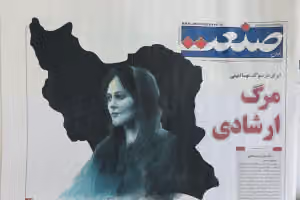
Four years after Mahsa Amini’s death, the deepest legacy of Woman, Life, Freedom may be that Iran cannot simply be returned to the society it was before September 2022.

Four years have passed since Zhina Mahsa Amini, a 22-year-old woman who had travelled to Tehran to visit family, died after being detained by the morality police.

She could never have imagined how her name would appear on walls, streets and university campuses, or on the lips of millions of Iranians, or how three simple words, “Woman, Life, Freedom,” would become one of the most enduring slogans in Iran’s modern history.

The story of 2022 is not only the story of a slogan. It is the story of the price thousands paid to break through the wall of fear.

Zhina’s death on September 16, 2022, sparked protests across Iran. Human rights organizations documented live ammunition and pellet fire, mass arrests, torture, sexual violence and the killing of protesters. HRANA later recorded protests in all 31 provinces, 160 cities and 143 universities, and reported at least 530 people killed, including 68 children and teenagers.

Nika Shakarami and Sarina Esmailzadeh were both sixteen. Kian Pirfalak was nine, remembered for “In the name of the God of the rainbow” and the small boat he built with his own hands. Khodanour Lojei, a 27-year-old Baluch man, lives on in videos of him dancing, alongside the haunting image of him with his hands tied to a pole and water placed before him while in detention.

Their stories were different, but each became part of the collective memory of Woman, Life, Freedom.

Then came the gallows. Mohammad Mehdi Karami, a 22-year-old karate champion, was executed after being sentenced in connection with the fortieth-day commemoration for Hadis Najafi. Seyed Mohammad Hosseini, who worked at a poultry farm and taught martial arts to disadvantaged children for free, was executed the same day; human rights reports say his confessions were obtained under torture. Majidreza Rahnavard, executed only 23 days after his arrest, asked before his death that people not cry at his grave but celebrate and play happy music.

These names are reminders that behind every statistic was a family.

The repression did not end with the street protests. Students, schoolchildren, journalists, artists, athletes and activists were arrested. Families sometimes went weeks or months without news. Some detainees appeared in televised “confessions” that human rights organizations said were tainted by torture. Families seeking the truth about those killed also faced pressure. Others eventually left Iran after imprisonment, threats and persecution, carrying the cost of the uprising into exile, lost careers, interrupted education and separation from family.

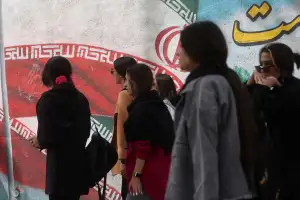
And yet one of the movement’s deepest legacies is visible in an ordinary scene: a woman walking down an Iranian street without compulsory hijab.

The state responded with fines, vehicle seizures, arrests, flogging, business closures, cameras and surveillance. But women’s defiance continued. Four years after Zhina’s death, a woman without compulsory hijab is no longer the exceptional image it was in September 2022; it has become part of Iran’s social reality.

That is also where the connection to Dey 1404 (December 2025 and January 2026) becomes important.

The new protests began amid the collapse of the currency, inflation and protests by Tehran bazaar merchants, but quickly moved beyond economic demands. According to HRANA data cited in a UK government report, by January 27 at least 656 gatherings had been recorded in 201 cities across all 31 provinces, compared with 160 cities during the 1401 protests.

There are no reliable data to compare total participation, but the later uprising was documented across more cities and had a far higher reported toll. By March 2026, HRANA had recorded information on more than 7,000 people killed and more than 53,000 arrested in connection with the Dey and Bahman protests, far above the Iranian government’s figures.

HRANA described the confirmed cases as the minimum it could verify, with thousands more still awaiting review. Internet shutdowns, pressure on families and the lack of independent access inside Iran made the full scale harder to establish.

But the difference was not only scale. The society that entered January 2026 was not the same society that had existed before September 2022.

Iranians had lived through a national experience of disobedience, broken taboos, solidarity, bullets, prison, executions, migration and grief.

Abolfazl Hajizadegan’s research on “The Lives of Dey,” based on the social-media traces of 957 of those killed, found people from widely different professions and backgrounds, from baristas, repair workers and sports coaches to lawyers, professors, filmmakers and musicians.

The uprising also entered families in ways that made the breadth of the upheaval painfully visible.

Mehdi Shafiei, 44, and his 18-year-old son Mani were killed in Eslamshahr less than two hours apart. In Bushehr, 37-year-old nurse Mansoureh Heydari and her husband, Behrouz Mansouri, were both killed, leaving behind two children. Elsewhere, fathers and daughters were arrested together.

This does not mean that the 1401 and 1404 uprisings were identical, or that all protesters shared one ideology, leader or vision of Iran’s future. Their immediate triggers were different. But something had changed in society’s relationship with fear.

Repression continued, but the memory of disobedience could not simply be erased. Hajizadegan’s research suggests that those who came into the streets in 1404 did not acquire their anger overnight. Their earlier posts showed dissatisfaction and protest stretching back through previous protest waves, including the November 2019 protests and the 2022 uprising.

Dey 1404 was therefore not simply the explosion of an economic crisis. It was part of a longer accumulation of experience. Perhaps this is one of the most important legacies Woman, Life, Freedom left behind: not a single organization or leadership, but a social experience of the possibility of saying “no.”

The government’s response in Dey 1404 was severe. From January 8, the internet was almost completely shut down. Amnesty International reported widespread killings, mass arrests, enforced disappearances, torture and systematic pressure on victims’ families.

Yet behind every new number was another life: Hamid Mahdavi, Mohammad Jabbari, Mehdi and Mani, Mansoureh and Behrouz, just as Nika, Sarina, Kian and Khodanour had been lives, not statistics, four years earlier.

From September 2022 to January 2026, the names and faces changed and the sparks were different, but each chapter left something for the next: memory, wounds, language, courage and sometimes hope.

Zhina is not only the name of a young woman, and Woman, Life, Freedom is not merely the name of a few months of protest. It became part of the social and political language of a generation that paid an extraordinarily heavy price and emerged with a different understanding of choice, dignity and the possibility of standing firm.

Zhina and thousands of others killed in Iran’s protest movements are no longer with us. But something of them remains: in the hair of a woman who chooses not to cover it; in a mother who refuses to let her child’s name be erased; in a father who rejects the official account of his son’s death; in a family that dances at a loved one’s grave despite threats; and in a generation that has not abandoned its questions about freedom, dignity and the future.

Repression can empty the streets for a time, but it cannot erase what a generation has lived through.


Mahsa Amini and the century-long struggle of Iranian women

Sep 16, 2026, 20:59 GMT+1
•
Abdollah Fathi-Nejad
100%

In September 2022, the death of 22-year-old Mahsa Amini in the custody of Iran’s morality police ignited a fire that still burns.

Her arrest for “improper hijab” sparked the historic Woman, Life, Freedom movement, drawing women and men into the streets to demand an end to compulsory veiling and gender apartheid.

For many outside Iran, this seemed like a sudden eruption. But it was the continuation of a struggle that began long before 2022—and long before 1979.

Iran’s state-supported march toward women’s equality began in the early 20th century under Reza Shah, who ruled from 1925 to 1941 and believed modernization required women’s active participation in public life.

His 1936 decree compelling women to unveil—though heavy-handed—was a watershed moment, symbolizing women’s entry into civic life after centuries of seclusion.

Under the Pahlavi shahs, especially Mohammad Reza Shah, who ruled from 1941 to 1979, this state-led transformation expanded into education, political participation, family law and the workplace.

Modern schools for girls expanded dramatically, and by the late 1970s women made up a growing share of university students, entering specialized fields from medicine to engineering.

In 1963, Iranian women won the right to vote and run for office. Within a decade, women held seats in parliament, served as cabinet ministers and worked as judges. The Family Protection Laws of 1967, expanded significantly in 1975, curbed polygamy, raised the minimum marriage age and substantially expanded women’s rights in divorce and child custody.

By the late 1970s, women were increasingly visible as doctors, lawyers, executives, pilots and business leaders.

Together, these advances transformed the legal and social position of Iranian women and brought greater equality within reach.

That progressive trajectory ended abruptly in 1979. While Ayatollah Khomeini cloaked his takeover in the language of prosperity and liberation, he delivered a theocratic counter-revolution.

The Family Protection Laws were dismantled, female judges were removed from the bench, the minimum marriage age for girls was lowered, and compulsory veiling was progressively imposed.

Iranian women resisted almost immediately. In March 1979, thousands marched through the streets of Tehran against compulsory veiling. Yet the West, eager to believe Khomeini’s moderate diplomatic promises, looked away as women’s hard-won gains were rapidly erased.

The consequences of that original betrayal continue to shape Iran, though the Islamic Republic’s methods have changed dramatically. In recent years, state security networks have intensified enforcement through measures including the Noor Plan, which stepped up enforcement of compulsory hijab.

Street-level coercion has increasingly been supplemented by technology and punitive restrictions. Authorities have used surveillance cameras, heavy financial penalties and other restrictions against women who defy compulsory veiling.

Yet this expanding apparatus has failed to break the population’s resolve. The civil defiance that followed Mahsa Amini’s death helped lay the groundwork for subsequent protests that again shook the Islamic Republic.

As an immigration consultant in Canada, I speak to many Iranians seeking to leave Iran. Again and again, they tell me the same story: they want a future where their daughters can study freely, choose their own paths and live without fear.

The history of Iranian women’s struggle also carries a lesson for the outside world. In 1979, Western leaders mistook a theocratic revolution for a movement that would deliver greater political freedom. Today, the West risks repeating its mistakes if it prioritizes short-term “stability” or narrow regional de-escalation agreements over fundamental human rights.

Supporting Iranian women is not a matter of international charity. It is also a strategic question. A secular, free Iran could fundamentally reshape the political and security landscape of the Middle East, reducing the forces that have fuelled proxy warfare and threatened vital maritime routes.

Iranian women recall the first time they went out uncovered

Sep 16, 2026, 14:16 GMT+1
•
Saba Heidarkhani
100%
Women are seen at an outdoor market in Iran without the mandatory hijab in September 2026.

Four years after the Woman, Life, Freedom protests, Iran International asked women on Instagram to describe the first time they went out without a headscarf. The answers came back in the same four registers: fear, freedom, grief and solidarity.

“I felt like a human being, that I had the right to choose and that others could no longer decide for me,” one woman wrote.

Most of the responses portrayed removing the headscarf not simply as a change in clothing, but as an emotional experience accompanied for many by anxiety over possible consequences.

Freedom and fear

Words including freedom, relief, lightness and power appeared repeatedly in the responses. Some said going without a headscarf gave them a sense of making their own decisions about their bodies and clothing.

100%

But many described fear alongside that sense of freedom.

Some others said they initially carried a headscarf in their bags, repeatedly looked around while walking or worried about being confronted.

100%

One woman recalled leaving home without carrying a scarf for the first time in November 2022.

“I was wearing a hooded puffer jacket so I could do something if I had to. It was the first time I had left home without taking a scarf with me, and my heart was racing with fear the whole time. But now wearing a headscarf feels unusual to me,” she wrote.

100%

Another respondent said seeing other women without headscarves gradually reduced her anxiety.

“I was extremely afraid, but seeing people like me made me less frightened and gave me more courage,” she wrote.

Public defiance of compulsory hijab expanded after the death of 22-year-old Mahsa Amini in September 2022, three days after her detention by Iran’s morality police, triggering the nationwide Woman, Life, Freedom protests.

‘When the wind touched my hair’

Several focused on physical sensations that had previously been denied to them in public, including feeling wind in their hair or cool air on their face and neck.

100%
Iranian women without the mandatory hijab browse stalls at an outdoor market in August 2026.

One woman said going completely without a scarf and feeling the wind in her hair was so different that she regretted experiencing it at 40 rather than 20.

“The first time I sat behind the wheel wearing a T-shirt, I was about to cry,” another woman wrote. “Why did we have to wear so many clothes and suffocate in the heat? When the air touched me, I felt light.”

100%

Another wrote: “When the wind touched my hair, face and neck, I enjoyed feeling it without having to fix my headscarf afterward or untangle the hair underneath it.”

The accounts come as messages sent to Iran International in recent days described the return of morality patrols and increased pressure on women in cities including Isfahan, Rasht, Fuman, Mashhad and Neyshabur.

100%
  • Iran used state machinery to crush 2022 uprising, Amnesty says

    Iran used state machinery to crush 2022 uprising, Amnesty says

  • Weaponizing sexual violence: Iran's systematic abuse to suppress 2022 protests

    Weaponizing sexual violence: Iran's systematic abuse to suppress 2022 protests

Gholam-Ali Haddad-Adel, a member of Iran’s Expediency Council, another the Supreme Leader Mojtaba Khamenei’s father-in-law said on September 9 that the Islamic Republic could not enforce its hijab requirements as extensively as it wanted because of “war conditions,” describing the situation as more difficult than in 1980s.

Grief and solidarity

For some, taking off the headscarf brought the dead with it.

One woman wrote that the experience did not bring a sense of freedom because she remembered the “heavy price” young people had paid. Others recalled crying or experiencing happiness and grief simultaneously.

100%

Solidarity between women also featured prominently.

A middle-aged woman in Pardis, near Tehran, said she was among the first women of her age there to remove her headscarf.

Another recalled girls periodically giving her chocolates with notes thanking her for her courage.

100%

“I will never forget the smile I had at that moment,” she wrote.

Others described smiles and encouragement from women they did not know, while some said simply seeing others without headscarves helped their fear subside.

For some women, there was no defining first time. Years of gradually pushing back against compulsory hijab had blurred that boundary, while others said workplace rules, restrictions on clothing or decades of habit still kept them from abandoning the headscarf altogether.

100%

The responses also showed how the experience stretched across generations. A 70-year-old woman said she had stopped wearing a headscarf completely at 60. Another, born in the 1960s, described removing it as unexpectedly recovering a piece of her youth.

“I couldn’t believe I was feeling like a teenager again,” she wrote.

Shot and left for dead, Iran protester faces 26th surgery

Sep 16, 2026, 12:56 GMT+1
•
Farnoosh Faraji
100%
Protesters gather around a fire during demonstrations in Ardebil, northwestern Iran, on January 8, 2026.

Twenty-five surgeries have failed to end the ordeal of a protester shot during January demonstrations in Iran, with a severe infection still spreading through the wounded leg and a 26th operation now planned, Iran International learned.

The person was shot with a Kalashnikov rifle from about 20 meters away in the central city of Isfahan on the evening of January 9, according to an informed source.

“The infection at the wound site is still continuing, and a problem with the tissue flap means another surgery is necessary,” the source said.

The bullet shattered bone and severed a nerve and tendon in the leg, leaving some of the damage permanent.

What followed the shooting began a medical ordeal that has stretched across months, repeated hospital admissions and operating rooms.

100%
The wounded protester receives hospital treatment after being shot during January demonstrations in Isfahan. The patient has undergone 25 surgeries and continues to suffer from a severe infection.

Iran International is withholding the individual’s identity and the names of the hospitals involved because of security concerns.

Shot, taken away and left in a gutter

Security forces put the badly wounded protester into a vehicle after the shooting. But the patient never reached hospital in that vehicle.

Believing the wounded person had died, the forces left them in a roadside gutter.

“Some time later, someone found the protester and took them to a hospital,” the source said.

The patient was still alive, but in critical condition.

Doctors administered 18 units of blood in an effort to save the protester’s life.

After the condition partially stabilized, the person was transferred to another hospital. There, the medical emergency collided with another problem: the presence of intelligence forces.

  • Iranian protester still unable to walk despite 23 operations for gunshot wound

    Iranian protester still unable to walk despite 23 operations for gunshot wound

Agents at one point prevented orthopedic doctors from entering to perform surgery.

Medical staff nevertheless secretly arranged to transfer the patient to the operating room.

A wound that would not heal

Surviving the shooting was only the beginning. The bullet had extensively shattered the bone in the leg, while exposure of the open wound to contamination contributed to a severe infection.

The patient remained in hospital for about four months.

Doctors used vacuum-assisted therapy to treat the wound and an external fixator to stabilize the severe bone injury. Surgery followed surgery.

Discharge from hospital did not bring the treatment to an end. The protester repeatedly had to return as doctors continued trying to treat the damage and control the infection.

A tissue flap – skin and underlying tissue transferred to reconstruct the damaged area – has since developed complications, making yet another operation necessary.

It will be the 26th.

Months after the shooting, the infection remains uncontrolled and protester’s life continues to move between home, hospital and the operating room.

  • Iranian protester undergoes months of secret treatment to save wounded leg

    Iranian protester undergoes months of secret treatment to save wounded leg

Treatment under security pressure

The physical injuries are only part of the difficulty surrounding the treatment.

The wounded person works in an administrative position at a government institution, and concern that the circumstances of the injury could become known has added to the difficulties surrounding treatment.

100%
Images show the protester’s injured leg during months of treatment following the shooting. The gunshot shattered bone and severed a nerve and tendon, requiring repeated surgeries and extensive wound care.

The account is one of several received by Iran International describing protesters facing prolonged treatment after being wounded during the January demonstrations.

The family of a 34-year-old demonstrator wounded in Qazvin previously told Iran International that the patient underwent more than five operations after being shot in the lower leg with live ammunition and had to pursue parts of the treatment secretly and at considerable expense.

Security forces deploy as shops in western Iran strike on Mahsa Amini anniversary

Sep 16, 2026, 08:17 GMT+1
100%

Iranian security forces fanned out across several western cities on Wednesday as shopkeepers shut down businesses to mark the fourth anniversary of the death of Mahsa Amini, according to videos and messages sent to Iran International.

The general shutdown followed a joint call by an alliance of Iranian Kurdish political groups for businesses to close and workers to stay home on the anniversary of the 22-year-old’s death in morality police custody, an event that ignited the nationwide Woman, Life, Freedom movement.

Tensions were highest in Saqqez, Amini's hometown. Authorities deployed heavy security around the city and the nearby Aichi cemetery, where she is buried.

Local rights group Kurdpa reported that authorities released water from the nearby Cheragh-Veis dam for a third consecutive year to submerge secondary routes to her grave, while installing elevated structures to mount additional surveillance cameras along the main road.

  • Resistance born from Mahsa Amini’s death endures, UN rapporteur says

    Resistance born from Mahsa Amini’s death endures, UN rapporteur says

Strikes and heavy military presence

Videos and messages sent to Iran International showed shuttered markets across Saqqez, Sanandaj, Oshnavieh, Bukan, Paveh, Divandareh, Kermanshah, and Marivan.

Residents and human rights monitors reported riot police, military convoys, and heavily armed units, some equipped with mounted machine guns, patrolling key commercial corridors. Rights group Hana said security forces actively pressured shopkeepers to reopen their businesses and reported a distinct slowdown in internet services in the region.

The shutdown was preceded by a pre-anniversary crackdown. Rights monitor Hengaw reported that at least 20 young people were arrested in Oshnavieh ahead of Wednesday. Additional military units and anti-riot convoys were seen moving from Divandareh into Saqqez on Tuesday evening.

  • A generation shaped by Woman, Life, Freedom refuses to go back

    A generation shaped by Woman, Life, Freedom refuses to go back

Beyond the western provinces, residents in Isfahan, Rasht, Fouman, Mashhad, and Neyshabur sent reports to Iran International detailing an increased presence of morality patrols, hijab monitors, and plainclothes security personnel enforcing strict dress codes.

100%
Zeinab Jalalian, Varishe Moradi, Sakineh Parvaneh and Matlab Ahmadian

Solidarity behind bars

Prominent political prisoners also backed the strike. Four female prisoners, Zeinab Jalalian, Varishe Moradi, Sakineh Parvaneh, and Matlab Ahmadian, announced a one-day hunger strike on Wednesday in support of the economic shutdown, calling it "the most civil form of expressing protest" in a message distributed by the Kurdistan Human Rights Network.

Dayeh Sharifeh, the mother of executed political prisoner Ramin Hosseinpanahi, also endorsed the action, saying: "We keep the pursuit of justice alive; we neither forgive nor forget."

Amini died in September 2022 after being detained in Tehran over alleged violations of Iran's mandatory hijab rules. Her funeral in Saqqez sparked months of widespread anti-government demonstrations that grew into one of the most serious challenges to the Islamic Republic in decades.