• العربية
  • فارسی
Brand
  • Iran Insight
  • Politics
  • Economy
  • Analysis
  • Special Report
  • Opinion
  • Podcast
  • Live TV
  • Iran Insight
  • Politics
  • Economy
  • Analysis
  • Special Report
  • Opinion
  • Podcast
  • Live TV
  • Theme
  • Language
    • العربية
    • فارسی
  • Iran Insight
  • Politics
  • Economy
  • Analysis
  • Special Report
  • Opinion
  • Podcast
  • Live TV
All rights reserved for Volant Media UK Limited
volant media logo

Israel's Katz threatens heavy response to any Iranian attack

Sep 10, 2026, 12:19 GMT+1

Israeli Defense Minister Israel Katz on Thursday again warned Iran against attacking Israel, saying any such action would draw a powerful response.

"Any attack on Israel, for any reason and in any place, will be met with a powerful response," Katz said in a video statement.

He said Israel could strike what he called Iran's main energy facilities, which he said support Tehran's war and military capabilities.

Katz said Iran could decide to target Israel because of what he described as mounting economic and other pressure on Tehran.

Most Viewed

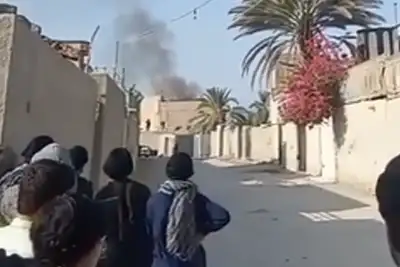
Heavy fighting spreads in southeastern Iran, with security force casualties reported
1

Heavy fighting spreads in southeastern Iran, with security force casualties reported

2
ANALYSIS

Russia may fill Iran gap if support for Yemen Houthis falters

3

Saudi Arabia squeezed from Iraq and Yemen ahead of GCC talks with Iran

4
INSIGHT

Bid to oust Pezeshkian exposes rift among Iran conservatives

5

Israeli attacks on Hezbollah fuel hardline calls for Iran to escalate

Banner
Banner
Banner

Spotlight

  • Rushed trials, public hangings: Iran courts race to crush dissent
    INSIGHT

    Rushed trials, public hangings: Iran courts race to crush dissent

  • Israeli envoy says no victory until Islamic Republic falls

    Israeli envoy says no victory until Islamic Republic falls

  • Russia may fill Iran gap if support for Yemen Houthis falters
    ANALYSIS

    Russia may fill Iran gap if support for Yemen Houthis falters

  • Bid to oust Pezeshkian exposes rift among Iran conservatives
    INSIGHT

    Bid to oust Pezeshkian exposes rift among Iran conservatives

  • Iran’s hardliners bet on escalation as options narrow
    ANALYSIS

    Iran’s hardliners bet on escalation as options narrow

•
•
•

More Stories

Iran cabinet opposes parliamentary report on controversial 'infiltration' bill

Sep 10, 2026, 12:17 GMT+1
100%

Iran's cabinet has opposed a report by parliament's National Security and Foreign Policy Committee concerning a controversial bill aimed at countering infiltration by foreign intelligence services, governments and organizations, state news agency IRNA reported on Thursday.

The published notice did not explain what the committee report contained or specify which parts of it the government opposed.

The cabinet took the decision at an August 23 meeting and it was formally communicated on September 8 by Iran's first vice president, IRNA said, citing the country's national database of laws and regulations.

The cabinet named the president's legal affairs office and the presidential office for science, technology and the knowledge-based economy as government representatives in the matter, IRNA said.

  • Iran’s ‘infiltration’ bill sparks backlash over sweeping reach

    Iran’s ‘infiltration’ bill sparks backlash over sweeping reach

Bill has drawn criticism over broad reach

Parliament approved the general principles of legislation on combating foreign infiltration in August by 183 votes to four, but lawmakers have yet to complete consideration of its individual provisions.

A publicly circulated draft would impose new restrictions on contacts with foreign media, universities, embassies and international organizations and give the Intelligence Ministry and the Revolutionary Guards' Intelligence Organization roles in identifying prohibited foreign links.

Some provisions would restrict sharing information with foreign institutions and certain forms of academic, cultural and civil-society cooperation.

Critics in Iran have warned that the broad wording could expose journalists, academics, researchers and other citizens to prosecution.

The notice did not say whether the cabinet opposed the legislation as a whole or only aspects of the parliamentary committee's report.

  • Pezeshkian admin says infiltration bill violates rights, could drive brain drain

    Pezeshkian admin says infiltration bill violates rights, could drive brain drain

Pezeshkian government had raised rights concerns

The decision follows earlier public opposition from President Masoud Pezeshkian's administration. Vice President for Legal Affairs Majid Ansari said in August that the proposal conflicted with constitutional protections for citizens' rights and individual freedoms and would sharply restrict academic contacts with institutions abroad.

"If every type of contact and communication faces restrictions and is criminalized by law, naturally they will prefer to migrate and carry out their scientific and research activities in a free environment," Ansari said, warning that the measure could drive more Iranian researchers, doctors and academics to leave the country.

Iranian protester still unable to walk despite 23 operations for gunshot wound

Sep 10, 2026, 09:32 GMT+1
•
Farnoosh Faraji
100%
A building burns during protests in Iran in January 2026, as people gather nearby.

An Iranian protester shot in the leg during January’s demonstrations remains unable to walk after 23 operations, with further treatment ahead, medical bills mounting and concerns for his safety persisting months after the shooting.

“Despite all these surgeries, I am still confined to my home,” the protester, whose identity and place of residence are being withheld for security reasons, told Iran International. “I am married, and during this time we have faced many problems paying for my treatment.”

His family eventually sold their car to help cover his medical bills, the protester said. Doctors have told him that regaining the ability to walk could take at least another year.

The account reflects the prolonged physical and financial consequences facing some people wounded during the protests, with Iran International receiving multiple accounts of injured demonstrators struggling to obtain treatment and pay medical expenses months later.

23 operations and more treatment ahead

The gunshot caused extensive damage to the protester’s leg, requiring doctors to perform muscle and skin grafts during a series of operations.

100%
An injured Iranian protester’s leg during treatment following a gunshot wound. The protester told Iran International he has undergone 23 surgeries and remains unable to walk.

“About a month has passed since the skin graft, and the Ilizarov device that was fitted to my leg at the beginning of treatment is due to be put back on for about three months,” the protester said.

An Ilizarov apparatus is an external bone-fixation system using metal rings, rods and wires to gradually reposition sections of bone. It can be used to treat severe damage or the loss of part of a bone.

Doctors also attached a vacuum-assisted device to the wound for several months to promote new tissue growth, the protester said.

Infection, nerve damage and numbness later forced doctors to remove some of the repaired tissue and perform a muscle graft about six months after the shooting, according to the protester.

“I asked people who were able to help, but in the end, with great difficulty and even by selling our car, we tried to cover the costs,” he said.

Security fears complicate hospital treatment

Fear of arrest or identification at hospitals has complicated treatment for some protesters wounded during demonstrations, prompting some to seek medical care covertly or at home.

  • Iranian protester undergoes months of secret treatment to save wounded leg

    Iranian protester undergoes months of secret treatment to save wounded leg

“After one of the surgeries, because there were many security officers in the emergency department, the doctor helped me leave the hospital,” the protester said.

Hospital staff recorded the cause of his injuries as a traffic accident, and his doctor later helped take him to Tehran to continue undergoing surgery, the protester said.

“I really do not know how to thank the medical staff,” he added. “They cooperated extensively and tried to make sure nothing else happened to me.”

Protester recounts January 8 shooting

Security forces initially fired pellets toward demonstrators before a live round struck his leg at close range on the evening of January 8, the protester said.

“My whole body is covered with pellet marks. The bullet hit my leg from close range,” he said. “When I was shot, they dragged me along the ground while I was in a very bad condition. I will never forget that night.”

Security personnel insulted him and tried to remove his clothing after he was wounded, according to his account.

“I held tightly onto my trousers, and they struck my hands with their boots,” he said. “My entire body was bruised, and I even thought my ribs were broken.”

The officers then put him on a motorcycle, the protester said.

“One of them said, ‘Don’t hit him here, take him farther up,’” he said. “I thought they meant they were going to finish me off. I passed out from fear.”

100%
The injured Iranian protester undergoes treatment with an external fixation device after suffering a gunshot wound to the leg during demonstrations on January 8.

The protester said he regained consciousness alone in a dark alley, where an elderly couple found him and helped him reach a hospital.

“At first, I thought I was dead,” he said. “Then an elderly woman and man found me. They were like angels to me and helped me get to the hospital.”

The protester said he had joined the demonstrations knowing that doing so could put his life at risk.

  • Security forces seized Iran hospital, sent wounded protesters to morgue

    Security forces seized Iran hospital, sent wounded protesters to morgue

“That night, I went out like many others, and I knew I might lose my life, but for me it was about Iran,” he said.

Six months after the shooting, the protester remains unable to walk, with further procedures ahead and no certainty over when he will regain mobility.

Iranian engineer detained after protests presents camera feature at Apple launch

Sep 10, 2026, 09:25 GMT+1
100%
People look at the new Apple devices on display during Apple's event at the Steve Jobs Theater in Cupertino, California on September 9, 2026.

Maryam Azimi, who has written of being driven blindfolded to court in Mashhad in an intelligence vehicle, thinking those were the last minutes of her life, introduced the new iPhone's camera technology at Apple's global launch on Tuesday.

Azimi, identified in Apple's prerecorded presentation as an image-quality engineer, presented a feature called Apple Reference Image during the segment on the iPhone 18 Pro's camera, which the company described as its most advanced to date.

Her appearance drew notice among Iranians for two reasons: her role in developing imaging technology at one of the world's largest companies, and her public opposition to the Islamic Republic, including her account of her own detention.

In a post on January 9, as protests spread across Iran, Azimi shared footage from the Vakilabad area of Mashhad and described being driven along the same street years earlier, blindfolded, in the back of an intelligence vehicle on her way to court.

"At the time, I did not know where we were going and thought these were the final minutes of my life," she wrote.

As the vehicle approached Park Square, she said, an interrogator told her to remove the blindfold, hold her head up and behave naturally. It was the hour she should have been in class at a nearby university. Looking out of the window, she recognized a close friend driving past.

"It felt like a dream," she wrote. "She was going toward her home, the safest place in the world, and I was a prisoner of the demon, with death before my eyes every second."

In the same post she praised those confronting the authorities as people seeking to "take back their rights from the bloodthirsty Islamic government," wrote that "now Vakilabad, Mashhad, Khorasan and all of Iran smell of freedom," and closed with the words Woman, Life, Freedom, the slogan of the uprising that followed Mahsa Amini's death in morality police custody in September 2022.

In a separate post in English after the January killings, addressed to non-Iranian friends and colleagues, Azimi described "the grief, the anger, the helplessness, the not-knowing," listed five Iranian human rights organisations and asked readers to donate.

Azimi's University of British Columbia profile records a bachelor's degree in computer engineering from Ferdowsi University of Mashhad in 2009 and a master's in electrical and computer engineering from UBC in 2014.

The feature she presented on Tuesday captures digitally signed data from the camera sensor and produces an unalterable reference image against which a finished photograph can be checked, in the manner of a digital negative.

Apple said it was intended for photojournalists, photographers and anyone seeking to distinguish an authentic image from one edited or generated by artificial intelligence.

Iran routed up to $2.5 billion via China sanctions workaround in past year - Reuters

Sep 10, 2026, 09:00 GMT+1
100%
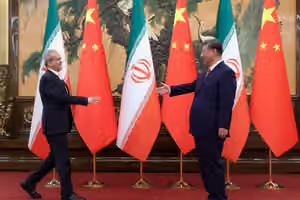
Chinese President Xi and Iranian President Pezeshkian meet in Beijing, File photo.

Iran routed an estimated $2 billion to $2.5 billion through a China-based trade mechanism over the past year, using proceeds from oil sales to pay for Chinese goods and, at least once, contracts for military equipment, Reuters reported on Thursday.

The barter-like arrangement allowed Tehran to turn payments for Iranian oil into credits for Chinese imports without sending money directly through international banking channels, Reuters said, citing two senior Iranian sources and three other people familiar with the mechanism.

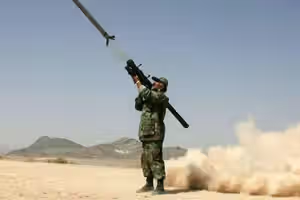
Iran used the system to buy medicines, vehicles and communications equipment, while it was also used in connection with contracts worth millions of dollars to supply Iran with air defense equipment over the past year, the sources said.

  • Iran set to receive Chinese shoulder-fired air defense systems - Reuters

    Iran set to receive Chinese shoulder-fired air defense systems - Reuters

Billions routed outside normal banking channels

The mechanism has been operating since at least 2021 but has become more important as Washington tightened sanctions on Iran and companies doing business with Tehran, according to the report.

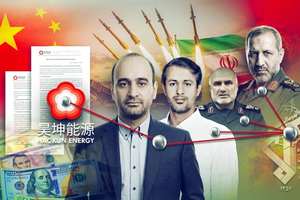
A buyer acting on behalf of Chinese state-owned oil trader Zhuhai Zhenrong had, at least until this year, deposited hundreds of millions of dollars a month with a China-based financial entity known as ChuXin, three people familiar with the arrangement told Reuters.

Those payments covered Iranian oil purchases. ChuXin then sent funds to Chinese exporters and companies involved in infrastructure projects in Iran, likely through other Chinese financial institutions, Reuters reported.

Around 70% of the Iranian oil proceeds handled through the arrangement went to infrastructure projects, while the rest entered accounts belonging to a special purpose vehicle, or SPV, used to pay suppliers of goods to Iran, the sources said.

  • Secret documents expose new network selling sanctioned Iranian oil

    Secret documents expose new network selling sanctioned Iranian oil

The two Iranian sources confirmed the existence of the SPV, which Reuters said had not previously been reported.

Oil exchanged for access to Chinese goods

The SPV is managed by two entities, one acting on behalf of China's Ministry of Commerce and another linked to Iran's central bank, according to all five sources.

When Iran's central bank approves an importer to use funds held in the SPV, the Iran-linked entity informs its Chinese counterpart so payments can be made to suppliers, three of the sources said.

The structure gives Chinese manufacturers access to payment without dealing directly with Iran, according to the report. Reuters said there was no indication that the Chinese manufacturers supplying civilian goods had broken sanctions.

Reuters could find no record of a financial institution called ChuXin in Chinese corporate registries, and one source said it may exist only on a spreadsheet.

  • Iran bets on China to blunt Trump’s economic offensive

    Iran bets on China to blunt Trump’s economic offensive

China says unaware of arrangement

China's foreign ministry told Reuters it was "not familiar with the situation you describe" when asked about the mechanism.

"China has consistently opposed unilateral sanctions that have no basis in international law and have not been authorized by the United Nations Security Council," the ministry said.

Iran's UN missions in New York and Geneva did not respond to Reuters requests for comment. Iran's central bank, China's commerce ministry, the National Iranian Oil Company and Zhuhai Zhenrong also did not respond to questions about their reported roles.

  • Iran has only 30 million barrels of oil left for China, Bessent says

    Iran has only 30 million barrels of oil left for China, Bessent says

US pressure raises stakes

China has long been the main buyer of Iranian oil. More than 80% of Iran's shipped crude went to China in 2025, averaging around 1.4 million barrels per day, according to Kpler data cited by Reuters.

The arrangement has helped Tehran keep trade flowing despite years of sanctions, while giving China access to discounted Iranian crude.

Its importance has grown as the United States has increased economic pressure on Iran during the six-month-old war. Treasury Secretary Scott Bessent warned countries in August to cut business ties with Tehran or risk losing access to the dollar-based financial system.

  • Leaked documents link Chinese firms to IRGC missile fuel network

    Leaked documents link Chinese firms to IRGC missile fuel network

Reuters said it could not determine how the US naval blockade on Iranian oil exports had affected the China trade mechanism. No Iranian crude cargoes had successfully passed through the Strait of Hormuz to China since the blockade was reinstated on July 14, according to the news agency.

A UN embargo on exports of most major conventional weapons to Iran was restored in September 2025 along with other sanctions.

Andrea Ghiselli, an international politics lecturer at the University of Exeter who studies China's relations with the Middle East, told Reuters that Beijing wanted to resist US pressure without putting major Chinese banks and companies at risk of exclusion from the international financial system.

"They want plausible deniability," he said.
Behind Iran’s display of mercy, the gallows keep working

Sep 10, 2026, 01:54 GMT+1
•
Sogand Sara Fakheri
100%
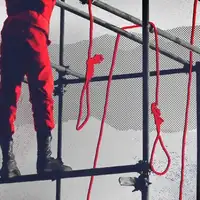
File Photo: A soldier stands on a scaffolding erected for executions in Iran

Iran is putting two faces of its justice system on display: highly publicized acts of compassion for thousands of prisoners, alongside an execution campaign that has killed hundreds and continues to put protesters on death row.

Iran’s leadership recently approved pardons or reduced sentences for 2,577 prisoners. The announcement came with the usual ceremonial packaging: a religious occasion, a request from the head of the judiciary and a generous act of compassion from above.

It is an impressive number. Large enough to make headlines and perhaps create the impression that something in Iran is becoming softer.

At almost the same time, the Revolutionary Court in Isfahan sentenced ten people arrested following the January protests to death. So much for the softer side.

These ten sentences are shocking, but they are not an isolated story. They were handed down in the middle of an execution campaign that has already taken hundreds of lives this year.

Iran Human Rights recorded at least 532 executions in the first eight months of 2026, including 82 in August alone. Only 77 of those 532 executions were announced by official sources. The rest were documented through the organization’s network and verified using independent sources.

In other words, while the Islamic Republic publishes its pardons, most of its executions happen with considerably less enthusiasm for publicity.

Iran Human Rights recorded at least 1,639 executions in 2025, a 68 percent increase from the previous year and the highest annual figure the organization has documented since 1989.

Many were sentenced to death for murder or drug-related offenses, often after proceedings criticized for serious violations of due process. But that distinction does not make the wider execution spree irrelevant to political repression.

The gallows create their own atmosphere. When a state executes people on such a scale, often without public acknowledgment, every new death sentence against a protester carries a very clear message.

At least 31 protesters had been executed by the end of August, according to Iran Human Rights. Twenty-nine of them had been arrested in connection with the January protests.

Amnesty International has also warned that dozens of protesters and dissidents remain under death sentences or at risk of execution.

The ten defendants in Isfahan are therefore not the entire story. They are the latest names added to a much larger campaign.

The case is known as the “Isfahan Shohada Square case.” According to matching reports by HRANA and Hengaw, those sentenced to death are Taraneh Rahimi, Navid Elyasi, Abolfazl Dadgostar, Mehdi Mansouri, Ahmadreza Saeidi, Mehrdad Boveyri, Mohammad Mehdi Asadi, Armin Gholami, Parsa Jafari and Mehdi Jafari, also known as Mehdi Jafari Khosravi.

All ten were also sentenced to 11 years in prison. Six other defendants received terms ranging from 16 to 36 years. Together, the prison sentences imposed on the 16 defendants amount to 256 years.

The charges include moharebeh, usually translated as “waging war against God,” allegedly through carrying bladed weapons, as well as destruction of public property, assembly and collusion, and propaganda against the state.

Two people died during the events around Shohada Square: a member of the Islamic Revolutionary Guard Corps and a homeless man. Yet the indictment reportedly did not charge the defendants directly with killing either of them.

According to HRANA and Hengaw, no documented evidence was presented establishing their responsibility for those deaths.

One detail is especially difficult to forget. A video found on the phones of some defendants reportedly shows Taraneh Rahimi, the only woman among the ten sentenced to death, trying to stop people from beating the homeless man.

She was reportedly attempting to prevent violence. The court sentenced her to death.

The defendants’ lawyers were denied access to significant parts of the case files and were not given sufficient time to review the evidence, according to the two organizations. The hearing was held inside Dastgerd Prison rather than an ordinary public courtroom.

During the proceedings, Ahmadreza Saeidi told the judges that an investigator had tortured him with electric shocks to his neck and genitals. There is no public indication that the allegation led to an independent investigation or caused the court to reconsider evidence obtained during his interrogation.

The full judgment has not been published, leaving no way for independent observers to examine the evidence or understand how the court justified ten death sentences without directly charging the defendants over the two deaths at the center of the case.

The verdicts are preliminary and can still be appealed. For the families, it offers limited comfort. They now have to wait while the same judicial system accused of denying the defense proper access to the case decides whether their loved ones should live.

This is what makes the pardon announcement so revealing.

Clemency is real for those who receive it. A prisoner returning home is not a public relations statistic to the family waiting at the door. A reduced sentence can restore years of someone’s life, and none of that should be dismissed.

But selective clemency should not be mistaken for a change in direction, especially while executions continue at this scale.

The 2,577 pardons offer the public one image of the state. The hundreds of executions offer another, one that receives considerably less official attention. Political defendants are being placed inside a system of capital punishment already operating at extraordinary speed.

The Isfahan case shows how that machinery can be directed against protest. A broad charge such as “waging war against God,” limited access to evidence, an allegation of torture and a closed hearing inside a prison can lead all the way to the gallows.

The pardons are meant to be seen. Most of the executions are not. Behind the official display of mercy, the machinery has not slowed down. Ten more people have now been placed in its path.