• العربية
  • فارسی
Brand
  • Iran Insight
  • Politics
  • Economy
  • Analysis
  • Special Report
  • Opinion
  • Podcast
  • Live TV
  • Iran Insight
  • Politics
  • Economy
  • Analysis
  • Special Report
  • Opinion
  • Podcast
  • Live TV
  • Theme
  • Language
    • العربية
    • فارسی
  • Iran Insight
  • Politics
  • Economy
  • Analysis
  • Special Report
  • Opinion
  • Podcast
  • Live TV
All rights reserved for Volant Media UK Limited
volant media logo
ANALYSIS

Every time Iran talks about de-escalation, something happens in Hormuz

Behrouz Turani
Behrouz Turani

Iran International

Sep 2, 2026, 10:14 GMT+1
Iranian President Masoud Pezeshkian attends a session of the Shanghai Cooperation Organisation (SCO) summit in Bishkek, Kyrgyzstan September 1, 2026.

Iran's president spent Tuesday assuring Xi Jinping, Vladimir Putin and Narendra Modi that Tehran would return to the Islamabad framework if Washington did. As he spoke, news broke that two Saudi tankers had been hit in the Strait of Hormuz.

Masoud Pezeshkian was at the Shanghai Cooperation Organization summit in Bishkek when the news came in.

Two supertankers, each carrying 2 million barrels of Saudi crude loaded at the Juaymah terminal, were struck within minutes of each other as they sailed out of the strait off Khasab, Oman, according to the shipping intelligence firms Marisks and Kpler.

The timing was, at minimum, unhelpful to Pezeshkian, and it fits a pattern in which his intermittent push for de-escalation is contradicted within hours by events in the strait. Whether by design or coincidence, escalation in Hormuz has repeatedly arrived at the moments his diplomatic track needed quiet.

It did not stay at tankers. By Tuesday night the most significant exchange of fire in weeks was under way. US Central Command said it had struck Revolutionary Guards air defenses, radar, maritime assets, mine-laying capabilities and communications sites, with Iranian media reporting hits near the strait.

Iran said it struck American assets in Bahrain, Jordan, Kuwait and Iraq; Jordan reported intercepting 10 of 13 ballistic missiles, and a drone set a residential block alight in Kuwait City. The Guards claimed heavy American casualties in Jordan and Erbil. Two US officials told Reuters initial assessments found none.

The civilian toll was not in dispute. Five people were killed and dozens wounded near Sirik on the Hormuz coast, according to the Iranian Red Crescent, with the Mehr news agency reporting a four-year-old among the dead. Seven more were killed in strikes on Khuzestan province.

Pezeshkian, it should be said, was not offering peace. He paired his appeal for a mutual return to the Islamabad framework with a declaration that Iran remains prepared to fight, which is the standard formula and the reason his diplomacy has never been the alternative to the war camp that outsiders sometimes take it for.

Inside Iran the coverage and the anxiety pointed in different directions. Newspapers led on the fight over Hormuz and the arguments over the war and the nuclear file; the public was watching the exchange rate.

And when Pezeshkian's de-escalation push was defended at all, it was defended by his own side: outlets close to the administration were the only ones to amplify his son Yousuf and Vice President Jafar Ghaempanah, who spoke up for him.

Both sides want the same thing

What makes the collapse of the past week strange is that the two governments are asking for the same outcome.

At the G20 finance ministers' meeting in Asheville, North Carolina, US Treasury Secretary Scott Bessent set out a dual-track strategy of financial pressure and calibrated military action, emphasizing economic isolation under Operation Economic Outcast over any broad expansion of the war.

Secondary sanctions and banking blockades, he said, are meant to force Tehran back to negotiations without committing ground forces.

That is, in substance, what Pezeshkian was asking for in Bishkek. Both capitals want a route back to talks. Neither can stop shooting long enough to find one.

A controlled cycle, for now

The shape of the conflict supports that reading. What is visible is a tit-for-tat pattern: targeted American strikes on Iran's mine-laying and air defense assets, localized Iranian missile and drone retaliation, both sides using maximum leverage without opening a sustained strategic bombing campaign.

Constraint is part of the explanation. Iran's war-damaged economy and degraded conventional forces have left it stretched, while the US Army has burned through much of its global stockpile of precision long-range missiles, as Reuters reported last month. Trump's own position is complicated by fuel prices rising ahead of November's congressional elections, and this week's strikes pushed oil to a five-week high and sent Asian stocks down.

The rhetoric has not adjusted. "I like our position now much better, with almost total control of the Hormuz Strait, and their economy totally collapsing," Trump said, asking when Iranians would "rise up and fight." Iran's joint military command warned that any country aiding American action in the region would face "heavier, more widespread, and devastating responses."

Washington's attempt to assemble an economic coalition is meeting resistance from partners wary of further disruption to energy and trade, particularly amid tariff disputes. Major importers in Europe and Asia want maritime stability restored rather than prolonged hostilities.

In Bishkek, Xi urged all parties to end the conflict at Hormuz, warning that continued instability threatens energy routes for everyone, which is Iran's largest customer asking it, in public, to stop.

Qatar, which mediated the June ceasefire that swiftly unraveled, went further, holding Iran "fully legally responsible" for this week's attacks and their consequences.

Both sides are pursuing leverage rather than victory. The trouble with leverage is that it only works if the other side can concede, and nobody in Tehran has shown any sign of conceding on the strait.

Most Viewed

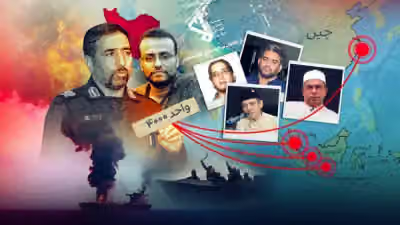
IRGC Unit 4000 plans attacks on shipping in East Asia, sources say
1
EXCLUSIVE

IRGC Unit 4000 plans attacks on shipping in East Asia, sources say

2
INSIGHT

Actor dropped from play after pro-Palestine stance in rare reversal for Iran

3
ANALYSIS

Iran loses ground on trade as war hits oil and non-oil exports

4
ANALYSIS

Iran fires back, but can missiles ease economic pain?

5

Jobs protests met with gunfire in southwestern Iran

Banner
Banner
Banner

Spotlight

  •  Hackers without borders: serving Tehran, stealing on the side
    SPECIAL REPORT

    Hackers without borders: serving Tehran, stealing on the side

  • The republic of magic: How Iran turned the unseen into an instrument of rule
    ANALYSIS

    The republic of magic: How Iran turned the unseen into an instrument of rule

  • President's son questions enrichment, ignites fierce debate in Tehran

    President's son questions enrichment, ignites fierce debate in Tehran

  • Iran fires back, but can missiles ease economic pain?
    ANALYSIS

    Iran fires back, but can missiles ease economic pain?

  • IRGC Unit 4000 plans attacks on shipping in East Asia, sources say
    EXCLUSIVE

    IRGC Unit 4000 plans attacks on shipping in East Asia, sources say

  • Iran loses ground on trade as war hits oil and non-oil exports
    ANALYSIS

    Iran loses ground on trade as war hits oil and non-oil exports

  • Iranians hit back at VP's case for pricier gasoline as dollar passes 2.1m rials
    VOICES FROM IRAN

    Iranians hit back at VP's case for pricier gasoline as dollar passes 2.1m rials

•
•
•

More Stories

US-Iran escalation prompts debate in Iran over preemptive strikes

Sep 2, 2026, 02:57 GMT+1
•
Maryam Sinaiee
100%
Smoke rises following a US strike on Iran’s Larak Island on August 30, 2026.

Calls for preemptive strikes on US forces are growing in Iran after renewed US attacks, intensifying debate over whether Tehran should shift away from a mainly retaliatory strategy.

The latest cycle began with a US strike on Revolutionary Guards targets on Larak Island in Hormozgan province Sunday night, after a period in which Washington had increasingly emphasized economic pressure, a naval blockade and additional sanctions on Iran.

Iranian authorities initially reported two deaths, but the toll later rose to three after one of the wounded died in hospital, according to the IRGC-affiliated Tasnim news agency.

US Central Command said the Larak strike targeted an “imminent threat,” alleging Revolutionary Guards forces were preparing to launch rockets carrying sea mines toward the Strait of Hormuz. Tehran rejected that account.

Iran responded early Monday with missile and drone attacks on two US bases in Jordan, according to the Revolutionary Guards, which said it had targeted technical and maintenance infrastructure and areas where fighter jets were stationed. Iran’s army separately said it had launched dozens of explosive drones at US personnel and helicopters at Al Minhad Air Base in the United Arab Emirates.

Iran also said after the Larak strike that its forces had shot down US MQ-9 drones over and east of the Strait of Hormuz. There was no immediate US confirmation of those claims.

The confrontation escalated further Tuesday when President Donald Trump announced “large and powerful” US strikes on Iranian targets near the Strait of Hormuz, warning Tehran that retaliation would trigger attacks at a “much harder and higher level.”

CENTCOM later said it had completed a new wave of strikes against Iranian military targets including air defenses, radar systems, maritime assets, mine-laying capabilities and communications sites. US officials told Axios that around 100 targets were struck.

Trump later told Fox News that Iranian radar systems were among the targets.

“They tried to rebuild their radar because they can’t see anything,” he said. “We waited until it was almost built and then we hit it.”

Iran responded with another round of missile and drone attacks on US positions across the region. The Revolutionary Guards said it targeted US facilities in Jordan and Erbil, while Iran’s army said it launched a large-scale drone attack on Sheikh Isa Air Base in Bahrain. Bahrain said its air defenses intercepted and destroyed Iranian drones over the kingdom.

The IRGC also said it had begun responding to the latest US strikes and claimed its air defenses had shot down what it called the 50th US MQ-9 drone. The claim has not been independently confirmed.

Calls for a change in strategy

The widening exchange has unfolded alongside an increasingly explicit debate inside Iran over whether its armed forces should move from retaliating after attacks toward acting when they detect signs that an attack is imminent.

Iran’s leadership has not formally announced any shift toward a preemptive doctrine.

But even before Trump announced Tuesday’s new strikes, political figures close to the establishment were arguing that the confrontation had exposed the limits of diplomacy and of waiting to respond after US military action.

Ali Gholhaki, a political activist close to parliament speaker Mohammad Bagher Ghalibaf, argued Tuesday that the Larak strike had demonstrated the “audacity of the United States” and showed that Washington was prepared to resume significant military action after a period of relative restraint.

He also said expectations of reviving the Islamabad understanding had been disappointed.

“It seems that resolving the issues in the ‘military field’ — given the conditions inside and outside Iran — will be more feasible than ‘diplomacy,’” he wrote.

The argument contrasts with President Masoud Pezeshkian’s continued insistence Tuesday that Iran was prepared to return to the Islamabad memorandum if the United States resumed compliance with its commitments.

Nour News, a website close to Iran’s Supreme National Security Council, said Tuesday that the Larak attack and Iran’s response should not be viewed simply as another cycle of “attack and retaliation,” but as a “sign of a change in the battlefield.”

The website linked Mohsen Rezaei’s appointment as secretary of the Supreme National Security Council to an approach aimed at raising the costs of US military decisions and shifting some of the war’s pressure toward the US economy and domestic politics.

“In the previous model, the United States attacked and Iran responded to maintain deterrence. But in the new model, the response is not only to punish the aggressor; rather, the action must be designed in a way that makes the next US decision more difficult and costly,” Nour News wrote.

It argued that Iran was seeking to confront Washington with a dilemma: restraint by the United States could be interpreted in Tehran as evidence that the threat of force had lost some of its deterrent value, while further US attacks could raise risks to energy supplies and economic stability.

Tasnim, which is affiliated with the Revolutionary Guards, similarly portrayed the speed of Iran’s response to the Larak strike as evidence that the gap between political decision-making and military action was narrowing.

The agency argued that Iran should move from an “immediate response after an attack” toward readiness for “action at the first serious signs of an attack,” while acknowledging the political and strategic risks of such a shift.

Hardline lawmaker Mahmoud Nabavian went further, openly calling for a preemptive attack on US interests across the Middle East.

“Given the enemy’s depleted war reserves, rising fuel prices and the proximity of the US congressional elections, the enemy is seeking to reduce tensions,” Nabavian wrote on X. “So now is the best time for a preemptive attack on US interests in the region, forcing the enemy to retreat and breaking the blockade.”

He described failing to act as “wasting the opportunity.”

The calls do not amount to an announced change in Iranian military doctrine. But they show a growing argument among hardline and security-linked voices that waiting for each US strike before responding leaves Washington with too much control over the pace of escalation.

Hormuz becomes central to military calculus

The debate is closely tied to the struggle over the Strait of Hormuz, where both sides increasingly portray military pressure and control of commercial shipping as part of the same confrontation.

Iranian officials continue to insist that ships cannot transit the strategic waterway without coordination with Tehran. Lawmaker Esmail Kosari said Tuesday that vessels attempting to cross without coordination would be confronted by the Revolutionary Guards.

In a video interview Tuesday, Ghalibaf said: “The Americans falsely assure ships that they can pass through the Strait, but those ships come under attack.”

Iranian military-linked outlets have also reported attacks or threats against vessels Tehran considers noncompliant. The IRGC said one supertanker caught fire after striking two naval mines, but CENTCOM rejected that account and said no vessel had struck mines in the Strait.

Fars separately reported that a Saudi tanker, Cedar, had stopped while transiting the southern corridor of the Strait, but did not establish that Iranian forces had detained the vessel.

The maritime confrontation widened further Tuesday when the US military struck two Iranian government tankers. Axios reported that the attack was carried out under a new “tanker for tanker” policy approved by Trump in response to Iranian attacks on shipping.

US officials said the two tankers were anchored off Iran’s coast north of the US naval blockade line when drones launched missiles into their engine rooms. Axios said it was the first time the US military had struck Iranian tankers in retaliation for attacks on shipping rather than to enforce the blockade.

The escalation leaves the debate inside Iran no longer centered solely on how to answer individual US attacks. Increasingly, the argument is over whether Tehran should try to anticipate them — and whether doing so would strengthen deterrence or instead accelerate an already widening regional war.

The republic of magic: How Iran turned the unseen into an instrument of rule

Sep 1, 2026, 14:27 GMT+1
•
Reza Haji Hosseini
100%

The Islamic Republic moved beliefs about the unseen from the margins of society to the center of power, and used oil money to give them institutions, budgets and a propaganda apparatus, so that its rulers could draw legitimacy from a source no citizen can question.

Two recent scenes show what that means in practice.

At state-organized rallies in February, marking the anniversary of the 1979 revolution, organizers set fire to effigies they identified as Baal, the Canaanite deity condemned as a false god in both the Bible and the Quran. In the middle of an economic crisis, the state staged its victory over its enemies as a piece of street ritual.

  • Why were ‘Baal’ statues burned at Iran’s revolution anniversary rallies?

    Why were ‘Baal’ statues burned at Iran’s revolution anniversary rallies?

Months later, Salar Velayatmadar, a member of parliament, said the decision to stop publishing images of Mojtaba Khamenei had been taken on the advice of senior clerics in Qom, Mashhad and Najaf, and of security officials, so that Iran's enemies could not use "occult sciences," a term covering practices such as talismans, incantations and divination, to harm him.

With that, the occult had entered the official language of national security.

A distinction matters here. This is not an argument about what Iranians privately believe, and the point is not that millions of people hold beliefs about the sacred, as they do in every society. The question begins at the moment an unfalsifiable claim becomes the basis of political legitimacy, a security decision and the distribution of public money. At that point it has stopped being faith and become statecraft.

Nor is this a case of a secular state later contaminated by such thinking. The Islamic Republic's identity was bound from the beginning to a phrase that describes the country as belonging to someone who cannot be seen.

The absent owner

Speaking to government officials in September 1981, Ruhollah Khomeini, the cleric who led the 1979 revolution and founded the Islamic Republic, said: "The owner of this country is the Imam of Time." The line is recorded in volume 15 of Sahifeh-ye Imam, the official collection of his speeches and writings.

The Imam of Time is the twelfth imam of Shia Islam, who is believed to have vanished in the ninth century, to be alive and hidden, and to be destined to return. Iran's constitution frames clerical rule explicitly as an arrangement for the era of his absence.

  • Will Mojtaba Khamenei's absence help the Islamic Republic survive?

    Will Mojtaba Khamenei's absence help the Islamic Republic survive?

Read as a theory of ownership, the consequences are considerable. If the country's true owner is absent, clerics become the interpreters of his will, and the Supreme Leader, rather than representing citizens, becomes the deputy of an absent proprietor. His accountability runs towards a realm no one can reach, not towards a public that could remove him.

Khomeini's arrival did not create popular belief in miracles and unseen forces, which long predated him. What the state he founded did was move those beliefs out of private life and into the machinery of power.

Manufacturing the sacred

The apparatus has been building sanctity around its leaders since the beginning.

The historian Olmo Gölz, in a study of the claim that Khomeini's face could be seen in the moon, drew on memoirs and newspapers of the period to trace both the spread of the rumor and its rejection by Khomeini himself and by a number of clerics. The denial did nothing to prevent the halo forming.

Video from Khomeini's first days back in Tehran shows a man touching his hand and then the hands of the crowd, passing on a blessing said to reside in the leader's body.

Decades later, Mohammad Saeedi, the Friday prayer leader of Qom, said that Ali Khamenei, the late supreme leader, had uttered the name of Imam Ali at the moment of his birth. The political significance of such a story lies not in efforts to establish whether it happened, but in the fact that the official apparatus uses it to build sanctity around a ruler.

The unseen world also has physical addresses. The most important is the mosque at Jamkaran, outside Qom, built on the belief that the hidden imam once appeared on the spot. Its own website describes the well where visitors drop written petitions addressed to him. Around such beliefs the state has built rituals, buildings, media, pilgrimage routes and an economy.

Set in that history, the absence of Mojtaba Khamenei is the most recent expression of the same logic. A leader with no verified image or voice governs a system whose true owner is also described as absent. What looks from outside like a crisis of decision-making, and has clearly produced disagreement inside the government, is material that this apparatus is equipped to convert into mystery, sanctity and waiting.

The security dimension is real, and the comparison with Osama bin Laden's final years captures it. But the difference is in the structure of meaning: the al-Qaeda leader hid in order not to be found, while the ruler of a country said to belong to a hidden imam can turn his own invisibility into symbolic capital.

In a secular system, a vanished leader is a legitimacy crisis. Here, absence was given meaning in advance by the architecture of belief.

Messages attributed to Mojtaba Khamenei extend the same logic outward, describing Iranians as the bearers of a historic mission and placing the public, state institutions and allied forces abroad in a chain of divine purpose. The ruler cannot be seen, but society is required to carry out his mission.

Who pays for it

None of this could have expanded so far without earthly backing.

The Venezuelan anthropologist Fernando Coronil, in The Magical State: Nature, Money, and Modernity in Venezuela, described how oil states use wealth from beneath the ground to stage a power that appears miraculous. In the Islamic Republic the metaphor has acquired a literal meaning.

In the state's first decades, oil revenue freed the government from depending on taxation, and therefore from bargaining with its citizens. Money came out of the ground and was spent building an apparatus that took its legitimacy from the sky. Oil remains the state's source of foreign currency: according to data from the analytics firm Kpler, China took about 1.2 million barrels a day from Iran in 2026.

On that foundation, the seminaries, the propaganda organizations, the shrines, religious foundations, devotional associations and cultural institutes became a network for reproducing this worldview.

Superstition in the Islamic Republic moved well beyond the pulpit and the amulet-writer: it acquired organizations, media, staff and budget lines.

In the 2026 budget bill, the Supreme Council of Seminaries was allocated 74.5 trillion rials, about $37 million at market exchange rates, and the Seminary Services Centre 164.2 trillion rials, roughly $82 million. What those figures show is less their size than their presence: bodies of this kind now appear as line items in the national accounts. In the same budget, a meaningful pay rise for civil servants and pensioners was set aside in the name of controlling inflation, while the apparatus that produces and distributes religious legitimacy was left untouched.

The political function of these institutions is clear enough. They produce clerics, preachers, rituals, obedience, enemies and legitimacy. They build a world in which a foreign policy failure becomes a divine test, poverty becomes an occasion for patience, repression becomes the defense of faith, and the survival of the government becomes a sacred promise.

But the apparatus is no longer run on oil money alone. The 2026 bill projects that 87 percent of total budget resources will come from taxation. Oil was central to constructing this ideological edifice; taxes, inflation and the falling purchasing power of Iranians now pay to maintain it.

Magic did not produce oil for the Islamic Republic. The Islamic Republic used oil money to turn magic into an instrument of power.

In the republic of magic, the orders still come from heaven. The bill is increasingly paid out of people's pockets.

President's son questions enrichment, ignites fierce debate in Tehran

Sep 1, 2026, 04:10 GMT+1
•
Maryam Sinaiee
100%
Yousef Pezeshkian, son and media adviser of President Masoud Pezeshkian. File photo.

A dispute over Iran’s nuclear enrichment program has escalated into a broader political fight after President Masoud Pezeshkian’s son and adviser Yusef Pezeshkian defended remarks questioning whether enrichment is worth its costs during wartime.

The dispute has evolved into a wider argument over what constitutes national security: maintaining strategic capabilities regardless of their costs or reassessing them in light of the risks to Iran’s population, infrastructure and economy.

The controversy began with remarks by Jafar Ghaempanah, executive deputy to President Pezeshkian, who argued that Iran should consider the costs of pursuing its nuclear program amid the threat of further attacks on the country.

“Wisdom means achieving an objective that you can achieve at the lowest possible cost,” he said.

His comments drew fierce criticism from conservatives and hardliners, but the dispute intensified after Yusef Pezeshkian entered the debate in an Instagram story on Saturday.

“Enrichment is neither a principle of religion nor our honour, nor is our survival dependent on it,” he wrote.

Pezeshkian stressed in another story on Sunday that decisions should be made with full awareness of their consequences.

“We must do whatever is necessary to secure our interests,” he wrote, arguing that Iran should pursue enrichment, missiles and drones only insofar as they served those interests.

But he did not retreat from his central argument: “Our survival does not depend on enrichment. We won’t die if we don’t enrich uranium.”

The intervention broadened the controversy, with hardliners directing their criticism not only at Ghaempanah but also at the president and his administration. Some even called for the president to be removed from office.

Hardline attacks

Yadollah Javani, deputy political chief of the Revolutionary Guards (IRGC), rejected the argument that abandoning enrichment would have prevented war or pressure on Iran in an interview with state television on Sunday.

He said claims that Iran’s nuclear program, human rights record, missile program and regional allies were the fundamental causes of pressure were inconsistent with historical realities. Rather, he argued, these issues were pretexts for a broader confrontation.

The hardline Kayhan newspaper described the positions of Ghaempanah and Yusef Pezeshkian as “subversive”, saying Ghaempanah’s remarks “smell of outright surrender”.

It accused them of being part of a “capitulationist current” and warned that the same logic could eventually be used to justify abandoning Iran’s drone industry, defensive capabilities and regional influence.

The conservative Khorasan newspaper argued that Iran’s enrichment program could not be assessed solely through an economic cost-benefit calculation.

Referring to what it called Iran’s policy of “nuclear ambiguity”, the newspaper argued that continuing enrichment would not give Iran nuclear deterrence but could preserve the possibility of changing its nuclear doctrine in response to a nuclear attack.

It also said enrichment could leave open the possibility of developing so-called dirty bombs and a painful second-strike capability, potentially forcing Iran’s adversaries to reconsider their calculations.

Other conservative critics argued that Washington’s demands would not end with enrichment and that concessions would merely shift pressure to Iran’s missile program and other strategic capabilities.

Meisam Zohourian, a hardline lawmaker, said the more important issue was not simply that Ghaempanah had made the remarks but that the presidential administration’s public relations office had republished them.

“This means that at least a current within the government has decided to openly stand against the Leader’s position,” he wrote.

Reformist defence

Reformist voices have argued that critics of Ghaempanah and Yusef Pezeshkian were putting ideological commitments ahead of the costs imposed on ordinary Iranians.

Rouydad24 said the attacks reflected hostility toward an approach that seeks to define national security through realism and the interests of the population rather than through slogans that impose additional costs.

The website argued that the nuclear dispute could not be reduced to a legal or technological question when its potential costs included the destruction of infrastructure, economic paralysis and threats to the foundations of the state. Iran’s foreign policy, it said, needed to put “prudence” ahead of provocation.

Journalist Davoud Heshmati rejected the argument that giving up enrichment would simply lead Washington to make further demands, describing it as evidence of faulty reasoning.

He argued that the controversy surrounding Iran’s nuclear program was ultimately connected to Israel’s security concerns and warned against pursuing a nuclear capability that Iran could not adequately protect.

“A bomb that you cannot protect is, in fact, a basis for killing your own people,” he wrote.

The argument now goes beyond whether uranium enrichment itself is worth its cost. The deeper divide is over the lessons Iran should draw from the war: whether vulnerability makes preserving strategic capabilities more necessary, or whether the risks associated with those capabilities require Tehran to reconsider what national security is meant to protect.

Iran fires back, but can missiles ease economic pain?

Aug 31, 2026, 23:57 GMT+1
•
Negar Mojtahedi
100%
People browse a local market in Iran's Persian Gulf port city of Bandar Abbas, August 25, 2026

Iran’s latest strikes on American forces have brought threats of further US retaliation, but Washington increasingly sees Tehran’s military escalation as a sign of economic vulnerability rather than strategic strength.

After Iran launched missiles at US bases in Jordan in response to an American strike on Larak Island in the Strait of Hormuz, President Donald Trump promised another response.

“We’re going to hit them hard,” Trump told Fox News. “There will be a response.”

At the same time, Treasury Secretary Scott Bessent offered a different measure of who has the advantage.

“I would think that they are lashing out kinetically because they are losing economically,” Bessent said, arguing that Tehran is feeling the effects of Washington’s expanding pressure campaign.

Iran’s economy does not have to collapse, he said. “We just have to have the regime come to their senses.”

That leaves a central question hanging over the latest exchange: can Iran’s military retaliation actually improve its position as economic pressure mounts?

“Keep firing on Jordan, keep firing on Kuwait and Bahrain and UAE, but does that solve your problem at home?” Kamran Bokhari, Strategic Forecaster and Senior Resident Fellow with the Middle East Policy Council in Washington, told Iran International.

Bokhari believes Washington has little incentive to escalate into a larger war when it can respond to specific Iranian actions while maintaining the blockade and economic pressure.

“Keep the blockade,” he said. “If they try to mine, do what they did yesterday, but don’t escalate anything, and just keep the pressure up on the economic front.”

In that scenario, Iran retains the ability to retaliate, but its attacks do little to relieve the broader pressures facing the Islamic Republic.

Can economic pressure lead to something bigger?

Ali Dadpay, an Iranian American economist from Texas, said Washington’s stated objective is to change the Islamic Republic’s behavior rather than openly pursue regime change.

“Right now, they officially and legitimately say change of behavior,” Dadpay said.

But he argued that the economic deterioration Iran is experiencing could ultimately produce a more consequential outcome than Washington’s stated goal.

Dadpay pointed to the Soviet Union, East Germany and communist Poland as examples of political systems that collapsed without being invaded by a foreign power.

“A similar set of socio-economic factors can create a similar outcome,” he said of Iran.

Dadpay also said the combination of military and economic pressure could alter calculations among groups within the Islamic Republic and push the system toward what he described as a “new equilibrium.”

The immediate question is how far Washington is prepared to go with that economic pressure.

Max Meizlish, a former senior policy adviser at the Treasury Department’s Office of Foreign Assets Control, said a key test will be whether the US targets financial institutions facilitating Iranian trade with China.

Iran may still have oil to sell. The bigger question is whether Tehran can get paid. Unless financial channels through Hong Kong, the UAE and elsewhere are constrained, Meizlish said, “the regime is still going to have pathways for rearming itself.”

The pressure reaches ordinary Iranians

The expanding campaign is also having consequences beyond the regime. On August 24, OFAC suspended General License G, which had permitted certain educational services and academic exchanges involving Iranians.

ETS told Iran International it has since paused TOEFL and GRE testing inside Iran. Iranian nationals can still take the tests outside the country.

  • Iran sanctions reach education: Duolingo blocked, TOEFL and GRE in doubt

    Iran sanctions reach education: Duolingo blocked, TOEFL and GRE in doubt

Dadpay called the impact on testing a “side effect” of the broader restrictions. Meizlish said the administration may be trying to prevent regime-linked individuals from using educational opportunities abroad.

But he acknowledged the wider cost.

“There could be an unintended effect here where ordinary Iranians are caught in the crossfire, so to speak,” Meizlish said.

Iran’s missiles have shown Tehran can still strike back. What remains unclear is whether those attacks can ease the pressure building on the Islamic Republic — or whether Washington’s economic squeeze can change the regime’s behavior without increasingly hurting the Iranians it is meant to pressure Tehran on behalf of.

Iran loses ground on trade as war hits oil and non-oil exports

Aug 31, 2026, 21:04 GMT+1
•
Dalga Khatinoglu
100%
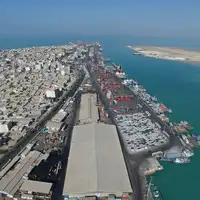
File photo shows the Bushehr port in southern Iran

Iran’s foreign trade has contracted sharply since the conflict with the United States began, with non-oil exports and imports falling by around a quarter or more, according to customs data released after months of delay.

Iran exported about $15 billion worth of non-oil goods, including natural gas and LPG, through August 16, nearly five months into the Iranian calendar year that began on March 21. That was nearly 30% below the figure reported for the first five months of the previous year.

Imports fell to about $17 billion over the same near-five-month period, about a quarter below the full five-month figure reported a year earlier.

The figures show a sharp deterioration in Iran’s trade during a conflict that has disrupted key industries and shipping routes, adding to an economy already struggling under years of sanctions, declining oil revenues and chronic shortages of foreign currency.

The United States has intensified economic pressure on Tehran since the conflict began on February 28, while imposing a maritime blockade on Iran amid disruptions to shipping through the Strait of Hormuz.

Iranian customs authorities have not published a detailed breakdown of the decline in non-oil exports. But the latest figures indicate that non-oil exports have fallen for a second consecutive year, with the current near-five-month total roughly a third below the level recorded in the first five months of 2024.

Imports have performed even worse over the longer period, with the latest total nearly 40% below the first-five-month figure recorded in 2024.

Petrochemicals and steel hit by strikes

The deterioration comes after attacks disrupted two of Iran’s most important non-oil export industries: petrochemicals and steel.

Iran exported about $45 billion in non-oil goods during the previous Iranian fiscal year, with petrochemicals and steel accounting for roughly $17 billion, or 37% of the total.

Israeli strikes in March hit Iran’s major petrochemical hubs in Mahshahr and Asaluyeh, as well as major steel producers including Mobarakeh Steel and Khuzestan Steel.

The Iranian government subsequently halted the export of a wide range of petrochemical and steel products for two to three months. Some export permits were later restored, but the government has not disclosed how much these industries exported during the first five months of the current year.

That makes it difficult to determine precisely how much of the overall decline in non-oil exports was caused by disruptions to these sectors.

But given their importance to Iran’s export earnings, any prolonged disruption to production, transportation or overseas sales would have a significant effect on the country’s trade balance.

Oil exports fall even faster

The decline in Iran’s oil exports appears to have been even steeper.

Iranian customs authorities do not publish oil-export figures. Kpler data seen by Iran International, however, show that Iran’s average daily crude-oil and condensate sales to China during the first five months of the current Iranian year were slightly above 1 million barrels per day, about 40% below the same period last year.

Iran’s total fuel-oil exports to international markets also fell sharply, averaging about 96,000 barrels per day, down 57% year on year.

The decline has accelerated in recent months.

Iran’s oil shipments to China, its main customer, have fallen to roughly 520,000 barrels per day this month, while the average over the previous two months was about 800,000 barrels per day, according to Kpler estimates.

That compares with roughly 1.7 million barrels per day of crude oil and condensate sold to China at the beginning of the conflict.

Iran’s fuel-oil exports have also dropped from an average of about 220,000 barrels per day at the start of the war to 61,000 barrels during August.

The collapse in fuel-oil exports has also coincided with a sharp deterioration in Iran’s trade with the United Arab Emirates.

The UAE was Iran’s largest fuel-oil customer last year, accounting for more than 70% of Iran’s fuel-oil exports. But following widespread Iranian attacks on the UAE, the trade has been almost suspended.

Malaysia, Singapore and China have also largely stopped buying Iranian fuel oil since the beginning of the conflict.

Mounting pressure on Iran’s economy

The combined decline in oil and non-oil exports is likely to put further pressure on Iran’s already strained foreign-exchange position.

At the same time, the fall in imports suggests that Iranian companies and consumers are facing increasing difficulty accessing foreign goods, raw materials, machinery and intermediate products.

The trade figures therefore point to a broader deterioration than a simple decline in exports. Iran is simultaneously losing export revenue and reducing its ability to import the goods needed to sustain domestic production.

If the decline in oil shipments persists, pressure on Tehran’s foreign-currency reserves and its ability to finance imports could intensify further in the coming months.

For an economy heavily dependent on oil revenue and imports of industrial inputs, the latest figures suggest that the economic costs of the conflict are extending well beyond the energy sector.