Iranian officials repeatedly say around 20 million liters of fuel are smuggled out of the country every day, costing Iran between $4 billion and $5.2 billion a year. But the figure is far less precise than it is often presented.
Official statements generally refer to “fuel,” not gasoline alone, and include diesel and other petroleum products. In July 2026, Keramat Veys-Karami, head of the National Iranian Oil Products Distribution Company (NIOPDC), said gasoline was less vulnerable to smuggling than diesel and identified transport allocations as a major source of leakage.
The government has not published the refinery, depot, tanker, customs and station-level data needed to show that 20 million liters physically disappear from the regulated system each day. Without a product-by-product balance, the figure cannot be treated as a measured flow of smuggled gasoline.
Its dollar value is equally uncertain. Twenty million liters a day amounts to 7.3 billion liters a year. Valuing that at $4 billion assumes a loss of about 55 cents per liter; a $5.2 billion estimate puts it at 71 cents. Officials rarely explain whether those figures represent replacement costs, forgone subsidy value, foreign black-market prices or smugglers’ revenue.
What the numbers show
Data released after the war reveal a strained gasoline balance, but do not account for smuggling on the scale claimed.
NIOPDC reported that between March and mid-July 2026, Iranian refineries produced around 109 million liters of gasoline a day, with another 12 million liters supplied through blending. Average consumption stood at 129 million liters.
In late June and early July, daily distribution rose to 134.5 million liters, partly because of increased road travel and Iran’s aging vehicle fleet.
Fuel-card data reveal another problem with interpreting headline numbers. Before the three-tier pricing reform introduced in December 2025, NIOPDC was loading the equivalent of 172 million liters a day in entitlements onto fuel cards belonging to 32 million eligible vehicles, even though actual consumption was around 131 million liters.
The reform reduced those entitlements to about 135 million liters a day and was followed by a six-percent fall in consumption.
But the original gap did not mean that more than 40 million liters of fuel were physically disappearing each day. It was a gap between theoretical entitlements and actual consumption—an important distinction when assessing the scale of diversion.
Establishing how much fuel actually disappears requires comparing refinery dispatches with depot receipts, tanker movements and station-level sales, rather than treating unused or inflated card allocations as physical fuel.
The border-province problem
One argument for the scale of gasoline smuggling focuses on allocations to provinces along or near Iran’s borders. But no published NIOPDC series located for 2025–2026 verifies the claim that Kerman, Hormozgan, Kurdistan and Sistan and Baluchestan together receive 17.5 million liters a day.
Nor can their “normal” demand reliably be put at 14–15 million liters without data on vehicle registrations, fuel-card transactions, agricultural demand and interprovincial traffic.
Available evidence shows why population alone is a poor measure of legitimate demand. Kerman consumed 586 million liters of gasoline during the summer of 2025, equivalent to around six million liters a day, making it one of Iran’s five largest provincial consumers.
In July 2026, the government approved an additional 20-liter third-tier quota for private vehicles in Kerman, Hormozgan and Sistan and Baluchestan, citing long distances and inadequate public transportation.
The provincial figures therefore raise a question rather than provide an explanation. If verified allocations exceed plausible consumption by only a few million liters a day, much of the claimed national leakage must occur elsewhere, or consist of diesel and other fuels rather than gasoline.
An organized supply chain
There is considerably firmer evidence for large-scale organized smuggling and diversion.
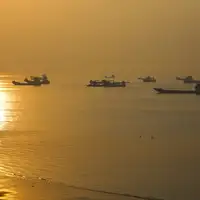
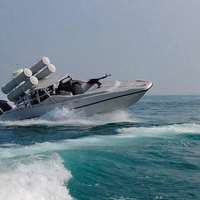
Pakistani traders and transporters told RFE/RL in May 2026 that at least six million liters of Iranian gasoline and diesel were entering Pakistan each day. A leaked Pakistani intelligence report identified around 2,000 vehicles and 1,300 boats involved in the trade and described payments moving through hawala networks.
That points to a substantial and organized cross-border economy. But even the six-million-liter estimate accounts for less than one-third of the 20 million liters Iranian officials say are smuggled daily—and it includes both gasoline and diesel.
Evidence from inside Iran points more clearly to the organized networks behind large-scale diversion.
In November and December 2025, judicial officials in Hormozgan said an investigation known as the Toofan case had uncovered 35 interconnected smuggling networks that allegedly moved more than four billion liters of fuel over several years. Authorities opened cases against 753 people described as major participants.
These remain judicial allegations rather than final findings. But the scale and structure described by investigators point to something considerably larger than subsistence smuggling by residents of impoverished border communities.
Where does the fuel disappear?
One of the strongest official clues lies further upstream, in the way fuel allocations are administered.
NIOPDC says around 60 million liters of diesel are allocated to transport operators every day through electronic waybills and acknowledges that inaccurate information about end users creates opportunities for diversion.
The evidence therefore points not to a single route or group of smugglers but to overlapping channels: manipulated fuel entitlements, transport documentation, bulk tanker movements, maritime trafficking and informal payment networks.
That does not establish that Iran’s official estimate of 20 million liters smuggled each day is wrong. It shows that authorities have not published the data necessary to establish what those millions of liters consist of or where they leave the regulated system.
Answering that question would require depot balances, tanker GPS records, station-level sales and provincial allocation data. Until those are published, attributing 20 million liters of daily smuggling chiefly to border communities risks mistaking the visible final carriers for the organized supply system that makes diversion on such a scale possible.