Land routes cannot replace Iran’s blocked sea trade, chamber official warns
Replacing a single ship carrying essential goods to Iran would require about 2,500 trucks, a Chamber of Commerce official warned, saying land routes cannot offset the US maritime blockade and negotiations are the only realistic way to restore trade.
Davoud Rangi, vice chair of the chamber’s Import Management Committee, said Iran receives around 400 to 500 ships carrying essential goods each year, making any attempt to replace maritime imports with overland transport impractical.
“Mobilizing this number of trucks is far-fetched for us, and even if they were mobilized, transportation costs would rise sharply,” Rangi told Eghtesad News on Thursday.
He said Iranian authorities should not count on land corridors as a substitute for the country’s southern ports because neighboring states could restrict border traffic at short notice and the routes lack the capacity to handle the necessary volume of goods.
Neighboring governments could close a border “with a single order,” he said, adding that the justification would not necessarily have to be political or military and could instead involve quarantine or veterinary restrictions of the kind Iran has faced before.
Rangi said land routes through countries such as Turkey or Pakistan might accommodate around one million tons of cargo annually, but could not come close to replacing Iran’s maritime trade.
“At a small scale, perhaps one million tons of cargo a year could be brought in through Turkey or Pakistan, but 23 million tons, or even half of that, is simply inconceivable,” he said.
The warning comes as Iran’s southern ports remain under pressure from the war. IRGC attacks on commercial vessels in the Strait of Hormuz have escalated regional tensions in recent weeks, while the United States intensified economic pressure on Tehran through a maritime blockade.
The outlook for negotiations between Tehran and Washington over reopening the Strait of Hormuz remains uncertain, with concerns also growing over a possible expansion of the regional conflict.
Negotiations seen as only viable way out
Rangi said negotiations and a reduction in military tensions were the only practical route to lifting the blockade and restoring the regular flow of essential goods into Iran.
Attempting to rely instead on overland corridors would impose heavy losses on importers, he said, because of both limited capacity and sharply higher transportation costs.
The blockade is also complicating Iranian exports, particularly containerized trade.
Rangi said vessels carrying bulk commodities could more easily be allowed to pass, while container ships pose a greater problem because individual containers cannot practically be separated from the rest of a ship’s cargo.
“We are extremely vulnerable on the southern route, in Bandar Abbas and Chabahar, but along the northern and western corridors the situation is much better for exports than for imports,” he said.
Iran’s economy has already come under mounting pressure in recent months from the continuing conflict, tighter sanctions and a sharp decline in the value of the rial.
Surging inflation and falling purchasing power have further strained household finances, making essential goods increasingly difficult to afford for a large part of the population.
File photo shows s motorist in Iran fills up a white SUV at a petrol station.
A plan to sell petrol at a much higher “refinery cost” rate in southern Kerman province was halted hours before it was due to begin, the provincial fuel distribution company said on Thursday.
The petrol was scheduled to go on sale from early Thursday at 872,000 rials ($0.47) per liter, Ahmad Salarifar, the manager of the National Iranian Oil Products Distribution Company in Kerman, said.
The suspension, he said, followed a conversation between the provincial governor and national officials and was ordered so that a program on fuel consumption management and anti-smuggling measures could be examined further. Petrol will continue to be sold at existing rates until further notice, Salarifar said.
Monthly salaries for many Iranians are commonly put at around 200 million to 250 million rials ($108 to $134). Filling a typical 50-liter tank at the proposed price of 872,000 rials per litre would have cost 43.6 million rials ($23), a sum equivalent to roughly one-fifth of a monthly wage at the upper end of that range and more than 17 times the cost at the current 50,000-rial ($0.027) station-card rate.
Iran introduced a three-tier petrol pricing system in December 2025. Private cars initially received 60 litres at 15,000 rials ($0.008) and 100 litres at 30,000 rials ($0.016) each month, with any extra volume charged at 50,000 rials on a station card. The second subsidised tranche was later cut, leaving a total national quota of 110 litres while the two lower prices remained unchanged.
Plan halted hours before launch
Provincial authorities have not said how long the review will last or whether the higher price will be introduced later.
The suspension came only hours after Ali Asghar Zakeri-Harandi, the deputy governor of Kerman for civil affairs, announced that 204 filling stations in the province were ready to sell petrol at the “full refinery cost” rate.
The plan, he said, would take effect from early Thursday under national decisions by the country’s fuel headquarters. Neither the Oil Ministry nor the government has published details of the decision or how the 872,000-rial figure was calculated.
Motorists queue at a gas station in Iran.
Higher rate far exceeds current charges
The Kerman announcement came less than a month after government spokeswoman Fatemeh Mohajerani said the government had no plan to change petrol prices. She repeated on July 28 that no final decision had been taken on the station-card rate and that any change would be announced officially.
A manager of a filling station in Kerman told Iran International that the provincial oil distribution office called stations on Wednesday evening to say the higher-priced petrol would start from early Thursday at selected sites.
A second call later the same night said the plan had been cancelled following talks with the regional oil company. The manager said the reversal was linked to concern over possible public reaction, adding that security forces normally present in the province had been redeployed elsewhere and that the higher price was still expected to be introduced soon.
Sudden fuel price increases have triggered major unrest in the past. In November 2019, an overnight rise of 50 percent on the subsidized quota and up to 300 percent on volumes above it sparked protests across more than 100 cities. Rights groups documented hundreds of deaths in the subsequent crackdown, and a near-total internet shutdown was imposed for several days.
Provincial officials have not clarified whether the Kerman plan was a local pilot or part of a wider national test. Its abrupt suspension before launch has left unanswered questions about the legal basis, the method used to set the price, and the government’s longer-term approach to reducing fuel subsidies.
Iranian authorities have sealed at least 42 cafés, restaurants, shops, sports clubs and other businesses across the country in the past three weeks, over compulsory hijab rules and what officials describe as violations of Islamic norms.
The figure is based on individual closure cases reported separately by state media and rights groups.
The closures were reported in at least 17 cities, including Tehran, Mashhad, Yazd, Kerman, Ardabil and Birjand, and affected cafés and restaurants, women's gyms, shops and a cultural center.
In just three weeks, the number of closures has already reached about 22% of the 191 cases HRANA documented over the entire previous Iranian calendar year.
Cafés, shops and gyms targeted
Among the latest cases, an optician in Qaen was sealed on Wednesday after authorities said customers and employees had failed to comply with compulsory hijab rules.
The Yin Yang café in Khomein was sealed over what authorities described as "improper hijab" and Instagram content, while a women's clothing store called Shabnam Maison in Kerman was also shut.
A café-restaurant in Tehran's Velenjak district was sealed a day earlier. Authorities in Ardabil also closed three coffee shops and arrested 16 people in connection with the businesses.
Hossein Salari, Ardabil's deputy prosecutor, said inspections of cafés would increase and authorities would act against shops selling clothing that he described as contrary to Islamic law or harmful to "public chastity."
Three cafés in Mashhad, Bojnourd and Birjand were sealed on August 10. Authorities also shut the Zhovan café in Minudasht on August 9 and the Arghavan café-bookstore in Mashhad on August 5.
The enforcement has extended beyond cafés. Two sports clubs in Borujerd were sealed by judicial order on August 4, while authorities shut a Shahr-e Ketab bookstore in Babol the same day.
Four women's sports clubs were also sealed in Yazd, while authorities in Abadeh shut five businesses and arrested a café operator.
In Dezful, the local prosecutor announced the closure of 15 cafés and hookah lounges on July 23.
Enforcement rises sharply in Mashhad
Authorities have used terms including failure to observe compulsory hijab, "violations of norms," failure to observe "Islamic standards," and promotion of indecency to explain the closures.
Some businesses have also faced other accusations. Authorities in Ardabil cited alleged gambling and promotion of corruption among the reasons for closing three cafés.
One café in Mashhad was cited for issues including failing to list matcha on its price list and selling cakes and desserts without required health certification. Police described the alleged violations at four women's gyms in Yazd only as "disciplinary offenses."
Official figures from Mashhad point to a sharp rise in closures.
Mohsen Sayadi, the city's head of trade inspection and supervision, said authorities sealed 104 businesses during the first four months of the current Iranian year, which began on March 21, compared with five during the same period a year earlier - an increase of about twentyfold.
Friends gathered at a cafe in Tehran to watch a match together.
Pressure extends to social media
The enforcement has also extended online.
HRANA said that between July 11 and August 1, authorities sealed at least 23 businesses, blocked or seized at least 72 social media pages and accounts, and required the operators of 21 pages to publish statements pledging compliance.
Those affected included bloggers, content creators, athletes, artists, fashion and beauty workers, online businesses, travel agencies and cafés.
HRANA also reported that authorities had identified and removed 56 Instagram pages in Qazvin and deleted 3,258 pieces of content from social media pages belonging to 32 businesses in Rasht.
Businesses face wider pressure
The closures come as businesses are also struggling with falling purchasing power and broader economic pressure.
Iranian authorities have previously sealed businesses that joined strikes, supported anti-government protests or did not enforce compulsory hijab, including during the 2022 Woman, Life, Freedom protests and demonstrations earlier this year.
Many Iranian women have increasingly appeared in public without the mandatory headscarf since 2022, while authorities have continued to use business closures and action against social media accounts to enforce compulsory hijab rules.
FILE PHOTO: Mohsen Rezaei at a farewell ceremony for Iran's late Supreme Leader Ayatollah Ali Khamenei, July 3, 2026.
Mohsen Rezaei’s appointment as Iran’s new security chief has opened a battle over its political meaning, with ultra-hardliners portraying the removal of his predecessor as evidence that the balance in Tehran has shifted against advocates of negotiations with Washington.
Supreme Leader Mojtaba Khamenei appointed Rezaei as his representative on the Supreme National Security Council (SNSC), after which President Masoud Pezeshkian named him secretary of the body at the center of Iran’s security and foreign policy decision-making.
Rezaei replaces Mohammad Bagher Zolghadr after only about five months in the job, an unusually short tenure for a position whose previous occupants typically served for years.
Opponents of negotiations have welcomed the change and sought to link Zolghadr’s departure to disagreements surrounding the ceasefire, negotiations with Washington and the Islamabad memorandum.
Reformist and government-aligned voices have cautioned against concluding that the harder-line camp has prevailed.
A battle over Zolghadr’s departure
Raja News, an outlet associated with the ultra-hardline Paydari camp, said Zolghadr’s replacement showed that, contrary to claims by supporters of negotiations, “not everything was coordinated with the Supreme Leader.”
Amir-Hossein Sabeti, a hardline member of parliament and prominent critic of negotiations, went further, accusing Pezeshkian of resisting the Supreme Leader’s wishes over replacing Zolghadr with Rezaei.
He warned the president that unless he changed course and followed the leader’s direction, “the people will replace him.”
Accounts circulating among hardliners have claimed that Pezeshkian initially resisted appointing Rezaei as SNSC secretary and did so only after Khamenei named Rezaei as his representative on the council.
No official explanation has been given for Zolghadr’s departure, and the claims do not establish that disagreements over negotiations caused his removal.
The reformist-leaning Rouydad24 website said opponents of negotiations were seeking to build a political narrative around the reshuffle: that divisions had emerged during the ceasefire and negotiations and that the balance had now shifted toward the harder-line faction.
Nour News, which is considered close to the SNSC, also said Rezaei’s appointment could signal “the beginning of a new approach to the country’s strategic governance,” but rejected attempts to portray it as evidence of a confrontation between Pezeshkian’s government and the leadership.
Rezaei’s record fuels hardline hopes
Rezaei’s own previous statements have added to speculation over what his appointment could mean for negotiations.
Ultra-hardliners have recirculated comments in which he interpreted an earlier message from Mojtaba Khamenei saying that “in principle, I had a different view” of the path taken by the SNSC.
Rezaei said the phrase meant “the path he had in mind was better than the path taken by the Supreme National Security Council,” remarks critics of the Islamabad memorandum have cited as evidence that Khamenei had reservations about the council’s approach.
But Rezaei has not opposed negotiations outright.
In an earlier interview with the Iranian Labour News Agency (ILNA), he said talks should take place but argued against maintaining a ceasefire while they continued, saying a pause in fighting would give the enemy an opportunity to rebuild its forces.
The distinction suggests the emerging argument may be less about whether to negotiate than about the conditions under which talks take place and the role of military pressure alongside diplomacy.
What comes next
The conservative Farhikhtegan newspaper similarly argued against reducing the choice to either concessions or continued war.
It criticized those who believe the conflict could be turned into peace through concessions, including handing over management of the Strait of Hormuz, but also those who view the conflict solely through a military lens and see war as the only solution.
Hesamoddin Ashena, a former adviser to President Hassan Rouhani, meanwhile appeared to caution against the risks of miscalculation at the SNSC without explicitly naming Rezaei.
“Because you are not allowed even one analytical mistake, you must be very careful,” he wrote on X. “Because a nation will pay the cost of your mistake, you must be very careful.”
For now, Rezaei’s appointment has become a proxy for the larger argument over Iran’s direction.
Ultra-hardliners see Zolghadr’s departure as evidence that the political ground has shifted toward them, but Rezaei’s own record points to a more complicated position: support for negotiations combined with a greater emphasis on maintaining military pressure while they take place.
Canada says immigration applications are assessed individually in response to cases of Iranians who completed mandatory military service with the Revolutionary Guards receiving letters warning they could be deemed inadmissible on security grounds.
In a statement to Iran International, Immigration, Refugees and Citizenship Canada (IRCC) said “membership in the IRGC and service in the IRGC are distinct considerations” for assessing inadmissibility.
Individuals who served as a result of compulsory military service are assessed individually, the department said, adding that “conscription alone does not necessarily result in inadmissibility.”
IRCC said final decisions are made by immigration officers after reviewing submitted documents, relevant case law and recommendations from security partners, including the Canada Border Services Agency (CBSA) and the Canadian Security Intelligence Service (CSIS).
Conscripts receive fairness letters
Documents and accounts obtained by Iran International indicate that Iranian applicants whose only declared connection to the IRGC was compulsory military service have received Procedural Fairness Letters (PFLs) raising possible inadmissibility.
The letters notify applicants that their cases are being assessed under paragraph 34(1)(f) of the Immigration and Refugee Protection Act (IRPA) over possible membership in an organization believed to engage in terrorism.
A finding of inadmissibility can result in the refusal of an application for permanent residence and can also affect accompanying family members.
Iran International reviewed a PFL issued to an applicant on Aug. 6 that explicitly cited the applicant’s mandatory military service with the IRGC.
“On form IMM 5546, you indicated that you served your mandatory military service with the IRGC,” the letter said, giving the applicant 30 days to submit additional information before a decision is made.
IRGC designation and compulsory service
Canada designated the IRGC a terrorist entity under the Criminal Code in June 2024, after years of debate that included concerns over Iranians who had been conscripted into the force.
A separate measure expanded later that year makes senior Iranian government officials who served at any point since June 23, 2003 inadmissible to Canada.
IRCC said procedural fairness letters give applicants an opportunity to provide additional information before a final decision is made. Community advocates and legal representatives, however, say the recent volume of letters has created widespread uncertainty among Iranians with a history of compulsory IRGC service.
Advocates estimate that thousands of Iranian families in Canada could be affected by security reviews stemming from mandatory conscription.
Several applicants also told Iran International they had participated in anti-government demonstrations and human rights rallies since arriving in Canada and feared possible repercussions if they were eventually returned to Iran.
“We served in the military solely because it is mandatory under Iranian law,” one applicant said on condition of anonymity because of security concerns. “Yet, my spouse is now also facing potential inadmissibility.”
The applicant said they were hesitant to submit evidence detailing their opposition activities in Canada because they feared the information could endanger their family if they were ultimately forced to return to Iran.
IRCC said no final decision is made until information submitted by an applicant during the response period has been evaluated.
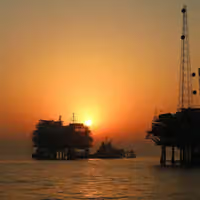
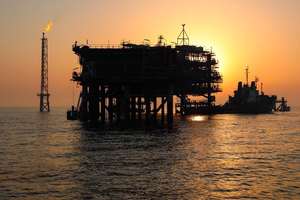
The P4 offshore platform at Iran’s Reshadat oil field in the Persian Gulf, completed in June 2026.
OPEC oil production continued its sharp post-war recovery in July, but Iran remained a notable exception, with output still around a quarter below pre-war levels and its oil revenues taking an even steeper hit.
Iran produced 2.478 million barrels per day (bpd) in July, up just 26,000 bpd from June, according to OPEC’s latest monthly report.
By contrast, Saudi Arabia increased output by about 590,000 bpd, Iraq by 665,000 bpd and Kuwait by 393,000 bpd. Combined crude production among OPEC members rose by about 1.66 million bpd in July to 23.63 million bpd.
Iran’s export revenues have recovered even more slowly.
Commodity intelligence firm Kpler told Iran International that daily deliveries of Iranian crude to Chinese refineries fell from more than 1.7 million bpd in March and April to less than 500,000 bpd in July.
Kpler said Iran offered its crude at a discount of more than $5 a barrel in July, while transportation costs exceeded $10 a barrel. Once payments to intermediaries were included, it estimated that at least 25% of the nominal value of Iran’s oil sales was lost before the proceeds reached the country.
At July’s export volumes, Kpler estimated that crude delivered to China had a nominal value of about $1.2 billion. That compares with average monthly oil revenues of about $3.8 billion last year, according to OPEC estimates.
China has long been overwhelmingly the largest destination for Iranian crude, leaving Tehran particularly exposed to changes in purchases by Chinese refineries.
Iran struggles to restore output
Iranian production fell by nearly 1 million bpd between the beginning of the Middle East war and May, according to OPEC figures.
Over the following two months, it recovered by only about 200,000 bpd, reaching 2.478 million bpd in July. The pace of that recovery slowed sharply last month, with the 26,000-bpd increase leaving production roughly a quarter below pre-war levels.
The figures contrast with the much faster restoration of production elsewhere in the Persian Gulf following the severe disruptions caused by the war.
Saudi Arabia, Iraq and Kuwait accounted for much of OPEC’s July increase as producers took advantage of the temporary ceasefire to restore output. Despite the rebound, regional production remains well below levels before the conflict, with large volumes of Persian Gulf supply still offline.
The contrast is even sharper with the United Arab Emirates, which left OPEC in May and has since sharply expanded production. OPEC continues to track UAE output in its monthly report despite its departure from the group.
OPEC estimates that UAE crude production reached around 3.78 million bpd in July, approximately 882,000 bpd above its level in the months preceding the war.
Venezuela also continued its recovery, with production reaching about 1.12 million bpd in July, up from around 940,000 bpd in January.
For Iran, however, the combination of depressed production, sharply lower deliveries to China and the costs associated with selling and transporting its crude means the financial recovery has lagged even further behind the rebound in output.