• العربية
  • فارسی
Brand
  • Iran Insight
  • Politics
  • Economy
  • Analysis
  • Special Report
  • Opinion
  • Podcast
  • Iran Insight
  • Politics
  • Economy
  • Analysis
  • Special Report
  • Opinion
  • Podcast
  • Theme
  • Language
    • العربية
    • فارسی
  • Iran Insight
  • Politics
  • Economy
  • Analysis
  • Special Report
  • Opinion
  • Podcast
All rights reserved for Volant Media UK Limited
volant media logo

New documentary probes Jamshid Sharmahd's abduction and death

Aug 5, 2026, 17:12 GMT+1Updated: 20:29 GMT+1
The coffin of Iranian-German dissident Jamshid Sharmahd is covered with white flowers during his funeral service.

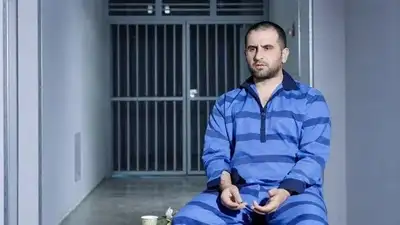
Six years after Iranian-German dissident Jamshid Sharmahd vanished during a trip to the United Arab Emirates, many questions surrounding his abduction, imprisonment and death in the custody of the Islamic Republic remain unresolved.

Marking the anniversary of his disappearance, Iran International has released the investigative documentary I'm Fine, I'll Call You!, directed by Ardavan Roozbeh.

Drawing on official documents, digital evidence and interviews with Sharmahd's family, legal team, international officials and political figures, the film reconstructs one of the Islamic Republic's most controversial intelligence operations—from his disappearance in the UAE to his death in Iranian custody.

In August 2020, Sharmahd, an Iranian-German citizen and US resident, disappeared while traveling through the United Arab Emirates.

Days later, Iran's Ministry of Intelligence announced it had captured him in what it described as a "complex operation" and transferred him to Iran—an act his family, legal team and human rights organizations have described as an extraterritorial abduction and a violation of international law.

As spokesperson for the Kingdom Assembly of Iran (Anjoman-e Padeshahi Iran), Sharmahd was accused by the Islamic Republic of involvement in the 2008 bombing of the Seyyed al-Shohada Hosseiniyeh in Shiraz.

He and his family consistently denied the allegations.

During his detention, Iranian state television aired what it said were confessions by Sharmahd, while rights groups repeatedly warned they may have been obtained under torture or coercion.

His case quickly became one of the clearest examples of what human rights organizations describe as the Islamic Republic's campaign of transnational repression.

100%
Iran International journalist Ardavan Roozbeh, director of the documentary I'm Fine, I'll Call You!, stands beside the coffin of Iranian-German dissident Jamshid Sharmahd during his funeral service.

Germany and the United States repeatedly called for his release, while the European Parliament condemned Iran's treatment of Sharmahd in several resolutions.

Diplomatic pressure, however, failed to prevent either his death sentence or his death in custody.

In October 2024, Iranian authorities announced Sharmahd's death. Conflicting official accounts, the lack of independent access to his case and unanswered questions surrounding his final months in prison have fueled continuing demands from his family and legal representatives for an independent investigation and accountability.

More broadly, the Sharmahd case has become emblematic of the Islamic Republic's use of cross-border intelligence operations, the targeting of political opponents abroad and the use of national security prosecutions as instruments of state policy.

By reconstructing the events leading from Sharmahd's disappearance to his death, I'm Fine, I'll Call You! examines how one of Iran's most consequential transnational operations unfolded, and why key questions surrounding the case remain unresolved.

Most Viewed

Tehran records heaviest damage in latest war, municipal report shows
1

Tehran records heaviest damage in latest war, municipal report shows

2
EXCLUSIVE

Iran's president met Mojtaba Khamenei in the back seat of a car

3

Aramco sidesteps Hormuz as Iran crisis cuts flows to a tenth

4

US depleted 'virtually all' long-range precision missiles in Iran war - Reuters

5

Iran presses wider Hormuz demands as US says deal may be close

Banner
Banner
Banner

Spotlight

  • Iran's parliament fades further from power after the war
    INSIGHT

    Iran's parliament fades further from power after the war

  • Iran state bank freezes national oil company accounts over debt

    Iran state bank freezes national oil company accounts over debt

  • War or government failure? Record inflation fuels political battle in Iran
    ANALYSIS

    War or government failure? Record inflation fuels political battle in Iran

  • Anti-Islam posts follow Iran's dawn executions, sparking hardline backlash

    Anti-Islam posts follow Iran's dawn executions, sparking hardline backlash

  • Iran used water hacks to intimidate not cripple, experts say

    Iran used water hacks to intimidate not cripple, experts say

  • Iran's president met Mojtaba Khamenei in the back seat of a car
    EXCLUSIVE

    Iran's president met Mojtaba Khamenei in the back seat of a car

•
•
•

More Stories

Iran executed at least 56 people since March, UN rights chief says

Aug 5, 2026, 12:42 GMT+1
100%
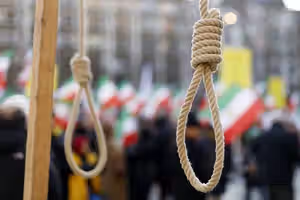
Iranian exiles hold a vigil against executions in Iran, Germany 2020.

Iran has executed at least 56 people on national security-related charges since March 19, including 27 in cases linked to protests earlier this year, UN human rights chief Volker Türk said on Wednesday.

Türk said executions and death sentences had risen since March, with more than 100 other people facing similar charges and the death penalty.

He urged Iranian authorities to halt all executions and move towards abolishing the death penalty.

The figures come after a series of executions in recent weeks of young people detained over the January protests, some of which drew gatherings by relatives and members of the public seeking to stop the sentences from being carried out.

  • More Iranian teenagers at risk of execution, rights groups warn

    More Iranian teenagers at risk of execution, rights groups warn

Protesters executed

Iranian authorities executed 20-year-old Arvin Kheirkhah at Shahroud prison on Saturday after he was sentenced to death over his involvement in the January protests, according to information obtained by Iran International.

Kheirkhah had been convicted by a Revolutionary Court on charges including moharebeh, or "waging war against God."

His family gathered outside Shahroud prison on Friday night in an effort to stop the execution, according to Iran International. In a final conversation with his family, Kheirkhah urged them not to let him be forgotten.

His execution came days after authorities hanged Amirhossein Safari and Abolfazl Sepahi in Isfahan's Alikhani Square.

The two were among 12 young men sentenced to death in a case stemming from the January protests in the square. Iranian authorities accused the defendants of involvement in the deaths of four security personnel as well as arson and vandalism.

  • Iran executes two protesters amid heavy security in Isfahan

    Iran executes two protesters amid heavy security in Isfahan

People gathered around the square overnight before the executions amid a heavy deployment of security forces.

Two other defendants in the same case, Golmohammad Mohammadi and Erfan Esfandiari, were executed on July 19, bringing the number put to death in the case to four.

Others remain under death sentences

A group of UN human rights experts, led by Mai Sato, the UN Special Rapporteur on the situation of human rights in Iran, urged Tehran in late July to halt the executions of defendants in the Isfahan case.

"Sentencing 12 people to death in one hearing, in a closed courtroom and without clarity as to each defendant's individual responsibility violates established fair trial standards," the UN experts said in a statement.

  • Iran executes 20-year-old protester as fears grow for other detainees

    Iran executes 20-year-old protester as fears grow for other detainees

They said the defendants, aged from their late teens to early twenties, had reportedly faced arbitrary detention, enforced disappearance and, in some cases, ill-treatment.

The UN experts also raised concerns that convictions relied heavily on confessions broadcast on Iranian state television, while Revolutionary Court hearings were held behind closed doors and the judgments were not made public.

Anti-Islam posts follow Iran's dawn executions, sparking hardline backlash

Aug 4, 2026, 22:13 GMT+1
•
Hooman Abedi
100%
AI-generated illustration depicting the juxtaposition of the Islamic dawn call to prayer (adhan) and executions carried out before sunrise in Iran.

Angered by a wave of early-morning executions of protesters and political prisoners, some Iranian social media users have directed their anger at Islam and the morning call to prayer, prompting an IRGC-linked campaign demanding their prosecution.

As executions have accelerated in recent weeks, some Iranian social media users have increasingly portrayed the pre-dawn adhan as a reminder of hangings rather than the beginning of the day’s religious observances.

The adhan is the Islamic call summoning Muslims to the five daily prayers.

Iranian regulations state that death sentences should ordinarily be carried out at sunrise unless the court specifies another time. Executions are nevertheless widely associated with the early-morning hours, when prisoners’ families and supporters often wait for news as the dawn call to prayer is broadcast.

  • Iran hangs two more political prisoners as execution wave widens

    Iran hangs two more political prisoners as execution wave widens

Social media anger turns toward religious symbols

Posts criticizing Islam and religious symbols circulated across Instagram and X following the latest executions.

An Instagram user wrote that the dawn adhan had become “a symbol and reminder of the execution of this country’s youth,” adding that a call intended to invite people to worship, peace and salvation had instead become associated with taking lives.

  • More Iranian teenagers at risk of execution, rights groups warn

    More Iranian teenagers at risk of execution, rights groups warn

Activist Masih Alinejad wrote after clashes outside an execution site that the dawn call to prayer had become “only a symbol of death and execution.”

Another Instagram user wrote before planned executions in Isfahan that the young prisoners were due to be hanged “to the sound of the dawn call to prayer,” adding that it now carried “only the smell of death.”

Other users went further, posting profanity directed at Islam, the Quran, Shi’ite religious figures, the adhan and the Arbaeen pilgrimage. Some wrote that they no longer associated the dawn call with prayer but with executions.

IRGC-linked campaign urges crackdown

The IRGC-affiliated Fars News Agency said more than 700 people had signed a campaign on its platform by Tuesday, calling for the “maximum punishment” of those accused of “insulting Islamic sanctities online.”

Organizers cited Article 513 of Iran’s Islamic Penal Code and urged judicial and security authorities to take what they described as “effective and deterrent” action.

Under Article 513, insulting Islamic sanctities is punishable by between one and five years in prison. Cases classified as sabb al-nabi, or insulting the Prophet, can carry the death penalty.

100%

Fars said campaign supporters called for tougher enforcement against people who “deliberately insult Islamic sanctities” online and urged authorities to prosecute offenders under existing legislation.

Judiciary spokesman Asghar Jahangir has previously said Iran continuously monitors cyberspace through a dedicated unit within the prosecutor general’s office and urged citizens to report alleged online offenses through official channels.

  • Iran executes 20-year-old protester as fears grow for other detainees

    Iran executes 20-year-old protester as fears grow for other detainees

The campaign adds to broader efforts by Iranian authorities to tighten oversight of online speech as criticism over the recent executions continues to spread across social media.

Why Afghans still risk death to reach Iran

Aug 4, 2026, 17:34 GMT+1
•
Negar Mojtahedi
100%
The father, a 35-year-old driver with his Afghan family, sits with his young daughter in a pickup van.

"Take care of my sons." Those were the final words of Hayatullah, an Afghan migrant who used his phone to record what would become the last moments of his life in the scorching desert as he tried to reach Iran.

"Pray for me. Mother, I'm dying," he said, pleading with his loved ones to look after his sons, especially Habib.

Hayatullah was among 14 Afghan migrants who died attempting to reach Iran, Afghan officials said, weeks after the vehicle carrying them broke down and they continued the journey on foot.

Why would anyone risk one of the world's deadliest migration routes to reach Iran?

The country is grappling with economic crisis and widespread repression. It has carried out one of the region's largest deportation campaigns against Afghan migrants and offers little prospect of permanent legal status.

"It's not about a choice between safety and danger," Yasin Samim, an Afghan governance and development analyst, told Iran International. "It's about what type of danger."

Samim said conditions inside Afghanistan had become so severe that many people continued to flee despite knowing the risks awaiting them in Iran.

"The fact that they come to Iran shows the severity of the situation and conditions in Afghanistan," he said. "The reasons they leave Afghanistan have not changed."

With the Taliban's return to power, legal pathways to Iran have become increasingly restricted, forcing many low-income Afghans into the hands of smugglers.

"Granting a visa has become a deal of the black market," Samim said, adding that visas can reportedly cost between $1,000 and $1,200—far beyond the reach of many Afghan families.

"The combination of poverty, unemployment and repression leaves people with no alternative," he said. "That is the only choice they have."

Those who cannot afford legal routes often attempt the crossing through Nimruz, one of the main transit corridors into Iran for irregular migration.

The route has become synonymous with one of the deadliest migration paths into the country. Migrants cross vast stretches of unforgiving desert where temperatures regularly exceed 45°C (113°F).

If smugglers abandon them or their vehicle breaks down—as happened in this case—survival quickly becomes a race against dehydration. Many die before reaching help. Others face robbery, exploitation or detention before ever reaching Iran.

Iran has long hosted one of the world's largest Afghan populations despite offering few permanent rights to those who settle there. Before its mass deportation campaign in 2025, an estimated four million Afghans lived in the country, including registered refugees, documented migrants and undocumented workers.

Yet many remained in legal limbo despite spending years—or even decades—in Iran. Children born in Iran to Afghan parents are not automatically granted Iranian citizenship, and for most there is no realistic pathway to becoming Iranian citizens.

"Iran has shut down legal pathways for Afghans in recent years," Omid Memarian, senior Iran analyst at DAWN told Iran International. "Because so many pathways have been blocked, they have to take much riskier ways to be smuggled from Afghanistan to Iran.”

That means the chance of being exploited is higher, Memarian added, and their rights are more likely to be violated.

Tighter restrictions appear to have little bearing on Afghans' calculations. It has only pushed them onto more perilous routes across deserts such as Nimruz, where extreme heat could quickly turn a journey into a death sentence.

"For them, the question is not, 'Let's go to the best ideal country.' The question is, 'Let us get out of here.' ... It's about survival," Memarian told Iran International.

Iran International reached out to the United Nations High Commissioner for Refugees (UNHCR) for comment.

A spokesperson referred us to a statement issued last month warning that Afghanistan is ill-equipped to absorb the growing number of returnees.

The agency said more than six million Afghans have returned since 2023, while nearly half the country's population already depends on humanitarian aid.

It called for returns to be safe, voluntary and dignified, warning that mass deportations risk deepening one of the world's worst humanitarian crises.


Iran hangs two more political prisoners as execution wave widens

Aug 3, 2026, 08:34 GMT+1
100%
Iranian exiles hold a vigil against executions in Iran, Germany 2020.

Iran hanged two political prisoners early Monday after convicting them of alleged “spying and intelligence cooperation with Israel,” the judiciary said, extending a surge in executions carried out under broadly framed national-security charges.

Omid Behzad and Pouria Safvat, the judiciary's news outlet said, were executed on Monday, after Iran's Supreme Court upheld their death sentences.

According to Mizan, the two men transmitted “coordinates, images and information about Iranian military and security sites to officers from Israel's Mossad intelligence agency and affiliated communication channels” during the 12-day and 40-day wars in 2025 and 2026.

The pair, the report said, were identified and arrested by the Islamic Revolutionary Guards Corps' intelligence organization but did not specify when, where or how they were detained.

  • Iran executes 20-year-old protester as fears grow for other detainees

    Iran executes 20-year-old protester as fears grow for other detainees

The judiciary outlet also said Behzad maintained direct contact with the administrator of a Telegram channel linked to Israel and supported the US and Israeli military campaign against the Islamic Republic.

Mizan cited Behzad's confessions as evidence, although rights groups have for years documented that Iranian authorities have extracted confessions under coercion, torture or harsh detention conditions.

Iranian authorities use broadly worded charges such as espionage, acting against national security, armed rebellion, enmity against God and corruption on earth to crush dissent and remove political opponents.

Human rights organizations say these labels are routinely applied to protesters, dissidents and political prisoners to portray them as security threats and provide a legal pretext for execution.

Amnesty International, Human Rights Watch and UN experts have documented repeated cases in which such convictions were issued by revolutionary courts after grossly unfair or highly expedited proceedings, with defendants denied meaningful access to lawyers and verdicts based on torture-tainted forced confessions.

Charges against Safvat

Safvat, Mizan said, photographed Iranian air defense systems from rooftops during the 12-day war and sent the images through communication channels linked to Israel.

100%

The outlet said some of the locations he photographed were later bombed. Without providing evidence, it also alleged Safvat had direct contact with Mossad in some instances and sent messages to Iran International.

The court, according to Mizan, sentenced both men to death based on what it described as “explicit confessions, technical evidence, recovered messages and other evidence.” The sentences were upheld by the Supreme Court before being carried out on Monday.

Wider crackdown

Iran has intensified arrests, prosecutions and executions in recent months, with authorities sentencing or executing dozens of people on charges including espionage, involvement in protests and membership of the exiled opposition group Mujahedin-e Khalq (MEK).

  • Iran executes two protesters amid heavy security in Isfahan

    Iran executes two protesters amid heavy security in Isfahan

Human rights groups and activists say the authorities have expanded the crackdown following recent military confrontations, arguing that the campaign is intended to deter renewed public unrest over Iran's deepening economic and political crises.

Iran's latest wave of public hangings of protesters amounts to "killings" and "murders" that form part of a continuing crime against humanity, former United Nations prosecutor Professor Payam Akhavan told Iran International's Eye for Iran.

“What we actually have in Iran are arbitrary executions. These are killings. They are murders,” Akhavan said. "Specifically, the case can be made that this is a crime of extermination, given the large scale of the killings."

More Iranian teenagers at risk of execution, rights groups warn

Aug 3, 2026, 00:44 GMT+1
100%
Shervin Baghera, 18, was sentenced to death following his arrest during the January protests in Isfahan

Rights groups have warned that more teenagers arrested during Iran's January uprising face imminent execution, saying authorities have intensified the use of death sentences against minors as part of a broader execution campaign.

In a joint statement on Saturday, the organizations Defenders of Children's Rights in Iran and the Center for Justice for Children said they were deeply concerned that authorities could soon execute 18-year-old Shervin Bagherian from Isfahan.

The groups said Bagherian's case demonstrated that death sentences against children and teenagers, issued under what they described as flawed criminal procedures, had become a continuing practice in the Islamic Republic.

Their warning came days after authorities executed another defendant in the same case, 20-year-old Arvin Kheirkhah, at dawn on Saturday, raising fears that Bagherian and other co-defendants could also face imminent execution.

The organizations said Iran had already executed two teenagers, Amir Norollahi and Amirhossein Hatami, in recent months after they were arrested during the January uprising.

Citing information gathered by human rights organizations, including the Committee for the Release of Political Prisoners, the groups said at least 184 teenagers detained during the January protests remained in prison as of July 26.

Fourteen had received death sentences, they said, with two already executed and another 12 still at risk.

The warning comes as Iranian authorities increasingly target young protesters who played a prominent role in both the 2022 Woman, Life, Freedom movement and the January uprising, where children and teenagers were among those killed, injured and detained.

Iran has sharply increased executions since the January protests, with rights groups saying authorities have used the death penalty more aggressively against protesters, political opponents and people accused of security-related offenses.

Activists say the escalation accelerated further during and after the recent conflict with Israel, as the government widened its crackdown under the cover of wartime security measures.

The statement accused Iran of violating its obligations under the UN Convention on the Rights of the Child, which prohibits capital punishment for crimes committed by people under the age of 18, regardless of the charges against them.

The groups also criticized authorities' use of national security charges such as moharebeh ("waging war against God") and efsad fel-arz ("corruption on earth") against minors, arguing that coerced confessions, prolonged interrogations and unfair trials had become the basis for death sentences.

They called on governments, international organizations, journalists and rights defenders to press for an immediate halt to executions of anyone accused of crimes committed before the age of 18.